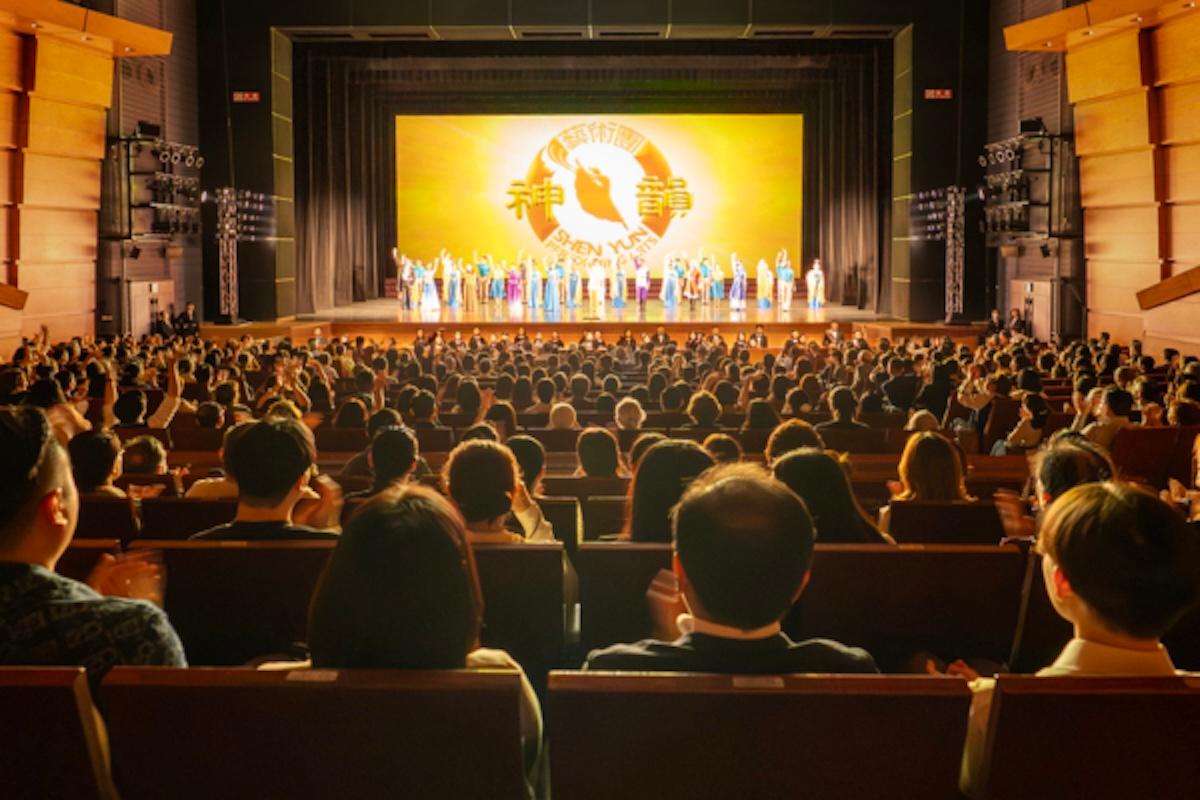
From a young age, Louis Liu had his sights set on becoming a dancer with Shen Yun Performing Arts.
“I absolutely loved it. I just thought they looked so cool,” Liu told The Epoch Times.
It was a dream Liu was dead set on, but his mother Gao Weiwei feared it might be a pipe dream. After all, just possessing the Shen Yun DVDs that Liu watched over and over was something the Chinese Communist Party (CCP) considered warranting arrest, and Chinese authorities surveilled Gao’s family almost obsessively, in an effort to silence her from speaking about her sister’s death at the hands of the CCP.
To Live in Truth
Falun Gong, also known as Falun Dafa, is a Buddhist-based spiritual practice that teaches the three principles of truth, compassion, and forbearance. After it was introduced to the public in the early 1990s, it spread rapidly through word of mouth, with practitioners telling of tremendous health benefits to the mind, body, and spirit. Gao’s mother experienced this firsthand and introduced the practice to Gao’s two sisters, who then phoned Gao, who had been working in Japan at the time, to tell her about how wonderful the practice was.The Gao family told The Epoch Times that Rongrong had been the baby of the family and the favorite. She retained her kind and loving disposition as an adult and was beloved at the fine arts school where she worked. Many students began practicing Falun Gong after learning about it from her, so she was well known and highly regarded in her community.
That put a target on her back when, in 1999, the CCP banned Falun Gong and launched a violent persecution against its practitioners.
As practitioners of Falun Gong, the Gaos believed in living by the principles of truth, compassion, and forbearance. That meant speaking the truth about Falun Gong amidst the CCP’s relentless propaganda campaign that sought to deceive the Chinese people through slander. The family members had petitioned the authorities, protested, distributed information about Falun Gong, and faced detention several times in the early years of the persecution because of it. But Rongrong suffered the worst of all, considered a high-profile target by the regime—“Top Secret Case No. 26”—and ultimately lost her life.
After Rongrong’s death, authorities tried to pressure family members into signing a form that would have shown it was the family’s decision to cremate her. Gao believes this was an attempt by the regime to shift accountability by trying to cover up evidence of torture.
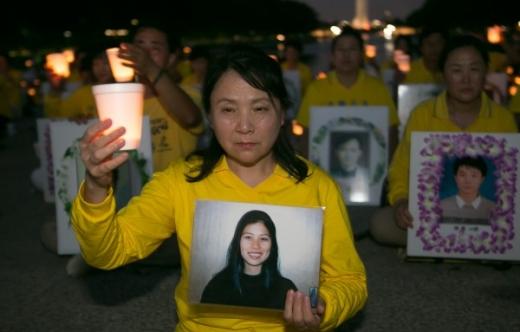
Harassment by CCP authorities was persistent that year, and for a four to five-month period, Gao and her young son went into hiding and lived on the run. That ended when they were apprehended in one city and put in a jail cell, but they were released the same night, and Gao said she overheard the officers’ superior saying he didn’t want to get involved in a Falun Gong case.
Despite these years of terror and intimidation, Gao did not waver in her faith and never stopped trying to tell others the truth about Falun Gong and the CCP’s persecution. Asked why she went to such lengths, she said she believes it is her responsibility as a Falun Gong practitioner to live in truth.
That meant explaining to Liu’s homeroom teacher and principal at school that, because the family practiced Falun Gong, Liu would not be joining the communist Young Pioneers organization, a decision they understood and respected. It meant speaking kindly even to the police officers who were stationed outside her home during major events like the 2008 Beijing Olympics to prevent her from speaking with international media about her sister’s death. When she went to tell them the truth about what Falun Gong is, she discovered they didn’t even know why they had been asked to monitor her. It meant continuing to distribute information about Falun Gong by giving out pamphlets or putting up posters.
On Stage
In 2013, Liu made up his mind to apply to Fei Tian Academy of the Arts, a school affiliated with Shen Yun in the United States. Using tools created by Falun Gong practitioners overseas to circumvent the CCP’s internet “Great Firewall,” he sent in his application online.Liu had little doubt this was where he was meant to be, but Gao said she was shocked at every stage, because contrary to her expectations, the application process and obtaining the requisite paperwork went entirely smoothly, and the whole family eventually immigrated to the United States.
Liu said when he first came to America, it wasn’t actually a big moment of arrival; that first year was a bit of a blur as he began formal classical Chinese dance training and finding his place in this new world. But when he finally began to tour with Shen Yun, he had a clear moment of realization: “Oh, I’m doing something really special.”
“I have a deep impression of my first performance, the first time I stepped on stage, seeing that huge audience for the first time. I was excited. Nervous. I didn’t know what to think. I had never experienced anything like it,” Liu said.
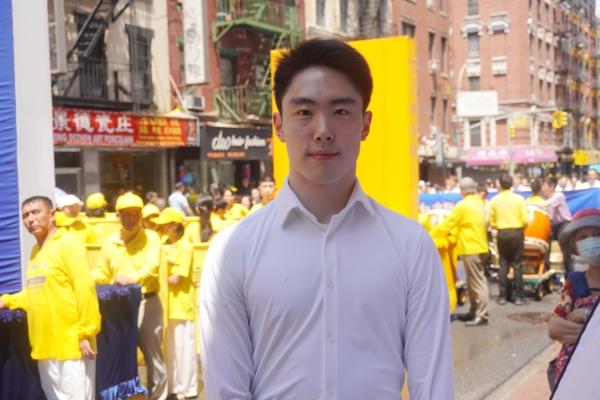
The past decade has been a continual process of refinement, he said, and every step of the journey in maturing artistically and as a person has been precious.
Shen Yun performances are comprised of more than a dozen vignettes, including a dance-based story showing Falun Gong practitioners holding onto faith in contemporary China despite the CCP’s oppression. Liu has been cast in these pieces as well, and he says that when he performs these roles, he’s not just telling the story of his family, but the stories of countless Falun Gong practitioners who’ve experienced a version of what’s shown on stage.
“I hope that through these single stories, I can show the world what all of those families still facing persecution are experiencing,” he said.