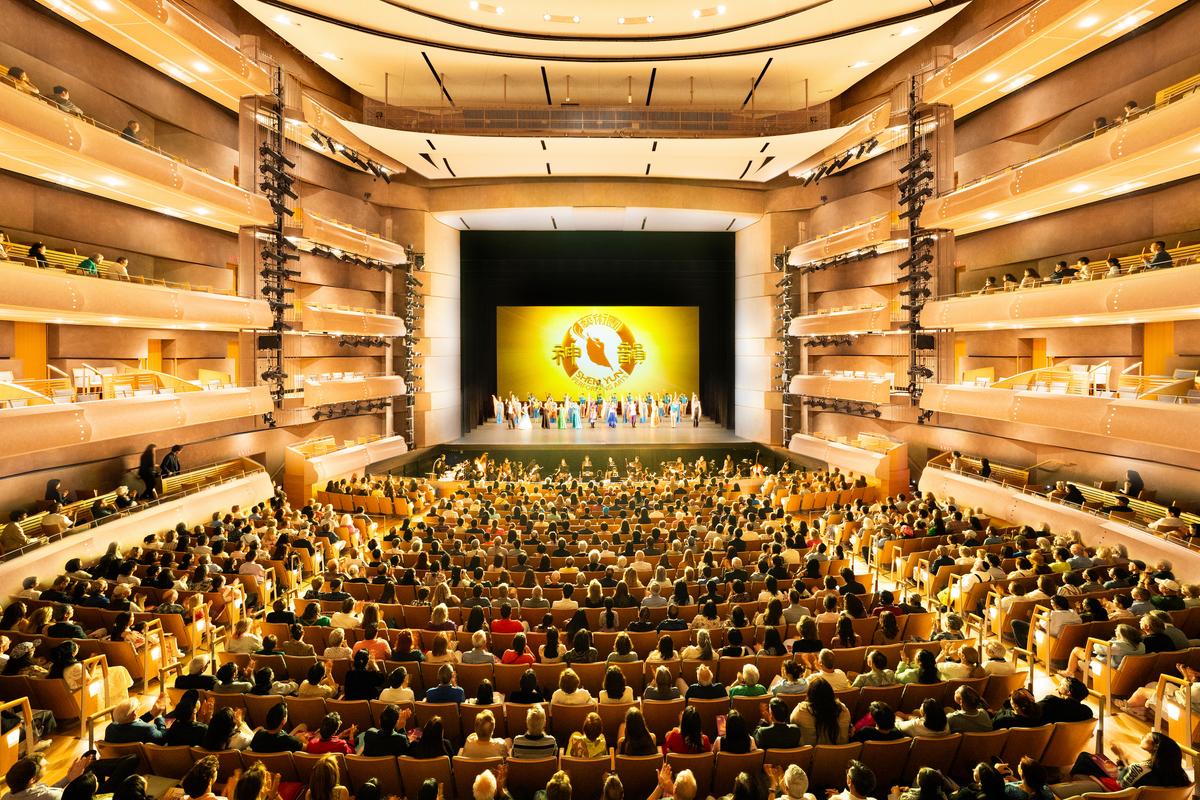
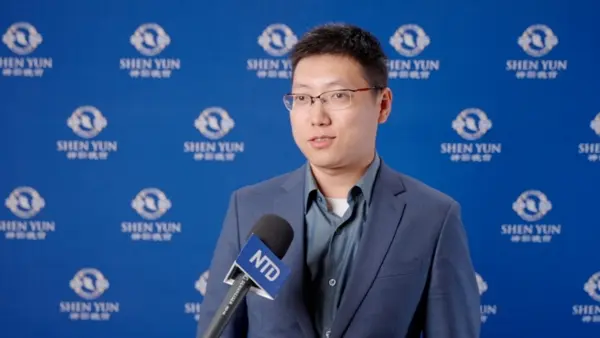
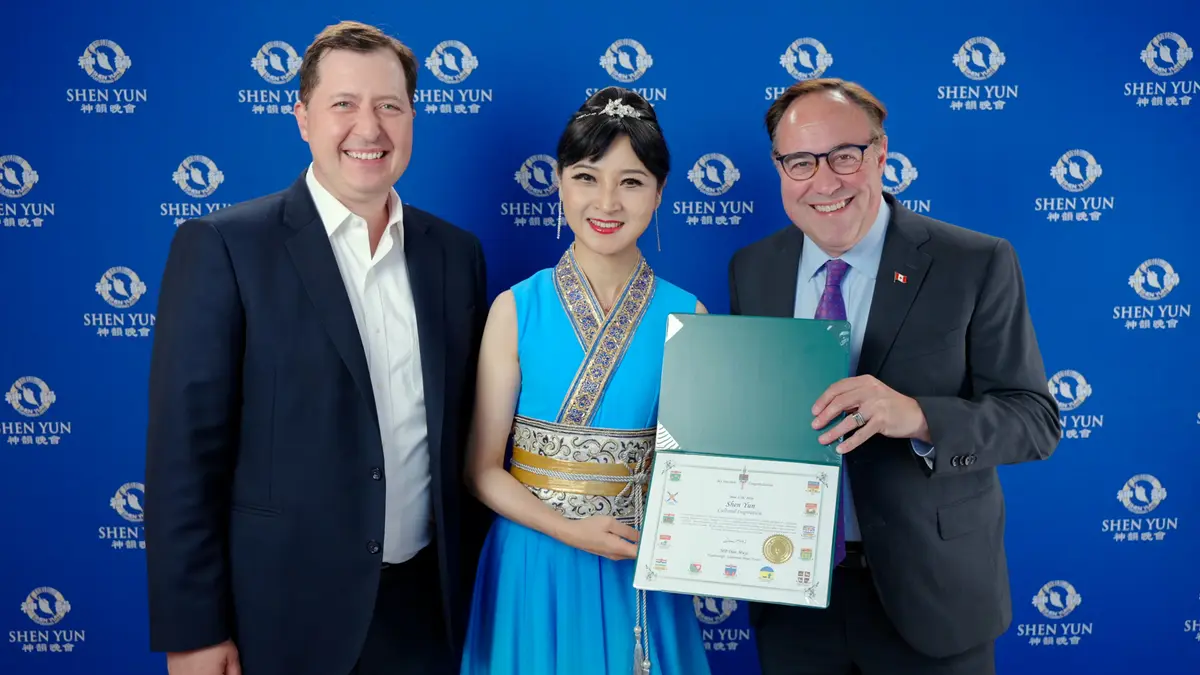
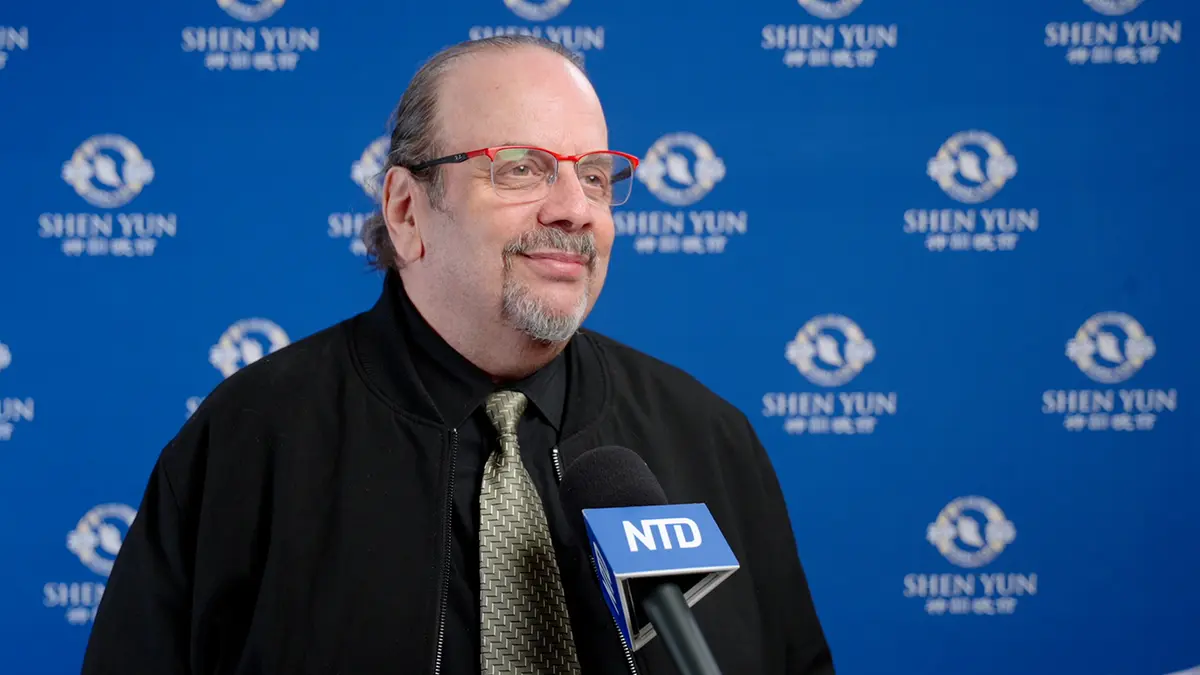
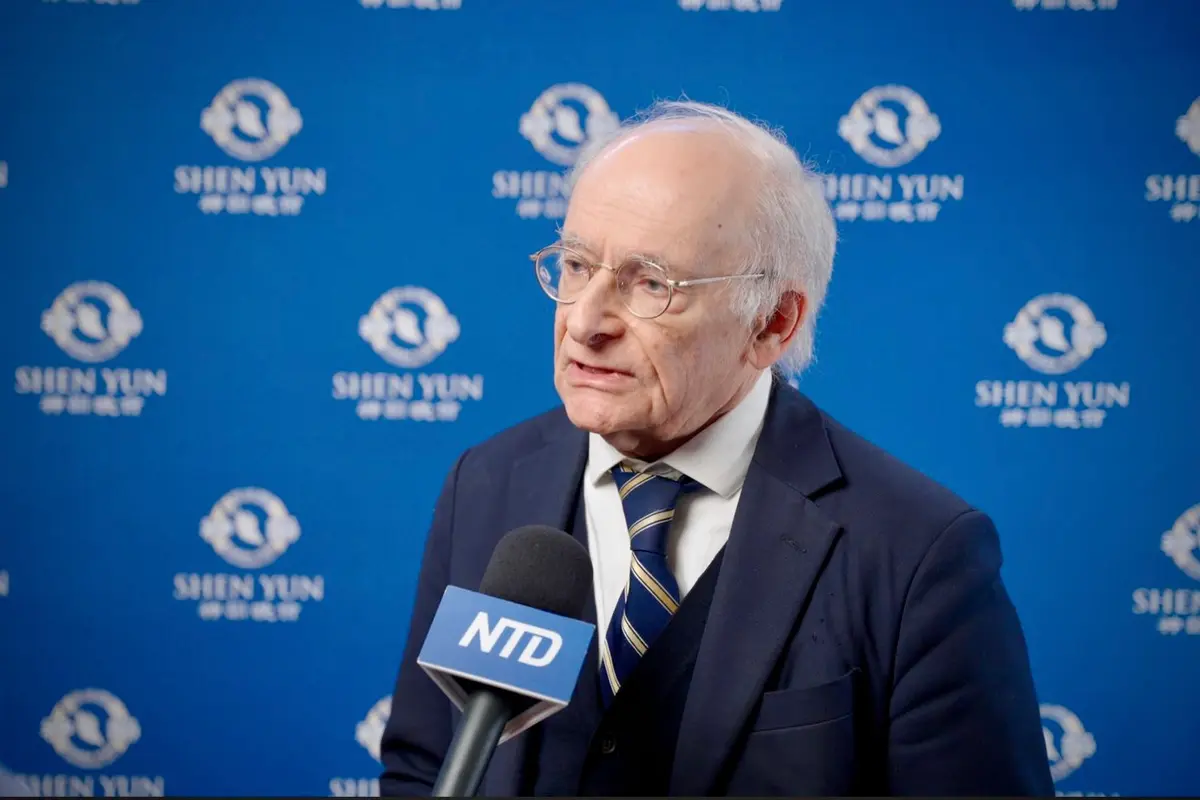
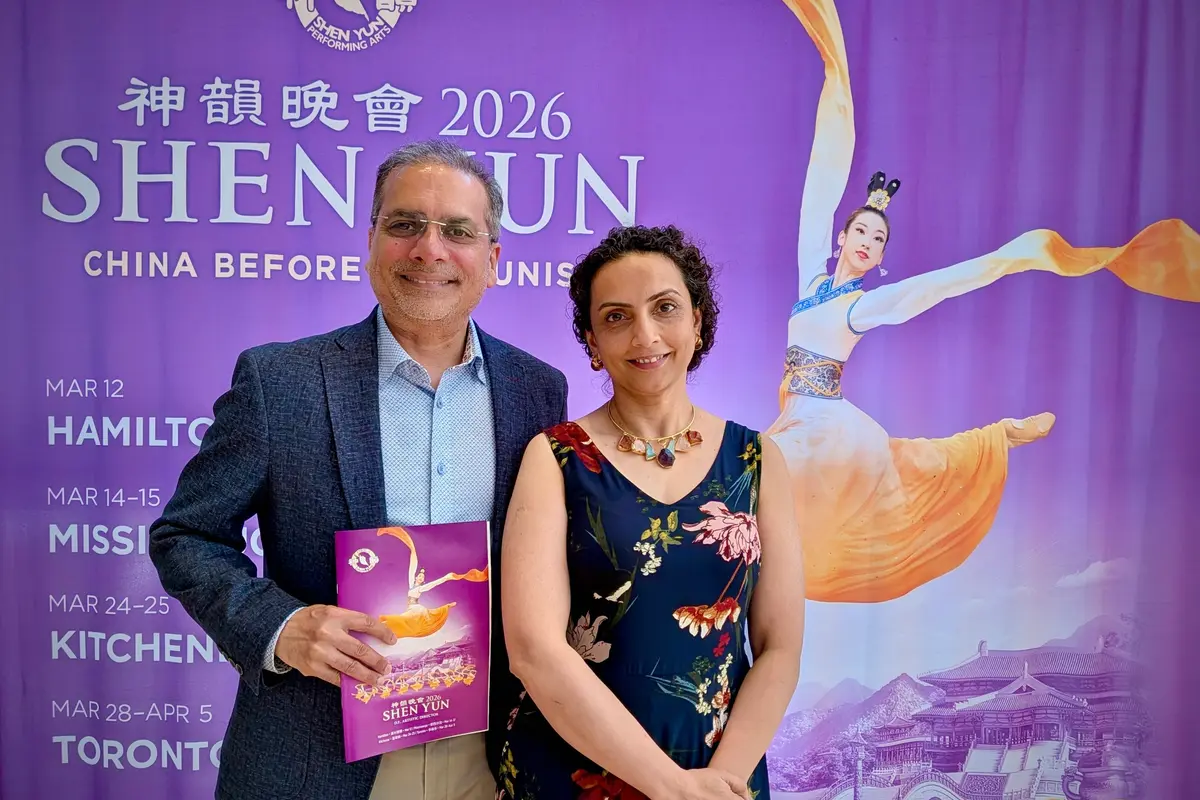
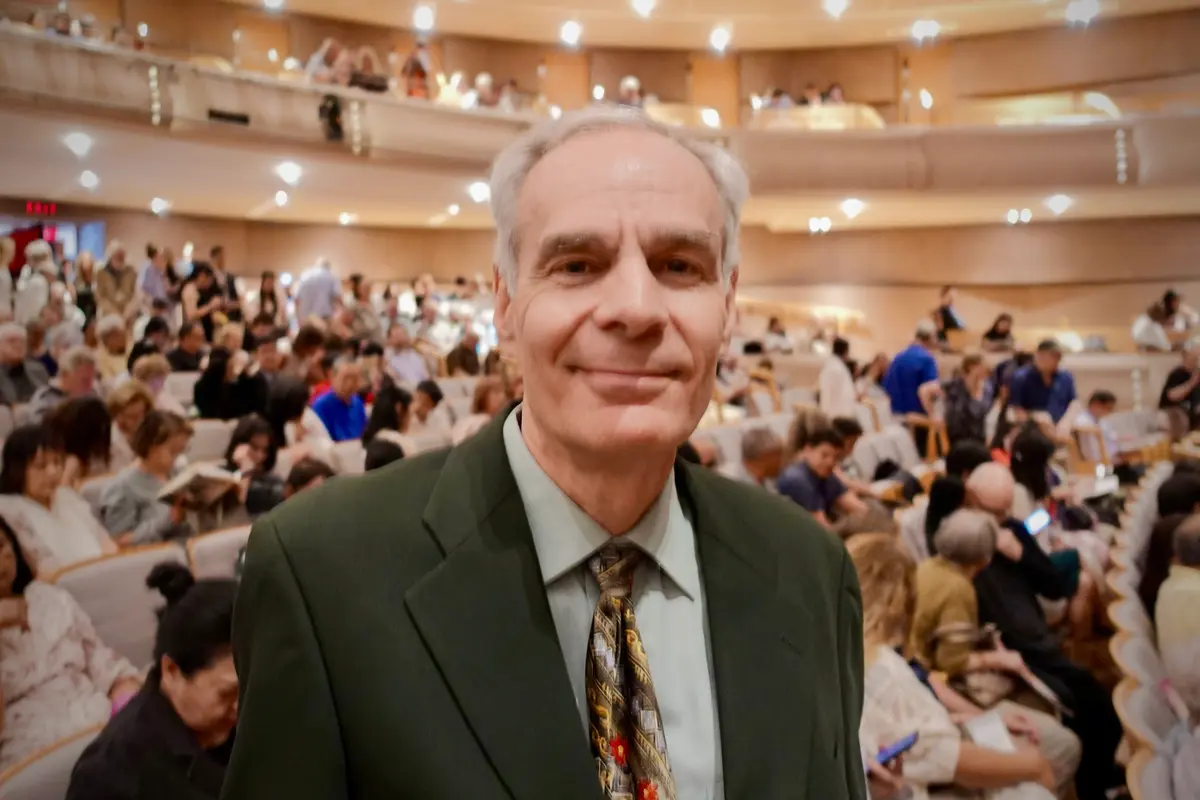
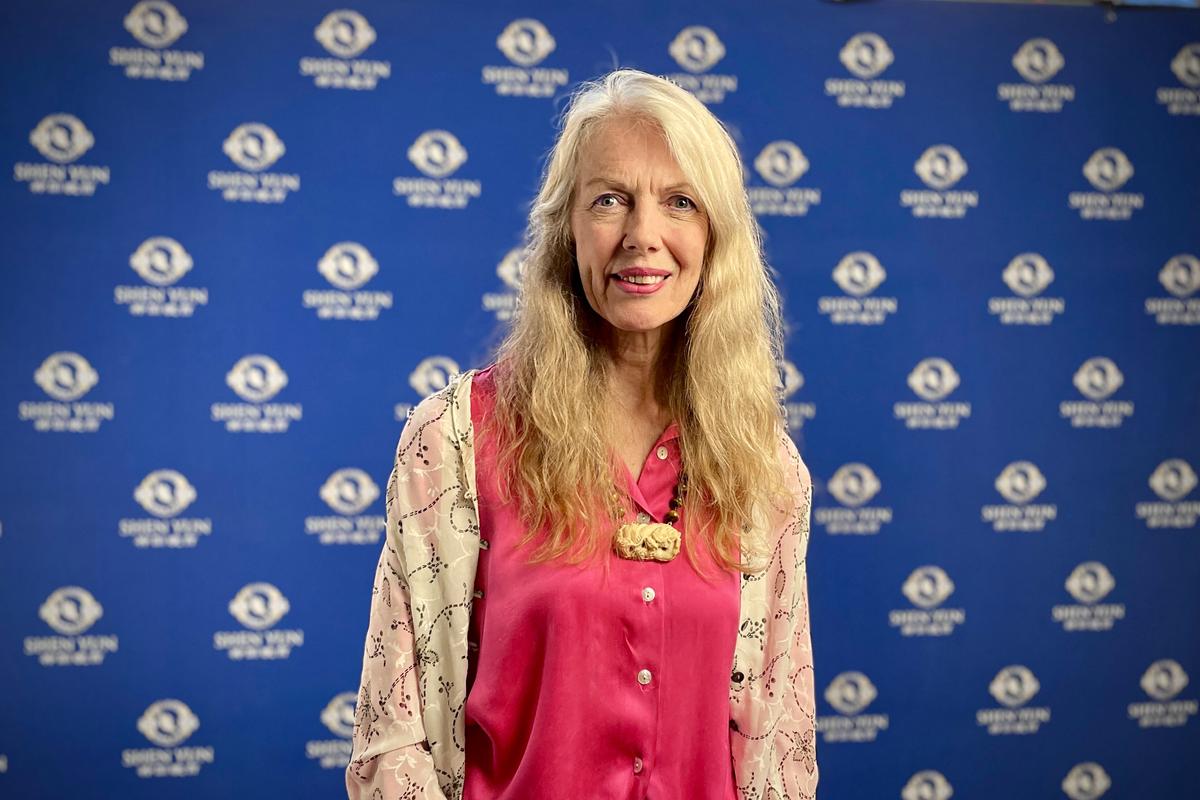
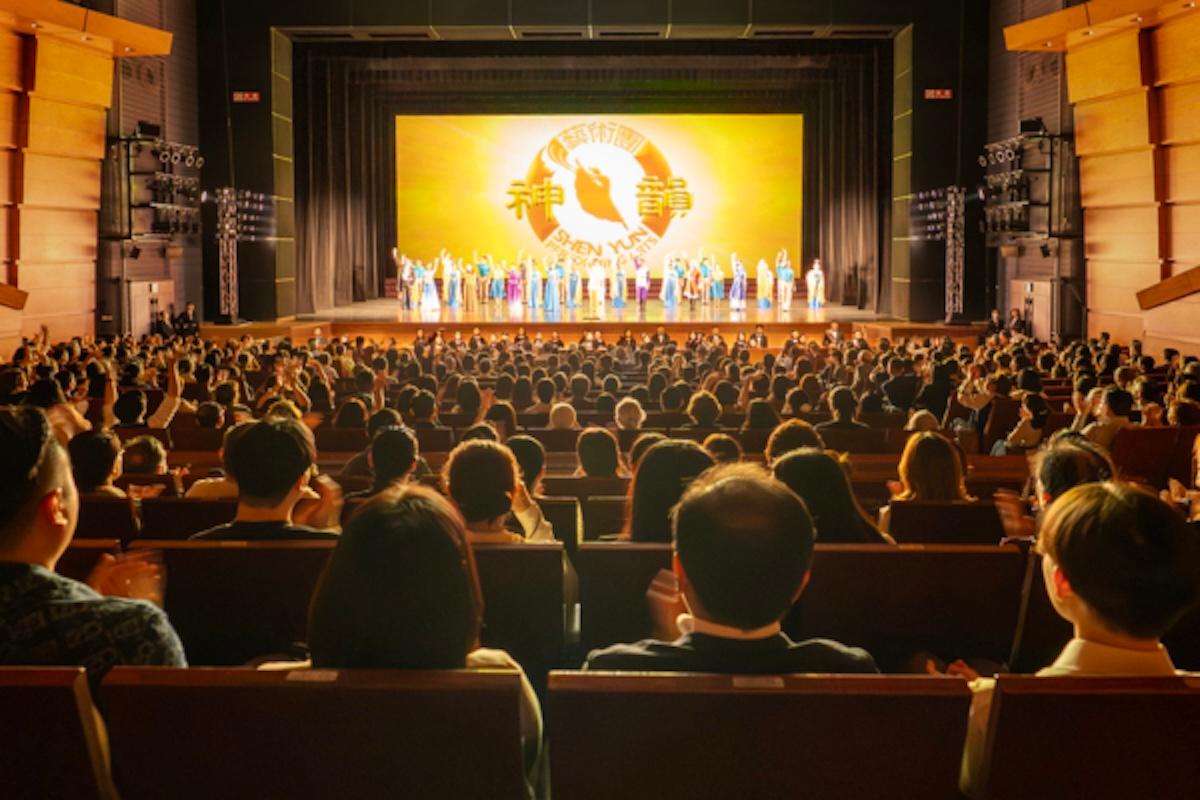
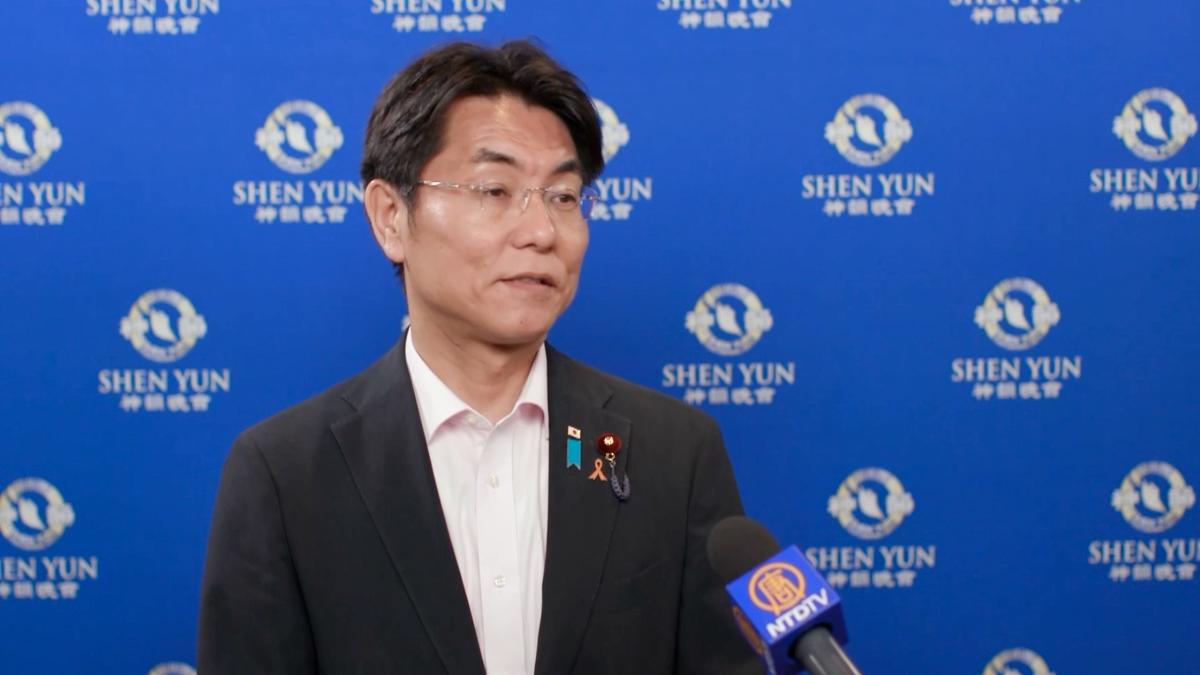
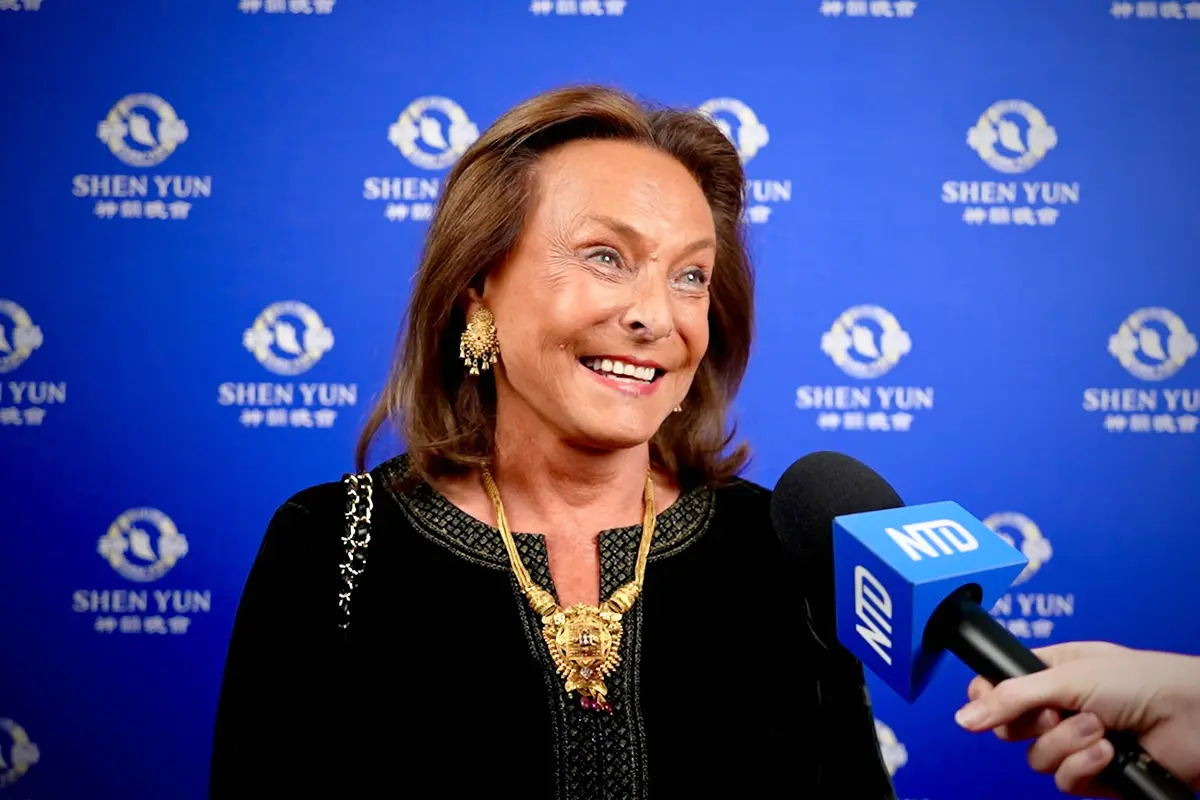
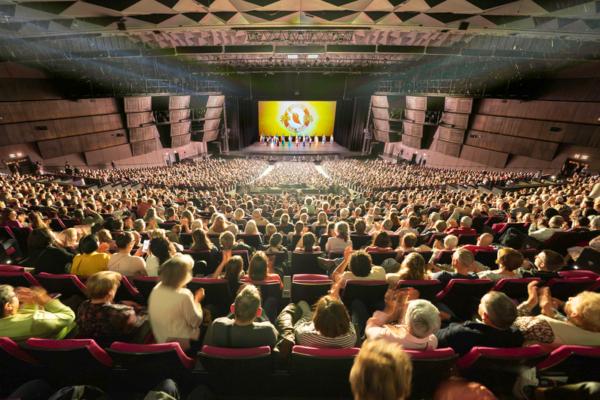
From the very first scenes, the visual richness is striking. “It was a real feast for the eyes,” Patrick Blondeau, an engineer, said of the performance, calling it “very colorful” and “a pleasure to watch.” Alexandra Caeru, also an engineer, shared the sentiment: “It was truly spectacular; the music was magnificent … it was pure joy.”
And its artistic quality impressed everyone. “Very high … in terms of both the dancers and the musicians, as well as the synchronization,” Mr. Blondeau said of the performance. Alexandra Caeru added: “It was truly of a very high artistic standard. I highly recommend it.”
And Shen Yun’s sensory immersion, featuring innovative digital sets and vibrant costumes, invited the audience through the first surface-level gateway into a deeper world.
But what truly sets Shen Yun apart, in their view, is the unique energy it exudes. “There was energy, a sense of well-being—and it’s something special that we’ve never seen before,” Mr. Blondeau said.
For Alexandra Caeru, the message was clear: she also spoke of “energy, well-being, and hope,” but above all a message “regarding divinity, regarding the creation of humankind.” She even said she felt a genuine connection: “Yes, it came through in the messages, through the music … it was very moving.”
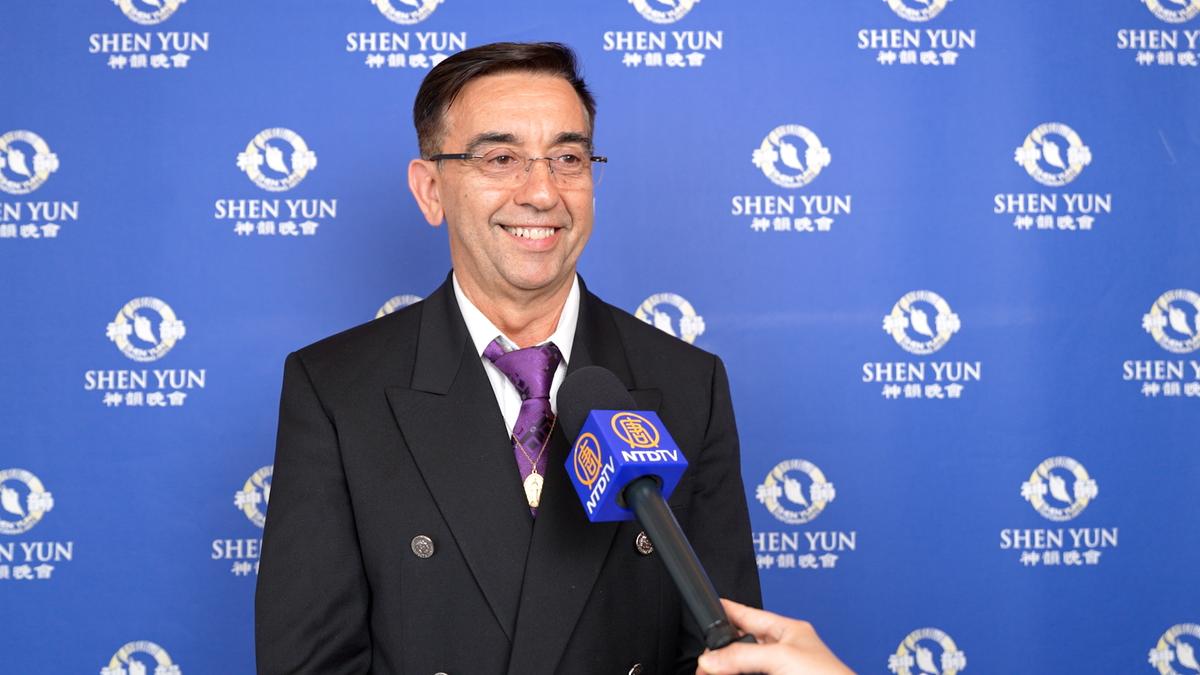
This sentiment is shared by Gilbert Berthet, a chemist, who attended the performance for the second time. “Every time, we’re greeted by a symphony of colors and music,” he said.
But what struck Mr. Berthet most was the cultural exposure. “You’re transported into a culture [that you] know very little about … it’s very impressive.” He also emphasized the importance of passing on the experience: “I wanted to bring my son so he could discover this other culture … which the younger generation should also learn about.”
As the stories unfold, the performance also reveals a more socially conscious dimension. It serves as a reminder that this traditional culture, with its rich history spanning several millennia, has been undermined in contemporary China. “These artists are forced to leave their homeland … and it is to their credit that they are trying to keep Chinese culture alive,” Mr. Berthet said.
Shen Yun is based in New York, and its eight companies of similar size perform all over the world, but are unable to perform in China. This is because the Chinese Communist Party bans independent artistic expression that highlights spirituality and ancestral traditions, particularly when such expression involves a belief in the divine, which is perceived as contrary to its official ideology.
“Belief in God can be stronger than anything else,” Mr. Berthet said, referring to the resilience of faith in the face of political pressure. Even if this perspective sometimes differs from Western sensibilities, it remains accessible: “This somewhat divine belief … is perceptible, but in ways that are slightly different from what we are accustomed to in the West.”
“Thankfully, there are groups like this that are trying to show the world that Chinese culture is very, very, very ancient,” he said.
For the audience, Shen Yun thus becomes a space for reflection. Mr. Blondeau spoke of “a bit of reflection, of meditation,” comparing the experience to the fairytales that shape childhood and nourish the spirit. The performance invites us to slow down, to feel, and to ponder fundamental questions: Where do we come from? What is the connection between humanity and the divine?