We are the most optimized generation in history. We measure our sleep, stack supplements, and follow strict morning routines. Yet somehow, we are more depleted, more anxious, and more disconnected from ourselves than ever.
Something isn’t adding up. Maybe the problem isn’t that we’re doing too little, but too much.
“Our nervous system doesn’t need more,” Julie Robinson, an organizational psychologist and neuroscience-based coach, told The Epoch Times. “It needs less, and it needs better.”
When the Nervous System Never Rests
When the nervous system is balanced, the body settles into rest-and-digest mode: Every system functions as it should, and people tend to feel most like themselves.When the nervous system is activated, the body shifts into fight-or-flight mode, and the stress response pulls resources away from other systems, Jaz Robbins, a licensed psychologist at Pepperdine University, told The Epoch Times.
That shift redirects resources away from digestion, immunity, and repair toward immediate needs. The problem, according to integrative physician Priyal Modi, is that modern life often keeps that switch flipped long after the threat has passed.

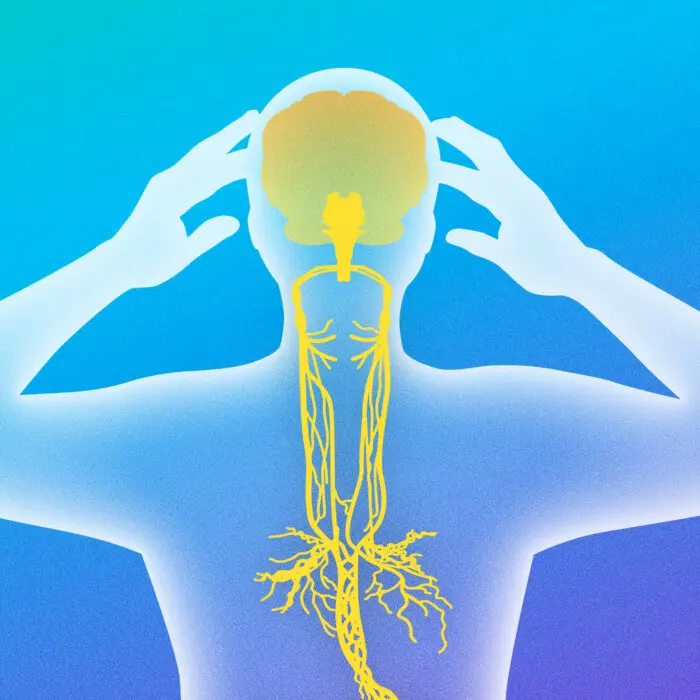
“Many people are living in a chronic state of survival without realizing it,” Modi told The Epoch Times.
The symptoms of that dysregulated state can ripple across virtually every system in the body—elevated heart rate and blood pressure, disrupted sleep, persistent fatigue, gut problems, difficulty concentrating, emotional reactivity, and social withdrawal—sometimes accompanied by self-medicating with ultra-processed food, caffeine, or alcohol.
Ancient Answers, Modern Language
Neuroscience is now validating much of what ancient traditions have understood for thousands of years: that the state of the nervous system shapes how we think, feel, heal, relate, and function, Modi explained. Practices such as breathwork, meditation, mindfulness, chanting, yoga, prayer, time in nature, and mindful movement were designed as ways to regulate the nervous system and cultivate balance, she noted.“What neuroscience now offers is the language and physiology behind these practices,” she said.
Mindfulness-Based Stress Reduction, the secular evidence-based program now used in hospitals and clinics worldwide, was developed by Jon Kabat-Zinn in 1979. But Kabat-Zinn drew explicitly from contemplative traditions in early Buddhism dating back roughly 2,500 years. The practice didn’t change; the framing did.
Consistent mindfulness practice also helps shift the nervous system from chronic sympathetic activation toward a more balanced and regulated state.
“Ancient systems approached this through direct embodied experience,” Modi said. “Modern science approaches it through measurement and research.”
What both point to is a similar set of practical ways of working with the nervous system. “Interestingly, ancient wisdom traditions and modern approaches to nervous system regulation often share remarkably similar practices: meditation, breathwork, rhythm, movement, social connection, and time in nature,” Dr. Lilian Cabiron, a certified mindfulness teacher and transformational coach, told The Epoch Times.
Back to Basics
Ancient practices are not only about formal techniques but also about returning to fundamentals. Nervous system regulation is, in a sense, inherently ancient—it connects us back to our roots and the basics of being human.“What I keep returning to, both in my own life and in the work I do with people, is that the basics are foundational, and most of us have abandoned them in pursuit of something more sophisticated, measurable, and impressive,” Robinson said. Because they seem simple, many people dismiss them as insufficient, she added. “However, they are the solid ground everything else is built on, and when we skip past them in search of the next trend, we are building on the fragility of sand.”
Robinson points to something that’s missing in conversations about wellness optimization. Nervous system regulation, she said, has become a solitary pursuit, managed through apps and individual protocols, while overlooking the most powerful regulator of all: human connection.
What Regulation Looks Like
Walk into Kari Asadorian’s school nurse office on the right day, and you might see a student who is too overwhelmed to speak, too wound up to return to class. Asadorian, a registered nurse with experience across neurology and psychiatry, doesn’t reach for a checklist. She asks the student to place a hand on their belly and notice their breath.“As a school nurse, I see dysregulated students who need tools to help them calm down so they can socialize with peers and perform at an optimal learning state in the classroom,” Asadorian told The Epoch Times.
Her tools are simple and old: guided breathing, grounding techniques, sensory awareness. One example is the 5-4-3-2-1 method—identifying five things you can see, four you can touch, three you can hear, two you can smell, one you can taste—which anchors a racing mind back to the present moment. Sometimes a sip of water or maybe a few seconds of stillness is enough.
“Stress is part of everyday life,” she said. What matters is what you do during these shifts, and find what works for you.
That principle—consistency over intensity—is central to almost everything experts in this area recommend. Consistency builds resilience.
A morning practice, whether meditation, mantra, breathwork, or gentle movement, can help anchor the system. In the evening, simple wind-down habits such as putting devices away before bed, preparing for the next day, skincare routines, calming music, or reading can support a gradual transition into rest.
Nervous system care isn’t only about rest. Healthy challenge, purpose, play, creativity, laughter, and emotional connection are equally regulating for the human system, Modi said.
“A healthy nervous system is flexible,” she said. “It allows activation when needed and a return to rest afterward. This adaptability is what regulation really means.”
Perhaps what modern science is increasingly showing is not something entirely new, but rather providing a new language for principles that have shaped human well-being for thousands of years.