For thousands of years, from Socrates to Lao Tzu, people have practiced meditation for mental clarity.
Research is validating this practice.
Sitting in meditation for a few minutes per day does more than just reduce stress. It promotes the growth of new brain cells and slows neural decline.
Your Brain Thrives on Meditation
Meditation activates the frontal lobe of your brain, especially its prefrontal cortex.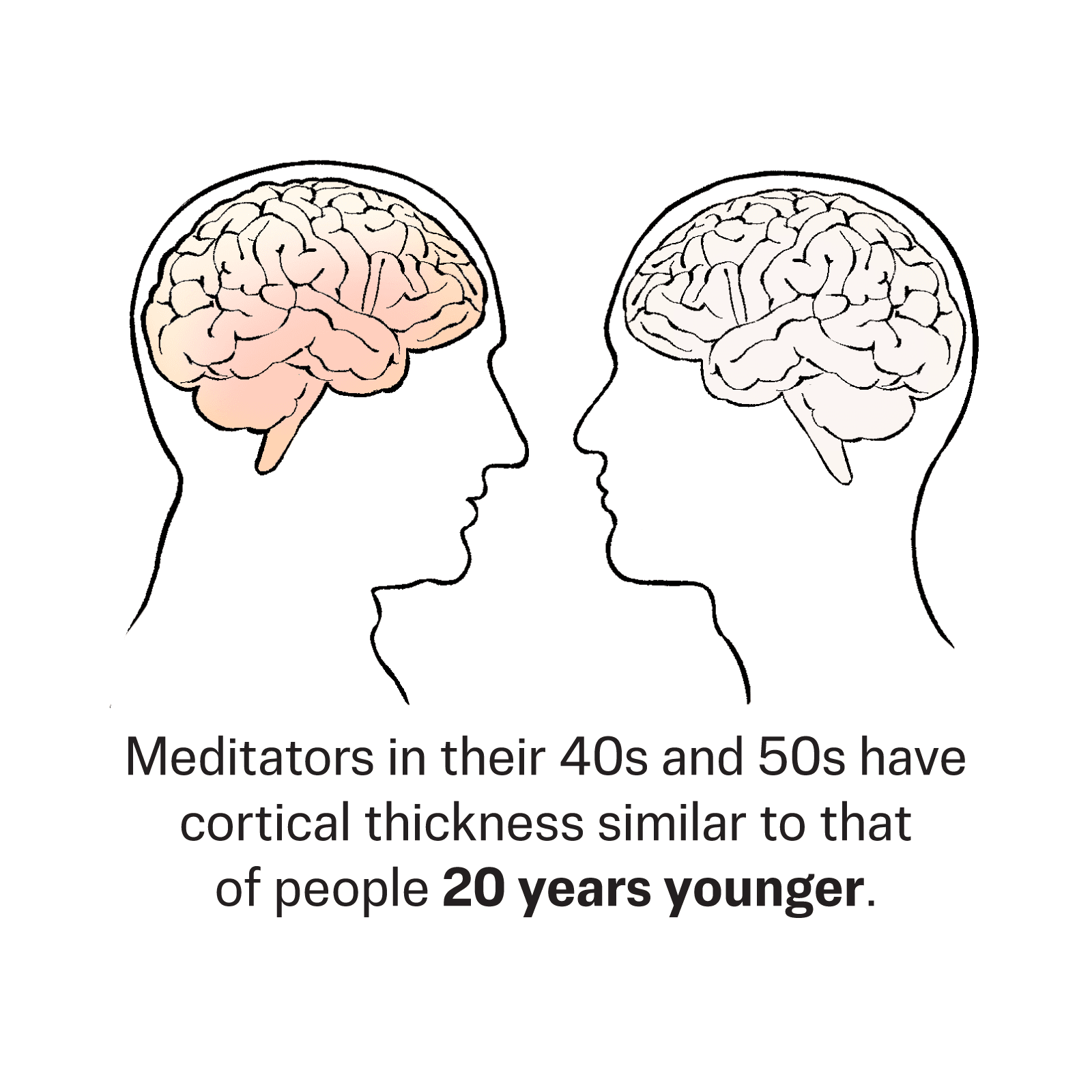
Brain regions involved in self-awareness and empathy also showed increased gray matter after meditation, which can help people become more attuned to their own psychological well-being and others’ perspectives.
Meditation works on the brain’s neuroplasticity—the ability for the brain to grow and change, Dr. Andrew Newberg, a pioneer of spiritual neuroscience and research director at the Marcus Institute of Integrative Health at Thomas Jefferson University Hospital in Philadelphia, told The Epoch Times.
The more one engages in meditation, the “greater the effect,” he said.
Meditation is like the universe’s natural anti-anxiety and antidepressant remedy.
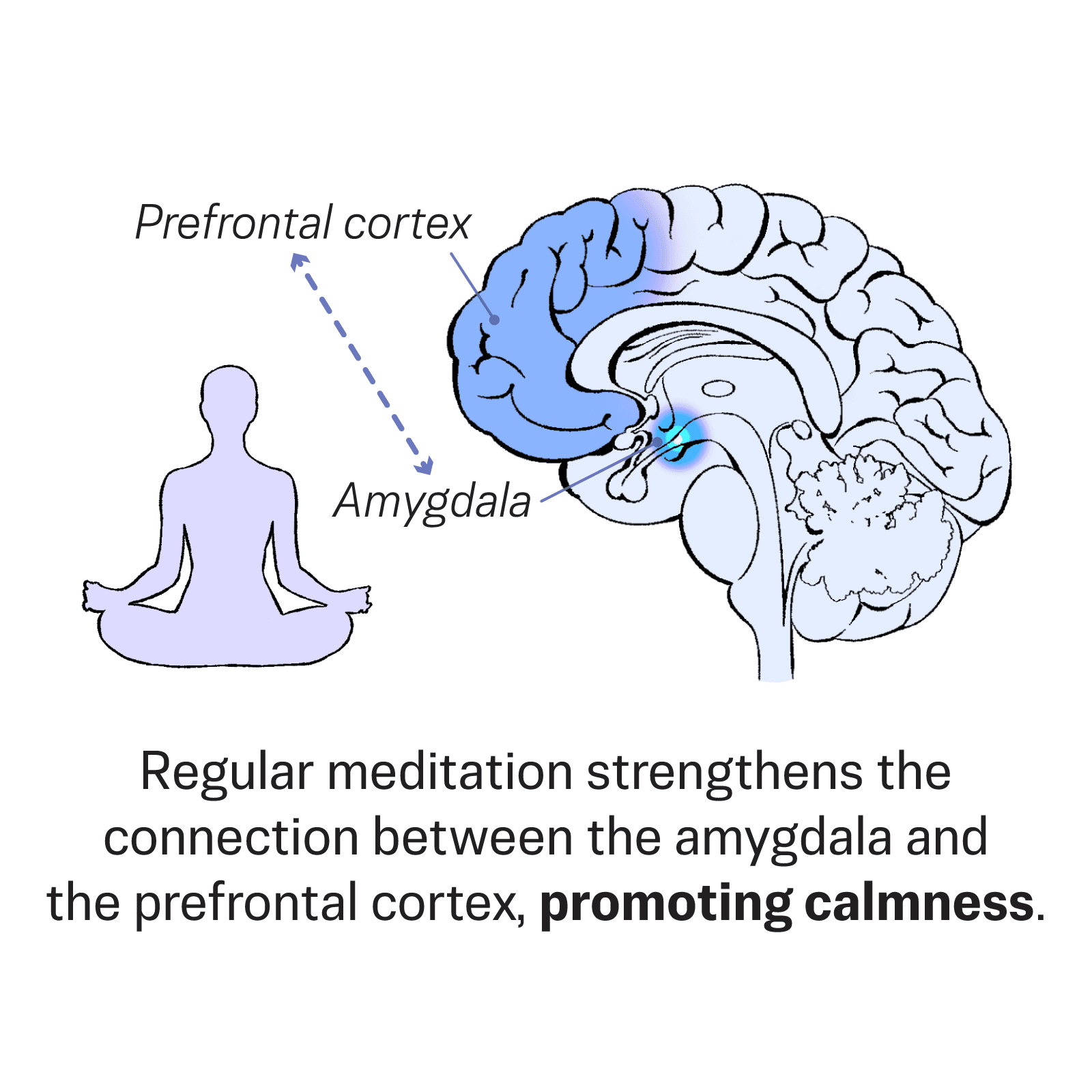
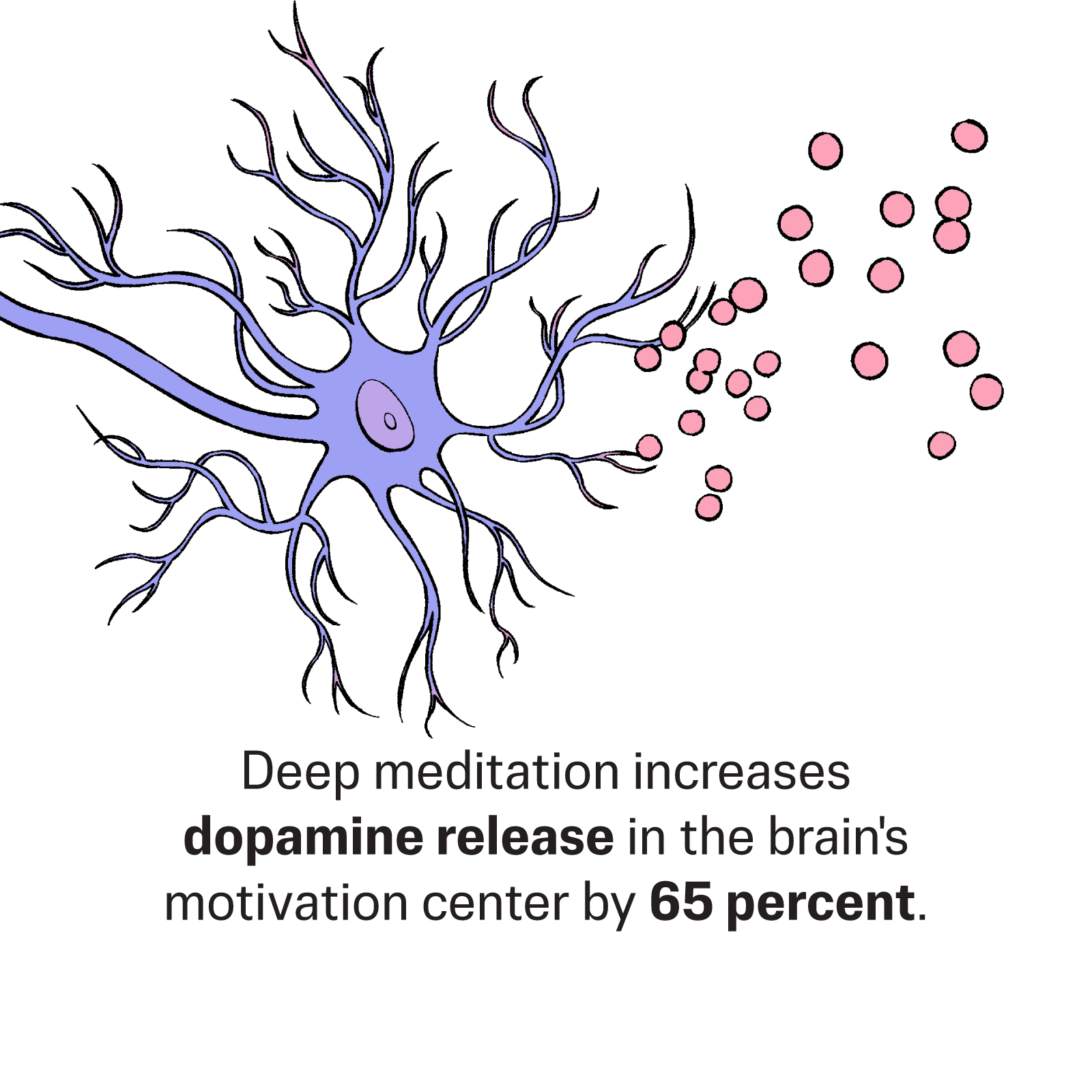
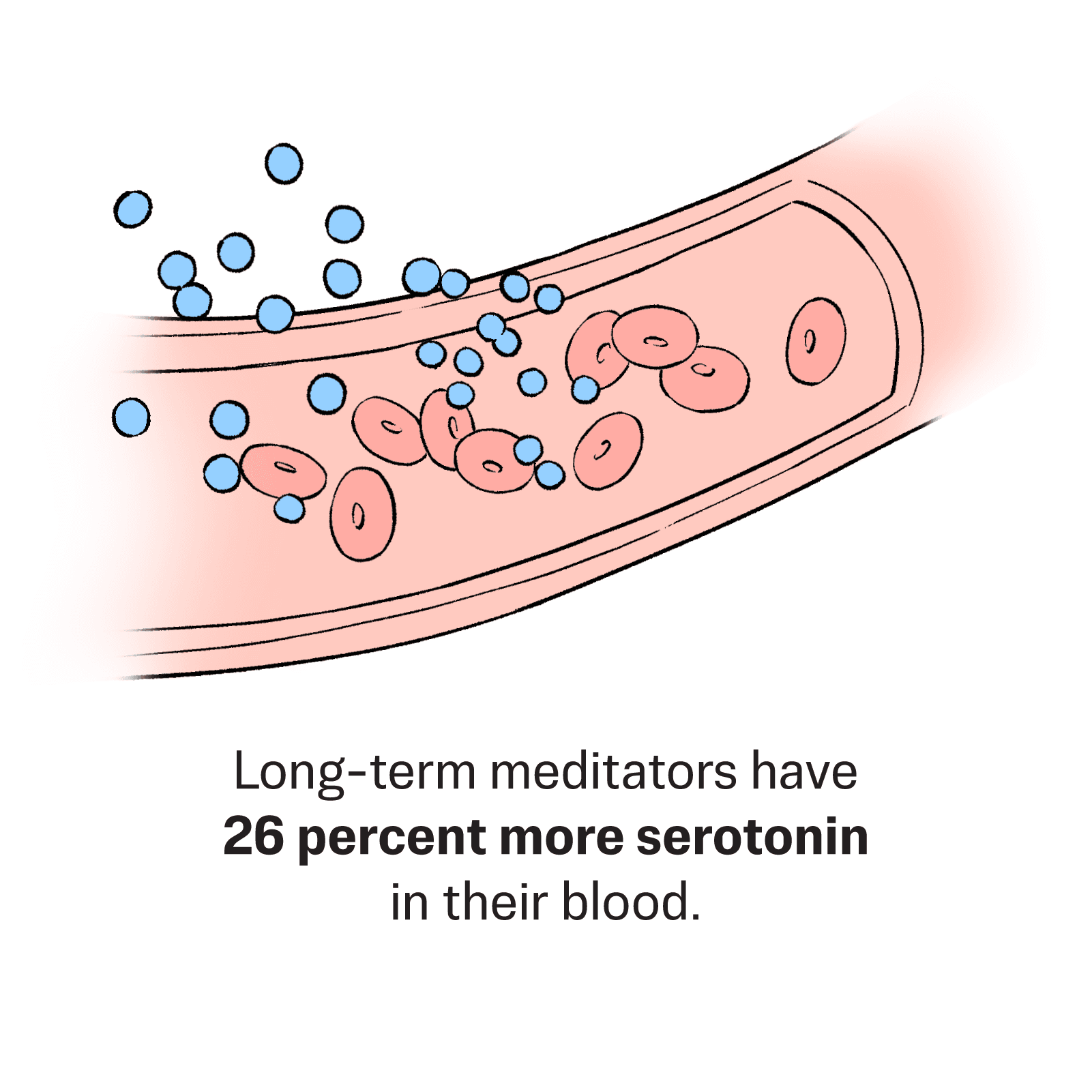
Dr. Elizabeth A. Hoge, board-certified psychiatrist and director of the Anxiety Disorders Research Program at Georgetown University Medical Center, told The Epoch Times that meditative practices offer “an alternative with fewer side effects” for anxiety disorders.
Beyond the mind, meditation quietly reshapes your biology.


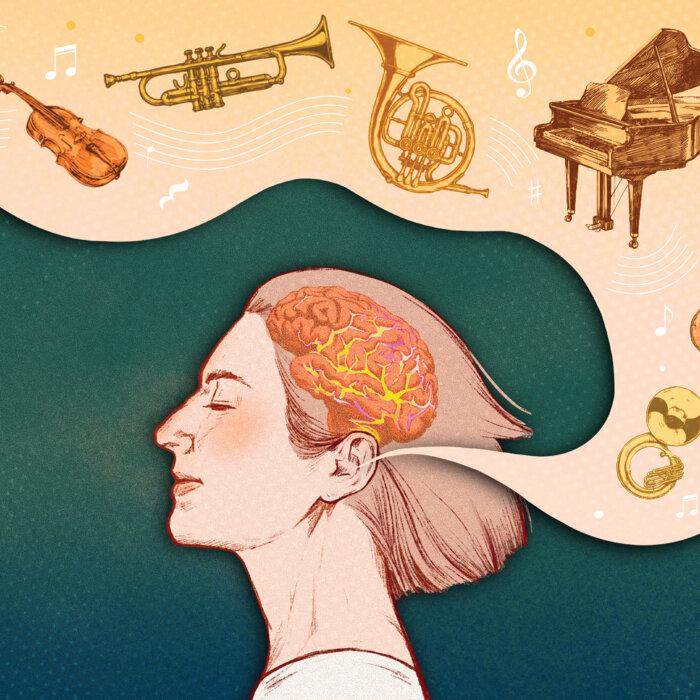
Calms the Heart and Eases Pain
Meditation further calms your body by slowing your heart rate and soothing pain.Meditation mitigates cardiovascular risk by reducing stress hormones and inflammation, and by promoting rest and recovery in the body, Dr. V. S. Prakash, a senior interventional cardiologist and cardiac electrophysiologist at Manipal Hospital in Bengaluru, India, told The Epoch Times. It helps shift the body from a fight-or-flight state to a rest-and-digest state, lowering heart rate and increasing heart rate variability.
“Improved [heart rate variability] is a very, very important thing,“ Praskash said. ”This is what improves your reaction to any kind of stress, as it gives you the ability to respond in a much better way—that’s how the heart is better prepared.”
Meditation’s calming effect on the mind and body also alleviates pain.
Dr. Aleksandra Zgierska, the lead author of the study and vice chair of research in the Department of Family and Community Medicine at Penn State College of Medicine, told The Epoch Times that mindfulness teaches people to pause and notice bodily sensations. Mindfulness helps people realize that pain often fluctuates and can be managed—a shift that can reduce suffering.
“People often fall into so-called ‘pain catastrophizing’—expecting pain to worsen and, because of it, avoiding activities,“ she said. ”This can create a vicious cycle. Mindfulness helps break that cycle.”
A Bridge to Higher Understanding
Before meditation was used for health purposes, it first appeared in spiritual practices in which it was seen as a way to attain inner peace and a higher understanding of life.Shu, who comes from a 600-year-old traditional Chinese medicine lineage, said that during meditation, your blood and life’s vital energy, called qi, move inward, nourishing the body and brain from within. When your body and mind are well-supported, your consciousness, or Shen, becomes sharp yet settled.
As a person gradually removes distractions and enters deeper levels of stillness, he reaches tranquility.
Tranquility in meditation is not a state of emptiness, she said.
“Deep tranquility is, in my experience, a state of heightened clarity,“ Shu said. ”In that state deeper levels of wisdom and understanding seem able to reveal themselves naturally.
“In those moments [of tranquility], I can clearly feel an energy filling my entire body—as if every cell is filled with and permeated by this energy.”
Prayer Is a Form of Meditation
Newberg’s brain imaging studies reveal that meditation and prayer share overlapping neurophysiological mechanisms.Both meditation and prayer increase attention and focus in the brain while decreasing activity in the parietal lobes. The parietal lobes are involved in giving us a spatial sense of self. A decrease in their activity makes people who meditate or pray regularly “lose their sense of self or feel a deep connectedness with the universe or God,” Newberg said.
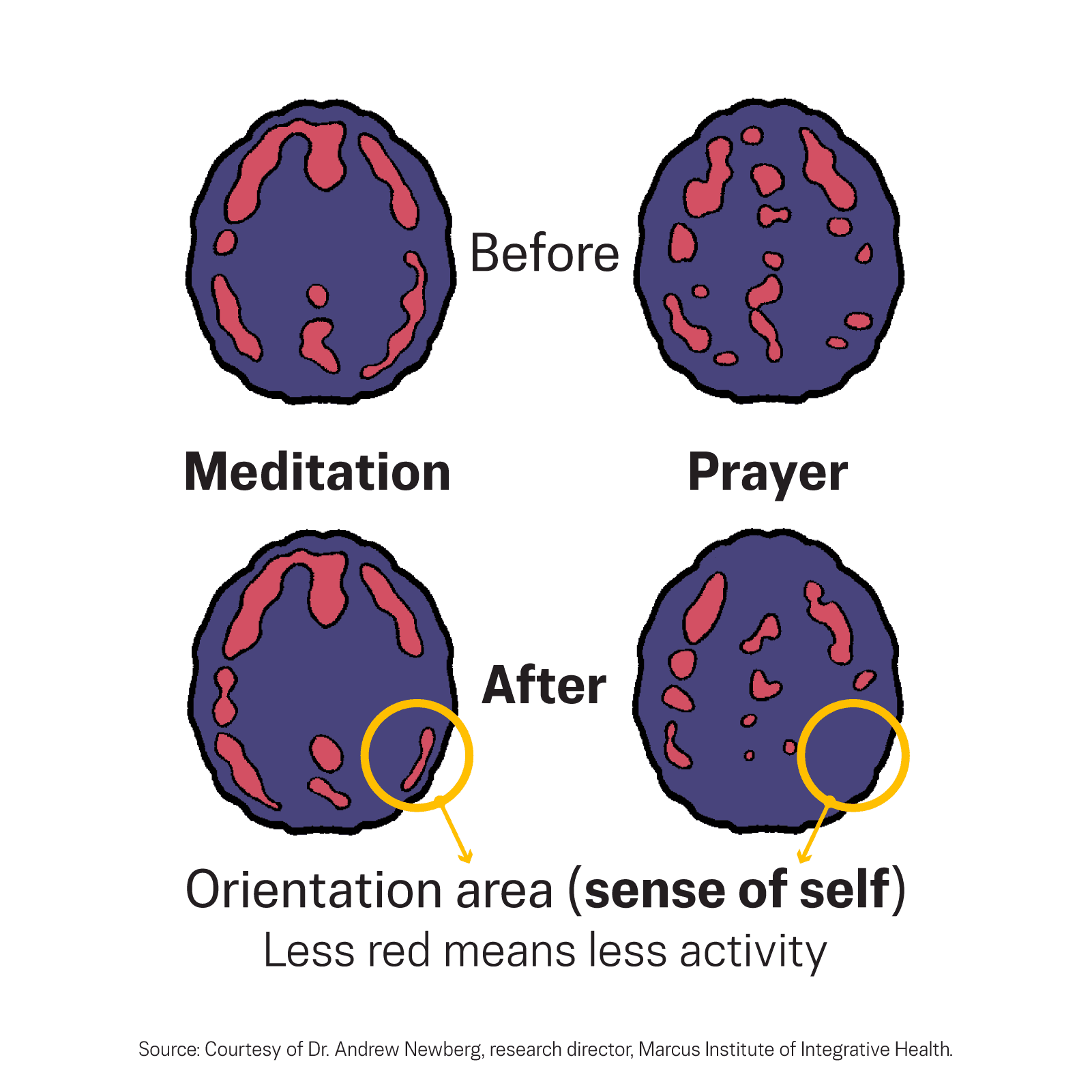
Feeling at one with the universe leads to a deep sense of inner security, Margaret Trey, a researcher who holds a doctorate in counseling, told The Epoch Times. It is “beneficial and healing,” she said.
Newberg said, “Meditating or praying also fills a person with a feeling of awe and humility that becomes stronger each time a person has that experience.”
These practices eventually increase optimism and a sense of meaning and purpose.
Into Tranquility
Traditionally, meditation involves controlled breathing, gradually eliminating discursive thoughts, and eventually achieving a calm, clear state of mind.“Meditation is not performance—it is practice,” she said.
For meditation beginners, Trey recommends sitting in silence for five minutes per day and gradually extending the duration. Don’t force yourself to empty your mind at the outset. Instead, start by noticing your thoughts, and if a negative or fearful thought arises, observe it and let it pass rather than spiraling into it. The key is: When your mind wanders, just bring it back—you are sitting right here.
After her mind quiets during meditation, Trey sometimes experiences a warm sensation move through different parts of her body. Moments later, she said, she experiences a sensation as if her body has “disappeared,” and what remains is an awareness—“a calm, clear consciousness.”
In our day-to-day lives, we are driven by emotions. Emotions often burn out like a fire, leaving our bodies and minds fatigued in their wake. By contrast, “mental stillness can be profoundly restorative,” she said.
“In those moments of genuine stillness, every cell and every molecule in the body seems no longer bound by the ordinary constraints of the material world,” she said.
“The mind at rest is a mind finally free to receive what thinking alone could never reach.”