You meant to check your phone for two minutes. Forty-five minutes later, you are watching a stranger’s cat video, and you do not even remember how you got there. That’s not by chance. The most sophisticated engineering teams in the world are locked in a daily battle for your attention, and you are almost certainly losing.
How Algorithms Work
To understand how algorithms affect our brains, it first helps to understand what they are designed to do.When it comes to social media, algorithms act like invisible editors. They constantly sort, filter, and decide what users see based on rules designed to predict which content will keep people on the platform the longest. Every like, pause, scroll, and click becomes a signal linked to that user’s profile and used to predict, often with surprising accuracy, what content will keep them engaged and coming back for more.
“In several reported cases, social media algorithms correctly predicted users being pregnant before they had told their partners, friends, or even their doctor, and targeted them with ads, content, and suggested parenting podcasts and videos,” Alexander Bell, a global keynote speaker and digital wellbeing advocate, told The Epoch Times.
These predictions are built from tiny digital clues, Bell said. Even a brief pause or glance at a post can signal a preference, interest, or emotional reaction.
Most of this happens through design features that users never directly see, often referred to as backend systems or system architecture. These systems control suggested posts, the order of newsfeeds, recommended accounts, targeted ads, trending topics, notifications, and engagement statistics such as likes, profile views, and impressions.
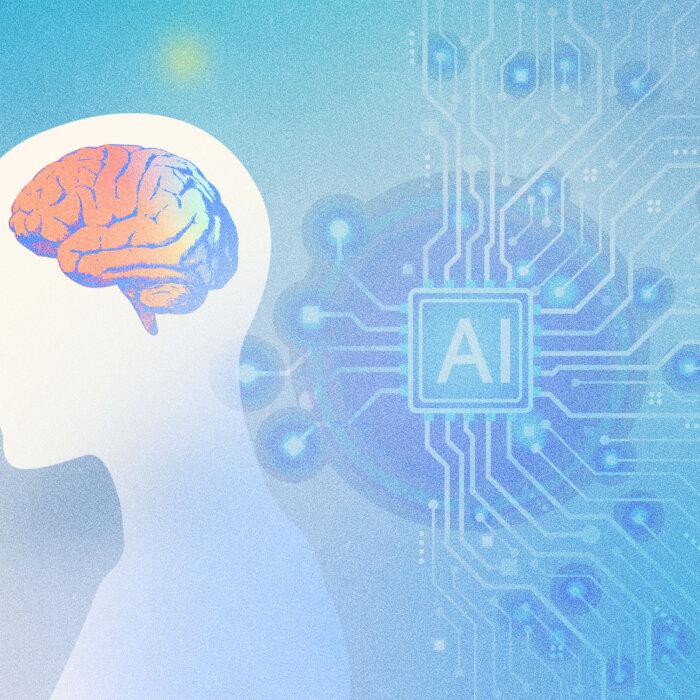

“The longer the user stays, the more ads are served, the more user data is generated, tweaking and improving the algorithm to serve more content that will further engage the user, therefore starting the cycle again,” Bell said.
Kenneth Schlenker, who previously held product and data roles at Google across Maps, YouTube, and AdWords and later founded a screen-time management company, told The Epoch Times: “Our data shows that most excessive screen time happens in sessions where the user never made a deliberate decision to keep going. They just didn’t stop.
‘Brain Rot’
The target of algorithms is engagement.“It’s not satisfaction, not learning, not well-being, just engagement,” Schlenker said.
These changes may have broader consequences, especially in adolescents and young adults. Excessive screen time has been linked to impaired brain development and potentially earlier cognitive decline. Long-term exposure to fast, fragmented digital content may also interfere with emotional regulation.
At the same time, it can crowd out activities that support brain health, such as deep thinking and reflection.
“The threshold for boredom drops. Reading a book can start to feel difficult. Sitting quietly can feel uncomfortable,” Schlenker said.
It’s not a personal weakness or lack of character, he said, but rather neuroplasticity working against you. The brain literally rewires around the new dopamine patterns.
The Most Effective Changes
Until meaningful platform reform arrives, people are left trying to reduce the impact of systems they cannot fully control.Individual willpower alone is not enough to protect people, Schlenker said.
“And framing it as a willpower problem is exactly what platforms want, because it shifts blame to the user,” he said.
He described it as an arms race. On one side, there is the human brain with limited focus and self-control, especially when tired, stressed, or lonely, which is often when people scroll the most. On the other side are highly funded systems designed by some of the world’s most advanced engineering teams, built to predict behavior.
The most effective changes come from environment design—removing triggers, adding friction, and making unwanted behavior harder at the exact moment it happens, Schlenker said. This can include blocking or limiting apps during focus periods, removing infinite scroll, switching phones to grayscale, or adding a short delay before opening distracting apps.
He applies these designs in his own life, using screen-time management and keeping set focus hours, including a daily work window from 10 a.m. to 3 p.m., during which social media and news apps are blocked. He also takes regular “digital sabbath” periods during which only messaging, maps, and music are allowed.
“I’ve learned that I’m not immune,” Schlenker said. “Even as someone who built a screen time company, I still catch myself scrolling if I don’t put guardrails in place.”
A Shift Could Be Coming
Bell said he believes that the tide may already be turning.“I believe the world is waking up to the negative impact technology can have,” he said. “Future generations will look back and laugh at the wasted daily hours spent doomscrolling and on social media.”
Schlenker imagines a different approach to using algorithms, one built to benefit people rather than take advantage of them.
People could optimize for outcomes they need: feeling informed without feeling anxious, staying connected without losing hours of time, being entertained without feeling manipulated.
A healthier relationship between humans and digital technology, Schlenker said, would be intentional rather than default: using apps by choice rather than being pulled in by notifications, stopping when you intended to stop rather than when your willpower runs out, and feeling fine after using your phone rather than drained or guilty.
Bell said he hopes the future will look more balanced than it does today.
“We will learn from this era of over-consumption and over-creation,” he said. “And learn that regardless of technological advancements, being naturally human is the most valuable of all.”