
A 49-year-old woman’s memory loss had reached such a point that she placed a sticky note on the steering wheel of her car to remind herself to drive on the right side of the road. As a jogger, she was used to keeping left, and she had begun to confuse the two.
Diagnosed with Alzheimer’s-related mild cognitive impairment, she asked a neurologist whether there was anything she could do to prevent further decline. He replied: “Good luck with that.”
The woman wasn’t satisfied with the answer. She decided to try a precision medicine protocol, and it worked for her. Over time, her cognitive testing improved from below average—the 35th percentile—to far above—the 98th percentile.
Many people believe Alzheimer’s disease is simply a matter of bad genes, bad luck, or an inevitable consequence of aging—and that once decline begins, little can be done. Dr. Dale Bredesen, the lead author of the study and an internationally recognized neurologist specializing in neurodegenerative diseases, said that the belief is outdated and that he has built a career trying to prove it.
“I wish more people understood that Alzheimer’s disease is far more common than it needs to be,” Bredesen, developer of the Reversal of Cognitive Decline (ReCODE) precision medicine protocol for Alzheimer’s disease, told The Epoch Times.
He said he believes that precision medicine should be how the disease is approached.
A Multi-Factor Disease
Bredesen described a biological switch that moves the brain between what he calls “connection mode” and “protection mode.”
When the brain is in connection mode, it can learn, adapt, and form memories. Alzheimer’s, he said, develops when the brain shifts into protection mode, a shift that can be triggered by many different factors, including insulin resistance, sleep apnea, poor energy production, lack of exercise, chronic inflammation, infections, and exposure to toxins such as air pollution, heavy metals, and microplastics.
“We are addressing a network insufficiency,” he said. “Nothing by itself is a cure. It’s like tuning up a car. You’re changing multiple things to get them working together so the body no longer needs to stay in protection mode and can return to connection mode.”
“One reason why treatment for Alzheimer’s disease has not been particularly successful up to now is that we have historically approached Alzheimer’s too narrowly and too late,” Dr. Margarita Mikhaylova, a board-certified neurologist and functional medicine physician, told The Epoch Times.
The focus needs to shift beyond amyloid to a variety of factors, from insulin resistance to nutrient deficiencies, she said.
“These are not alternative-medicine questions, but mainstream dementia risk factors,” she said.
The growing recognition that Alzheimer’s is a multifactorial disease has given rise to a precision-medicine approach to treating it. Instead of giving everyone the same treatment, precision medicine takes a more personalized approach: Doctors consider the factors that may be affecting a person’s brain health and then put together a plan based on that person’s needs.
A Realization
“All of my career, Alzheimer’s has been a death sentence with no therapeutic success,” he said. “Everyone knows a cancer survivor, but no one knows an Alzheimer’s survivor.”
That frustration led him to question not just the treatments, but also the assumptions behind them.
“We need to understand the fundamental nature of Alzheimer’s because none of the current theories has ever led to significant treatment,” he said.
Like many researchers, Bredesen initially thought the answer would be a single drug, and he was surprised when it wasn’t. Research showed him that multiple pathways need to be addressed to achieve the best outcomes, leading him to develop the ReCODE protocol, a personalized approach to treating Alzheimer’s.
The ReCODE Protocol
Bredesen’s protocol is one example of what precision medicine can look like in practice.
The goal of the protocol is to identify as many potential contributors to cognitive decline as possible, and then address them. It is demanding, taking about two hours per day—Bredesen recommends thinking of it as a part-time job.
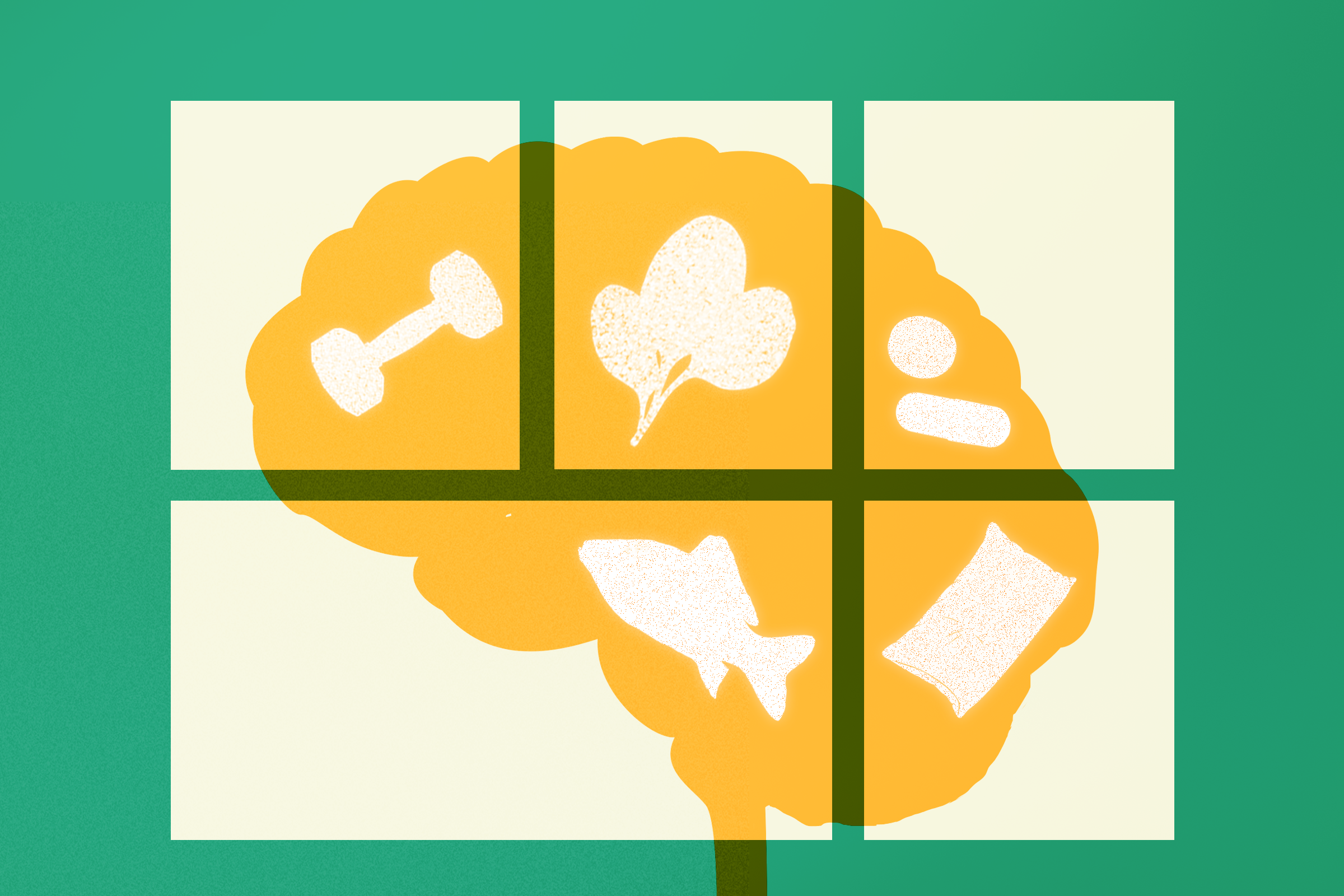
The protocol centers on a plant-rich, mildly ketogenic high-fiber diet: leafy greens, non-starchy vegetables, healthy fats, and low-glycemic foods. It encourages organic produce, wild-caught low-mercury fish, and pastured eggs and meats. Processed foods, refined carbohydrates, artificial sweeteners, gluten-containing foods, dairy, and alcohol are discouraged. People are encouraged to fast overnight for 12 to 16 hours. This approach helps support gut health, insulin sensitivity, metabolic flexibility, and ketone production.
“The brain needs a lot of power to function,” Bredesen said.
It can use glucose or ketones, but many people lack access to either because they are insulin resistant. They are not using glucose efficiently, and the elevated insulin levels prevent the liver from making ketones.
Like every other aspect of the protocol, the dietary approach must be individualized, Bredesen said. For people who are overweight, fasting and ketosis may be easier because they have fat stores available to make ketones. For someone frail, however, the same approach may not be appropriate.
Exercise is another core component. The protocol includes aerobic exercise, strength training, balance work, and stretching for at least 45 minutes per day and six days per week. Each type of exercise benefits the brain in different ways. Aerobic exercise improves blood flow and oxygen delivery, while strength training improves insulin sensitivity. High-intensity interval training is recommended twice a week.
Patients need to ensure seven to eight hours of quality sleep, with adequate rapid eye movement and deep sleep.
Hormone levels and nutrient status—including vitamins D and B, minerals, omega-3, thyroid function, and sex hormones—are assessed and corrected where necessary. Stress management through biofeedback and heart-rate variability training is also included. Once the brain has been better nourished, brain stimulation is also added.
“The last thing you want to do is work out with weights if you’re malnourished. The same applies to the brain,” Bredesen said.
What the Trials Found
Cognitive testing was performed at the beginning of the study and again at three, six, and nine months.
Participants following the precision medicine protocol showed significant improvements in overall cognitive function, memory, and Alzheimer’s symptom severity. Improvements were seen in blood pressure, body mass index, blood sugar control, lipid profiles, and other markers.
The treatment effect size for overall cognitive function was calculated to be seven times greater than that reported in trials of anti-amyloid drugs such as lecanemab and donanemab.
Mikhaylova noted that precision medicine for Alzheimer’s disease is still an emerging field, but she said Bredesen’s work offers an important shift in how the disease is understood and challenges the idea that Alzheimer’s is a single-pathway disease.
“A multimodal lifestyle and metabolic approach is most likely to help earlier in the disease course, when there is still enough neuronal network function to preserve or improve,” she said. “In more advanced dementia, we may still improve quality of life, sleep, behavior, and caregiver burden, but we should be much more cautious about expecting cognitive reversal.”
A Turning Point
Even among those sympathetic to the protocol’s goals, the practicality of the approach raises questions.
Paul Ehren, a functional nutrition practitioner and a master personal trainer, told The Epoch Times it is “so full on with regards to exercise commitment that there are very few people who could afford the time or cost involved.”
Bredesen acknowledges this. People do not need to do everything perfectly, he said.
“There is a threshold that is different for each person,” he said. “Doing what you can and continuing to optimize usually leads to good results.”
There is currently no cure for Alzheimer’s disease. Existing medications have only a modest effect on symptom progression, are typically prescribed late in the disease course, and can carry significant side effects. The failure of dozens of drug trials over the past two decades has pushed researchers and clinicians to look more broadly at what drives the disease.
Bredesen said he believes that the field is at a turning point.
“It’s not long before we no longer have to wake up worrying about Alzheimer’s,” he said. “If we do the right things, it will become a scourge of the past.”