We’ve been told to drink milk for strong bones our whole lives. However, a plate of kale may actually deliver calcium more efficiently.
What Does Bioavailability Mean?
When we talk about calcium in foods, we usually focus on how much a food contains, but the number listed on the label tells only part of the story; bioavailability also matters.“Bioavailability is calculated by dividing the estimated amount of calcium absorbed by the body by the total calcium content of the food or supplement, then multiplying by 100 to get a percent,” Dr. Shernell Surratt-Gary, an osteopath, told The Epoch Times in an email.
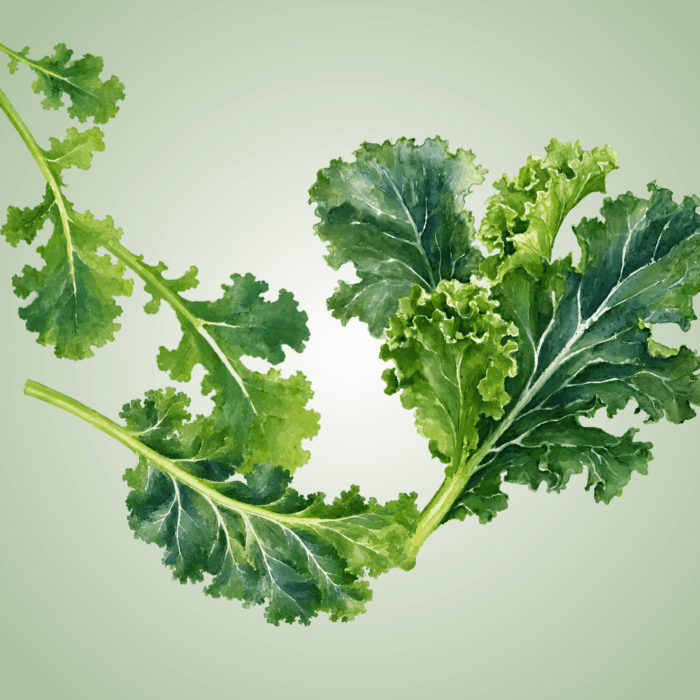
Kale’s fractional absorption rate is estimated at close to 60 percent, compared with roughly 32 percent for milk, meaning that nearly twice as much of kale’s calcium makes it into your system per milligram eaten.

Several factors can influence absorption, including vitamin D status, which plays an important role in calcium uptake by enhancing absorption in the intestine. Even highly bioavailable sources of calcium may be less effective if overall vitamin D levels are low.
Researchers measure calcium absorption in several ways, including isotopic tracer studies and simulated digestion models that estimate how much calcium dissolves and becomes available for absorption, Surratt-Gary said.
Two foods can contain similar amounts of calcium but behave very differently once eaten.
Kale Versus Other Leafy Greens
The contrast becomes even sharper when kale is compared with other leafy greens such as spinach. Although spinach is calcium-rich on paper, its high oxalate content significantly limits calcium absorption.“Oxalate plays a detrimental role in the absorption of calcium,” Surratt-Gary said.
Kale stands out among leafy greens for its high calcium content—because it is relatively low in oxalates, a greater proportion of its calcium remains available for absorption.
The Limitations of Kale as a Calcium Source
Kale’s calcium may be highly bioavailable, but absorption efficiency is only part of the equation. Total calcium intake still matters, which is where kale hits a practical ceiling.One cup of cooked kale contains 94 milligrams of calcium. The recommended daily intake for most adults is approximately 1,000 mg. Meeting that through kale alone would mean eating more than 10 cups a day, consistently.
For this reason, leafy greens are rarely relied on as the sole source of calcium.
“While kale cannot fulfill one’s entire calcium requirement, it can certainly serve as a contributing factor,” Grawert said.
How to Incorporate Kale for Calcium Intake
In practice, it is best to pair kale with higher-density options such as dairy products, calcium-fortified plant milks and cereals, and other calcium-containing foods, including legumes, nuts, and seeds. Kale in a salad at lunch, calcium-fortified plant milk in coffee or smoothies, and legumes at dinner can collectively help meet calcium needs.“If you follow a plant-based diet or a vegan diet, incorporating kale can assist in obtaining your required amounts of both calcium and vitamin K, as well as fiber—all of which are important nutrients for healthy bones,” Grawert said.
The most effective strategy is to combine multiple moderate sources of calcium throughout the day rather than relying on any single food.
“Increase your calcium intake by adding chia seeds, sesame seeds, flaxseeds, and almonds into your diet,“ Surratt-Gary said. ”Legumes and beans such as black beans, lentils, and chickpeas are all great sources of calcium.”
The bottom line: Kale contributes to calcium intake, but it works as part of the system, not as its driver.