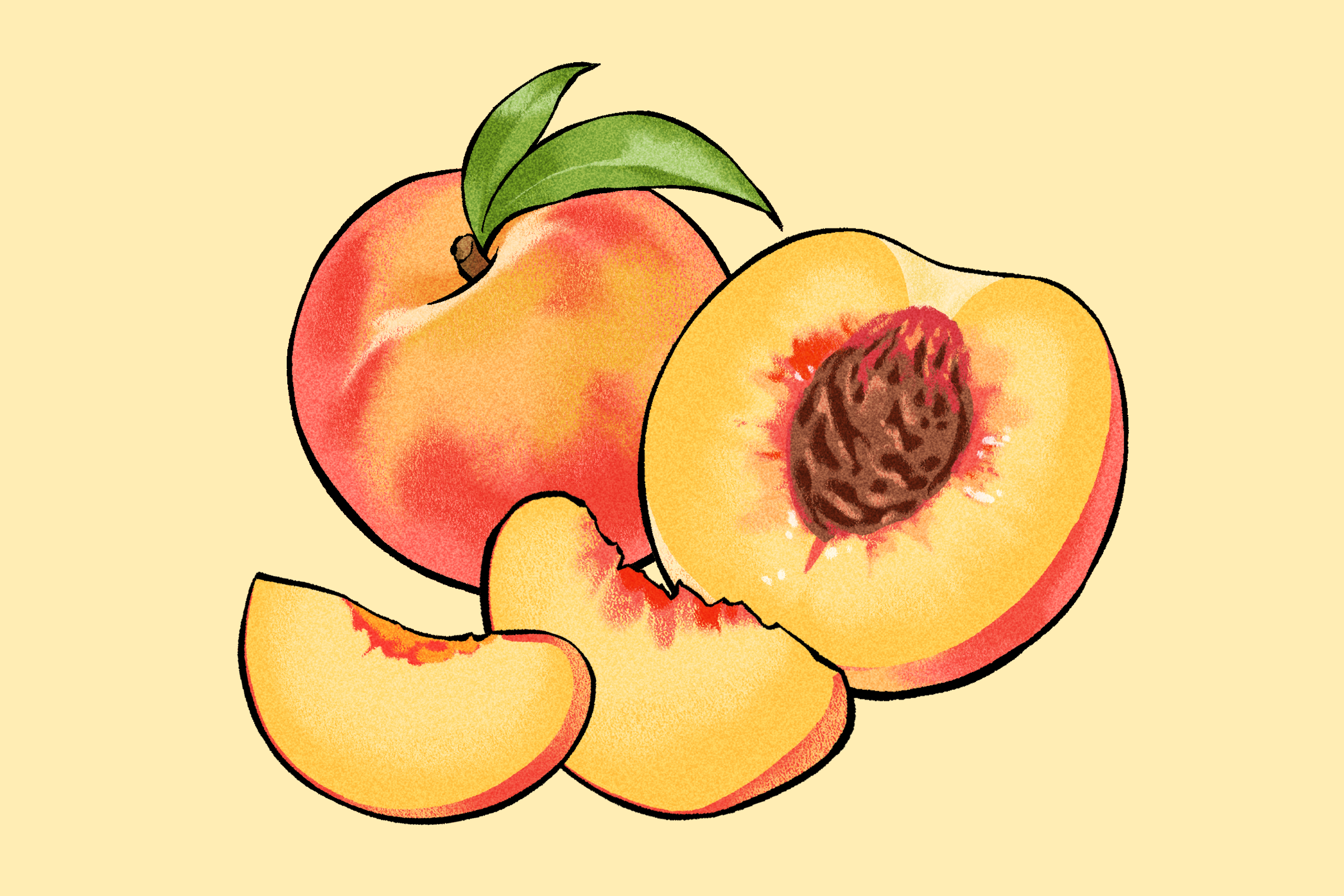
When you think of carotenoids, carrots probably come to mind first. But peaches also offer up a healthy dose.
While carotenoids give peaches their golden-orange hue, they are also potent antioxidants that help support eye and skin health.
Beyond their nutritional value, peaches have long been considered a symbol of longevity in Eastern culture.
Key Nutrients
Bite per bite, peaches contain a surprising amount of essential nutrients, easily trumping many other common fruits.
One medium peach, about 150 grams, contains:
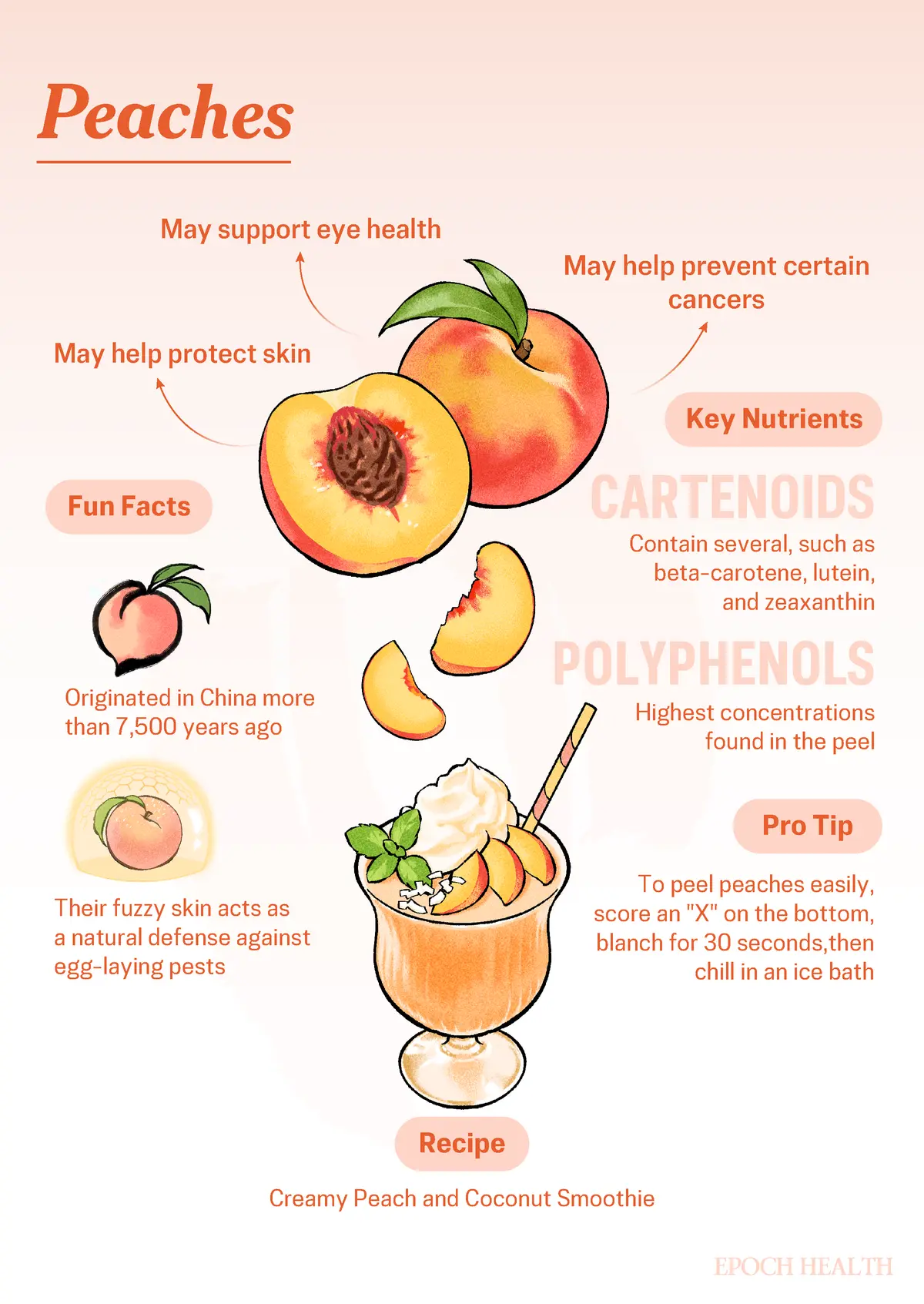
Carotenoids: Peaches contain several carotenoids including beta-carotene, lutein, and zeaxanthin. These pigments also give peaches their vibrant color. Yellow-fleshed varieties generally contain higher levels than white-fleshed peaches.
Fiber: Close to 10 percent of the daily value, nearly four times as much as another summer staple, watermelon.
Vitamin C: More than 10 percent of the daily value.
Niacin: More than 8 percent of the daily value.
Copper: Up to 15 percent of the daily value, more than three times as much as an apple.
Polyphenols: Plant compounds with antioxidant properties. The highest concentrations are found in the peel.

Health Benefits
From protecting skin and eyes to supporting immune and digestive health, these compounds offer up a whole host of health benefits.
May Support Eye Health
“Peaches contribute three nutrients the eye actually uses,” Dr. Krishna Surapaneni, a board-certified ophthalmologist, told The Epoch Times in an email.
Beta-carotene is a building block for vitamin A, which the retina’s light-sensing cells need to function, he said. “That is why severe vitamin A deficiency causes night blindness.”
Lutein and zeaxanthin are carotenoids that concentrate in the macula, the small central area of the retina responsible for sharp reading vision, where they filter high-energy blue light and act as antioxidants. Surapaneni noted that carotenoid-rich diets are associated with lower rates of macular degeneration.
Vitamin C is part of the eye’s own antioxidant defense system and appears in the major eye health trial formulas. The strongest evidence on carotenoids and aging vision comes from the AREDS and AREDS2 trials run by the National Eye Institute, he said.
“No single food prevents eye disease, but the retina is one of the most metabolically active tissues in the body, and it benefits from the same colorful, whole-food diet as the heart. A peach is a perfectly good part of that pattern,” Surapaneni said.
May Prevent Certain Types of Cancer
May Help Protect Skin
Peaches may support skin health thanks to their carotenoids and polyphenols.
“Peaches contain several carotenoids, particularly β-cryptoxanthin and β-carotene. Dietary carotenoids accumulate in the epidermis and provide photoprotection through direct UV absorption,” Dr. Debra Jaliman, a board-certified dermatologist in New York, told The Epoch Times in an email.
While no clinical trials have directly tested whether eating peaches protects skin from UV damage, research on carotenoid-rich diets suggests these compounds may help reduce oxidative stress, improve skin elasticity and hydration, and provide modest photoprotection. However, the protective effects are additive and not a substitute for sunscreen, Jaliman said.
“It is plausible that the carotenoids and polyphenols found in peaches could help protect skin from oxidative stress and UV-related damage,” she said, though she noted the evidence is largely extrapolated from studies of these compound classes rather than peach-specific research.
Additional Benefits
How to Increase Absorption
Getting the most nutritional benefits out of peaches is as simple as pairing and preparing them thoughtfully.
Pair With Healthy Fat: The beta-carotene in peaches is fat-soluble and absorbed more efficiently when eaten with a small amount of healthy fat like yogurt or nuts.
Eat With Protein: Peaches pair well with protein-rich foods such as Greek yogurt, cottage cheese, and nuts. Some of the amino acids in protein may also help facilitate copper uptake. Pairing fruit with protein also makes for a more balanced, filling snack.
Eat Fresh When Possible: Vitamin C is water-soluble and can be reduced by prolonged heat exposure. Eating peaches raw or using quick cooking methods, such as brief grilling, broiling, or quickly warming peaches on a flatbread or in a cheese-stuffed bake, can help preserve more of this nutrient.
Optimal Storage
While a perfectly ripe peach is often too tempting to survive the trip home from the store, proper storage can help extend the life of the rest of your haul.
Ripe Peaches: Keep ripe peaches in the refrigerator to slow further ripening. Store them in the crisper drawer, where they will typically stay fresh for three to five days. For the best flavor, let refrigerated peaches sit at room temperature for 15 to 30 minutes before eating. “Peaches are more peachy at room temperature or above,” Jamie Simpson, the executive chef of the Culinary Vegetable Institute at The Chef’s Garden, told The Epoch Times in an email.
Unripe Peaches: Leave unripe peaches at room temperature until they soften. Storing them stem-side down can help reduce bruising. Avoid refrigerating unripe peaches, as the cold temperature can interfere with ripening and leave a mealy texture. “Leave them out on the counter in a bowl to breathe,” Simpson said.
Overripe Peaches: If your peaches are becoming too soft, don’t toss them just yet. Instead, slice them and remove the pit, then freeze the pieces in a single layer on a baking sheet before transferring them to a freezer-safe bag or container. Frozen peaches are perfect for smoothies, baked goods, and sauces, and last up to 12 months.
Pro Tips
“Peaches, in my opinion, should be treated like avocados,” Simpson said. Unless you plan to eat them right away, he suggests buying them on the firmer side. You’ll know they’re ready when they squeeze like an avocado.
If you’re shopping in early summer, you’re more likely to find clingstone peaches, whose flesh clings tightly to the pit. They’re often especially juicy and sweet, making them ideal for eating fresh. Later in the season, freestone peaches become more common. Their flesh separates easily from the pit, making them a better choice for slicing, grilling, baking, canning, or freezing.
For seamless slices and minimal bruising, rather than cutting straight through the fruit at random, use a sharp knife to slice along the natural seam that runs from stem to end. For freestone peaches, a gentle twist in opposite directions will separate the halves. With clingstone peaches, you may need to carefully loosen the flesh from around the pit with a knife or spoon.
If a recipe calls for peeled peaches, there’s no need to struggle with a vegetable peeler. Instead, score a small “X” on the bottom of each peach, then blanch them in boiling water for about 30 seconds before transferring them immediately to an ice bath. Once cooled, the skin should slip off easily using just your fingers.
For a simple way to cook a peach, cut it in half and rub a little sugar on the cut side, Simpson said. Sear them in a hot pan with a touch of oil or butter and then finish them in a hot oven around 350 degrees Fahrenheit. The same can be done for slices. “Peaches that are vibrant in color but a little firm are best for cooking,” he added.
Recipe: Creamy Peach and Coconut Smoothie
The combination of sweet peaches, ripe banana, and creamy coconut milk gives this smoothie a flavor reminiscent of a peach piña colada. The healthy fats in the coconut milk help your body absorb fat-soluble carotenoids, including beta-carotene. There’s no need to peel the peaches—the skin contributes additional polyphenols. However, if you prefer an ultra-smooth texture, feel free to peel them first.
1/4 cup raw cashews
1 cup unsweetened coconut milk
1 cup ice cubes
2 ripe peaches, pitted and sliced (about 2 packed cups)
1 ripe banana (about 1 cup sliced)
1 teaspoon honey
1/2 teaspoon vanilla extract
1 teaspoon fresh lemon juice
1/8 teaspoon ground cinnamon
1/8 teaspoon salt
In a small bowl, soak the cashews in hot water for 15 minutes. Drain the water.
Add the coconut milk, ice, and soaked cashews to a blender.
Add the peaches, banana, honey, vanilla, lemon juice, cinnamon, and salt.
Blend on high until smooth and creamy, about 45 to 60 seconds. Serve immediately.
Precautions
Never eat the peach pit, or even chew it. It contains amygdalin, a naturally occurring compound that can be converted into hydrogen cyanide when the pit is crushed, chewed, or digested.
Peaches are among the more common fruit allergies and can cause reactions ranging from mild oral allergy syndrome to more serious allergic reactions, including anaphylaxis.
“People who are allergic to birch pollen may develop itching or tingling of the lips, mouth, tongue, or throat after eating uncooked peaches because some of the proteins are similar,” Jaliman said, adding that cooked or canned peaches are often tolerated because heat breaks down the allergic proteins.
Peaches can cause skin reactions. “The skin around the mouth or on the hands may develop redness, itching, hives, or eczema after handling or eating peaches, particularly in people with sensitive skin or underlying eczema,” Jaliman said. Peach fuzz can also be irritating and may add to skin irritation.
Commercially grown peaches frequently appear on the Environmental Working Group’s annual “Dirty Dozen” list of produce with higher pesticide residues. Always thoroughly wash peaches before eating, and choose organic when available and affordable.
Keep peaches away from pets. The pit, leaves, and stems contain compounds that can be toxic if chewed or ingested. The pit can also cause choking or intestinal blockages.
Fun Facts
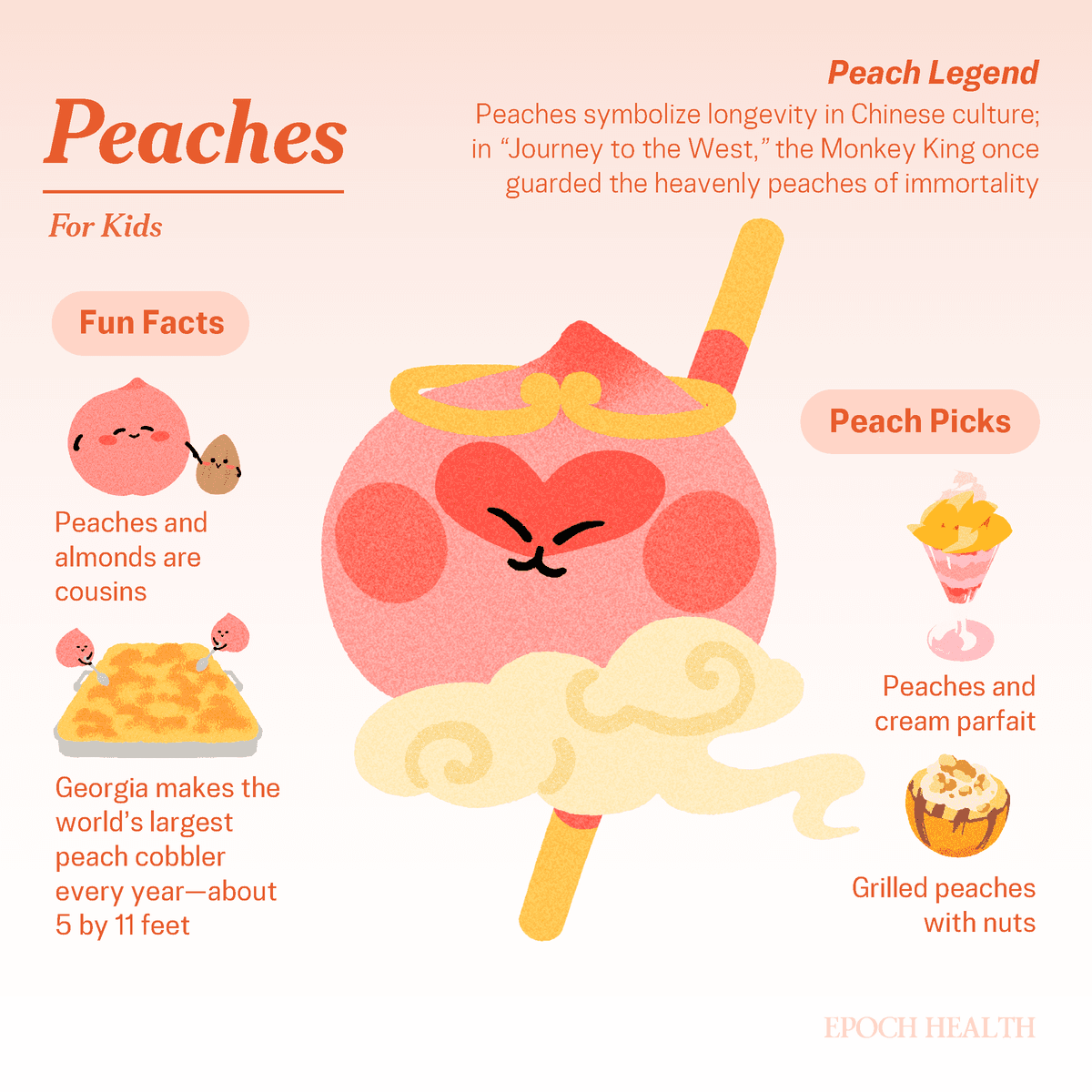
Peaches and almonds are cousins.
Nectarines are just bald peaches.
Peaches originated in China more than 7,500 years ago.
Peaches have symbolized longevity in traditional Chinese culture. In the classic novel “Journey to the West,” the Monkey King was once appointed to guard the heavenly peaches of immortality.
The world’s largest peach cobbler is made annually in Georgia, measuring around 5 feet by 11 feet.
Peaches’ fuzzy skin serves an important purpose for the fruit, acting as a defense mechanism that prevents pests from laying eggs in their flesh.
Tips for Kids
Peaches are naturally sweet, so getting kids to eat them is pretty easy. However, if there’s hesitation about texture or taste, there are a few sneaky workarounds you can try.
You can layer diced peaches with Greek yogurt or cottage cheese and a sprinkle of granola for a simple “peaches and cream” parfait.
For a refreshing hot weather snack, freeze peach slices and serve them straight from the freezer. They’re soft enough to bite and can fill in as a naturally sweet popsicle.
For a warm sweet treat, grill or bake peach halves and sprinkle them with cinnamon and chopped nuts, or add a drizzle of honey.
If you’re serving peeled peaches to younger children, keep in mind that the fruit can become quite slippery. Rolling peeled slices in unsweetened shredded coconut, finely ground nuts, or crushed freeze-dried fruit can make them easier for little hands to grip.
Always remove and discard the pit before serving peaches to children. As mentioned above, peach pits pose a choking hazard and can release toxic hydrogen cyanide if they’re crushed or chewed.