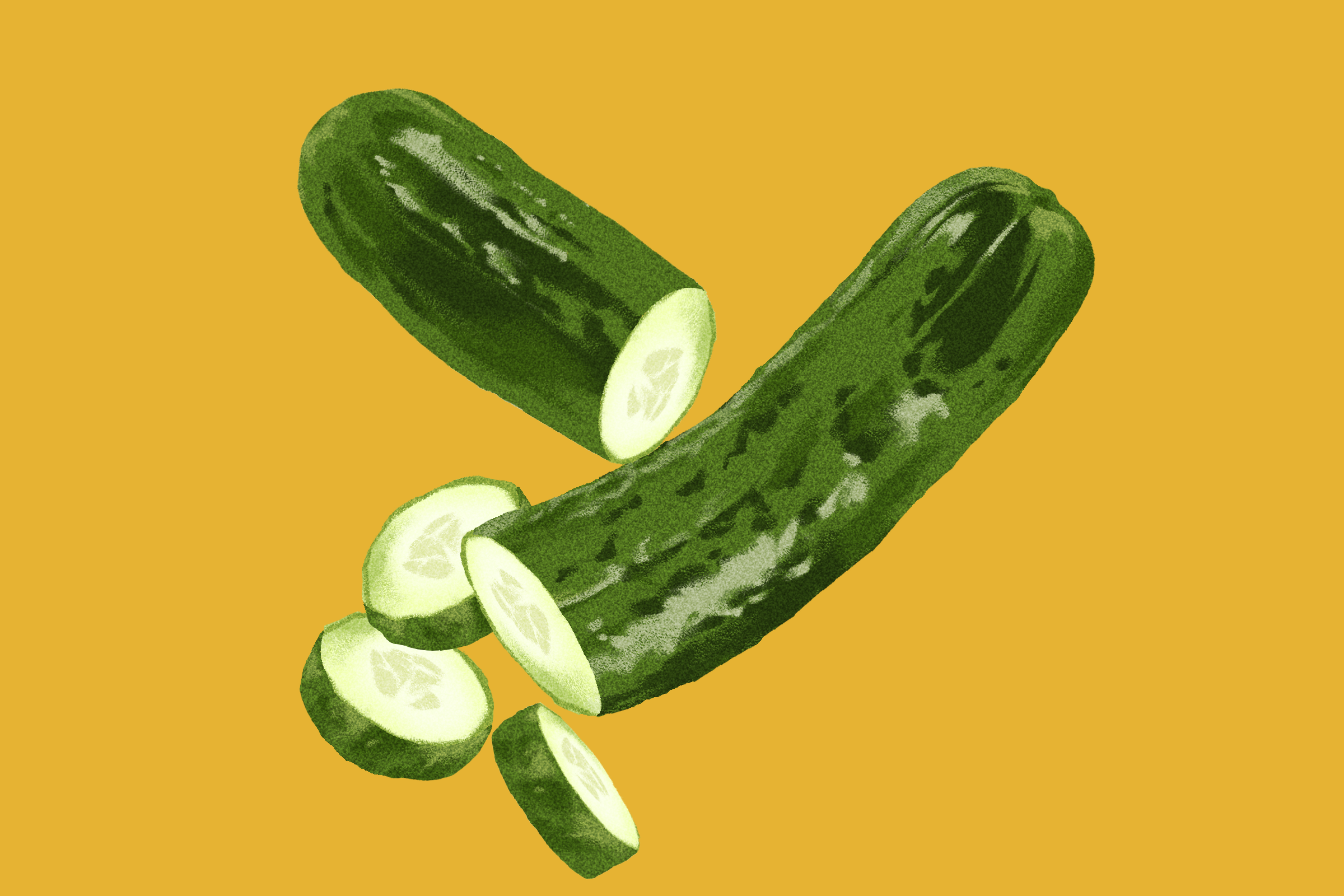

Made up of more than 95 percent water, cucumbers are “one of the most hydrating foods you can put on your plate,” Dr. Joseph Mercola, a board-certified family physician, told The Epoch Times.
The other 5 percent is made up of nutrients that help your skin age more slowly and your bowels move more quickly.
As long as you don’t peel it.
Key Nutrients
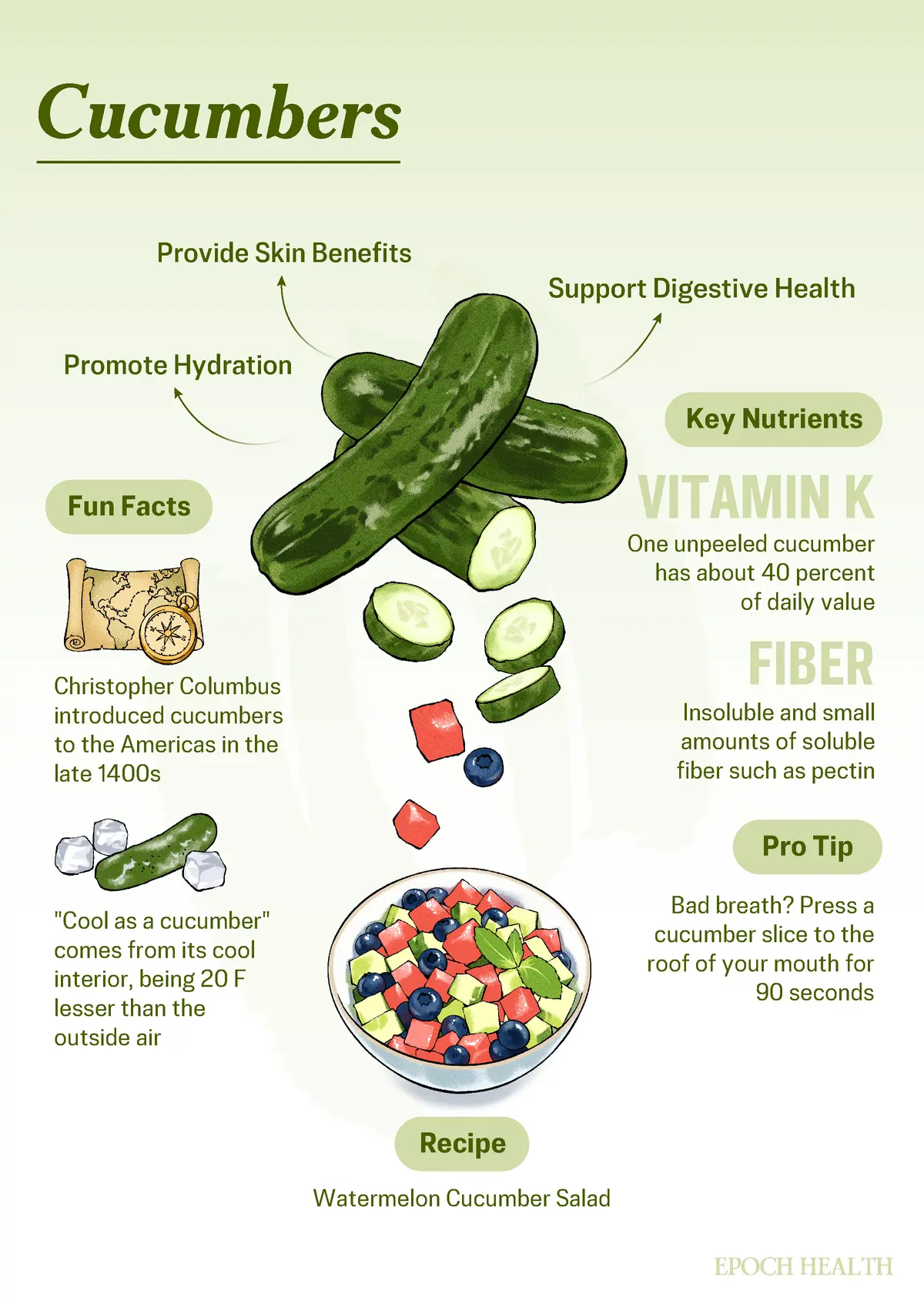
Vitamin K, approximately 40 percent of the daily value
Potassium, close to 10 percent of the daily value
Vitamin C, about 10 percent of the daily value
Fiber, both insoluble fiber and small amounts of soluble fiber, such as pectin, which may support regularity and help feed gut bacteria
Carotenoids, which are found mostly in the skin and can help protect against oxidative damage
Cucumbers also contain a family of protective plant compounds.
“Among the most interesting is fisetin, an anti-inflammatory flavonol that researchers have connected to brain health and memory,” Mercola said, adding that they also offer antioxidant flavonoids such as quercetin.
Health Benefits
Although popular claims that cucumbers detox your body or melt away fat aren’t supported by evidence, research does back several of cucumbers’ health benefits.
Promote Hydration
Sliced cucumbers dancing in pitchers of water at spas and hotels aren’t just for show. The high water content in cucumbers can help you meet your daily fluid needs.
Cucumbers’ role in supporting hydration is especially notable for pregnant women, nursing mothers, women in menopause, and those living in warmer climates, all of whom need increased amounts of fluids, Dr. Robert Thompson, a board-certified physician executive, told The Epoch Times in an email.
“That high water content comes bundled with vitamin K1 and potassium, plus other valuable micronutrients,” Mercola said.
Provide Skin Benefits
The review published in JARLife suggested that when applied topically or used in skin creams, cucumbers may soothe sunburns, provide anti-aging benefits by scavenging free radicals, help reduce under-eye dark circles and puffiness via their vitamin K content, and help calm inflammation through lignans—a class of polyphenolic compounds found in plants.
“Healthy skin starts from the inside out, and hydration is part of that equation,” Dr. Nneoma Oparaji, a triple board-certified physician in lifestyle, obesity, and internal medicine, told The Epoch Times in an email.
Support Digestive Health
Cucumbers can help keep your digestive tract moving smoothly.
“The combination of water and fiber supports regular bowel movement and easier digestion,” Oparaji said.
“The small amount of fiber and pectin may provide a modest source of fermentable material for beneficial gut microbes,” Mercola said.
For people with gastrointestinal conditions who are sensitive to fiber, “the high water content helps keep the contents of [the] digestive tract moving comfortably, and because cucumbers are so mild and low in fiber, most people tolerate them easily even when heavier vegetables cause bloating or discomfort,” Mercola said.
Most of a cucumber’s fiber is found in the peel, so eating it unpeeled can help maximize the digestive benefits.
Additional Benefits
Cucumber extracts have shown measurable anti-inflammatory activity in lab and animal studies.
Quercetin in particular has been studied for its ability to influence histamine release and inflammatory signaling, Mercola said.
“That is promising, but it is early-stage science,” he said.
“Cucumbers contain lignans and compounds called cucurbitacins that lab studies have linked to anticancer activity,” Mercola said.
Cucurbitacins have shown effects on cancer-signaling pathways such as the STAT3 and MAPK, although he noted that these are mechanistic and preclinical findings.
How to Increase Absorption
A few minor culinary tweaks can elevate how your body absorbs cucumber’s nutritional benefits.
Put Down the Peeler
“As with so many vegetables, most of the nutrients are in the skin, so try not to peel them,” Thompson said.
The skin contains most of the cucumber’s insoluble fiber, as well as higher concentrations of antioxidants and vitamin K than the flesh.
Pair With a Healthy Fat Source
Cucumbers contain fat-soluble nutrients, including vitamin K and carotenoids. Adding a healthy fat helps your body absorb these nutrients more effectively.
“Pairing them with low-fat Greek yogurt dip, hummus, and nuts helps create a more satiating meal,” Oparaji said.
Ferment for a Gut-Health Boost
If you want a more direct microbiome benefit, ferment your cucumbers.
“Proper fermentation introduces live microorganisms that can help balance your gut flora,” Mercola said.
Prioritize Local and Seasonal
How a cucumber is grown and shipped dictates its final vitamin density.
“Buy from a local farmers market when you can, because fresh, in-season cucumbers picked close to home retain more of their nutrition,” Mercola said.
Optimal Storage
Storing cucumbers to keep them fresh and crunchy is pretty straightforward, requiring just a little temperature and moisture control. Whole cucumbers naturally last longer than sliced ones because the intact skin serves as a protective barrier.
To shield them from humidity, be proactive.
“Dry out the excess moisture from the cucumber prior to refrigeration to extend its shelf life,” Thompson said.
To do so, loosely wrap each cucumber in a paper towel to absorb any dampness, and place them inside a reusable produce bag or a partially open plastic bag. Store the bag in your refrigerator’s crisper drawer, making sure to avoid the coldest zones of the fridge. Cucumbers are sensitive to chilling injury when exposed to low temperatures for extended periods.
If you have an English cucumber, leave the plastic wrapping on until you’re ready to use it. They lose moisture quickly because of their especially thin skin. Rewrap any leftover portion after cutting.
For standard cucumbers that have already been sliced, wrap the cut end tightly in plastic wrap or transfer the pieces into an airtight container to lock in freshness.
Placement inside your kitchen is also key to preventing rotting.
“Put them away from fruits such as bananas, apples, and tomatoes because they produce ethylene that speeds up spoilage,” Oparaji said.
Pro Tips
Cucumbers are one of the easiest crops to grow yourself—even just in a container on a patio will work—and homegrown cucumbers are “about as good as it gets,” Mercola said.
Got bad breath? Take a slice of cucumber and press it to the roof of your mouth with your tongue for about 90 seconds. Cucumbers are packed with phytochemicals that act as natural antimicrobials, killing off the bacteria in your mouth that cause odor.
The outer skin of cucumbers can gently lift and remove crayon, marker, and even some pen inks from walls and paper for an eco-friendly cleaning solution.
If you rub a cucumber slice along your bathroom mirror before hopping into the shower, the natural oils and polymers will create a coating that prevents the mirror from fogging up.
Because of their mild flavor and high water content, cucumbers are a great starting point for anyone interested in juicing, which is an easy way to increase vegetable intake, especially if you find heavier fiber hard to digest, Mercola said.
Recipe: Watermelon Cucumber Salad
This simple summer salad delivers refreshing hydration, crisp flavor, and healthy fats from olive oil, which helps your body absorb fat-soluble nutrients such as vitamin K more efficiently. English cucumbers work best because of their thin skin and fewer seeds, but any fresh cucumber will work. This recipe is also incredibly easy to double or triple.
1 medium cucumber
3 cups cubed watermelon
1 cup blueberries
9 mint leaves
Juice and zest of one lime
1 teaspoon olive oil
1 teaspoon raw honey, optional
Pinch of Himalayan sea salt
Cut the cucumber into 1/2-inch pieces.
Place the cucumber, watermelon, and blueberries in a large bowl.
Tear the mint leaves into small pieces and add them to the bowl.
In a separate small bowl, whisk together the lime juice and zest, olive oil, honey (if using), and sea salt.
Pour the dressing over the salad and gently toss to coat.
Serve immediately.
Precautions
“For most people, fresh organic cucumbers are one of the safest, most tolerable vegetables available,” Mercola said.
However, there are a few points to keep in mind. If you are taking blood-thinning medications, sudden spikes or drops in your vitamin K intake can disrupt how your medication works.
Some people experience bloating or burping after eating cucumbers due to the cucurbitacins.
If you are sensitive to sodium or managing your blood pressure, be mindful of pickled cucumbers, because commercial pickles can be very high in salt.
“Conventionally grown cucumbers can carry pesticide residues, and they are often coated in food-based wax after harvest to survive shipping. That wax can seal residue against the skin and make it harder to rinse away, and some waxes are petroleum-derived,” Mercola said.
He suggests choosing organic cucumbers, washing them well with a produce wash that removes wax and residue, and then enjoying the peel. If all you can find is a conventional, waxed cucumber, peeling it is the safer trade-off, even though you sacrifice some nutrients.
Fun Facts
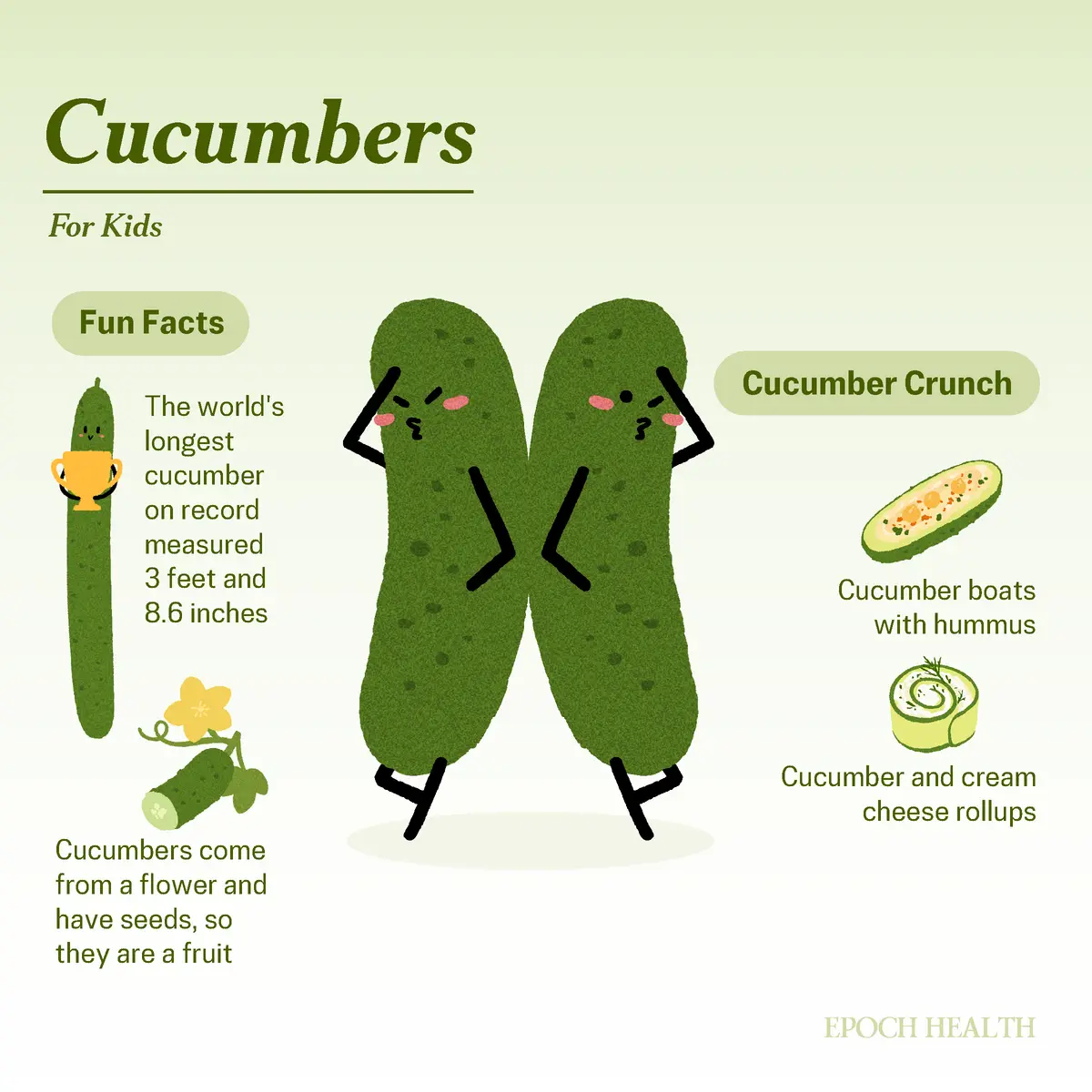
Cucumbers develop from a flower and contain seeds, which technically makes them a fruit and not a vegetable.
Christopher Columbus introduced cucumbers to the Americas during one of his voyages in the late 1400s.
The world’s longest cucumber on record measured three feet and 8.6 inches.
The phrase “cool as a cucumber” is rooted in science. Because of their high water content and density, the internal temperature of a cucumber on the vine can be up to 20 degrees cooler than the outside air temperature.
Tips for Kids
To get kids eating more cucumbers, make “boats” with hummus or cucumber-and-cream-cheese rollups.
“I often serve cucumbers as sticks or thin slices with yogurt [or] guacamole to my kids,” Oparaji said.
Visual appeal also helps.
“Adding thinly cut slices of cucumber into colorful lunch boxes has been shown to encourage children to eat all parts of a meal,” Thompson said.
You can try cutting them into sticks, coins, stars, or crinkle-cut slices, or use cookie-cutters for shapes.
Mini cucumbers are sweeter, crunchier, and easier for little hands to hold. If texture is the hurdle, try English cucumbers, which have fewer seeds and thinner skin. Instead of peeling the whole cucumber, you can try peeling it in alternating strips so it looks like a zebra. That way, you can keep some of the skin’s healthy nutrients while removing the toughness.
For younger kids, Oparaji recommends cutting cucumbers into age-appropriate pieces to minimize the risk of choking.