Last weekend, my daughter got married. A few days before, I lost my voice. The laryngitis felt like shattered glass in my throat. I was joking that guests would enjoy a mute mother of the bride. What I really wanted was relief for my aching throat.
Stress in the weeks leading up to the event weakened my immune system, and the virus had an easy time establishing itself in my body. I wish I had made my herbal cough drops for winter earlier this year.
Why We Get Stuffed Up
During the winter months, we spend much of our time indoors in heated areas with low humidity. These conditions dry out our mucous membranes in the nose and throat, leaving tiny cracks that make it easier for viruses and bacteria to slip into.Once infected, the mucous membranes become inflamed and begin producing excess mucus, which is initially clear but may turn yellow or green as more germs are trapped inside. Inflammation also irritates the throat, creating the familiar scratchy sensation that makes swallowing uncomfortable.
Often, the excessive mucus cannot drain freely. As it thickens, it spreads through the nose, throat, and upper airways, and may cause postnasal drip, which further irritates the throat and contributes to soreness. It’s at this point that people often reach for throat lozenges for comfort.
Thyme and Its Affinity to Transform Mucus
My herbalist teacher had a memorable line for each plant. With thyme, I learned: “Thyme transforms phlegm.”Sage: Thyme’s Herbal Partner in Fighting Slimy Irritants
While both herbs transform phlegm and help clear excess secretions, they do so in different ways. Thyme thins mucus and makes it easier to expel, while sage helps dry out mucus and reduce inflammation.Garden sage has been traditionally used as a remedy for sore throats and head colds. Herbalists consider sage an astringent, meaning it reduces the secretion of fluids and gently tightens the tissue. By helping dry excess mucus and calm swollen, irritated areas, sage addresses the underlying causes of throat discomfort.
Although echinacea was included in the formula, its primary role is to support the immune system rather than offer localized pain relief. Sage is the herb known for directly soothing the throat, which helps explain the fast symptom improvement seen in the trial.
Homemade Thyme-Sage Cough Drops
Both thyme and sage are popular culinary herbs, making them easy to find as ingredients for homemade remedies. These drops combine both herbs to soothe the throat and support respiratory comfort.Step 1: Make the Herbal Tea
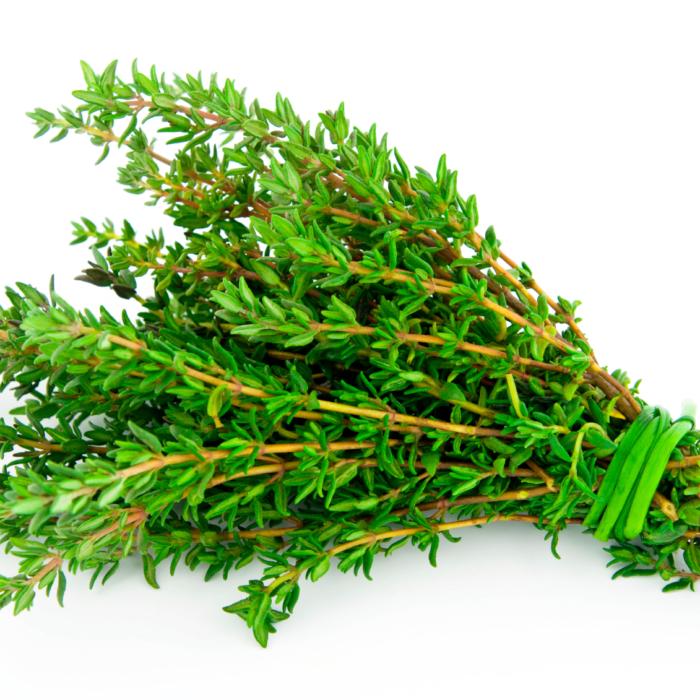
The first step is water extraction, which draws the herbs’ active components into the liquid. Once infused, this tea will be used to make the cough drops.- 7 to 10 small twigs of fresh thyme (or approximately 1 1/2 grams of dried thyme leaves)
- 6 to 8 large sage leaves (or 1 to 1 1/2 teaspoons of dried sage)
- 8 ounces water
- Combine the water and herbs in a pot.
- Bring to a gentle boil, then turn off the heat and cover with a lid.
- Allow to steep for 10 to 30 minutes.
- Strain out the herbs using a sieve.
- Set the tea aside for step 2.
Step 2: Make the Herbal Lozenges
Now it’s time to turn the infused tea into lozenges.- 3/4 cups sugar
- 1/8 cup raw honey
- 2 ounces thyme-sage tea (from step 1)
- Juice of 1/4 lemon
- Optional: Enough powdered sugar (approximately 10 cups) to make a 1/2 inch layer over a cookie sheet
- Option 1: Line a cookie sheet with a 1/2-inch layer of powdered sugar. Press small circular indentations into the powdered sugar using the back of a tablespoon to create molds.
- Option 2: You may use a candy mold or pour the mixture onto parchment paper to make “brittle.”
- Fill a wide-mouth jar or cup with cold water to test the syrup’s readiness later.
- Place sugar, honey, tea, and lemon juice in a small, high-rimmed pot.
- Over low to medium heat, bring the mixture to a gentle boil, stirring constantly to prevent burning. This may take 20 to 30 minutes.
- Test the syrup’s readiness by dropping a small amount into cold water. If it hardens immediately, it is ready. If not, keep stirring.
- Carefully spoon or pour the hot syrup into the powdered sugar indents, molds, or onto the prepared sheet. Be careful not to burn yourself with the hot, sticky syrup.
- Allow the lozenges to cool completely.
- Dust with powdered sugar and store in air-tight glass containers for the entire winter season.
Allow a lozenge to dissolve slowly in your mouth as needed throughout the day. You can safely take three to 10 lozenges daily.
My story has a happy ending. I got my voice back just before the wedding using a combination of thyme and sage.
This fun and rewarding herbal DIY project will have you creating soothing remedies for cold and throat symptoms in no time. With only a few basic kitchen ingredients and tools, you will be well on your way to homemade wellness. Just remember to handle the hot candy mixture with care!