How to Turn Elderflower Blossoms Into Pancakes and Syrup

Elderflower’s fragrant early-summer blossoms can be foraged, preserved, and transformed into traditional dishes enjoyed for generations.
How to Turn Elderflower Blossoms Into Pancakes and Syrup
Alexandra Roach/The Epoch Times
|Updated:
0:00

A few days ago, I headed out to pick elderflowers. The bushes were covered in pale yellow umbels—a sure sign that June has arrived and elderflower season is in full swing. For me, that means it’s time to make elderflower syrup, refreshing summer tonics, and elderflower pancakes, or “Hollerküchle,” a traditional German treat.

The sight also brought back memories of lifting my children onto my shoulders so they could reach the most fragrant blossoms high in the bush. Today, my children still help with the harvest, often alongside my grandchildren.

Elderflowers are not only beautiful and smell delicious, they are also full of beneficial plant compounds, including ones with anti-inflammatory properties.

Antioxidant-Rich Elderflowers

The edible flowers of the elder bush, Sambucus nigra, contain two notable flavonoids, rutin and naringenin, which are also found in citrus fruits. These compounds contribute to the flowers’ antioxidant and anti-inflammatory properties.
The traditional use of elderflowers for supporting wellness is backed by research. A 2015 study on traditional elderflower beverages highlighted their anti-inflammatory potential, while a February study reported the external benefits of elderflower extract in treating inflammatory skin diseases.
I grew up with this native German plant, which thrives along forest edges and roadsides. However, it wasn’t until I got older that I discovered its medicinal properties and culinary uses and truly grew to appreciate them.

How to Safely Harvest Elderflowers

(Alexandra Roach/The Epoch Times)
Alexandra Roach/The Epoch Times

Most people know the elder bush for the syrup made from its dark red berries, which ripen in the fall. Lesser-known are the delicate flowers that often hang in large umbels from the bush in early summer.

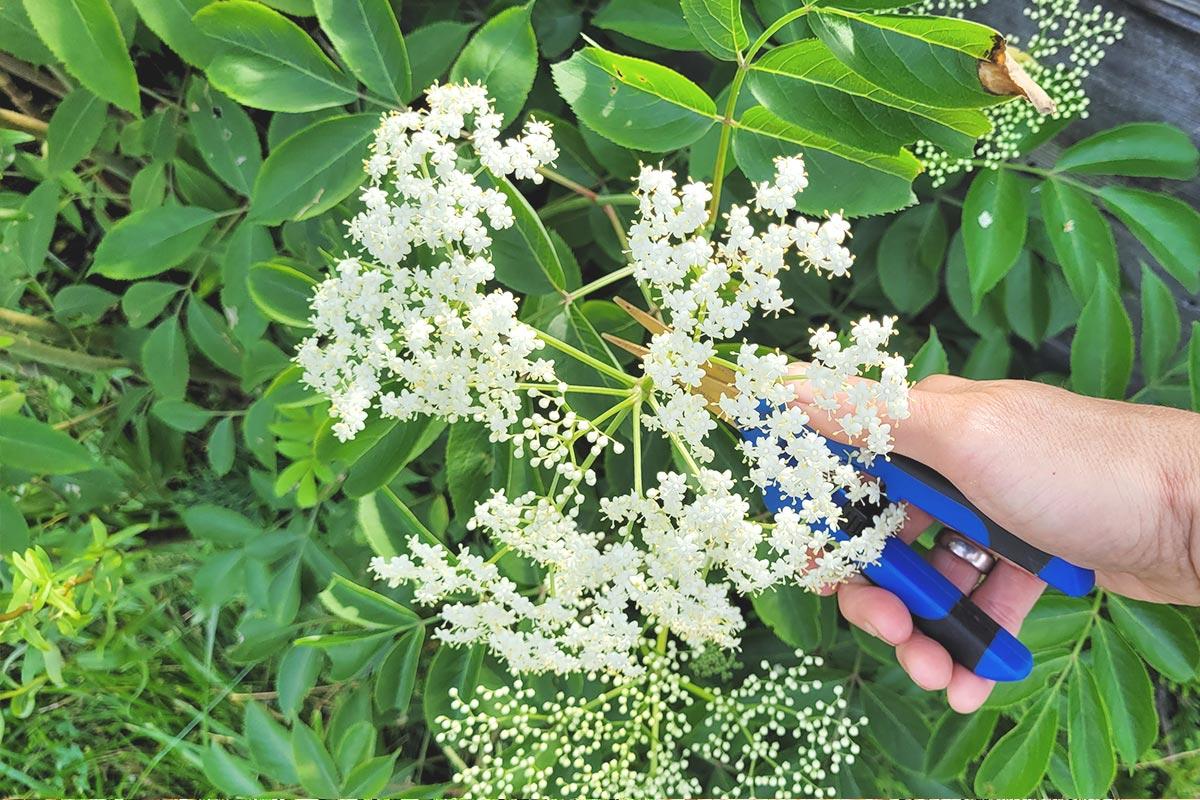
Harvesting is easy. To get started, grab a basket or bowl along with some garden clippers or scissors, and follow these tips:
  • Plant Identification Is Key: Make sure that you distinguish between elderflowers and the highly poisonous water hemlock, as they often grow in the same habitat. The elder bush has distinct woody stems, and elder flowers grow in a cyme, which is a branching flower structure; not all flowers originate from the same part of the plant.
  • Keep in Mind: Flowers make berries. Therefore, avoid harvesting the flowers if you want to enjoy berries in the fall. If you have a well-established elder bush, I recommend harvesting half of it for flower remedies and culinary uses, leaving the other half to ensure a good supply of berries in autumn.
  • Check the Flowering Stage Before Harvesting: The ideal time is when the flower buds are fully opened yet still firmly attached. You can test the flower by gently shaking it.
To harvest, use garden clippers to cut the stem just below the flowering umbel.

Shake the flowers gently before placing them into a gathering bowl or basket.

Place the flowers upside down on a drying rack or other flat surface to allow small insects to crawl away; 20 to 30 minutes is sufficient. Washing delicate elderflowers can be challenging.

Safety Note

Only the flowers and properly prepared ripe berries are commonly used in food. The leaves, stems, roots, and unripe berries should not be eaten.

Additional Note

If you want to dry the flowers for later use in tea, leave them spread out in a single layer in a well-ventilated area, away from direct sunlight, until they are completely dry.
After following these steps, you are ready to use your elderflowers for syrup and cooking.

How to Make Elderflower Pancakes

Sometimes called elderflower fritters, these pancakes have a delicate floral flavor with subtle hints of honey and citrus. The blossoms also add a pleasant crunch, which is what my family likes most about them.
Tools
  • Bowl
  • Frying pan
  • Spatula
  • Scissors
Ingredients
  • 2 cups pancake mix (or make your own favorite batter from scratch)
  • 6 elderflower umbels
  • 1 teaspoon powdered sugar (for the traditional German way of serving them)
  • 1 tablespoon maple syrup as a topping (optional)
Total Time: 15 minutes
Serves: 1 to 2
Instructions
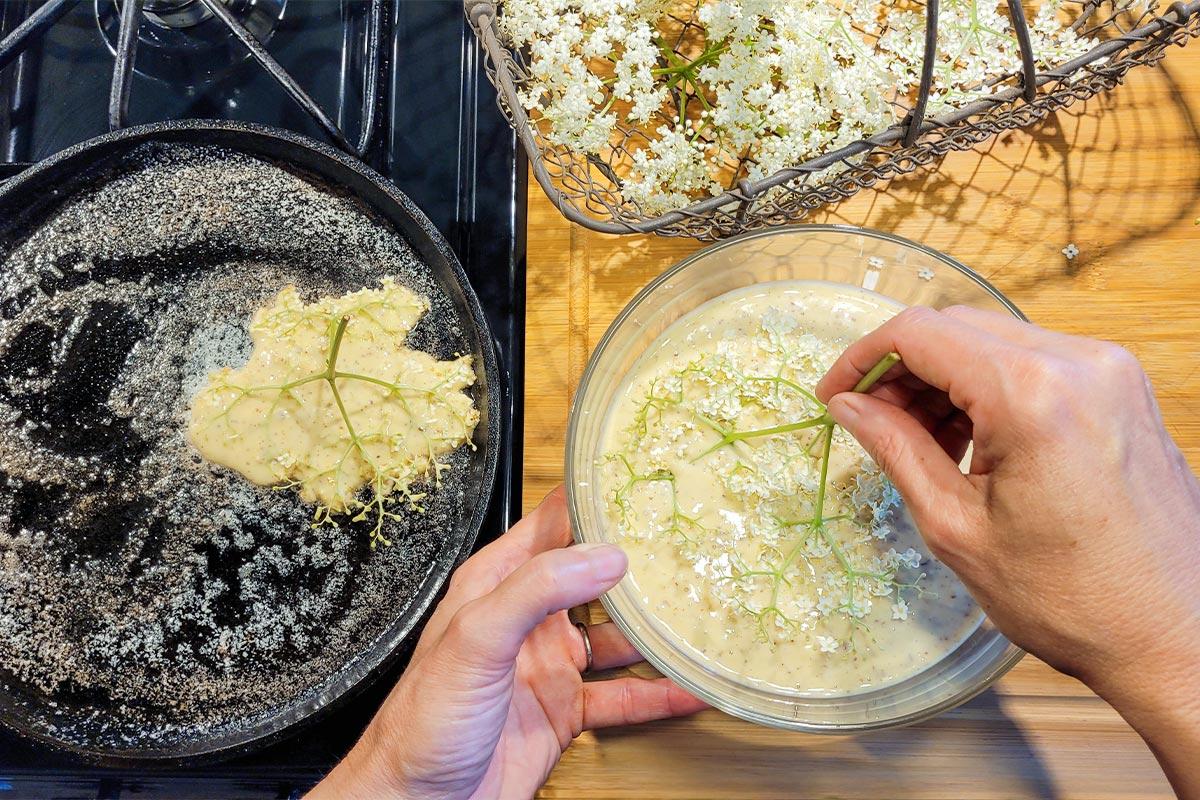
Step 1: Prepare your favorite pancake batter and pour it into a shallow bowl. Preheat a lightly greased skillet or frying pan over medium heat.
Step 2: Take one elderflower umbel at a time, dip it into the pancake batter, and place it blossom-side down in the preheated pan.
(Alexandra Roach/The Epoch Times)
Alexandra Roach/The Epoch Times
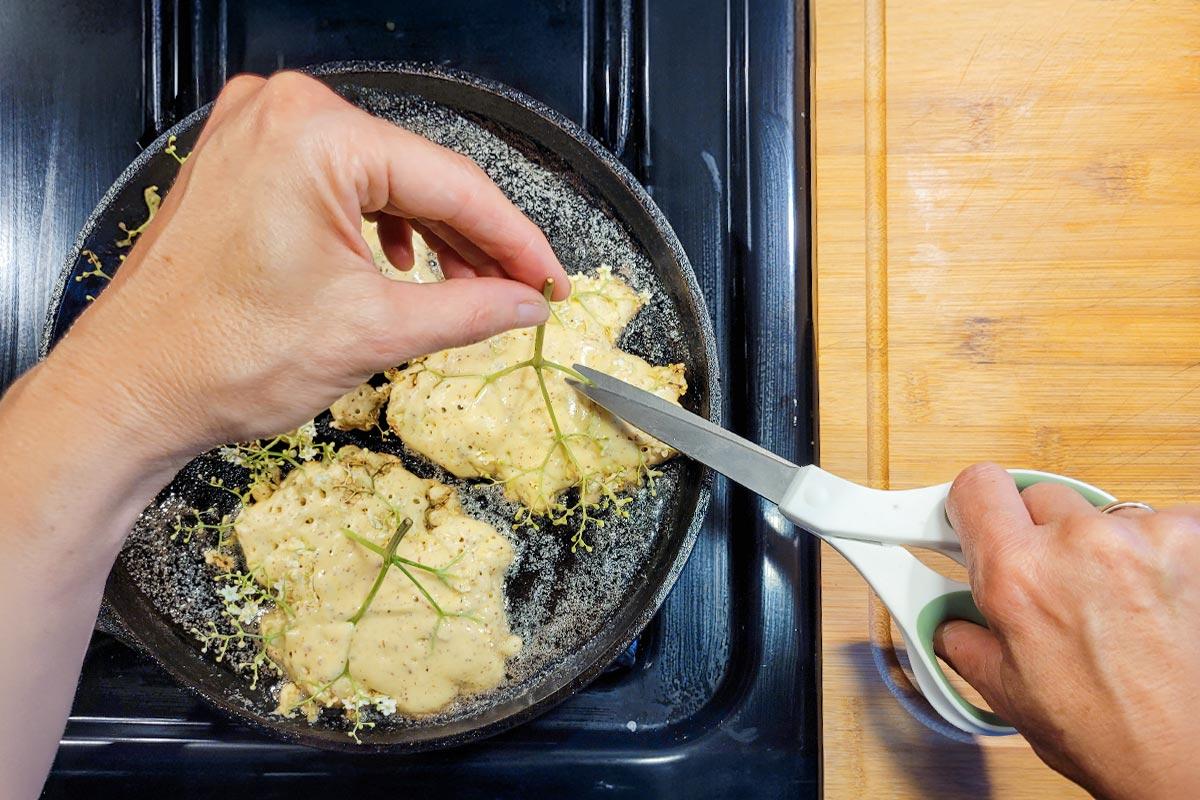
Step 3: While the first side is frying, use scissors to cut off the main stem close to the flower head.
(Alexandra Roach/The Epoch Times)
Alexandra Roach/The Epoch Times
Step 4: When bubbles begin to form in the batter and the underside is golden brown, carefully flip the pancake.
Step 5: Fry the second side of the pancake until it is golden brown and cooked through.
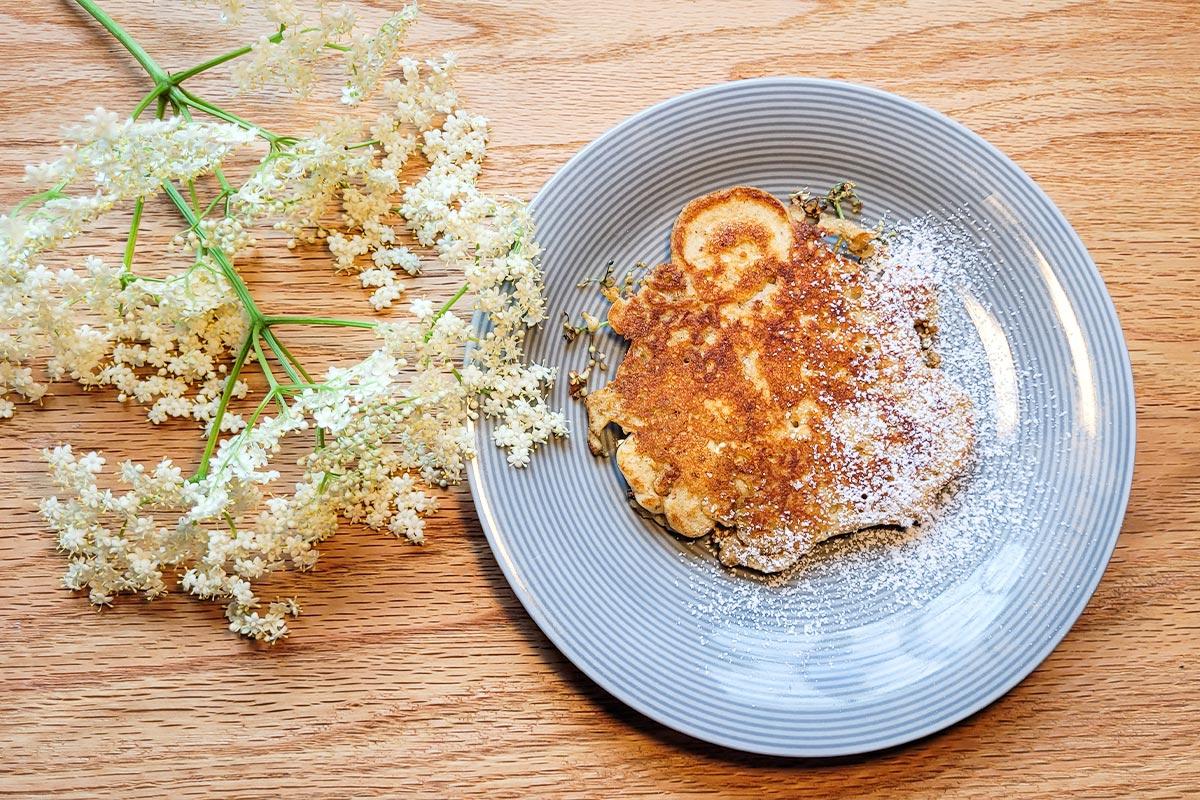
Step 6: Let cool slightly before dusting with powdered sugar and drizzling with maple syrup, if desired.
(Alexandra Roach/The Epoch Times)
Alexandra Roach/The Epoch Times
Of course, I am partial, but I enjoy elderflower pancakes best with a refreshing elderflower syrup tonic.

How to Make Homemade Elderflower Syrup

Even though homemade elderflower syrup has a high sugar content, it can still provide health benefits because of the presence of plant-based antioxidants and anti-inflammatory compounds in the flowers.

To transform your syrup into a health tonic, be mindful of the portion sizes and opt for minimally processed, unrefined sugars.

Tools
  • Saucepan
  • Jar
  • Cheesecloth (or thin kitchen towel)
  • Glass maple syrup bottles
Ingredients
  • 1 1/4 cups water
  • 5 cups granulated sugar
  • 1 organic lemon, sliced
  • 25 to 30 elderflower umbels
Total Time: 1 hour, 15 minutes
Makes about 25 ounces of syrup
Instructions
Step 1: In a saucepan, combine the water and sugar. Bring to a gentle simmer, stirring until the sugar is completely dissolved.
Step 2: Wash the lemon thoroughly and cut it into slices, discarding the ends.
Step 3: If desired, lightly rinse the elderflowers. Keep in mind that rinsing can wash away some of the pollen, reducing the flavor. I chose not to wash mine; instead, I laid them out in the sun to allow insects to crawl away.
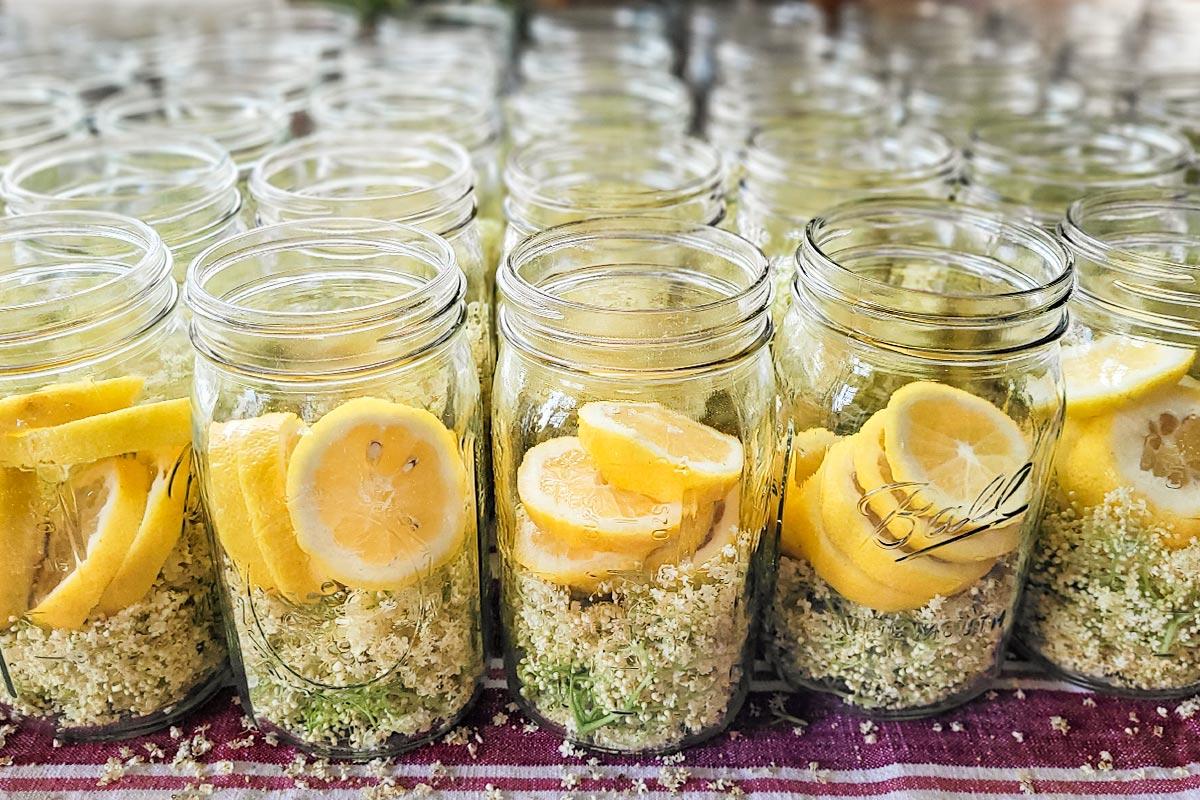
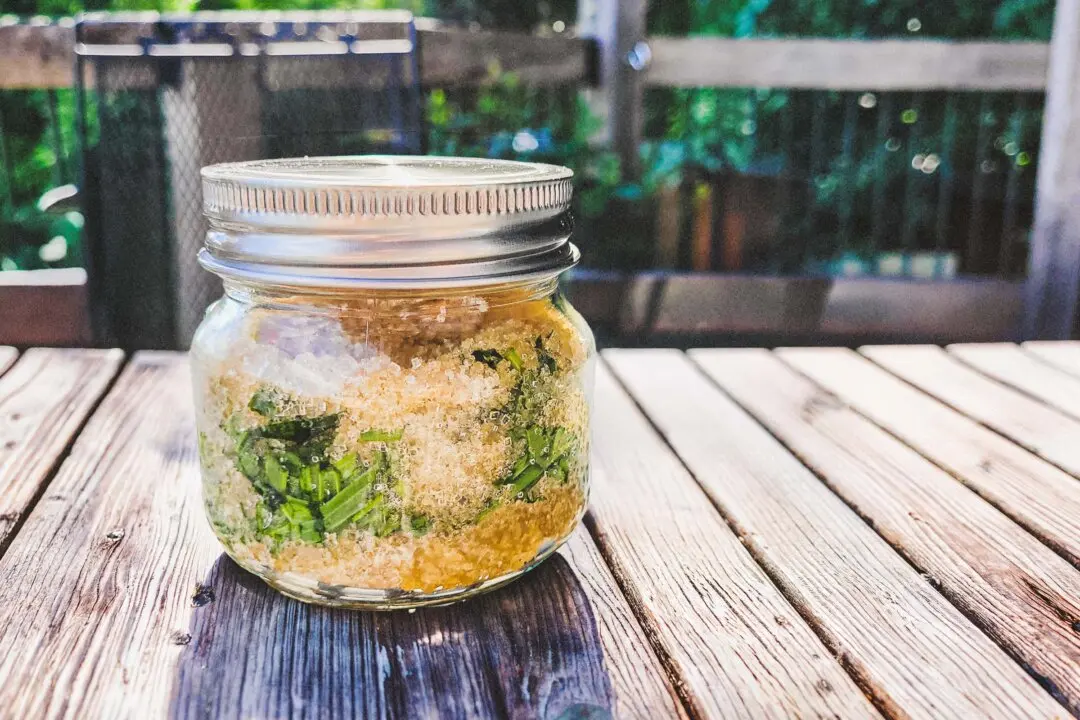
Step 4: In a large jar, layer the elderflowers and lemon slices alternately, pressing them down as you go.
(Alexandra Roach/The Epoch Times)
Alexandra Roach/The Epoch Times
Step 5: Fill the jar with the hot syrup mixture. Close the lid and allow it to rest for 24 to 48 hours, gently turning the jar over occasionally.
Step 6: After the extraction time is complete, strain the syrup into a pot using a wet cheesecloth or a thin kitchen towel (wetting the cloth prevents it from soaking up too much syrup). Wring out the flowers and press out the lemon slices to extract as much liquid as possible.
Step 7: Bring the syrup to a boil and cook for about 1 to 2 minutes, or until it reaches your desired thickness.
Step 8: Pour the syrup into clean, sanitized bottles. Seal and let cool completely.
Storage: Store unopened bottles in a cool, dark place. Once opened, refrigerate and use within several weeks for best quality.
Note

This syrup is a concentrate. To make a tonic, use about 1 teaspoon to 1 tablespoon for an 8-ounce glass of water (depending on how sweet you like your drink), or mix it with sparkling water and ice to create a refreshing nonalcoholic summer drink popular in Europe.

Elderflower pancakes and a refreshing elderflower tonic are simple ways to enjoy one of early summer’s most fragrant and flavorful seasonal ingredients.
Alexandra Roach
Alexandra Roach
Author
Alexandra Roach is a holistic health practitioner, community herbalist, and master gardener. She studied sustainable food and farming and lives with her family on an off-grid permaculture homestead. Roach works as a journalist and author, and writes with a broad perspective on health, gardening, and lifestyle choices.