Americans increasingly seek control over how they die. Yet the data suggests that control is often elusive.
The drugs used in medically assisted suicide—a cocktail of familiar medications—are given off-label in lethal doses, yet they receive sparse research.
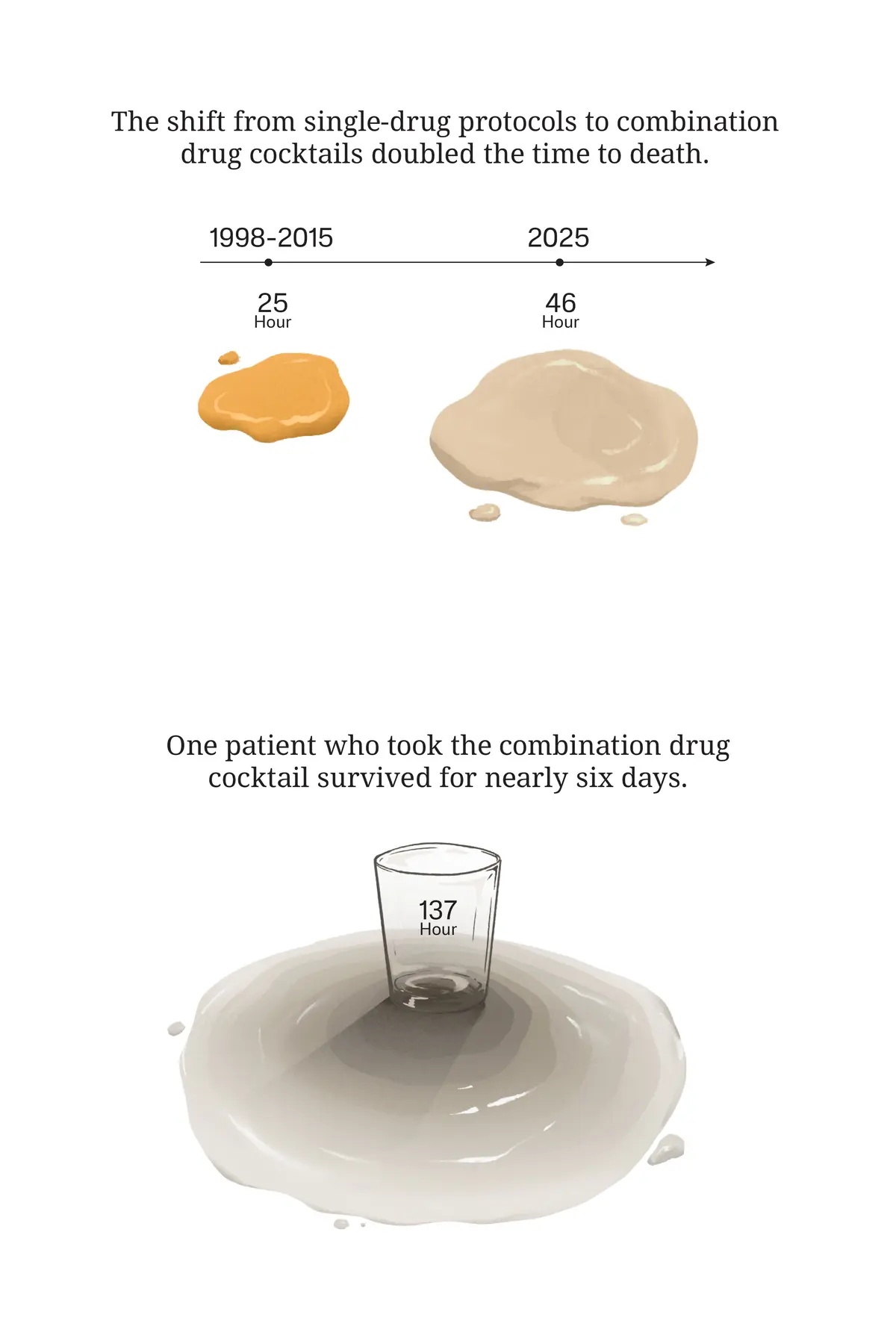
Even when results appear predictable, the common protocols used don’t always work as expected, leaving loved ones to be witnesses to vomiting, gasping, and deaths that stretch across hours or days.
A Protocol Built on Shifting Ground


Dr. Kerri Mason, medical director for Denver Health’s medical aid in dying program, told The Epoch Times she personally substitutes hydromorphone for morphine to lower the volume of powder in the drug cocktail to make it more palatable.
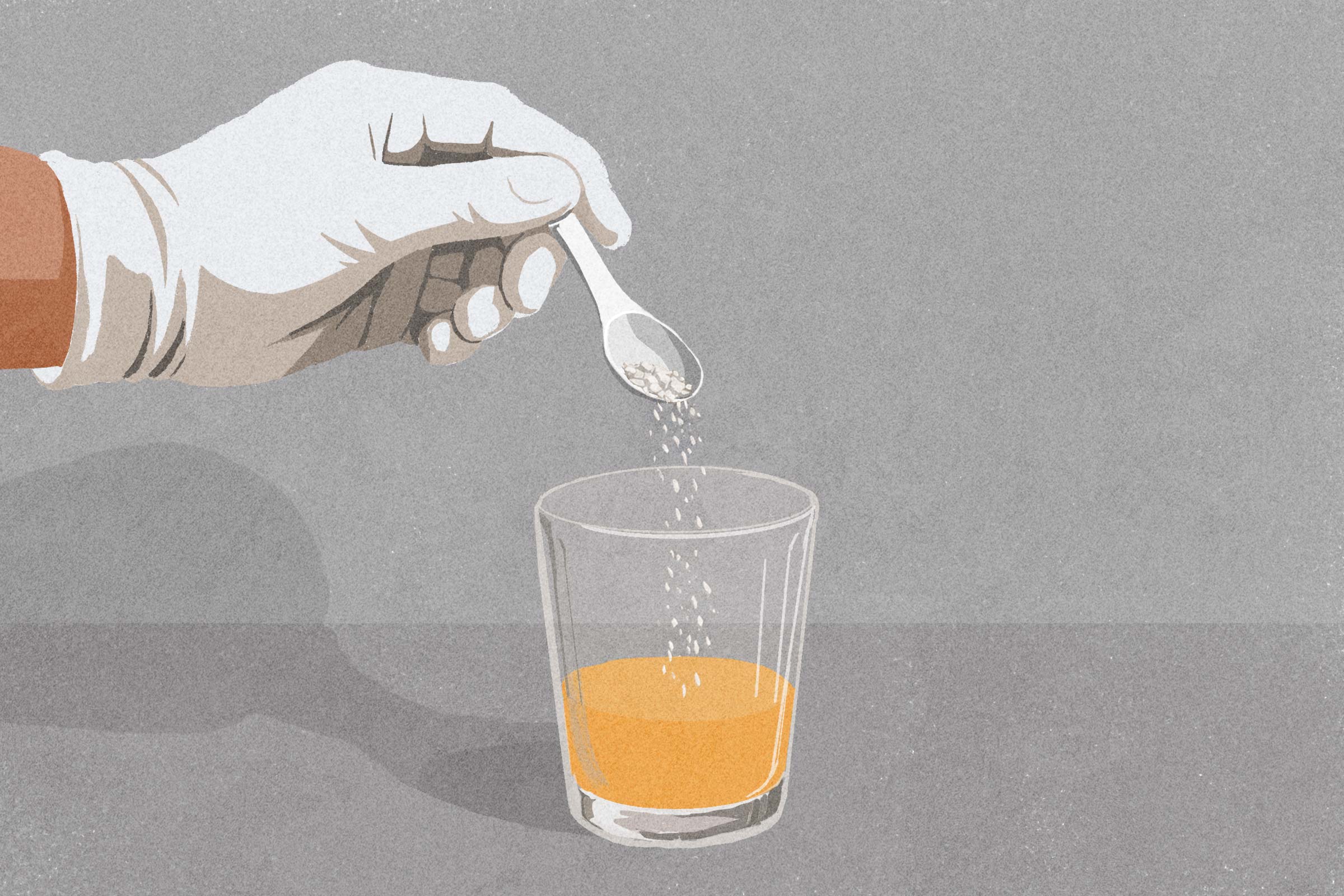
MAID drugs are ground-up pills given in powder form to be mixed with two ounces of apple juice or another sweet drink to offset the bitter taste. Patients must be able to ingest the mixture themselves, though family members are permitted to mix it. They must have a terminal diagnosis with less than six months to live and be at least 18 years old.
The academy is currently working with End of Life Washington to assess a high-dose version of DDMAPh that doubles the doses of diazepam and phenobarbital for patients with opiate or benzodiazepine tolerance. Some prescribers are using the formulation for all patients.
No single drug or combination of drugs used in MAID has been stringently assessed for efficacy or safety in this context, according to the British Medical Bulletin. The potential exists, the authors wrote, for the drugs to cause distressing deaths, which is the very thing MAID patients may be trying to avoid.
The Data That Isn’t There
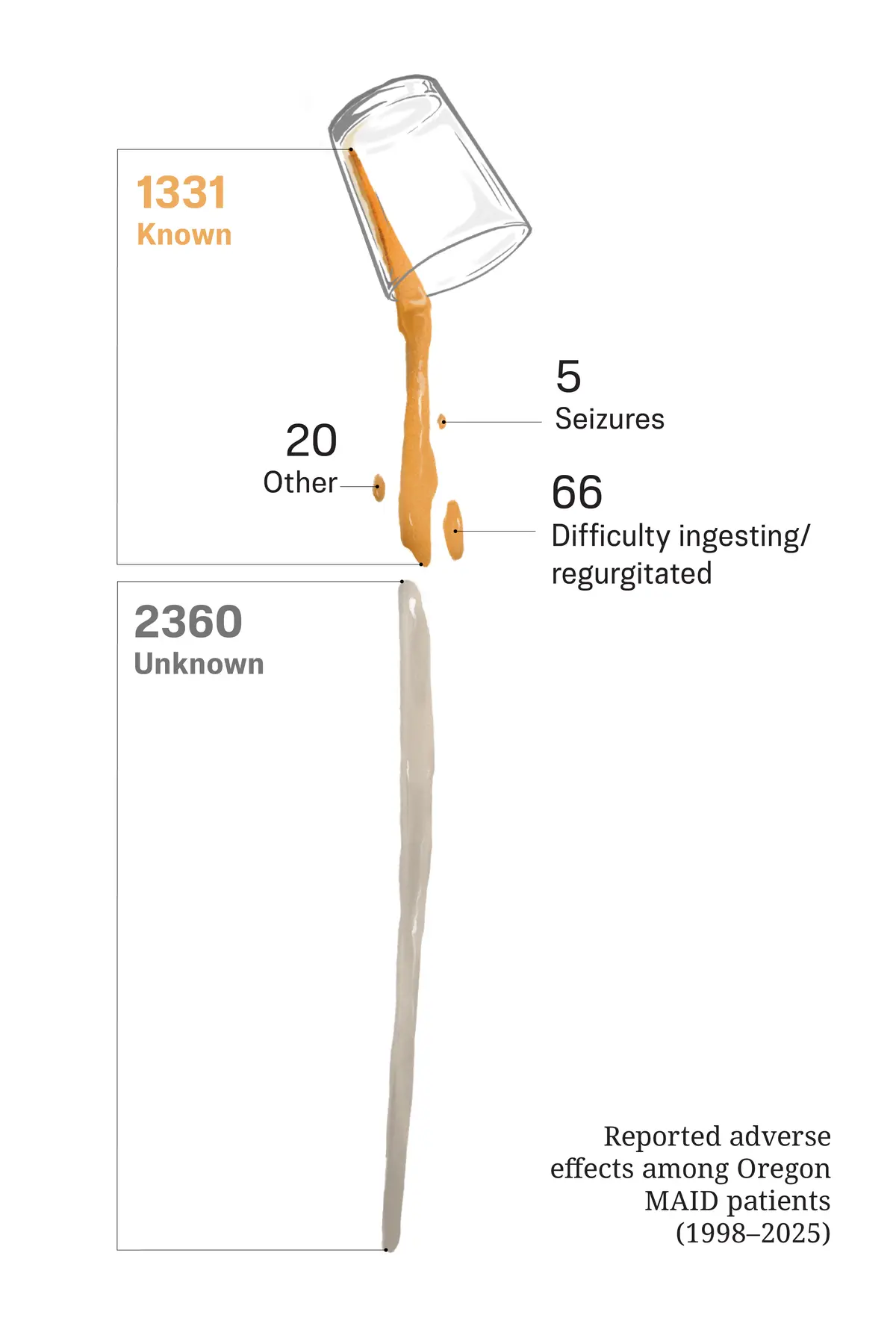
When emergency situations do arise, the response can be uncertain. California’s 2024 report noted that emergency medical services were called in three cases, a figure drawn from data covering only about half of patients who took their prescription.
Each state differs in how it collects data and what is reported, with eight states having filed up-to-date reports. Washington has suspended reports due to budget cuts. New Mexico collects information but doesn’t have public reports available, and Montana isn’t required to file reports because medical aid in dying was adopted as a result of the supreme court action rather than legislation. Some data on the reports is unclear; for instance, the number of filed cases in New Jersey could mean prescriptions, physician attended deaths, or patients who took the drugs.
“Complications, whether a little bit of nausea or an extended onset till death, can be torturous for a patient or for loved ones,” he wrote.
One reason the data regarding MAID deaths is lacking is that healthcare providers are not required to be present for the ingestion of drugs. Some patients do not want a doctor present and prefer to die with only their loved ones present, Mason said.
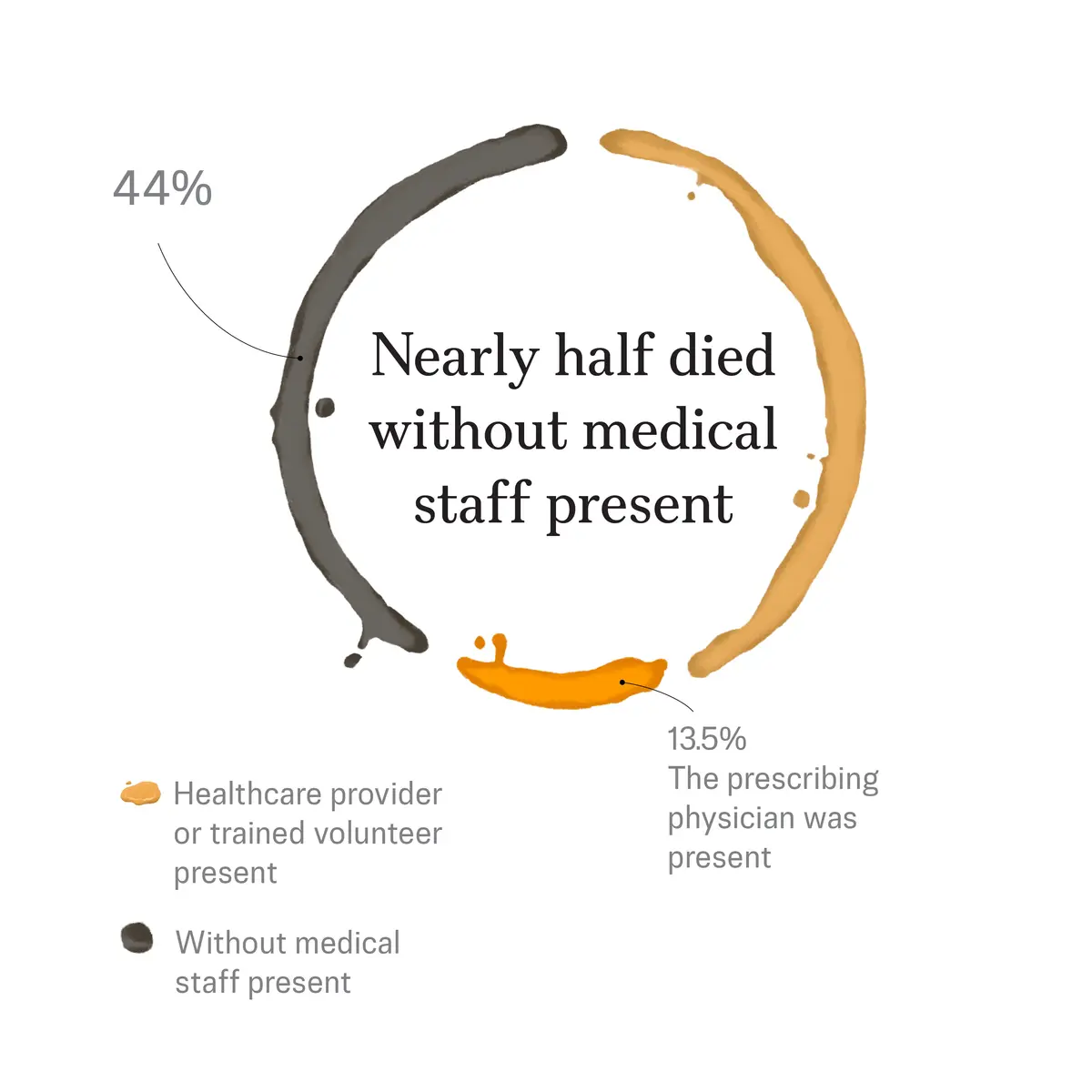
The British Medical Journal article found no reports of systematic monitoring of brain activity until death, blood levels of drugs, or postmortem examination of the lungs. The article went on to note that clinicians may be hesitant to reveal errors or complications.
“Despite limitations in data collection, statistics published in annual reports do reveal that ‘assisted’ deaths are not always accomplished quickly and without complication,” the authors wrote.
The lack of doctor involvement and inconsistency in data reporting reveal a deeper problem—more concern for ideologies than for science, Dr. Brick Lantz, vice president of advocacy and bioethics for Christian Medical and Dental Associations, a nonprofit organization that addresses healthcare policy issues, told The Epoch Times.
A concerned healthcare provider wants to report and review data, he said.
What Families See
Mason, who is sometimes present with her patients when they take their medication, is candid about the limits of prediction. She said there’s no way to predict how long it will take before somebody dies.
However, those whose deaths take longer tend to be patients with abnormal metabolism—either because they were extraordinarily fit before becoming ill or because of obesity. Other cases of delayed death tend to be patients with liver disease and neurodegenerative diseases who are otherwise healthy.
Physical movements during the dying process—known as tonic movements—can alarm loved ones who aren’t prepared for them. “That can be a little bit disconcerting,” Mason said, “but that’s a totally normal physiologic response to hypoxia.”
For families watching a loved one vomit or struggle to keep the medication down, the distress cuts deeper. It’s hard to know whether they’ve ingested an effective dose and if they are suffering, Lantz said.
“The drugs have not been developed or designed to do what they’re doing, which is killing a person,” he said. “Normally, patients don’t even know what they’re taking. Nobody knows what the person’s feeling. So, it’s a healthcare mess. It’s a moral mess right now.”
Patients Lost in the Process
Data on patient outcomes are frequently lost in medicine because follow-up isn’t always necessary, Mason said, and MAID is no exception, especially since none of the patients are expected to live beyond a year. “Somebody either takes it or doesn’t take it and dies, and their family didn’t reach back to their provider ... They just kind of get lost.”
Each state has different requirements for data collected, with few reporting complications or time-to-death. Most reports contain only the patient’s basic demographics and three numbers: prescriptions written, deaths from ingestion, and deaths from other causes.
In Oregon, 99 patients in 2025 had an unknown outcome; they were prescribed drugs, but whether they took them or died wasn’t reported. In California, 388 patients had an unknown ingestion status in 2024.
The data gaps represent something more fundamental—a field that has moved faster than its own evidence base, Riley said. Data collection needs to be taken seriously, and more research is needed, he added, while proponents should cease romanticizing complication-free deaths.
“This notion has allowed much of the general public to write them off as humane and turn a blind eye to any potential problems.”