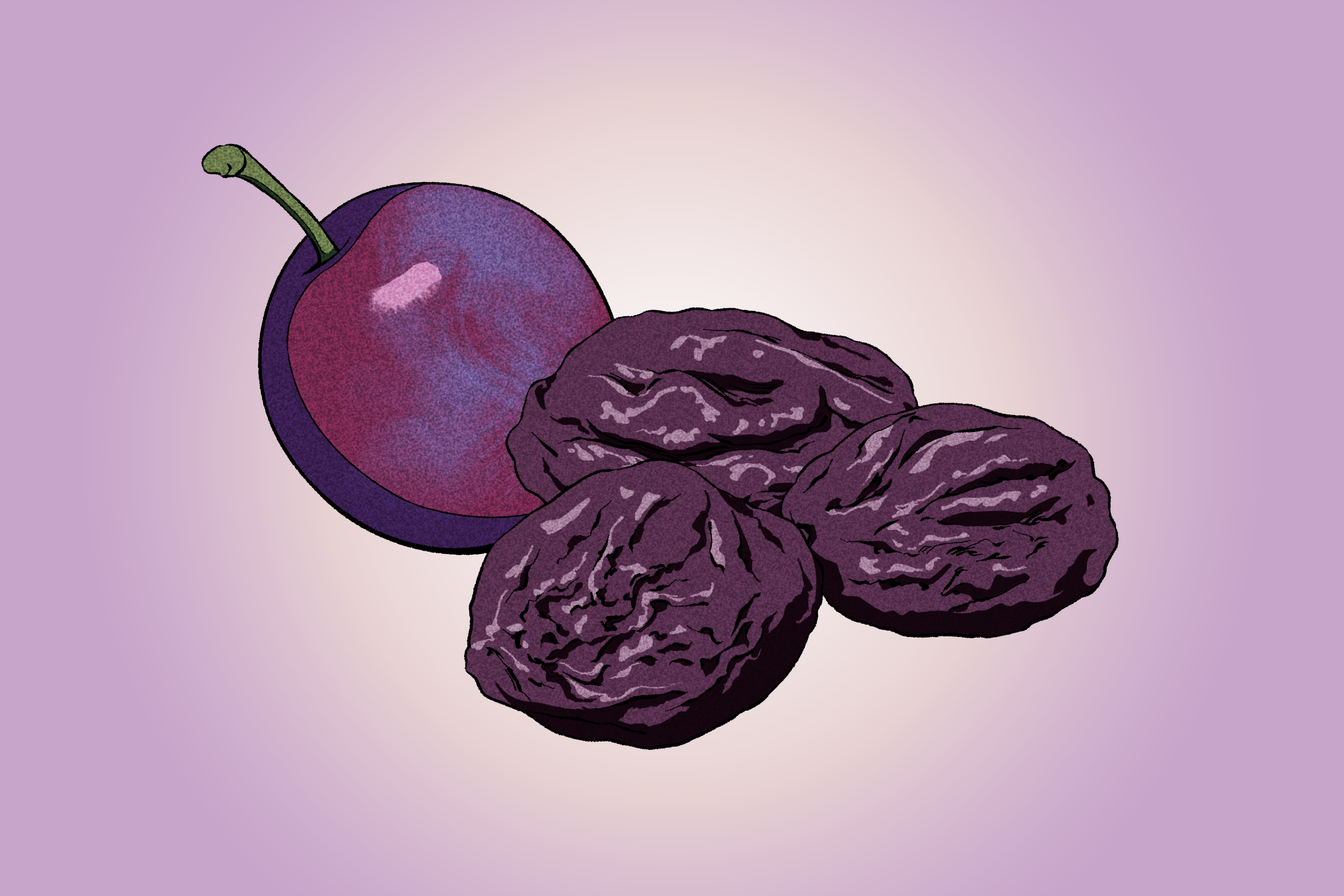

Turns out, your grandmother was right about prunes. If you need to get things moving, you may want to reach for a handful.
“They’re often thought of as a grandmother’s remedy,” Dr. Carmen Fong, a double-board-certified colorectal surgeon and chief medical officer of Bummed, told The Epoch Times in an email. “But they work because they work.”
Beyond their ability to support elimination, a growing body of research now links a daily serving of prunes to everything from bone density and heart health to inflammation, metabolic function, and, yes, digestive regularity.
It’s time to take prunes seriously.
Key Nutrients
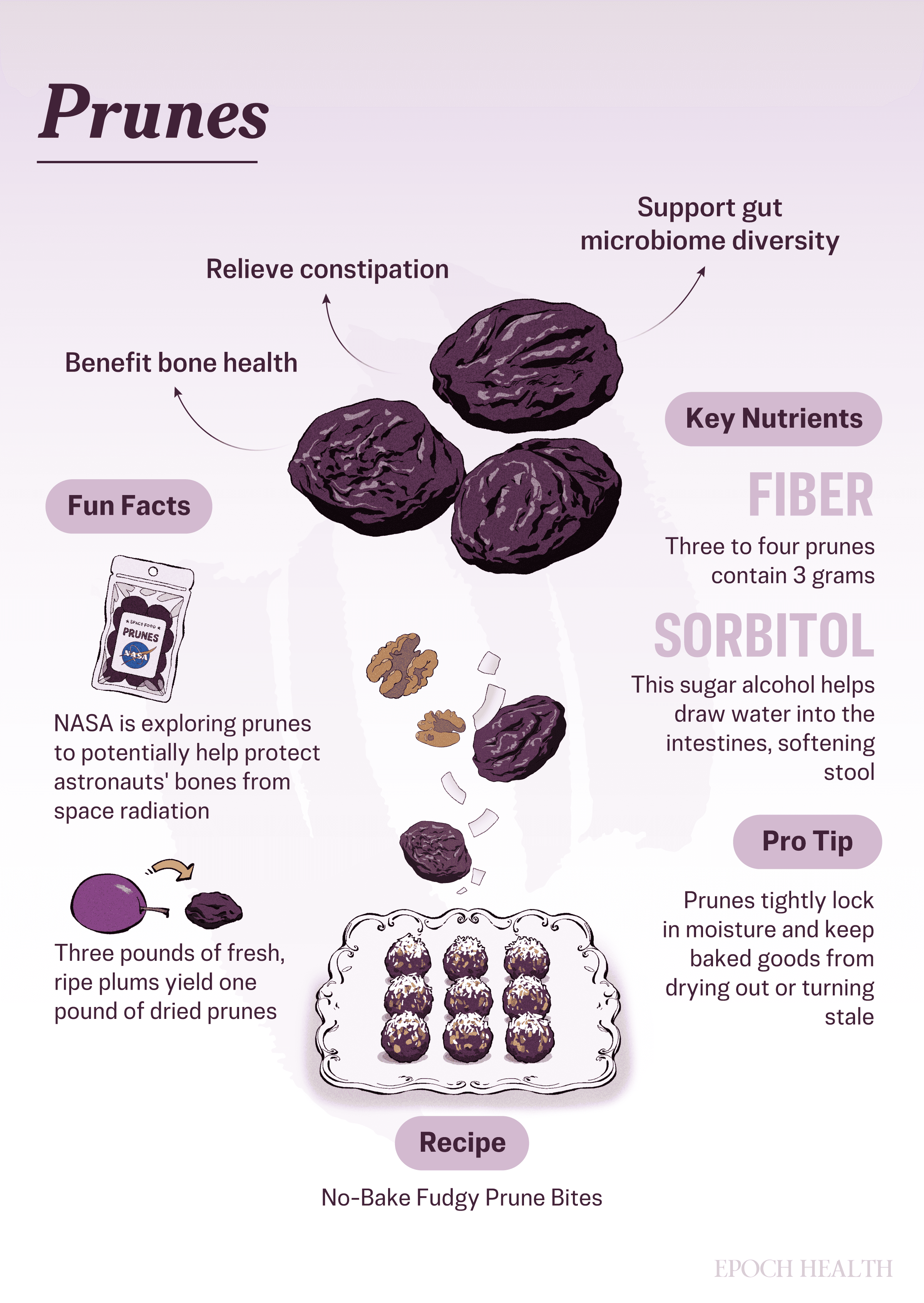
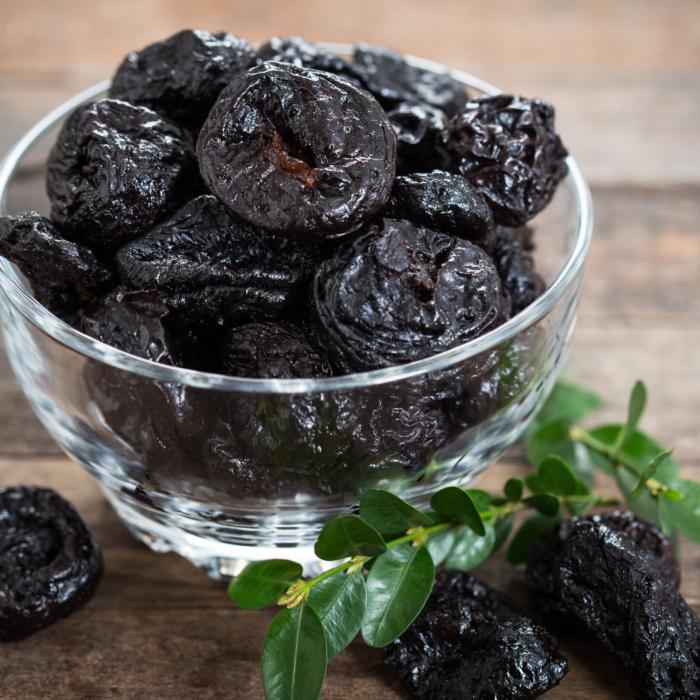
- Fiber: Prunes contain roughly three grams of dietary fiber per 40-gram serving, which is about four to six prunes, depending on their size.
- Vitamin K: Four to six prunes provide about 20 percent of the daily value for vitamin K.
- Sorbitol: Prunes are naturally rich in sorbitol, a sugar alcohol that draws water into the intestines and helps soften stool.
- Potassium: Four to six prunes provide about 6 percent of the daily value for potassium, a mineral that is important for a variety of functions essential for health.
- Polyphenols: Prunes are rich in polyphenols, naturally occurring plant compounds with antioxidant properties.
Health Benefits
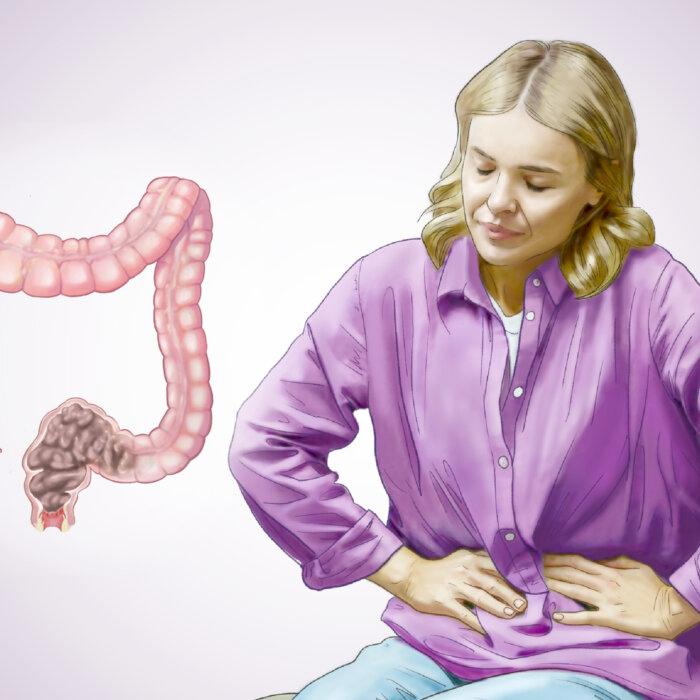
Relieve Constipation
“Prunes are among the most thoroughly researched whole foods for constipation management,” David Goldman, a registered dietitian, told The Epoch Times in an email.The key to prunes’ digestive benefits may lie in their combination of fiber, sorbitol, and polyphenols.
Fiber helps by increasing stool bulk and retaining water within the stool, Fong said. The fiber in prunes is mostly insoluble, which supports stool regularity and transit time, with a smaller amount of soluble fiber, which forms a gel-like substance that can help soften stool and support beneficial gut bacteria.
“Prunes contain a lot of sorbitol, a ‘natural laxative,’ which is what makes them so effective,” she said.
Sorbitol works by drawing water into the colon, softening stool and improving motility.
Benefits Bone Health
Prunes may help preserve bone density, particularly in postmenopausal women. In a 12-month randomized controlled trial published in 2022 in The American Journal of Clinical Nutrition, daily consumption of 50 grams of prunes, about five to six, helped maintain hip bone mineral density compared with bone loss in the control group, suggesting a potential drug-free strategy for helping preserve bone mass.Supports Gut Microbiome Diversity
Early research suggests that prunes may act as a prebiotic, influencing gut microbiome composition.“There is evidence that prunes may help feed the good bacteria in the gut, promoting a healthy microbiome,” Fong said, noting that their fiber also acts as a prebiotic by feeding beneficial gut bacteria.
The effects of prunes on the gut may reach beyond specific bacteria and help shape the microbiome as a whole.
Additional Benefits
Prunes may aid in weight management. A 2021 study published in Nutrition Bulletin found that they improved short-term satiety and did not adversely affect weight-management outcomes when used as a snack replacement.“Prunes can absolutely fit into a blood‑sugar‑friendly lifestyle. Pair them with protein or healthy fats, and they digest slowly and steadily,” Clancy-Strawn said.
“Despite their natural sweetness, prunes do not cause a rapid spike in blood sugar. Their glycemic index is estimated at 29, well within the low range, due to their fiber, fructose, sorbitol, and plant compounds that slow glucose absorption,” Goldman said.
How to Increase Absorption
Pairing prunes with healthy fats can support the absorption of fat-soluble nutrients, such as vitamin K, as part of a balanced eating pattern.
She suggests eating prunes with foods rich in vitamin C, such as citrus, berries, or bell peppers, to enhance non-heme iron absorption.
Combining them with zinc‑rich foods like beans, meat, or poultry may support immune function, she added.
Optimal Storage
- Keep unopened packages of prunes in a cool, dry, and dark place such as a pantry or cupboard, away from direct sunlight and heat sources like the stove. Stored this way, they typically remain fresh for several months to about a year, depending on conditions and packaging.
- Once opened, transfer prunes to an airtight container or a resealable bag, removing as much excess air as possible. Refrigeration helps maintain their quality and extends shelf life for several months, up to about a year.
- For longer storage, prunes also freeze well due to their low moisture and natural sugar content. If you buy them in bulk, portion them into a freezer-safe bag or container, press out any excess air, and freeze for up to two years. They will not freeze into a solid block, so individual portions can be removed as needed without thawing the entire batch.
Pro Tips
“A quarter cup of prune puree can substitute for one large egg in many recipes,” Goldman said.
Prunes also have a place in savory dishes.
“Prune puree works well as a thickener and natural sweetener in sauces, marinades, and braises,” he said, noting that they have been used that way in Moroccan and Persian cuisines for centuries.
Their natural sugars and acidity can help tenderize and soften tougher cuts of meat.
Recipe: No-Bake Fudgy Prune Bites
Fudgy Prune Bites come together quickly with no oven required. The healthy fats from the nuts and seeds help support the absorption of fat-soluble nutrients, while the prunes add a natural, subtle sweetness and act as a nutrient-dense “glue” that binds everything together without the need for added sugar.
- 3/4 cup raw walnuts
- 1/2 cup pitted prunes
- 1/4 cup peanut butter
- 2 tablespoons cocoa powder
- 1 tablespoon chia seeds
- 1 tablespoon hemp seeds
- 1 teaspoon ground cinnamon
- 1/4 teaspoon salt
- 1/4 to 1/2 cup shredded coconut
- 1 to 2 teaspoons water, if needed
- Additional walnuts, if needed
- Add the walnuts to a food processor and pulse until coarsely chopped.
- Add the prunes, peanut butter, cocoa powder, chia seeds, hemp seeds, cinnamon, and salt. Process until the mixture is well combined and begins to clump together.
- Pinch a small amount of the mixture between your fingers. It should hold together easily. If it seems too dry, add 1 teaspoon of water at a time, pulsing after each addition. If it feels overly sticky, add two to three walnuts at a time and pulse until the desired consistency is reached.
- Scoop about 1 tablespoon of the mixture and gently roll it into a ball. Repeat with the remaining mixture.
- Place the shredded coconut on a small plate and roll each ball until lightly coated.
- Refrigerate for 10 minutes to firm up before serving.
- Store in an airtight container in the refrigerator for up to one week.
Precautions
“Going from zero to 12 prunes a day will cause bloating and GI upset,” Fong said. “Drink water, because fiber without water turns into concrete in the colon.”
She recommends that people with irritable bowel syndrome and those prone to diarrhea may want to proceed with caution.
If you’re using prunes to combat constipation and they don’t provide relief, it’s important to see a medical provider to evaluate for any underlying medical issues or pelvic floor dysfunction, she said.
Eating large quantities in one sitting can also result in a higher overall glycemic load, which may affect blood sugar levels.
“Those with diabetes should watch their glucose levels,” she said.
Fun Facts
- California produces 99 percent of the United States’ supply of prunes and roughly 40 percent of the world’s supply.
- NASA is exploring prunes for astronauts to potentially protect against the bone-damaging effects of space radiation.
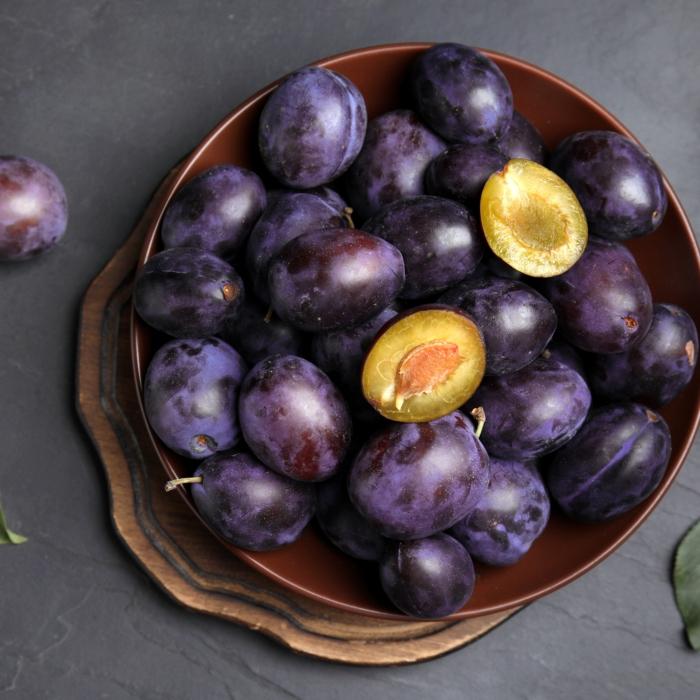
- It takes roughly three pounds of fresh, ripe plums to yield just one single pound of dried prunes.
- Nearly all of the prunes grown in the United States trace back to a single French plum tree imported in 1850.
Tips for Kids
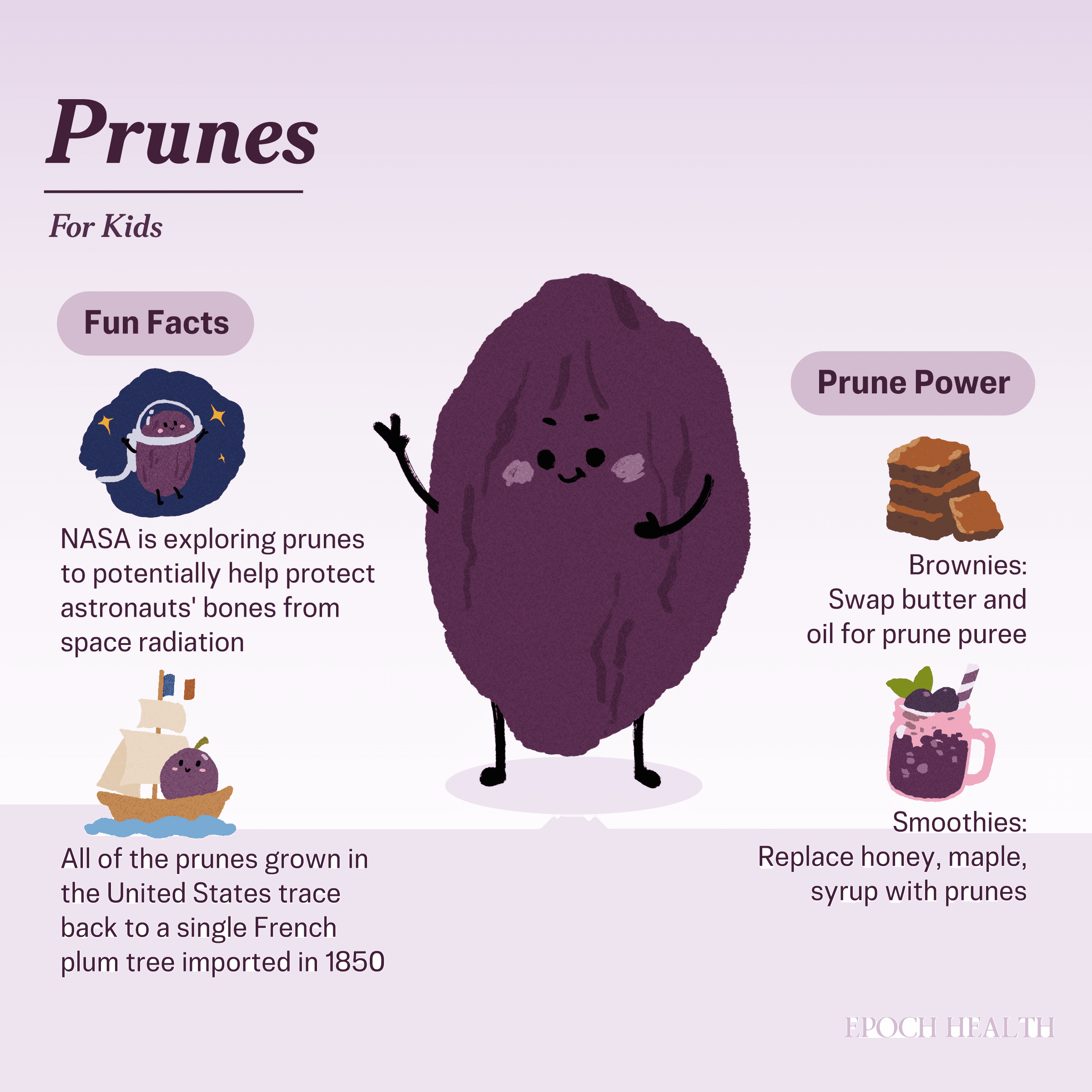
Because kids have smaller digestive systems, it’s best to start slowly. Fiber and sorbitol can cause gas or loose stools if their intake increases too quickly.
“One or two prunes at a time, and chop them finely for younger children,” Clancy said, adding that for constipation in kids, they’re a gentle, food-based option, but chronic issues should always be discussed with a pediatrician.
“Whole prunes are a choking risk for children under 18 to 24 months and should be pitted, softened, and mashed before serving,” Goldman said.