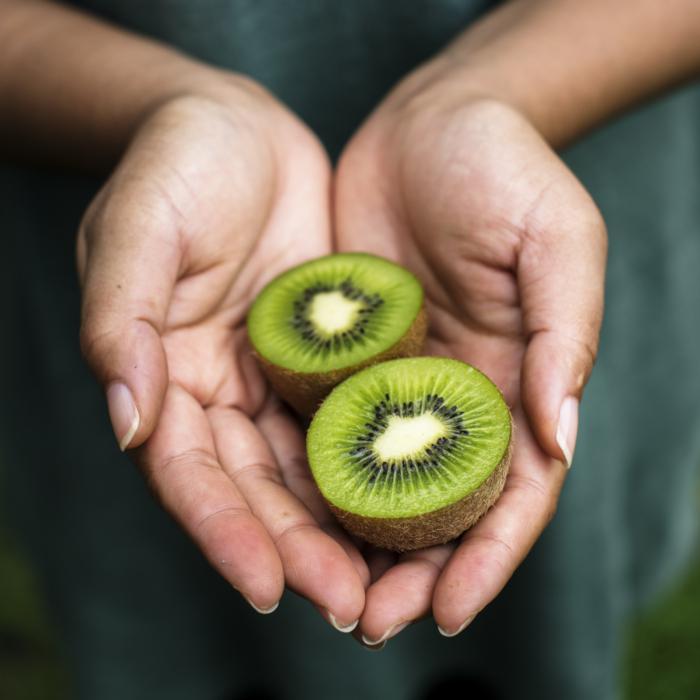
Kiwifruit, also known as monkey peach due to monkeys’ love of it, is rich in nutrients. It can help one lose weight, improve constipation, and help prevent cancer and cardiovascular diseases. Further supporting kiwifruit’s health benefits, a team from a Japanese TV program surveyed kiwifruit farmers and found that their blood vessel age was, on average, 21 years younger than their actual age.
Kiwi’s Nutrition Contents
Kiwifruit is one of the most nutrient-dense fruits. According to the U.S. Department of Agriculture (USDA) data, every 100 grams (3.5 ounces) of kiwifruit contains:- 74.7 milligrams of vitamin C.
- 1.3 milligrams of vitamin E (alpha-tocopherol).
- 52 micrograms of beta carotene.
- 122 micrograms of lutein.
- 0.3 micrograms of vitamin K.
- 3 grams of total dietary fiber.
- 35 milligrams of calcium.
- 15.7 milligrams of magnesium.
- 34 milligrams of phosphorus.
- 198 milligrams of potassium.
- 74.7 milligrams of total ascorbic acid.
Anti-Cancer Properties
According to professor Ozaki Yoshihiko from the Faculty of Biophysics and Engineering of Kinki University, who has a doctorate in agriculture, kiwifruit is a “nutritional treasure trove” that not only inhibits the mutation of cancer-inducing genes but also helps prevent coronary heart disease, high blood pressure, atherosclerosis, and other cardiovascular diseases.Mr. Ozaki stated in an article that kiwifruit has powerful anti-mutagenic properties capable of inhibiting the production and action of carcinogens that induce mutations in cancer-causing cells, which help prevent cancer.
In 2022, an animal experiment in Japan found that the components of kiwifruit juice can help prevent and reduce lung cancer. It can enhance the repair of DNA damage by affecting DNA methyltransferase, thereby achieving anti-mutation effects.
A 2020 study in the journal Nutrition and Cancer also suggests that kiwifruit supplementation may be associated with both direct and indirect anti-cancer effects. Direct effects may be due to the ascorbic acid-mediated reduction of DNA oxidative damage and cytotoxic effect on cancer cell lines, and indirect likely attributable to improved daily bowel movements and more lactic acid bacteria in intestinal feces, ultimately helping lower the risk of malignant tumors, especially colorectal.
Helps Prevent Cardiovascular Disease
In his article, Mr. Ozaki stated that eating one or two kiwifruits a day is ideal. Kiwifruit contains a large amount of dietary fiber and a relatively high level of potassium and magnesium. Water-soluble dietary fiber can help lower blood sugar and cholesterol levels, and higher potassium intake can lower blood pressure and reduce the risk of heart attack. Potassium can also inhibit calcium excretion into urine. Magnesium is vital to the heart, muscles, nerves, and bones, and its deficiency will increase the risk of ischemic heart disease, hypertension, and osteoporosis.Dr. Honda Kyoko, a Japanese registered dietitian, once said on the Japanese television program “サタデープラス” (“Saturday Plus”) that kiwifruit protects blood vessels, and its potassium and vitamin C content can improve high blood pressure, high blood sugar levels, and relatively high neutral fat, resulting in weight loss.
The show’s team interviewed five kiwifruit farmers in New Zealand (who all eat kiwifruit regularly) and measured their blood vessel age. The results showed that their blood vessel age was, on average, 21 years younger than their actual age. In addition, the team also invited three people from the general public to eat two kiwifruits before meals every day. After 10 days, the waistlines of two of them decreased by about 2 inches (5 centimeters), and their body weight showed varying degrees of reduction.
Related Stories
In 2022, a study published in the European Heart Journal showed that potassium helps keep the heart healthy and that women benefit more than men.
A study by the University of Oslo in Norway showed that kiwifruit helps prevent cardiovascular diseases. Eating two or three kiwifruits a day continuously for 28 days can reduce the overactivity of platelets, thereby reducing blood lipid and blood pressure in the human body.
Another study published in Nutrition Journal showed that eating even one kiwifruit a week can help cardiovascular health, too.
The Institute of Nutrition and Health Science of Taipei Medical University also conducted a study in which 43 adult men and women with hyperlipidemia ate two kiwifruits a day for eight weeks. As a result, the concentration of high-density cholesterol (good cholesterol) in these patients with hyperlipidemia increased, the concentration of low-density cholesterol (“bad” cholesterol) decreased, and vitamins C and E levels in the body of all participants increased significantly. This indicates regular kiwifruit consumption can benefit hyperlipidemia patients’ antioxidant status and reduce their risk of cardiovascular disease.
Relieves Constipation
The causes of constipation vary from person to person. It is generally caused by insufficient water intake and/or dietary fiber, lack of exercise, weak bowel movements, excessive tension or stress, and a slowdown in the defecation reflex.In 2018, a literature review published in the European Journal of Nutrition pointed out growing evidence that kiwifruit benefits both digestive and overall body health. Studies have found that eating two kiwifruits a day can increase the number of bowel movements, including the number of entirely spontaneous bowel movements per week, shorten the time of gastrointestinal motility, and improve intestinal comfort.
3 Types of People Should Be Cautious
Dr. Lee Ping-Hsun, a plastic surgeon at Chang Gung Memorial Hospital in Tucheng, New Taipei, Taiwan, reminded everyone in an interview with The Epoch Times that although kiwifruit is nutritious, people should be aware of the following three situations:- People with kidney disease must restrict their potassium intake, so they should avoid eating kiwifruit because its potassium content is quite high.
- Overeating kiwifruit can affect blood coagulation, so people taking anticoagulant drugs should be wary, as kiwifruit can affect those drugs’ efficacy.
- Women should avoid eating kiwifruit during menstruation.