Nocturia: A Warning Sign
Liu noted that many medical conditions can trigger nocturia, including benign prostatic hyperplasia, diabetes or high blood sugar, overactive bladder, urinary tract infections, chronic heart diseases (such as heart failure), chronic kidney diseases, and sleep apnea.In addition, natural aging, modern-day stress and anxiety, and hormonal changes in women during menopause are also reasons for increased nighttime urination.
Nocturia From the TCM Lens
Healthy adults typically experience little to no nocturia, with occasional episodes at most. If frequent nighttime urination arises suddenly, it’s a signal to monitor your health and seek a medical evaluation.In younger people, nocturia often stems from what TCM calls “excess syndromes,” such as:


In older adults, nocturia is commonly linked to “deficiency syndromes,” particularly kidney qi deficiency, which includes:
Acupressure and Herbal Remedies
TCM emphasizes syndrome differentiation, meaning that treatment is tailored to the person’s specific patterns of imbalance rather than applying a one-size-fits-all approach. This is particularly important when treating nocturia, as its root causes can vary widely depending on a person’s age, lifestyle, and constitution.In younger people, factors like late nights, irregular meals, and screen overuse can throw off the body’s internal rhythms, leading to liver qi stagnation and damp-heat accumulation.
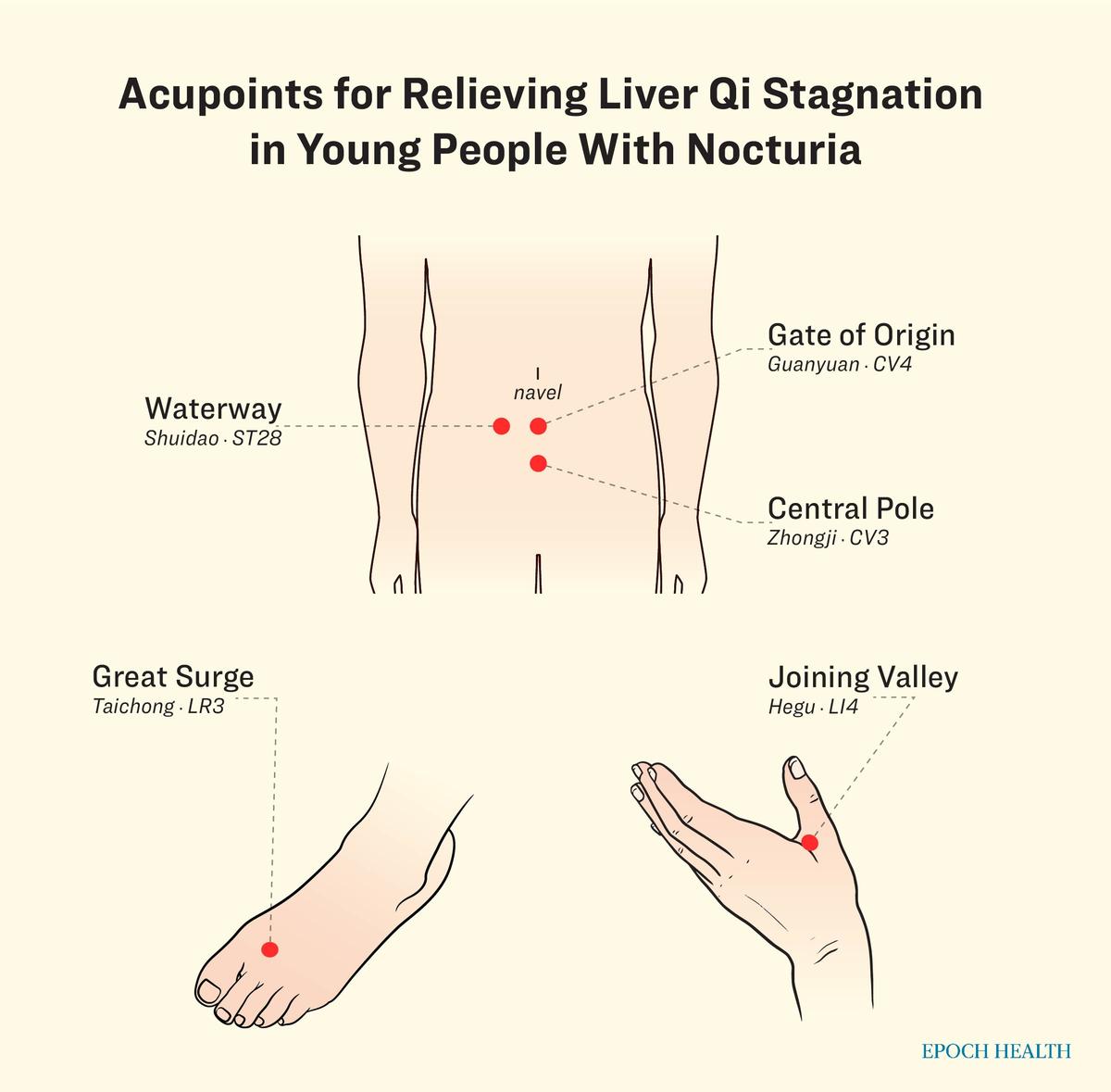
- Zhongji acupoint (CV3, Central Pole): Located on the midline of the lower abdomen, 5.2 inches below the navel
- Guanyuan acupoint (CV4, Gate of Origin): Located on the midline of the lower abdomen, 3.9 inches below the navel
- Shuidao acupoint (ST28, Waterway): Located on the lower abdomen, 3.9 inches below the navel and 2.6 inches lateral to the Guanyuan point
- Taichong acupoint (LR3, Great Surge): Located on the upper surface of the foot, in the depression between the first and second metatarsal bones
- Hegu acupoint (LI4, Joining Valley): Located on the upper surface of the hand, between the first and second metacarpal bones at the midpoint of the second metacarpal
- Sanyinjiao acupoint (SP6, Three Yin Intersection): Located on the inner side of the lower leg, about 3.9 inches above the tip of the inner ankle, just behind the medial border of the tibia
- Zusanli acupoint (ST36, Three Miles of the Foot): Located on the lateral side of the lower leg, about 4 inches below the kneecap and one finger-width lateral to the anterior crest of the tibia
- Shenshu acupoint (BL23, Kidney Shu): Located on the lower back, about 2 inches lateral to the midline, at the level of the second lumbar vertebra
- Pangguangshu acupoint (BL28, Bladder Shu): Located in the sacral region, about 2 inches lateral to the second sacral foramen
- Zhibian acupoint (BL54, Order’s Limit): Located on the buttocks, about 4 inches lateral to the midline of the sacrum, level with the fourth sacral foramen
- Guanyuan acupoint (CV4, Gate of Origin): Located on the midline of the lower abdomen, about 3.9 inches below the navel
- Zhongji acupoint (CV3, Central Pole): Located on the midline of the lower abdomen, about 5.2 inches below the navel
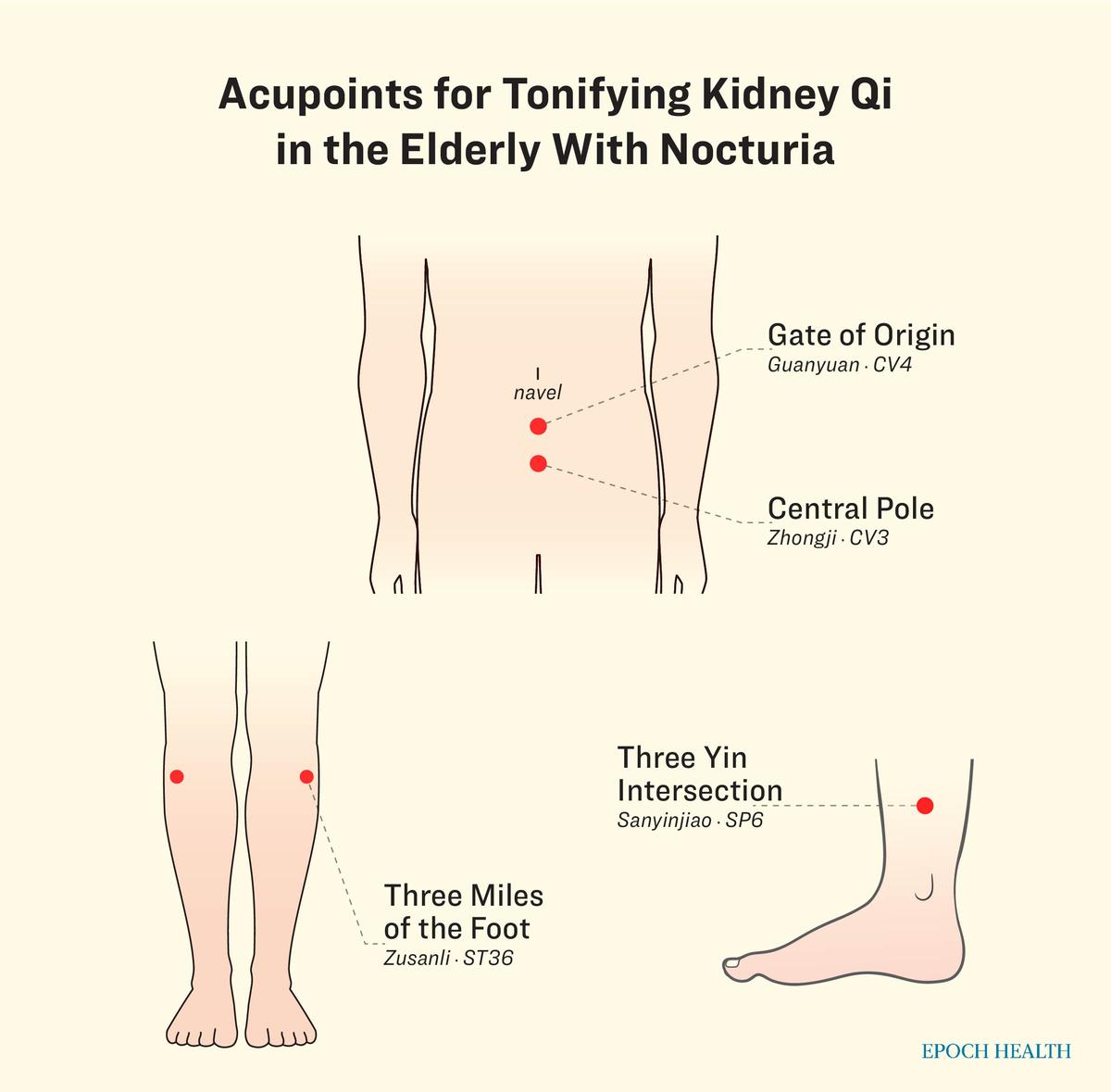
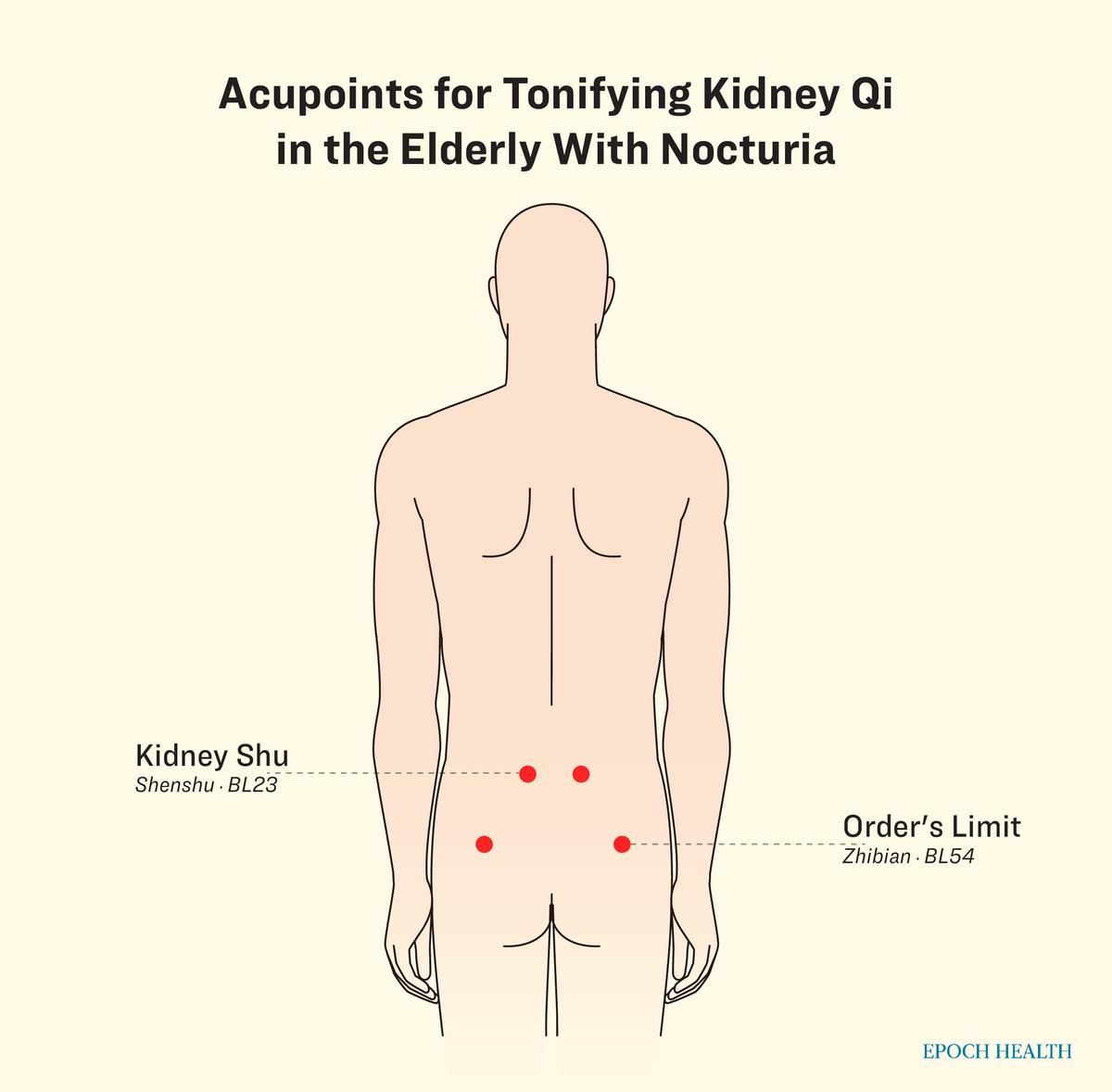
These points are used to warm the kidney yang, strengthen kidney qi, and support bladder control.
Dietary Therapy
Sometimes, certain acupoints can be difficult to massage. In such cases, the following dietary remedies may be more convenient.Corn Rosa Laevigata Paste
Corn Rosa Laevigata Paste, also known as “Jin Ying Zi Gao,” is made from the fruit of Jin Ying Zi (Rosa laevigata).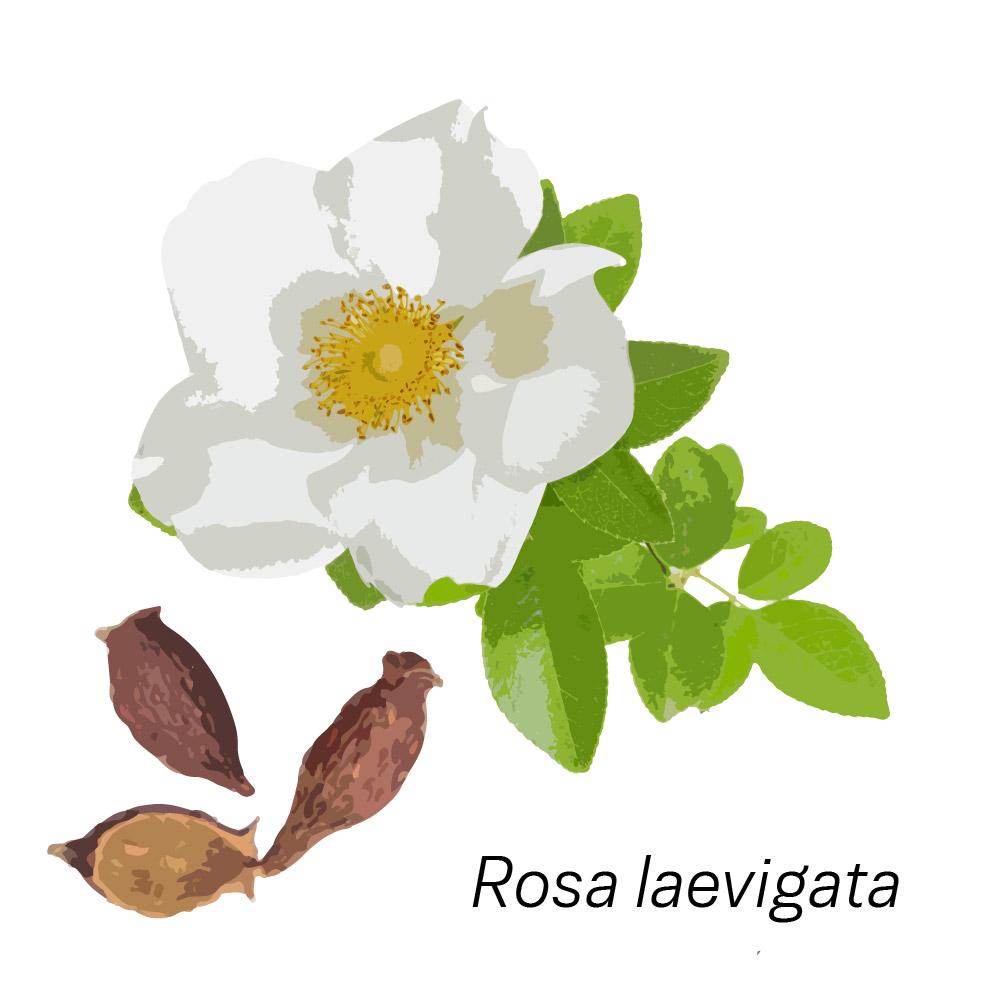
2.2 pounds Rosa laevigata
1 quart of water
Honey (amount adjusted to taste and consistency)
- Boil the Rosa laevigata in water.
- Simmer until about 500 milliliters remain.
- Strain and add honey to create a thick, smooth syrup or paste.
- Take 1 spoonful twice daily—once in the morning and once in the evening.
Related Formulation: ‘Shui Lu Er Xian Gao’
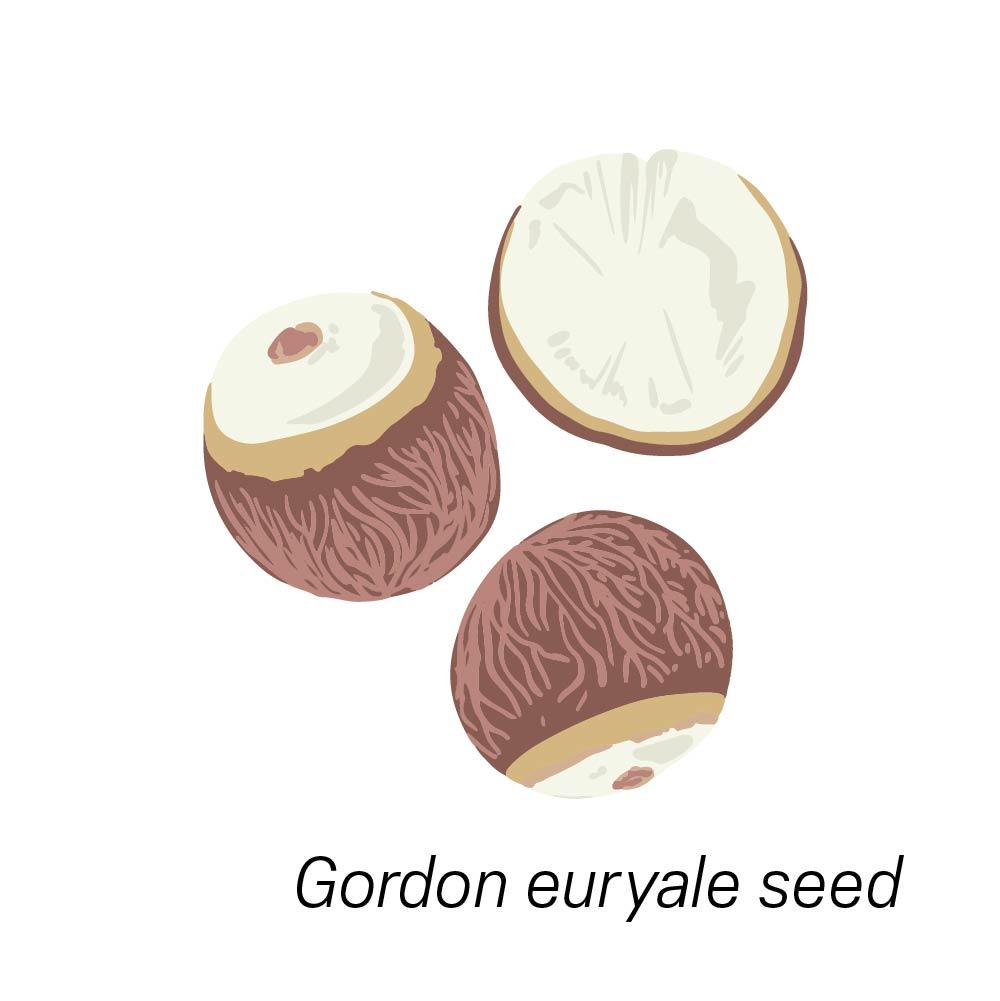
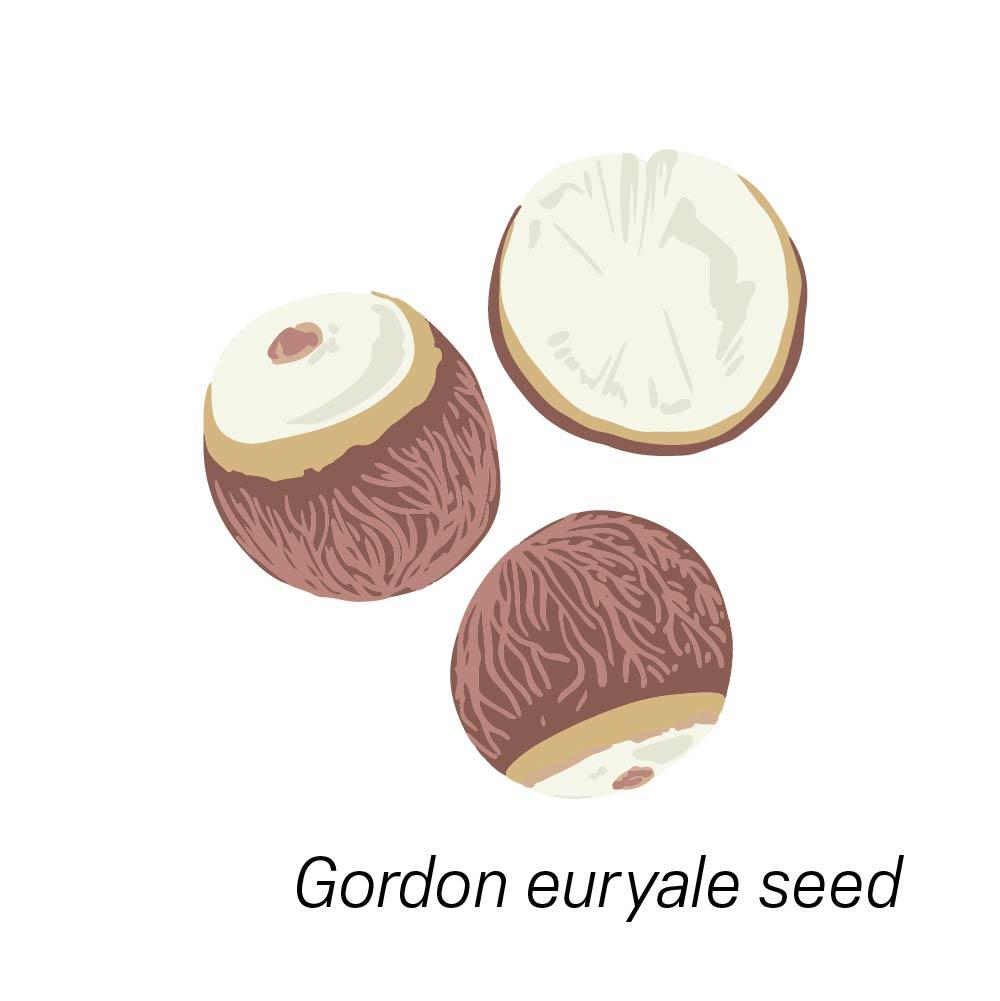
When “Qianshi” (Gordon euryale seed) is added to Jin Ying Zi, the combination forms a classical TCM formulation known as Shui Lu Er Xian Gao. This is a representative kidney-tonifying formula, often used for chronic kidney deficiencies and related symptoms.In TCM, Gordon euryale seed plays a dual role:
It strengthens the kidneys and helps “secure essence”—a concept referring to the body’s foundational energies, including reproductive health and vitality.
Additionally, Gordon euryale seed is used to eliminate dampness, a TCM term describing excess fluid or mucus-like conditions in the body that can lead to fatigue, bloating, or discharge. By clearing dampness, Gordon euryale seed supports digestive and urinary health.
Rich in starch, protein, and micronutrients, Gordon euryale seed is frequently used in TCM dietary therapy for its mild, restorative properties and ability to support overall vitality.
Qianshi-Baiguo-Goji Porridge
This is a gentle, nourishing porridge rooted in TCM. Made with kidney-supporting herbs and mild ingredients, this porridge helps restore balance, ease nighttime urination, and support overall vitality.1 ounce Qianshi (Gordon euryale seed)
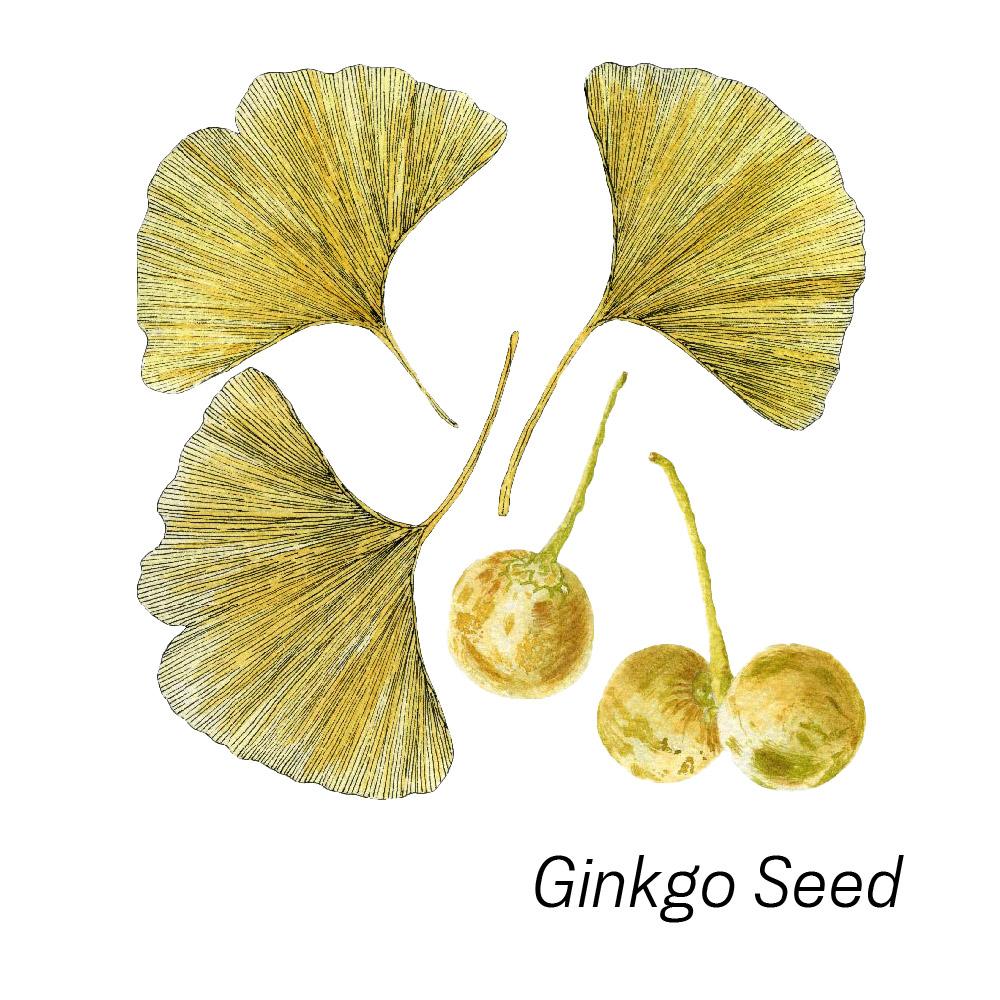
5 to 8 Baiguo (Ginkgo biloba nuts, shelled and with the core removed)
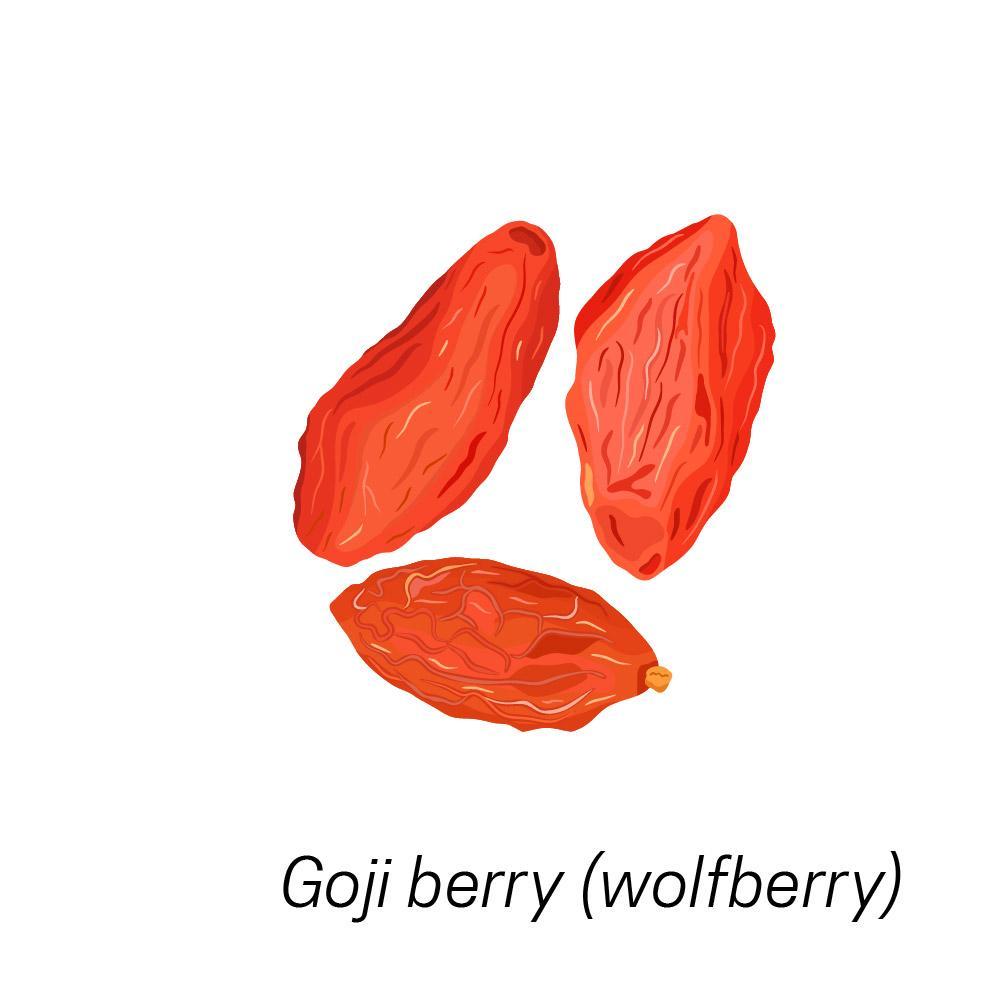
1/2 ounce Goji berries
1/3 to 1/2 cup Jing Mi (short-grain glutinous rice, or substitute with sushi rice)
4 to 5 cups of water
Optional: Rock sugar or honey, to taste
- Cook all ingredients together into porridge or soup.
- Add a little sugar for taste, if desired.
Precautionary Notes
Ginkgo biloba nuts are commonly used in TCM to treat involuntary urination. However, they can be toxic if eaten raw or in excess. They must be thoroughly cooked and should be eaten in moderation.Avoid Foods That Provoke Nocturia
According to TCM, excessive amounts of certain cold-natured or diuretic foods at night may impair bladder and kidney function, worsening nocturia.Avoid the following foods in the evening, especially if you are prone to frequent nighttime urination.
Healthy Drinking Habits
The body continues to metabolize during the night, so drinking an appropriate amount of water before bed can help prevent dehydration and dry mouth, protect kidney function, support detoxification, and keep the respiratory tract moist.- Drink a small cup of water 1 to 1.5 hours before bedtime, particularly in air-conditioned environments.
- Avoid drinking water within 30 minutes of sleep.
- Limit fluid intake after 7 p.m. if you’re prone to nighttime urination.