The study’s findings suggest that eating selenium-rich foods positively influences the trajectory of the disease and may potentially mitigate the risk of developing Parkinson’s. The best part? Simple dietary additions can increase selenium intake, making it easy for those with Parkinson’s and those at risk of developing Parkinson’s to consume more of it.
The Selenium and Parkinson’s Connection
The cohort study looked at data from 184 people ages 18 and older from the United States’ National Health and Nutrition Examination Survey 2005–2006 to 2015–2016 and the National Death Index.
“We found that normal selenium intake had a positive effect on [Parkinson’s disease] prognosis compared with low selenium intake, but this effect disappeared when compared with high selenium intake,” the researchers wrote.

“Selenium administration increased levels of antioxidant enzyme and GSH [glutathione], reduced dopamine loss, maintains cellular DNA integrity and improved motor function recovery,” researchers wrote.
This suggests a correlation between higher blood selenium levels and a lower incidence of Parkinson’s disease. Dr. Ramit Singh Sambyal, a general practitioner not associated with the study, told The Epoch Times in an email, “The association exhibited a non-linear pattern, with more pronounced risk reduction at higher selenium concentrations. [Parkinson’s] patients tend to have lower blood selenium levels compared to non-[Parkinson’s] patients.”
Selenium deficiencies are rarely detected, but low levels of selenium may cause changes to cellular metabolism, including the gradual loss of neurons that produce dopamine, which may lead to neurodegenerative diseases such as Parkinson’s disease.
What Is Selenium?
Selenium is a trace mineral, meaning that the body needs it in small amounts. It is considered an essential micronutrient for humans—you must get it from food or supplements, as your body is incapable of making it. Selenium is a component of the amino acid selenocysteine. Selenocysteine is incorporated into selenoproteins, which have a variety of important functions in the body. They play a role in thyroid hormone production and DNA synthesis, among other duties.
Selenium is crucial for your brain’s development and overall health. Adequate selenium intake is important for cognitive function, memory, coordination, and overall neurological well-being, as it helps maintain the central nervous system.
What Is Known About Parkinson’s Disease?
As it progresses, it leads to cognitive and mobility issues, usually coupled with mental health disturbances. There is no cure for Parkinson’s, but treatments include medications that increase dopamine production, affect neurotransmitter levels, and help with involuntary movements.
Dietary Sources of Selenium
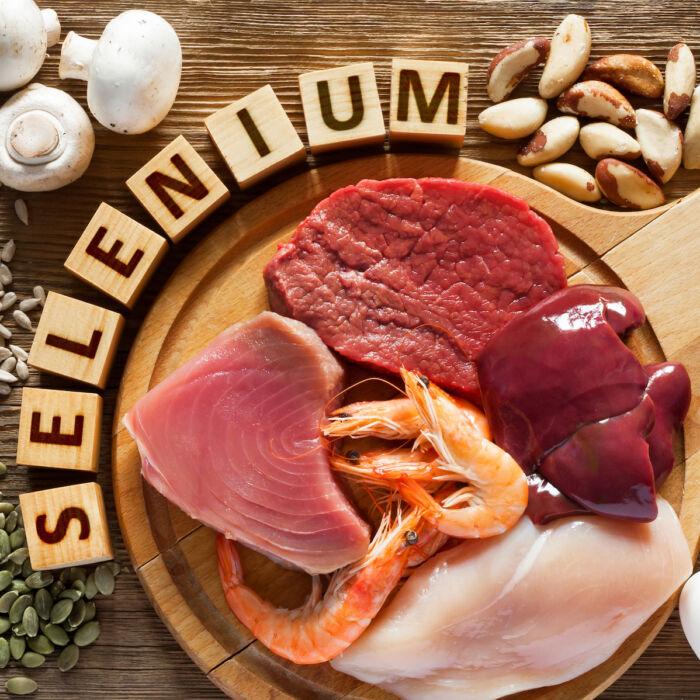
Good dietary sources of selenium include:
Brazil nuts
Fish (tuna, halibut, sardines, salmon)
Shellfish (oysters, shrimp, crab)
Meat (beef, liver, pork)
Poultry (chicken, turkey)
Eggs
Sunflower seeds
Mushrooms
Brown rice
Dairy products
Beans
Lentils
There Is Too Much of a Good Thing
It is possible to consume too much selenium; high levels of selenium are deemed to be toxic. Excessive intake of selenium can lead to a condition called selenosis, which can cause symptoms such as nausea, vomiting, hair loss, fatigue, and even nerve damage. In severe cases, it can lead to respiratory distress, heart problems, and even death. Consuming selenium within the recommended daily intake levels is important to avoid potential health risks.
The Recommended Dietary Allowance for selenium is 55 micrograms per day, which is roughly equivalent to three to four eggs or 6 ounces of turkey. The tolerable upper intake level is set at 400 micrograms per day, which can be surpassed with just a small handful of Brazil nuts, so moderation is key.