Small cell lung cancer (SCLC) is one of the most aggressive forms of cancer. Most people diagnosed with advanced disease survive less than a year. Yet one man whose cancer had already spread to multiple organs has now lived for more than seven years—a remarkable outcome that offers hope and reflects how newer treatments are beginning to change the outlook for a disease once considered almost uniformly fatal.
Dr. Gary Tian, a medical oncologist and hematologist at West Cancer Center in Tennessee with more than 20 years of clinical experience, shared the patient’s story on a recent episode of “Health 1+1,” a program produced by NTD, a sister media outlet of The Epoch Times.
Diagnosed in his early 50s with stage 4 SCLC, the patient’s cancer had already spread beyond his lungs at the time of diagnosis. Over the following years, it metastasized twice to his brain and later to his adrenal glands.
He underwent a combination of radiation therapy, surgery, and immunotherapy. Despite repeated setbacks, he continued working full-time for several years, often bringing his laptop to oncology appointments while receiving treatment. Only recently has he retired. Today, he remains stable on maintenance immunotherapy.
While long-term survival in extensive-stage SCLC remains rare, Tian said this case illustrates how prompt, multidisciplinary treatment can sometimes transform a rapidly fatal disease into a manageable chronic condition, allowing patients to enjoy years of meaningful life.
Understanding SCLC: The ‘King of Cancers’
How Treatment Is Changing
Given the aggressive nature of SCLC, swift and effective treatment is crucial.
Dr. Stephen Liu, associate professor and lung cancer specialist at Georgetown University School of Medicine, discussed on “Health 1+1” that the current standard first-line treatment for SCLC consists of platinum-based chemotherapy (cisplatin or carboplatin) combined with etoposide, a topoisomerase II inhibitor that disrupts DNA replication in cancer cells. Although this treatment often delivers fast and noticeable improvement, the cancer frequently returns within months after treatment ends.
Recent breakthroughs in immunotherapy, however, are changing this narrative.
Dr. Ticiana Leal, professor of hematology and medical oncology at Emory University School of Medicine, describes immunotherapy as an intravenous therapy that empowers the body’s immune system to better recognize and eliminate cancer cells.
In limited-stage SCLC—the earlier stage where the cancer is confined to one lung and nearby lymph nodes—immunotherapy is typically given as consolidation therapy after completing chemotherapy and radiation.
“We deliver immunotherapy after completing chemotherapy and radiation, for a total course of two years,” Leal said on “Health 1+1.” “This approach has markedly improved disease control and extended patients’ lives.”
The current standard of care for extensive-stage SCLC integrates immunotherapy with platinum-based chemotherapy (carboplatin or cisplatin plus etoposide) from the very beginning, Liu said.
Recently, the U.S. Food and Drug Administration approved a new maintenance regimen that continues immunotherapy (atezolizumab) while adding lurbinectedin—a second chemotherapy drug—after the initial four cycles of chemo-immunotherapy. This combination has been shown to further extend survival.
A Blood Test May Help Personalize Treatment
Researchers are also finding new ways to identify which patients are most likely to benefit from immunotherapy.
Patients whose ctDNA remains detectable after initial chemotherapy appear to have microscopic residual disease. In these patients, consolidation immunotherapy significantly reduces disease progression and prolongs survival.
By contrast, patients whose ctDNA becomes undetectable after chemotherapy generally derive little additional benefit from consolidation immunotherapy. A negative ctDNA result suggests that treatment has eliminated most or all detectable cancer cells and is therefore considered a highly favorable sign.
Researchers hope this approach will allow doctors to tailor treatment more precisely, ensuring patients receive the therapies most likely to help while avoiding unnecessary treatment when possible.
Why Clinical Trials Matter
Despite these advancements, long-term survival for SCLC remains rare. For a disease with such a challenging prognosis, “clinical trials truly represent the best treatment option available,” Liu said.
Today’s standard therapies—including chemo-immunotherapy—were once available only through clinical trials. Participating in a trial can therefore provide early access to promising new treatments while helping advance future care.
The biggest challenge is often logistical rather than financial. Study medications and testing are typically covered, but participants usually require more frequent clinic visits and closer monitoring, placing additional demands on patients and their caregivers.
Symptoms Requiring Vigilance
Diagnosing SCLC early is a challenge.
Current lung cancer screening programs primarily target non-small cell lung cancer, Leal said. Because SCLC grows and spreads far more rapidly, even routine screening often fails to detect it at an early stage due to the relatively long intervals between scans.
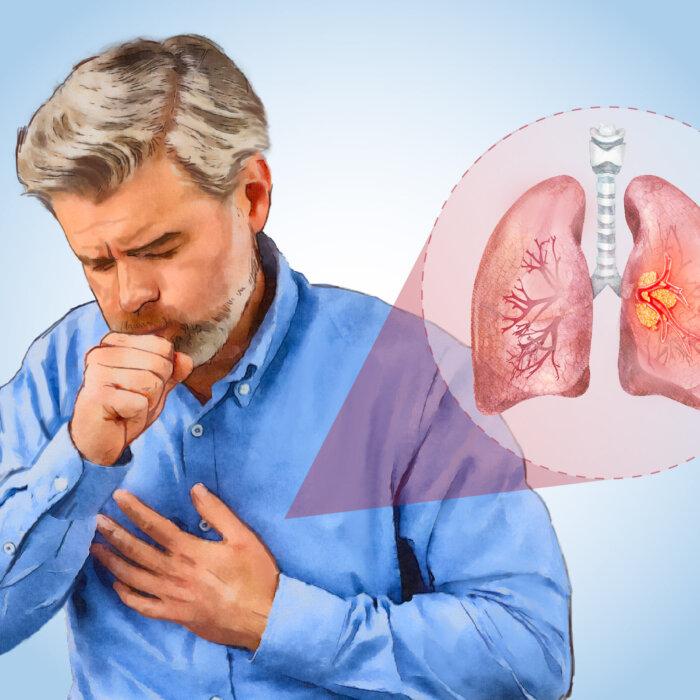
Common symptoms include a persistent cough, chest pain, coughing up blood, and hoarseness, Tian noted. If the cancer spreads to lymph nodes beneath the collarbone, a palpable lump may develop. Symptoms closely resemble those of typical respiratory conditions and are therefore easy to overlook or dismiss, potentially delaying diagnosis and treatment.
As a neuroendocrine tumor, SCLC can produce systemic symptoms such as profound fatigue, weight loss, loss of appetite, and night sweats. It may also cause low blood sodium (hyponatremia) through a paraneoplastic syndrome called SIADH, where tumor cells inappropriately secrete antidiuretic hormone, leading the kidneys to retain excess water and dilute sodium levels.
Prevention Remains the Best Strategy
Despite rapid progress in treatment, prevention remains the most effective way to reduce deaths from SCLC.
“First and foremost, the best method is not to smoke,” Tian said.
Quitting smoking at any age lowers the risk of SCLC as well as many other cancers, and the earlier a person quits, the greater the benefit.
For people at high risk, annual low-dose CT screening is recommended for adults aged 50 to 80 who have smoked the equivalent of at least 20 pack-years and either currently smoke or quit within the past 15 years. Individuals with other risk factors, such as asbestos exposure, may also benefit from screening based on their physician’s assessment.
The patient who inspired this story reminds us that advances in immunotherapy and precision medicine are changing what is possible for some people with SCLC. But his experience remains the exception rather than the rule. For now, avoiding tobacco, recognizing symptoms early, and seeking prompt treatment remain the best ways to improve outcomes against one of the most aggressive forms of lung cancer.