Sha Yu Zhu, a 72-year-old Taiwanese, exemplifies the quintessential traits of a traditional Eastern woman—filial piety and forbearance.
Throughout the decades of her marriage before turning 60, Ms. Sha appeared diligent and uncomplaining. Yet, in the middle of the night, she would hide beneath her covers, secretly shedding tears. Her suppressed grievances drove her to express sorrow over life’s unfairness.
Ms. Sha had always yearned to have children, yet she experienced the misfortune of seven miscarriages. It was only after the final miscarriage, which brought about significant bleeding, that her uterus had to be surgically removed, leaving her body significantly weakened. Nevertheless, she continued to care for her bedridden mother-in-law. Faced with constant demands and criticisms from her mother-in-law, Ms. Yu obediently complied, in accordance with her husband’s steadfast belief that “A parent’s words are sacred decrees, meant to be obeyed.”
A Rare Cancer Diagnosis–2 to 3 Years to Live
When Ms. Sha turned 60, she experienced an unusual episode of abdominal pain. Having undergone numerous surgeries before, she was no stranger to abdominal discomfort. Initially, she assumed it was caused by the same abdominal adhesions. However, the pain escalated, prompting a hospital visit. Suspecting peritonitis her doctors performed surgery, only to discover that Ms. Sha had a very rare type of cancer—pseudomyxoma peritonei.Pseudomyxoma peritonei does not spread through the bloodstream or lymphatic system like other cancers. However, it can spread across the surfaces of various abdominopelvic organs, posing challenges for treatment.
This type of cancer is extremely rare, affecting only about two individuals per million each year.
Many doctors told Ms. Sha that her illness was nearly untreatable, and she might have—at most—two or three years left to live. A surgical specialist even said to her, “Eat and drink whatever you can, and wait for your time at home.”
Knowing her days were numbered, Ms. Sha secretly made preparations for her funeral. She even purchased burial clothes and had her funeral portrait taken.
A Glimmer of Hope
Clutching onto her last glimmer of hope, Ms. Sha joined a Falun Gong study class.The first time she read the primary book of Falun Gong, “Zhuan Falun,” she found the content to be highly approachable. She described it by saying, “The book is telling a story, unveiling the truths of life, explaining how the universe works, and exploring why people undergo so much suffering in this world. The more I read, the more I found myself enjoying it.”
Shortly after completing “Zhuan Falun,” the discomforting knot that had been weighing on Ms. Sha’s chest dissipated. She experienced a sense of refreshment and ease. “I no longer resent life’s unfairness. This book has untied the knots in my heart,” she said.
After completing the Falun Gong study class, she started practicing at a nearby Falun Gong practice site. During the practice, she could feel a strong energy surging in her hands, and her body felt at ease. She thoroughly enjoyed the experience.
Ms. Sha has been tirelessly reading books related to Falun Gong, including “Zhuan Falun.” She shared, “I often read late into the night because I enjoy it. Not only do I not feel tired, but the more I read, the clearer my eyes become. It’s quite miraculous, considering I had undergone surgery for retinal detachment and had been experiencing blurry vision and eye fatigue for over a decade after the surgery,” she explained.
Before Falun Gong, she had long suffered from sleep disorders. Even after her mother-in-law’s passing, she would still dream about her, leading to considerable stress. Additionally, she frequently experienced night terrors and found herself unable to move her body at all. The persistent torment brought her immense distress, yet there appeared to be no way to alleviate it.
“Remarkably, after reading ‘Zhuan Falun,’ all the stress in my heart melted away, and I started sleeping soundly. I now wake up early every day, brimming with joy and an inexplicable sense of happiness,” she shared.
About a week after joining the Falun Gong morning group exercises, her appetite began to improve, and she could eat half a bowl of rice. Prior to this, following her surgery, she had little appetite and could only eat the bare minimum. Additionally, she would also experience a sense of heaviness in her stomach, leading to a pessimistic and depressed mental state.
“After practicing for about a month, I was able to eat normally again, my strength returned to its usual level, and my body felt light and rejuvenated.” It has been 12 years since then.
She practices Falun Gong every day, and in all her actions, she considers whether it aligns with the principles of truthfulness, compassion, and forbearance.“ This mindfulness extends to her speech as well, ensuring it does not cause harm to others. ”I’m already 72 years old, yet I’m very healthy. People often remark that I look much younger compared to my peers,” she said.
In the past, when hurt or misunderstood by others, Ms. Sha would feel wronged and struggle to maintain her composure. Now, her emotions are no longer stirred up by such circumstances. Instead, she would respond politely and offer explanations to the other party, and it is completely fine if they are not accepted.
Ms. Sha said that her husband has a kind heart, but he has a short temper and tends to raise his voice in anger. Prior to practicing, she used to endure it, but it left her feeling upset inside. Since she started practicing, when her husband gets angry, she would respond with a patient approach, showing genuine concern for him, which often leads to the resolution of conflicts. “I choose to see his positive qualities, understanding that his intentions are good, despite his difficult behavior,” she explained.
Falun Gong: Cultivating Virtue and Enhancing Physical Well-Being
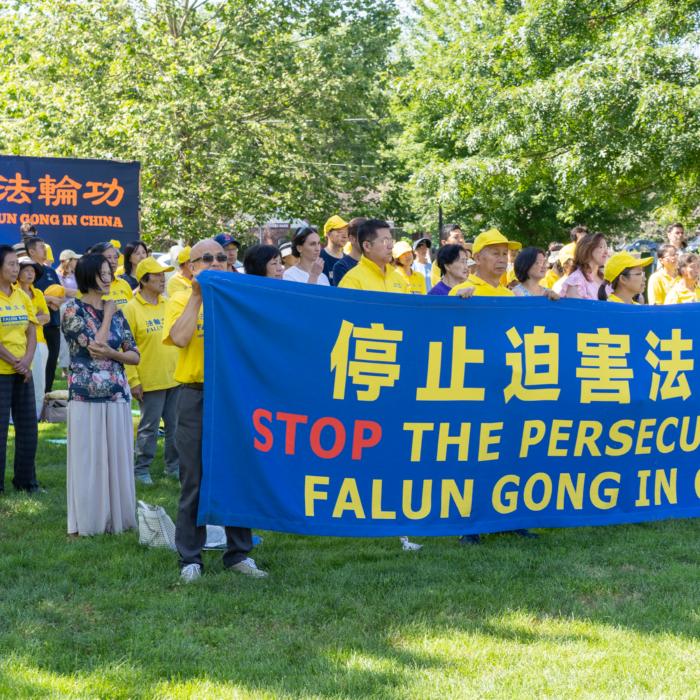
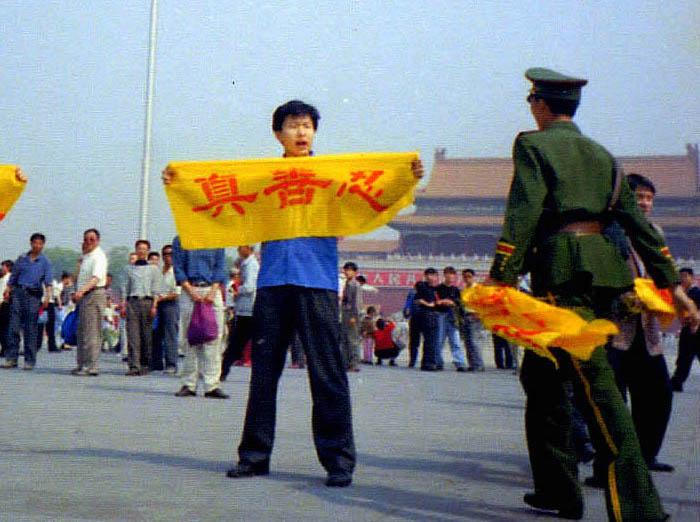
Falun Gong, also known as Falun Dafa, is a mind-body cultivation practice introduced in China by Master Li Hongzhi in 1992. Following the principles of truthfulness, compassion, and forbearance, Falun Gong encourages practitioners to cultivate their moral character, elevate their spiritual nature, and ultimately reach the goal of returning to their true selves. The practice consists of five sets of exercises, which include meditation and are designed to be straightforward and easy to learn. A significant number of Falun Gong practitioners have reported experiencing improved emotional well-being, enhanced physical health, and the resolution of various chronic illnesses through practice.Researchers from Switzerland, the United Kingdom, the United States, and Taiwan observed 152 terminal cancer patients in China who practiced Falun Gong. The primary cancer types included lung, liver, stomach, leukemia, esophagus, gynecological, pancreas, bile duct, and colorectal.
The study showed that as of the report date, 149 patients were still alive and in good health. Compared to the predicted survival period of 5.1±2.7 months, the actual survival period was significantly prolonged to 56.0±60.1 months, with a median time of symptom improvement of 1.3±1.7 months. Among them, 147 cases (96.7 percent) reported complete symptom recovery, with 60 cases confirmed by treating physicians. The median time for complete symptom recovery was 3.6±3.3 months, and the median time for symptom-free survival was 52.7±61.1 months. Additionally, practicing Falun Gong led to a significant improvement in the patient’s quality of life.
The study also found that compared to the general norms in Taiwan, 70 to 89 percent of individuals with chronic conditions such as heart disease, diabetes, lung conditions, and high blood pressure experienced improvements or recoveries after practicing Falun Gong.