By the end of the workday, many people have the same routine: rub tired eyes, reach for artificial tears, or wonder whether it’s finally time to buy another bottle of lutein.
Yet despite spending billions of dollars each year on eye-care products and supplements, complaints such as dry eyes, blurry vision, eye fatigue, and difficulty focusing continue to rise. These problems are no longer limited to older adults. Increasingly, they affect people in their 30s and 40s who spend much of the day working on computers or scrolling through smartphones.
According to Wu Hung-Chien, director of E Sheng Chinese Medicine Clinic in Taiwan, one reason is that many people focus on treating symptoms instead of maintaining how the eyes function.
“Healthy vision isn’t built by one nutrient or one medicine,” Wu said on “Health 1+1” on NTD, a sister outlet of The Epoch Times. “Like the rest of the body, the eyes need regular care.”
Although traditional Chinese medicine (TCM) and modern ophthalmology describe eye health differently, they share several practical principles. Healthy eyes rely on good circulation, a stable tear film, flexible focusing muscles, and adequate nutrition. When these systems are stressed day after day, discomfort often develops long before serious eye disease appears.
A 10-Minute Eye Routine
Wu said four functions help keep the eyes healthy: circulation, tear stability, focusing ability, and nourishment.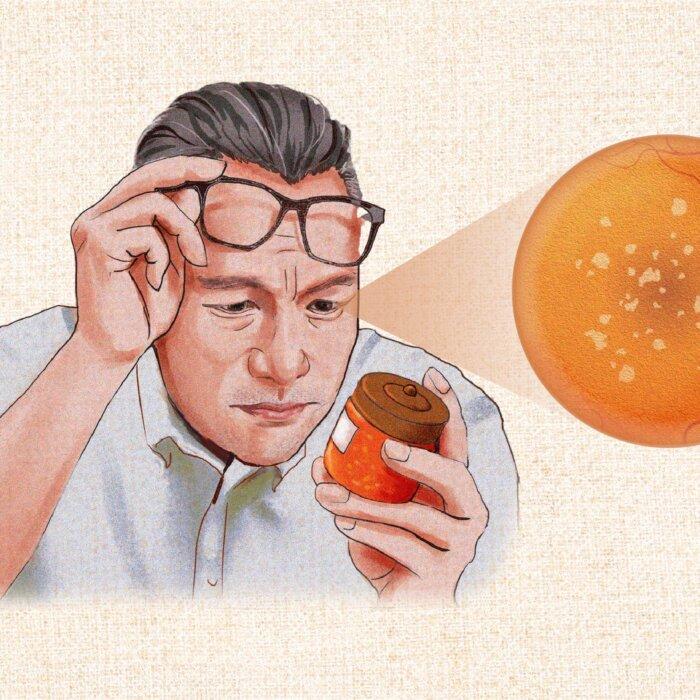

Step 1: Warm the Eyelids, Not the Eyeballs
Most people place a warm towel directly over their closed eyes.Wu recommends a slightly different approach. “The goal is to warm the eyelids and the tissues around the eyes—not the eyeballs themselves,” he said.
He suggests rubbing the palms together until they feel warm and gently cupping them over the eye sockets, or rolling a warm towel into a ring that rests around the orbital bones while leaving the eyeballs uncovered.
The reason is both traditional and scientific. In TCM, warming the eye area is thought to promote the flow of qi (vital energy) and blood, helping prepare the eyes for the exercises that follow.
Modern ophthalmology points to another benefit. The eyelids contain tiny oil-producing structures called meibomian glands, which help prevent tears from evaporating too quickly. When these glands become blocked—a common cause of dry eye—warm compresses soften the oils inside them, allowing the glands to function more effectively.
The Tear Film & Ocular Surface Society, an international panel of dry-eye experts, recommends warm compresses as a first-line treatment for meibomian gland dysfunction, one of the leading causes of evaporative dry eye.
Step 2: Blink With Intention
Eye fatigue often triggers an automatic response: rubbing the eyes. Although it may feel satisfying, rubbing can irritate the cornea, introduce bacteria from the hands, and, when repeated frequently over time, may contribute to damage in people with vulnerable corneas.Wu recommends replacing rubbing with a simple exercise. Close the eyes firmly for about 10 seconds, then relax. Repeat three to five times.
Step 3: Let Your Eyes Move Again
Most people remember to stretch after sitting all day. Few remember that the eyes also remain in one position for hours.Wu recommends closing the eyes and slowly looking up, down, left, and right, pausing for about five seconds in each direction. Then rotate the eyes clockwise and counterclockwise five times each.
These movements won’t strengthen eyesight or reverse age-related vision changes, but they may help relax muscles that have remained fixed during prolonged close work.
Step 4: Change Your Focus
The final exercise trains something modern life rarely asks us to do: shift focus.Hold a finger or pen at arm’s length. Focus on it as it slowly moves toward the tip of your nose, then shift your gaze to a distant object before repeating the movement about 10 times.
Hours spent reading or working on a screen keep the eye’s focusing muscles engaged at nearly the same distance. Alternating between near and far vision gives those muscles a chance to relax and readjust.
The exercise won’t prevent presbyopia—the natural stiffening of the lens that occurs with age—but it may reduce accommodative fatigue, making the eyes feel less strained after prolonged close work.
Step 5: Relax the Tissues Around the Eyes
Wu ends his routine with a gentle massage around the eye sockets—not the eyeballs themselves.Using light pressure, he massages along the eyebrows, beneath the lower eyelids, at the outer corners of the eyes, and beside the bridge of the nose. In TCM, these areas correspond to acupuncture points believed to promote the flow of qi and blood to the eyes, which may help manage various eye conditions, including floaters and dry eye disease.
Modern medicine explains the benefits somewhat differently. Although research on periocular massage remains limited, gentle massage may help relax facial muscles, reduce tension around the eyes, and improve local circulation, making it a soothing way to relieve eye fatigue after prolonged screen use.
“The massage shouldn’t hurt,” Wu said. “The goal is to help the tissues relax, not to press hard.”
- Place four fingers along the brow bone and massage quickly and gently about 100 times. Then place four fingers along the lower edge of the eye socket and massage about 100 times.
2. Next, place three fingers in the hollow between the outer brow and the outer edge of the eye socket and massage about 100 times.
3. Finally, use the index finger to glide from the inner end of the eyebrow down along the bridge of the nose to the lower eye socket, then back up to the eyebrow. Repeat this motion 50 times.
Feed Your Eyes
Once the exercises are complete, Wu turns to another essential part of eye care: nutrition.Many people assume protecting their eyesight means taking lutein supplements, but Wu believes supplements should complement—not replace—a healthy diet. “Your body doesn’t use nutrients one at a time,” he said. “It works best when they come together in real food.”
Diets rich in leafy greens, colorful fruits and vegetables, nuts, fish, and eggs have consistently been associated with better long-term eye health because they provide a combination of antioxidants, vitamins, minerals, and healthy fats that work together to protect the retina.
Goji Berries
Among the foods Wu recommends most often are goji berries, also known as wolfberries. For centuries, TCM has used them to nourish the liver and kidneys and support healthy vision.Goji berries are one of nature’s richest sources of zeaxanthin, a carotenoid concentrated in the macula—the central part of the retina responsible for sharp, detailed vision.
The study did not show improvements in vision itself, but suggested that regular consumption of goji berries may help support long-term eye health. Wu recommends chewing the berries thoroughly rather than swallowing them whole or throwing them away after brewing tea.
Eggs
Eggs are another staple Wu recommends. Egg yolks naturally contain lutein, zeaxanthin, vitamin A, and high-quality protein. Because these nutrients are packaged together with dietary fat, they are readily absorbed by the body.Wu encourages patients to focus less on finding a single “superfood” and more on eating a wide variety of nutrient-rich foods.
A Traditional Tea for Tired Eyes
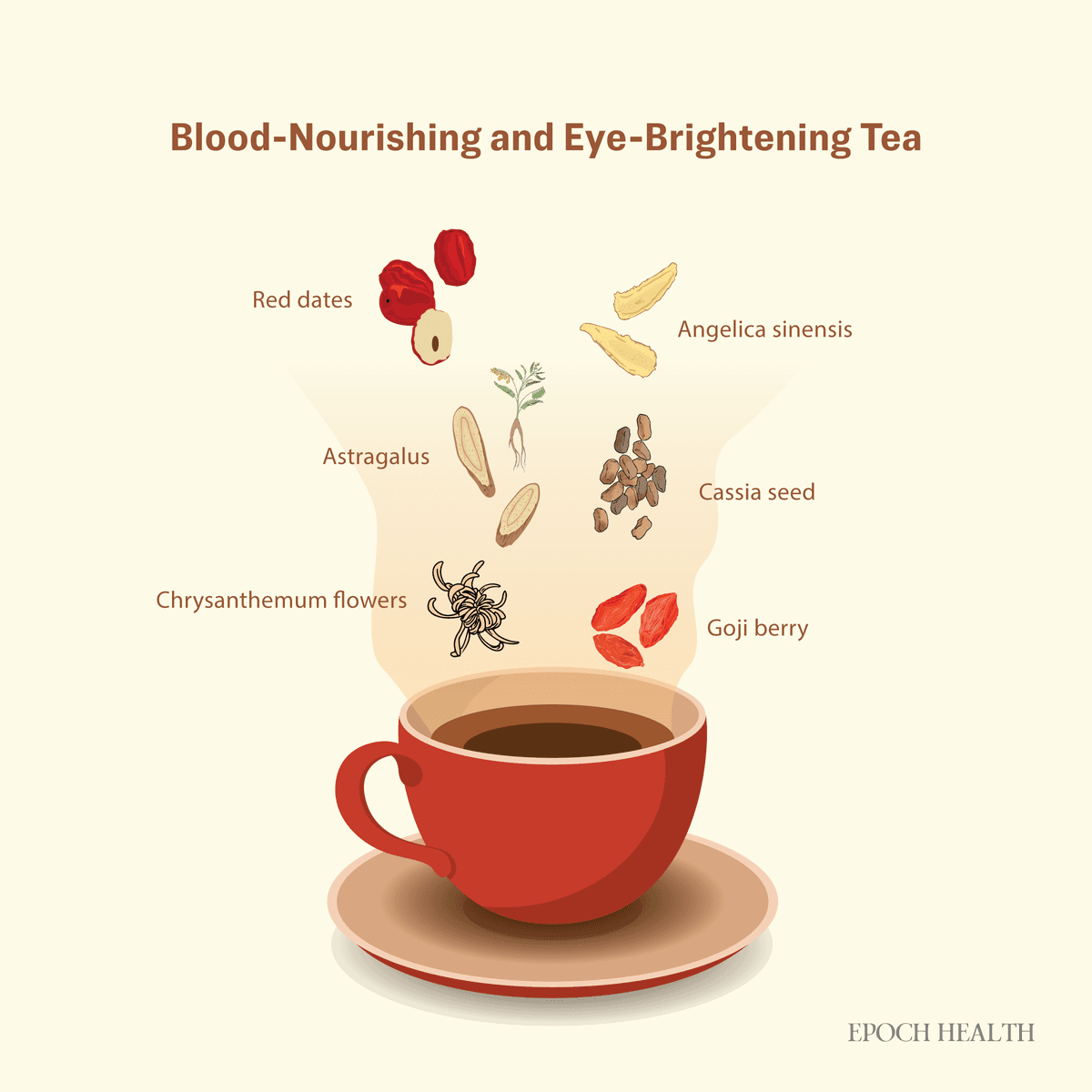
For people who spend long hours reading or working on computers, Wu also recommends a traditional herbal drink called Blood-Nourishing Eye Tea.His recipe includes eye-nourishing herbs that can be sipped throughout the day, while the softened goji berries and red dates are eaten afterward.
- 15 grams astragalus
- 15 grams goji berries
- 5 grams cassia seeds
- 5 grams chrysanthemum
- 15 grams angelica sinensis
- 6 red dates
- Place all the herbs in 2 quarts of water, bring to a boil, and continue boiling for five minutes.
- Let the tea cool until warm, then sip it throughout the day.
- Be sure to eat the goji berries and red dates in the tea.
From a TCM perspective, the tea is intended to replenish qi and blood while supporting eye health.
Scientific evidence for this specific formula remains limited, but ingredients such as goji berries and chrysanthemum contain antioxidants and other plant compounds that continue to be studied for their potential effects on inflammation and oxidative stress.
Know When Home Care Isn’t Enough
Wu emphasizes that his routine is designed to support healthy eyes—not replace professional medical care.Anyone who experiences sudden vision loss, flashes of light, a rapid increase in floaters, severe eye pain, or a curtain-like shadow across the vision should seek immediate evaluation from an ophthalmologist. These symptoms may indicate retinal detachment, retinal tears, or acute angle-closure glaucoma, all of which require urgent treatment.
Small Habits, Lasting Benefits
Many people search for a single solution to protect their eyesight—a supplement, a miracle food, or a new treatment. Wu sees eye health differently.Healthy vision is built through the small choices we make every day: giving our eyes regular breaks, eating a balanced diet, sleeping well, spending time outdoors, and setting aside a few minutes to restore circulation and relax tired muscles.
Although TCM and modern ophthalmology describe eye health in different ways, both arrive at a similar conclusion: Healthy eyes depend on consistent care rather than quick fixes.
“We ask our eyes to work harder today than at any time in human history,” Wu said.
“Ten minutes a day won’t solve every eye problem. But if you give your eyes the chance to rest, move, and recover, you’re giving them the best opportunity to stay healthy for years to come.”