Two of the tightest things on this planet are Ebenezer Scrooge and my hamstrings. Unfortunately, I’m in good company. Studies show that many people have tight hamstrings, with some even indicating that more than half of us share that dubious distinction. Tight muscles on the back of your thighs can be very problematic—for your back.
Hamstring tightness can directly affect your lumbopelvic rhythm. This can lead to movement restrictions and postural asymmetry, which can, in turn, force you to compensate for these limitations and structural challenges. Who or what gets to do that? Why, your poor little back, that’s what. In short, your body is working against itself. Painful backs account for some of the highest percentages of people living with disabilities, and I suspect that hamstring muscles don’t get enough of the credit—or the blame.
5 Exercises to Help High-Strung Hamstrings
Let’s help anyone with a hurting back out by supporting their hamstrings. The following exercises can help stretch and relax your hamstrings and restore proper balance to your movements.My patients generally tolerate these exercises well, but I recommend consulting with your medical provider to ensure that they are suitable for you.
1. Dumbbell Good Mornings
The good morning exercise is a great, low-stress activity with which to start your day.Step 1: Stand with your feet approximately 1 foot apart. You can either hold a weight in each hand or use both hands to hold a single weight.
Step 2: Hold the weights up near your collarbones and bend forward at the hips while keeping your back straight. Bend your knees slightly during this activity to avoid stress on your back. Slowly bend to approximately 90 degrees of hip flexion and then return to standing.
Step 3: Bending over and then returning to standing counts as one repetition. Try to perform three sets of 12 repetitions.
Modifications: If you can’t bend over very far, just bend as far as you can—it’s keeping your spine long and straight that affects the stretch the most. If you can’t handle much weight, just use as much weight as you can, or just hold your hands up by your collarbones.
Why I Like It: The dumbbell good morning exercise puts a spark in your morning routine. It warms up your back and hamstring muscles, and adding weights kicks it up a notch.
2. Kettlebell Swing
The kettlebell swing is a fantastic exercise for working on your posterior chain—your lower back, gluteal muscles, and, yes, your hamstrings. It’s highly dynamic and easy to perform.Step 1: Stand with your feet approximately 2 to 3 feet apart. Hold a kettlebell in both hands.
Step 2: Use both hands to quickly lift the kettlebell out in front of you with your elbows straight.
Step 3: Let the kettlebell swing down between your legs while keeping your arms and back straight. Next, and continuing in a fluid movement, swing it straight out in front of you again.
Step 4: Swinging the weight up and then back down counts as one repetition. Try to complete three sets of 15 repetitions, maintaining a controlled pace while avoiding speeding up.
Modifications: If you can’t swing the weight straight out, just swing it up as far as you can. Be sure to use a weight that you can effectively manage.
Why I Like It: The kettlebell swing is one of those rare movements that provide numerous benefits seemingly well beyond the exercise itself, and I love the postural work it provides.
3. Single-Leg Romanian Deadlifts
The single-leg version of the already excellent Romanian deadlift is unique because of its added balance component and also because it works your body in asymmetrical patterns.Step 1: Stand with your feet approximately 2 feet apart. Hold a weight in your right hand.
Step 2: Initiate movement by slowly lowering the weight down to the ground while slowly lifting your left foot off the ground and letting your left leg rise as you touch the weight to the floor.
Step 3: Return to standing while lowering your left leg back down to the ground.
Step 4: Lowering the weight to the floor and lifting back up counts as one repetition. Try to perform three sets of 12 repetitions on both sides, either performing all movements on one side and then the other, or alternating sides as you go.
Modifications: Stand next to a counter, chair, or other stable item if you need to hold on to something to stabilize. Also, if you can’t move all the way down with the weight, just lower as far as you can. Like with the dumbbell good morning exercise, form is more important than depth.
Why I Like It: Single-leg Romanian deadlifts are a great exercise for your hamstrings, with the added benefit of challenging your balance. It takes a bit to master, but keep at it and you’ll reap the benefits.
4. Hamstring Flossing
I know that you just scrunched your faces up because “flossing” is almost universally associated with something you do with your teeth. But tissue flossing is a thing, and generally involves wrapping body parts with elastic bands and then introducing active movement. Some exercises allow the use of our hands to introduce external pressure. This is one of them, and I think that you’ll like it.Step 1: Lie on your back on the floor, a couch, or a bed. You can put a pillow behind your head for support if desired.
Step 2: Bend your right hip and knee to approximately 90 degrees, place both hands behind your right thigh just above your knee, and then try to slowly straighten your knee. Moving slowly at first allows your hamstrings to stretch into the movement. Once you move as far into knee extension as you can, hold the position for approximately 10 seconds to allow the stretch to set in.
Step 3: Return your knee to approximately 90 degrees of flexion before repeating the movement. Extending your knee and then bending it again counts as one repetition. Try to perform three sets of 12 knee extensions per side. You can perform all repetitions on one side and then the other, or alternate sides as you go.
Modifications: Many folks can’t completely extend their knees, and that’s OK. Just extend them as much as possible. Regarding hip flexion, if you can’t move into 90 degrees of flexion, just move as far as you can.
For a bit more challenge, you can lift your head and shoulders off the floor to engage and strengthen the core muscles.
Why I Like It: There’s an emerging focus on muscle flossing, and while this exercise isn’t the strictest form of flossing, it does have one supreme advantage: It is laser-focused on stretching your hamstrings.
5. Hamstring Scoop
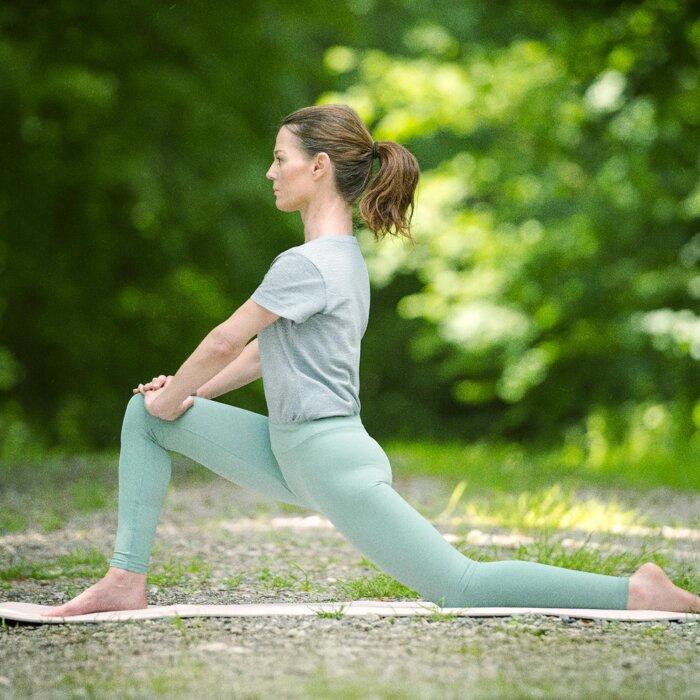
Hamstring scoops are a great rhythmic stretch for your hamstring muscles, alternately stretching and relaxing them. It takes a bit of practice to optimize this exercise, but not too much.Step 1: Stand with your right foot approximately 2 feet in front of your left foot, with your heel on the floor and your toes pointing toward the ceiling. Keep your right knee straight.
Step 2: Bend at the hips and make a forward scooping motion with both hands, ensuring that your hands are at approximately hip height and that your palms are facing forward. Sweep your hands from behind you all the way up to your shoulders. Straighten your hips as you move into standing. Performing this movement while keeping the knee of your leading leg straight should place a nice, discernible stretch on the hamstring.
Step 3: Each scoop is considered one repetition. Try to perform three sets of 15 repetitions per side, being sure to pace yourself—take about one second to perform each scooping motion and don’t rush.
Modifications: If you can’t bend down very far, just bend down as far as you can—again, it’s all about form.
Why I Like It: I love “pulsed” muscle stretches. Once you’ve warmed up with the other exercises and applied very focused stretches, this exercise is a great progression into movement, one stretch at a time.
Combined, these exercises can help stretch and mobilize your hamstring muscles, which in turn can provide much-needed relief for your back and prevent you from entering into pathological movement patterns. I suggest that you try performing them at least three times per week for the best benefit, or even more often if you want. I hope that they serve you well.
About the fitness model: Aerowenn Hunter is a health editor and fitness model for The Epoch Times. Vibrant in her 60s, she’s an accredited yoga therapist who has dedicated three decades to teaching yoga.
Views expressed in this article are the opinions of the author and do not necessarily reflect the views of The Epoch Times. Epoch Health welcomes professional discussion and friendly debate. To submit an opinion piece, please follow these guidelines and submit through our form here.