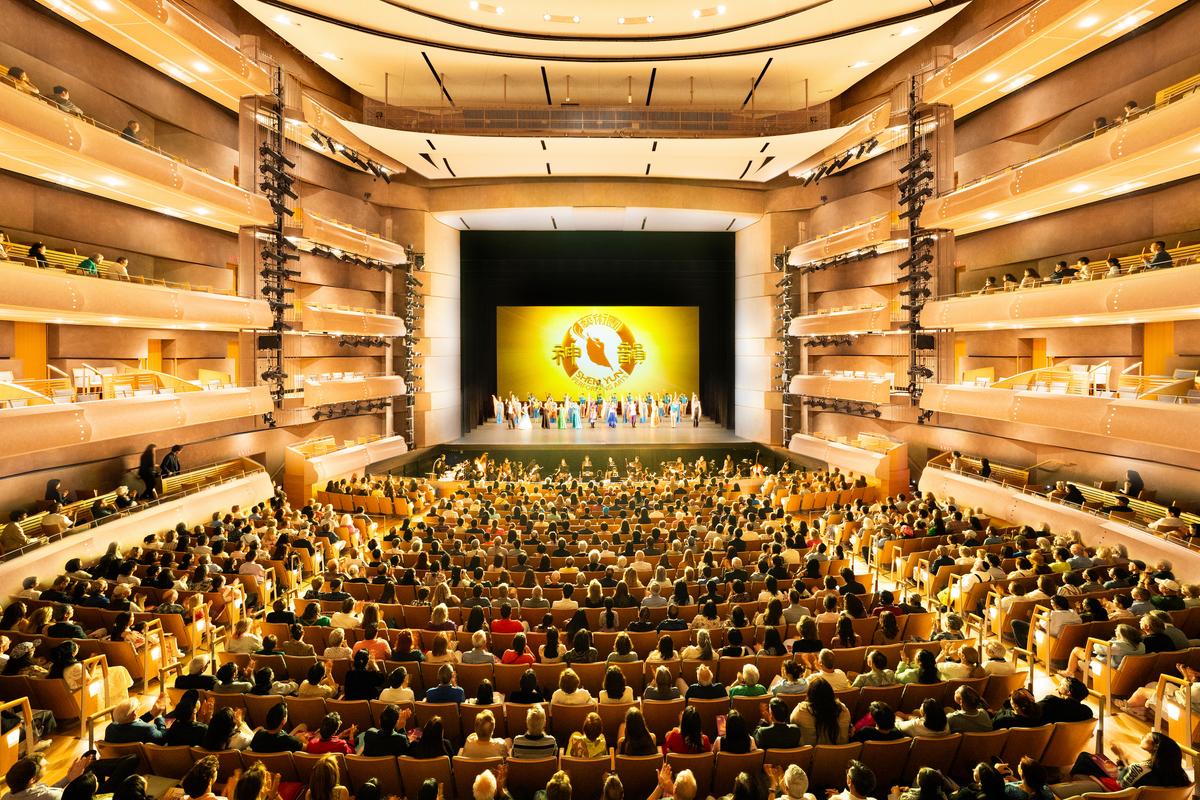
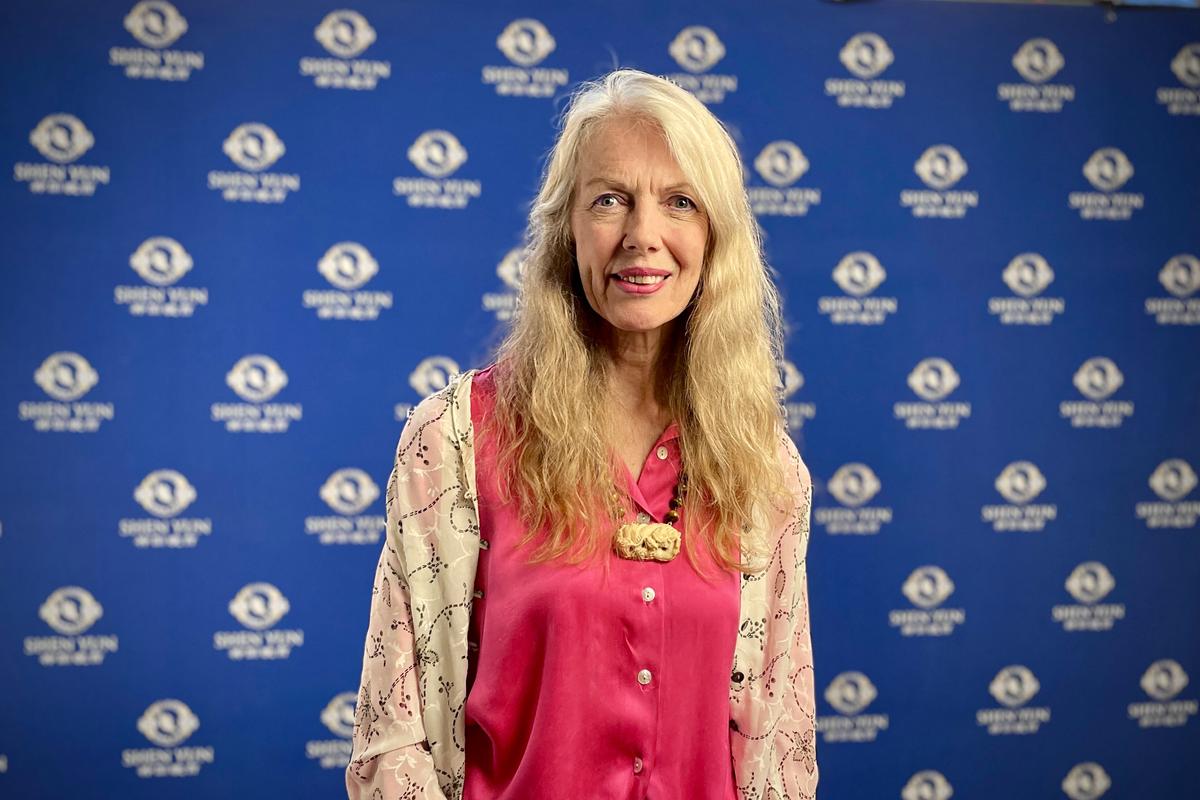
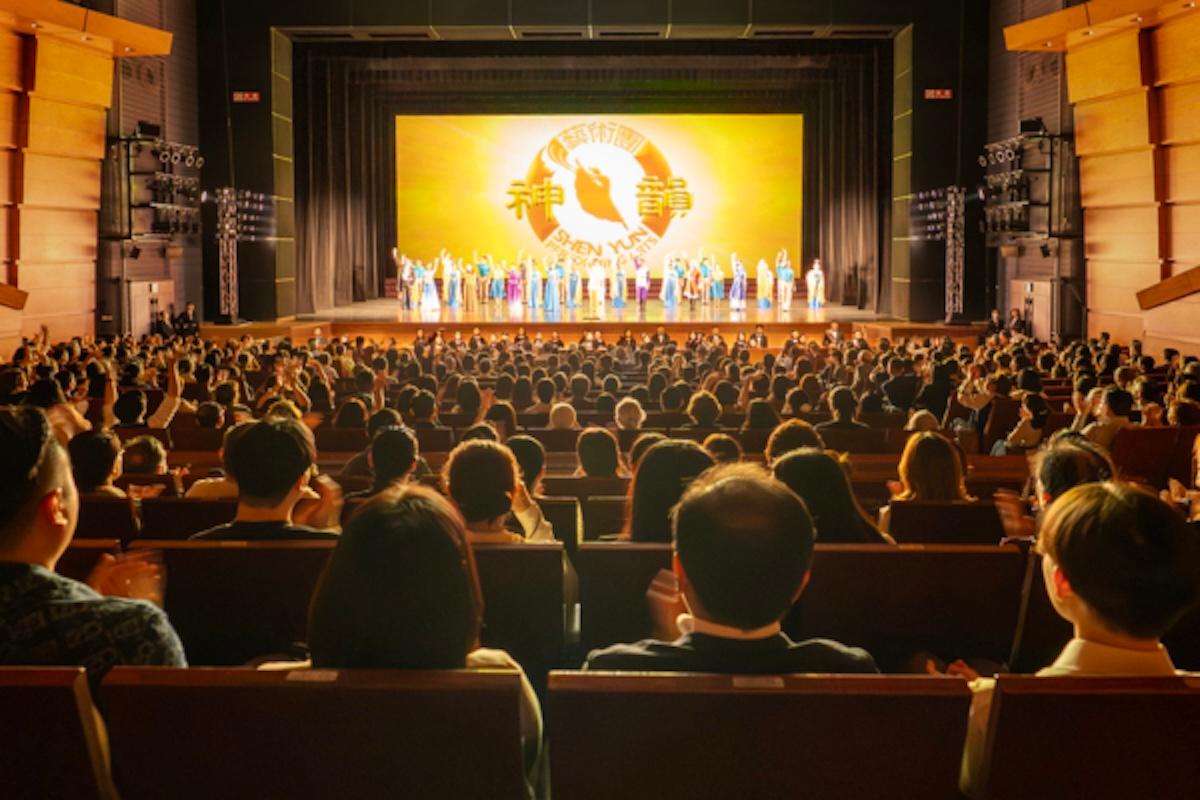
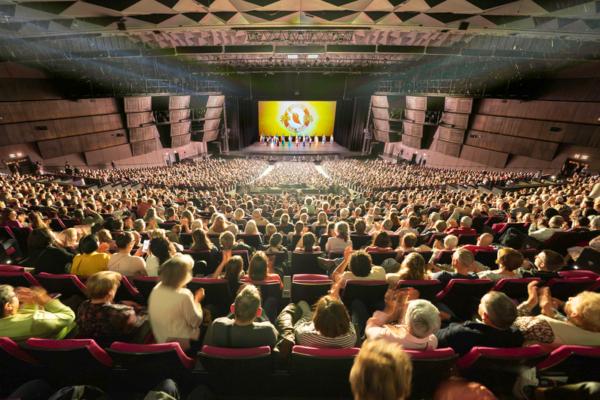
PORTLAND, Maine—Rhoda Bassett and 12 members of her family—among them nieces and nephews—saw Shen Yun Performing Arts at the Merrill Auditorium on April 19. Her husband had purchased tickets long before, and they’d been anticipating the performance.
Why had she and her husband brought such a large group to see New York-based Shen Yun? “We wanted them to be exposed to see the glory” of it, the retired chef said at intermission. “We wanted them to see it.”
Another dance moved her: “The Steadfast Heart.”
The message Mrs. Bassett took from the piece is that the divine will ultimately triumph, despite “repercussions and control from the Communist Party. … It shows that we can survive, we can overcome.”
As with most traditional cultures, China once embraced a belief in the divine. It was not just priests and monks who believed. “The Land of the Divine,” as China was once called, was considered semi-divine. From ordinary people to emperors, all were Buddhist, Taoist, or involved in some spiritual discipline.
Mrs. Basset said she tries to be open to God’s guidance in her life, and this performance solidified her understanding of this point.
Shen Yun “reassures me of my feeling about people and the divine. That is my takeaway—reassurance.”
If she could speak with Shen Yun’s artistic director, she would simply say: “Magnificent. The advertisements, of course, do not do it justice. And I have got to [say], we are all still in awe.”
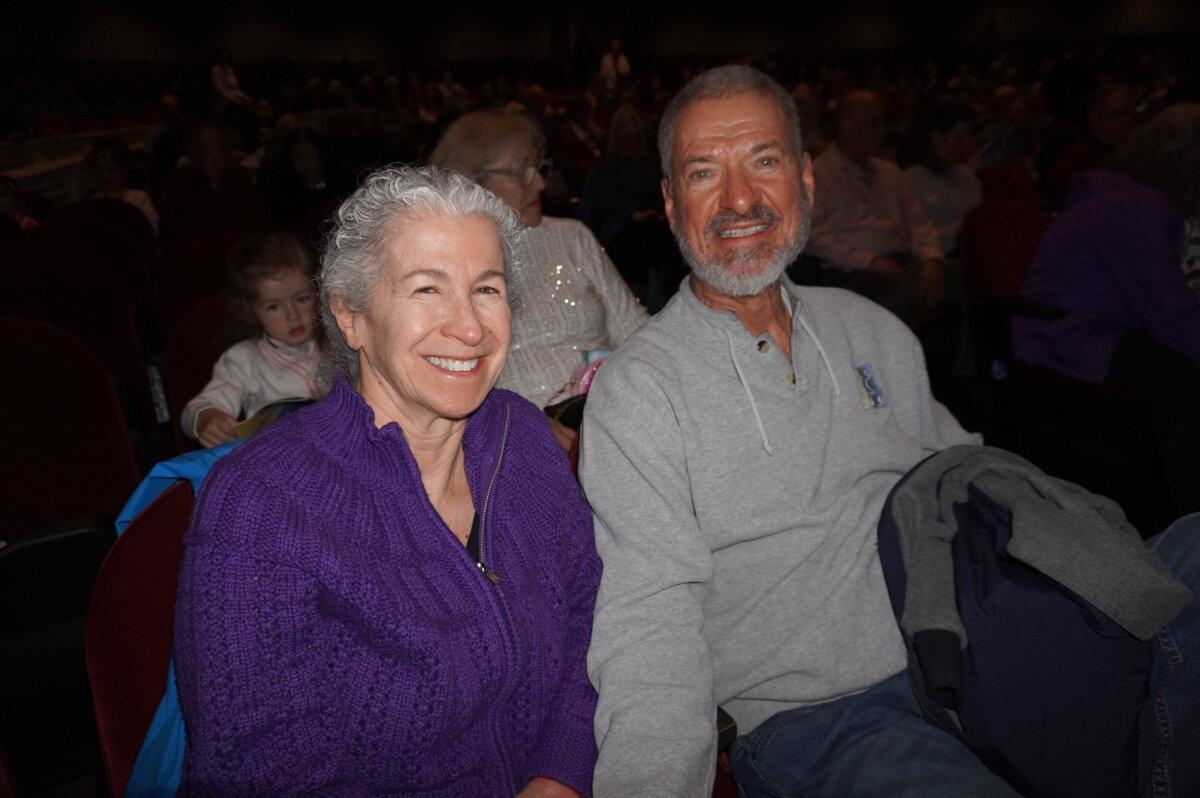
Tony Altieri felt much the same way. The message he took from Shen Yun was peace. “It has a positive message,” a message of “hope, kindness,” a performance that was amazing, very beautiful, and unbelievable.
“It’s just so amazing and fun and just inspiring to see the condition [of] these athletes. They’re really athletes. It’s just truly amazing. It really is,” Mr. Altieri, a dentist, said.
Classical Chinese dance requires tremendous skill and flexibility to perform its dynamic aerial tumbling and leaps. It might be called acrobatic, but in fact, these movements originated in China over the millennia.
Mr. Altieri attended with Eileen McDonald, a health care administrator. She agreed that the “dancers are impressive, well trained, [and] very athletic,” but she was more interested in the human rights themes of the performance. She was referring to the dance that Mrs. Bassett mentioned about the ongoing persecution.
She wanted to know what people could do to help.
Mr. Altieri said, “I’m surprised that they showed the organ harvesting. That’s a serious crime. I can’t believe that’s been going on.”
He already knew about the persecution in China. He’d been reading about it.
As the Shen Yun website explains, it’s “a performing arts company up against the world’s biggest dictatorship.”
Ms. McDonald asked again: “I think it’s informative and impactful … just seeing it is impactful, but if people want to do something about it, what can what can we do?”