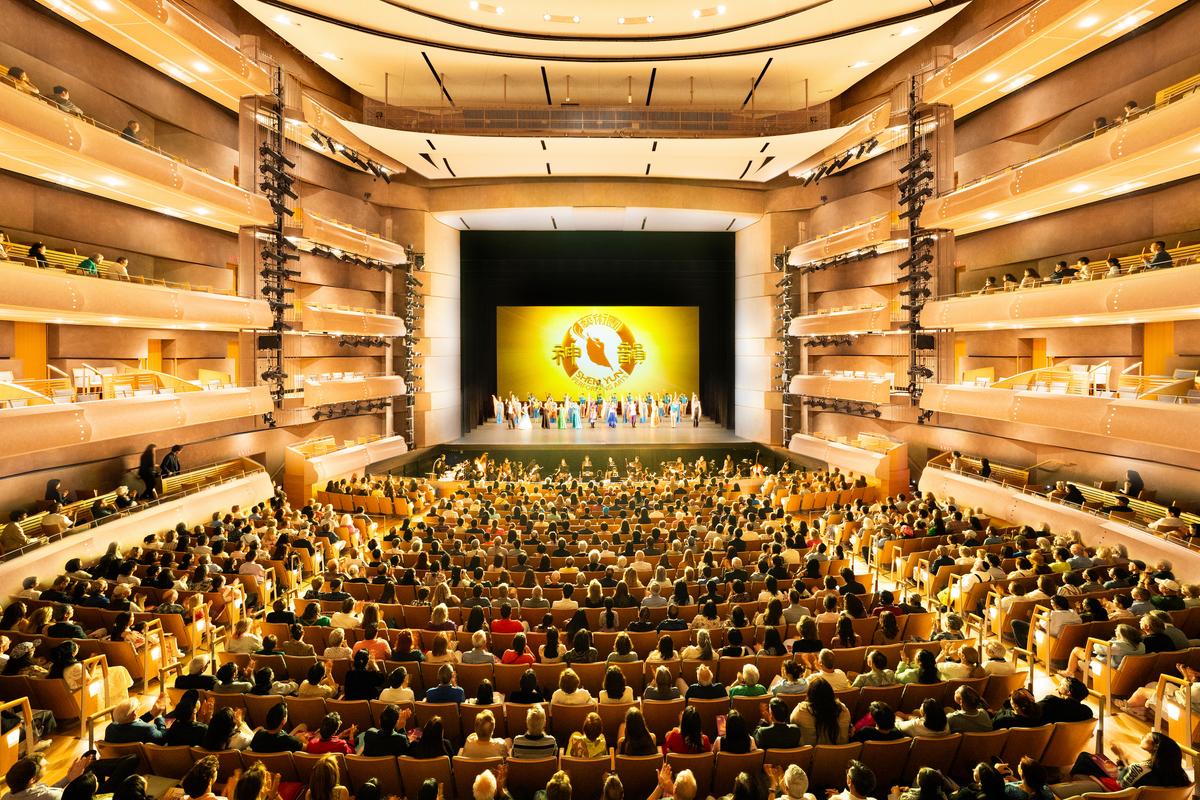
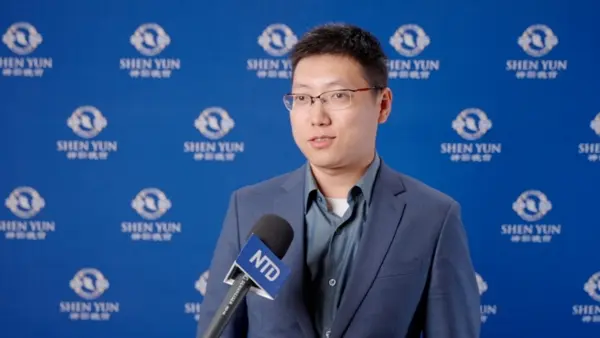
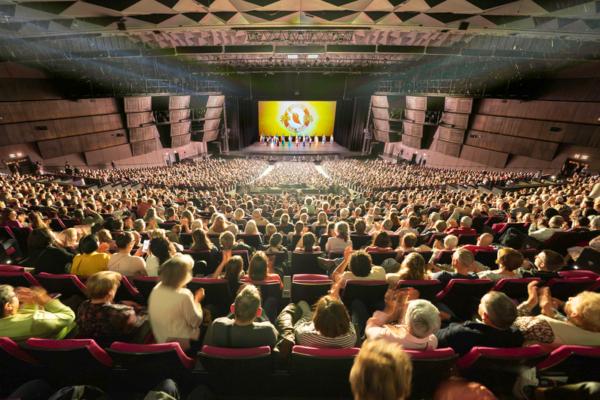
Semiconductor equipment veteran Kunika Hitoshi said the performance conveyed a powerful, eye-opening message.
“The opening scene, where beings descend from the heavens, was striking,” he said. “It conveyed the idea that people in today’s world were originally divine. It made me think that perhaps human beings possess a higher purpose.”
Mr. Kunika elaborated that the performance’s portrayal of the Creator leading divine beings to earth, establishing human civilization and history, left a deep impression on him.
“It felt like we descended to Earth together with the Creator,” he said. “If human beings truly have that kind of significance, then we—including myself—should treat one another with greater respect.”
“If it were just one performer, you might attribute it to individual talent,” he said. “But when everyone is at the same level, you realize how extraordinary the training must be. The result is wonderful, but it also makes me imagine the process that led there. I find myself very interested in that process.”
“These days, even ballet often uses recorded music,” he said. “But having a live orchestra creates a completely different sense of presence. It was truly excellent—I found myself repeatedly looking toward the orchestra pit. I just wish I could have seen the musicians more clearly.”
He added that the performance was both uplifting and culturally resonant.
Associate Professor: ‘Art Should Be a Praise to the Divine’
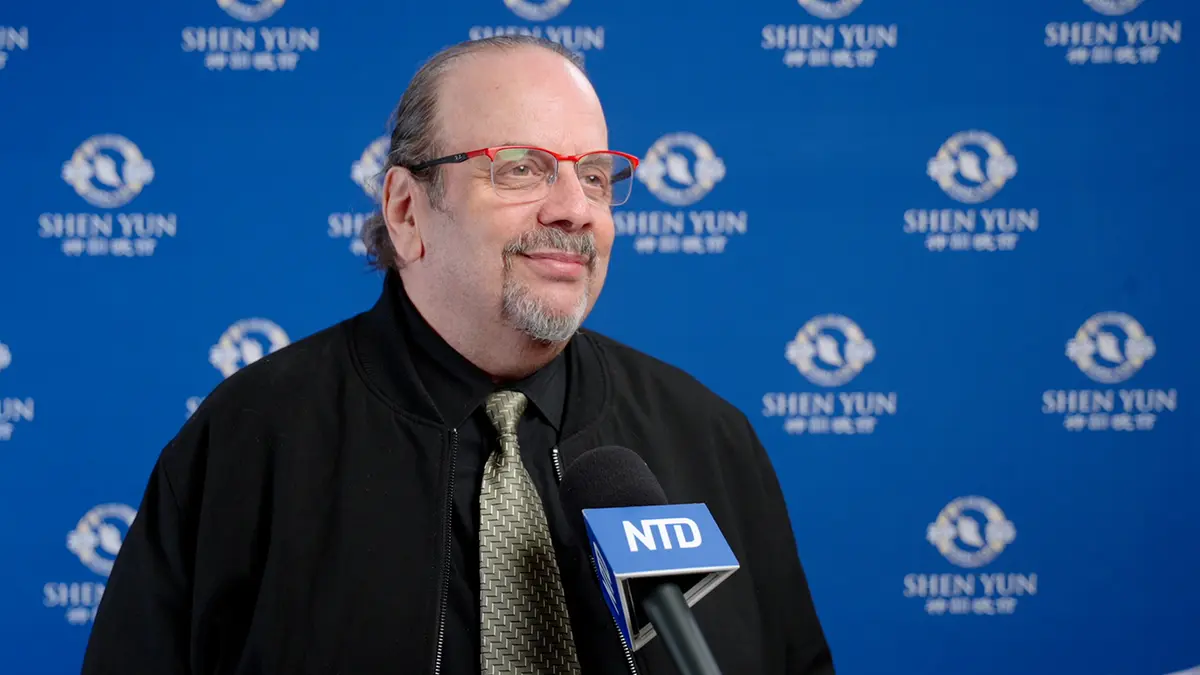
Associate professor Hasegawa Junnichi also praised the performance, highlighting its spiritual depth and artistic integration.“This performance was truly wonderful,” he said. “I’ve always been interested in classical ballet, and I even practiced it with my child when they were young. But this was different from typical Western ballet or dance performances. There was a sense of spirituality toward the divine, combined with art, music, and a live orchestra—a kind of ‘trinity.’ It deeply moved me.”
Mr. Hasegawa emphasized that art, at its core, should express reverence for the divine.
“I believe art is originally meant to be an offering to the divine,” he said. “If you ignore that spirituality and focus only on technique, then it becomes no different from mere technology.”
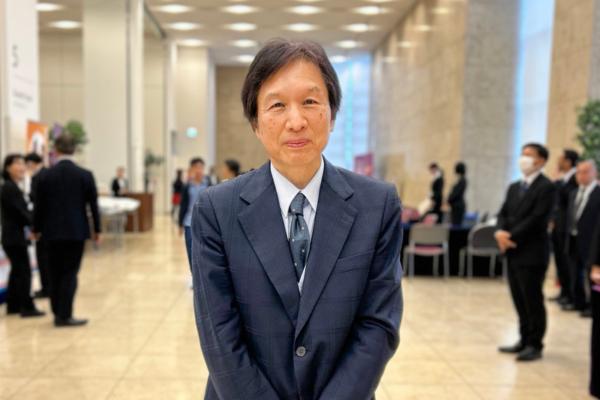
Drawing parallels with modern technological development, he added, “With technology like AI, it’s not just a matter of making good use of it together. If the technology gets too far ahead of us, it’s frightening. That’s why we need to reexamine our humanity.”
Mr. Hasegawa noted that traditional Japanese performing arts also share spiritual roots.
“In Japan, whether it’s Kabuki or Noh, there is a sense that these are offerings to the gods,” he said. “Seeing that kind of spirituality in today’s performance was very meaningful.”
He further reflected on the profound impact that traditional Chinese culture had on Japan.
“Since the Asuka period, Japan has absorbed a great deal of Chinese culture, including Chinese characters,” he said. “I think it’s important that we appreciate the good aspects of Chinese culture and share what’s good in each other. Watching this performance gave me an opportunity to rediscover the value of these traditions.”
He expressed regret that continued cultural exchange between the two countries has become impossible “when only certain ideologies take the lead.”
Despite this, the experience left a lasting impression.