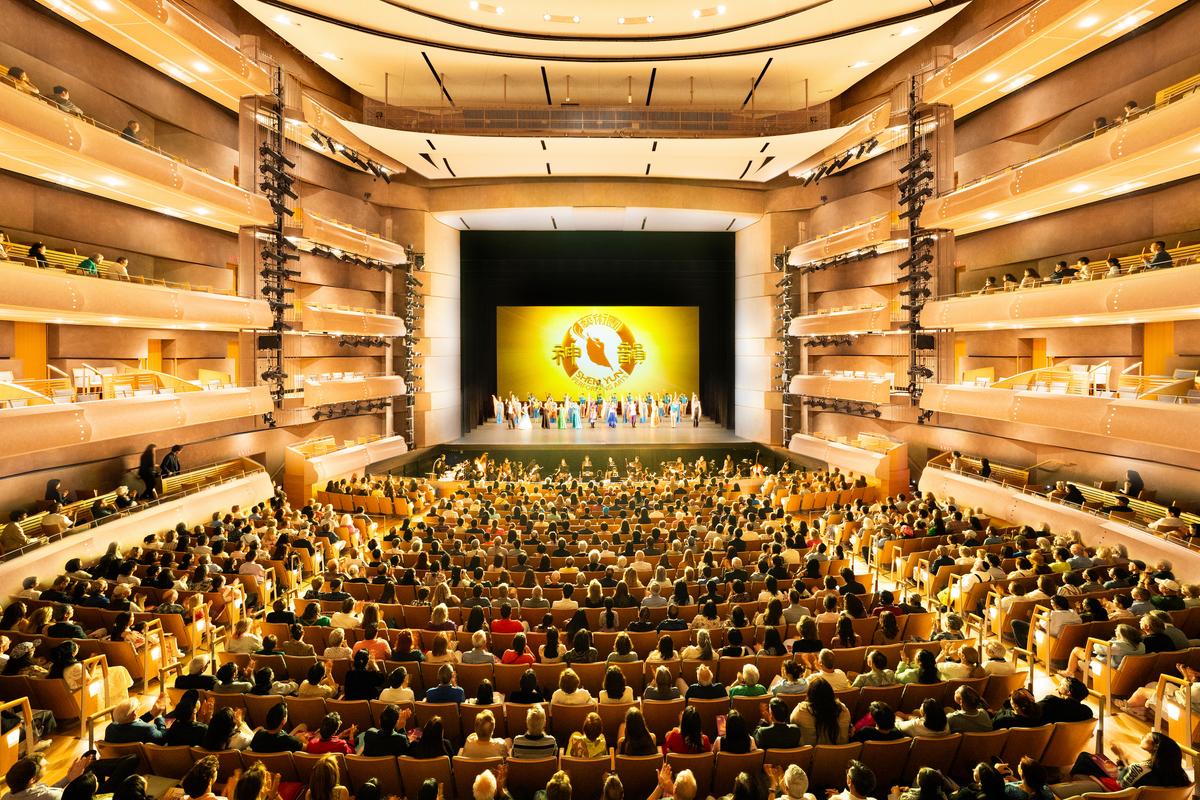
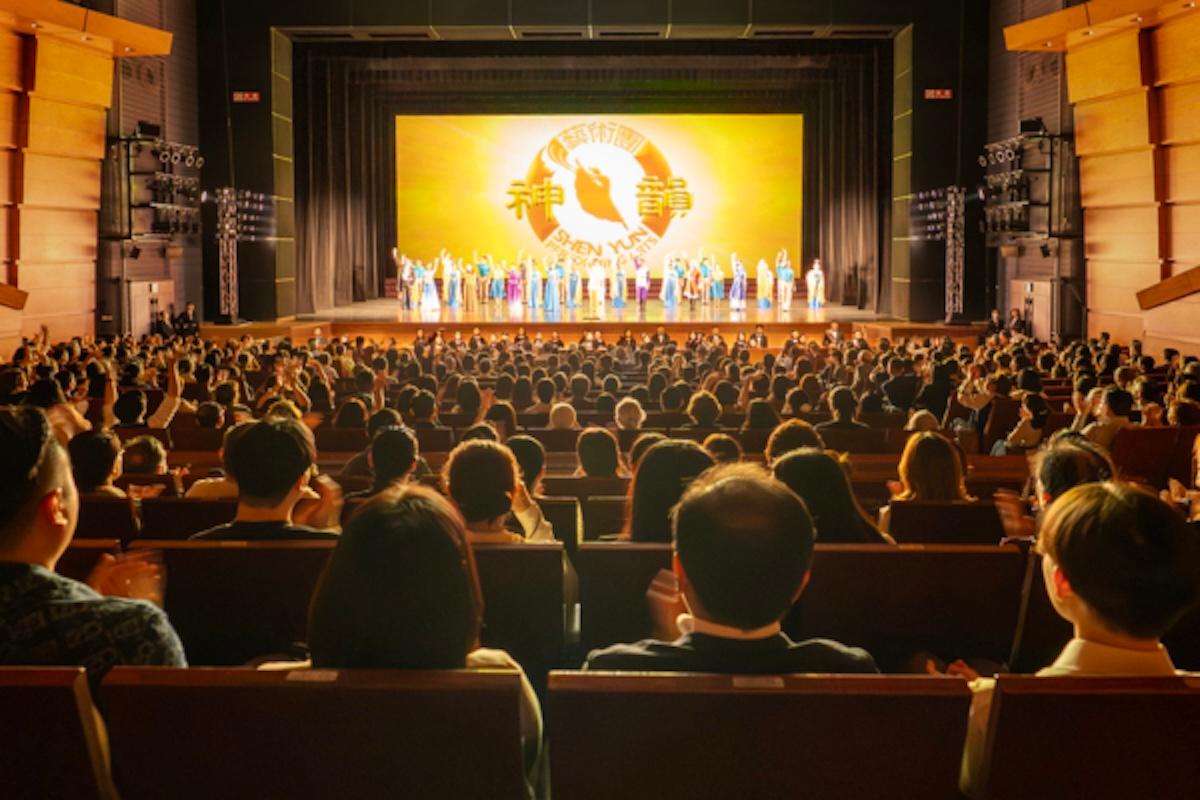
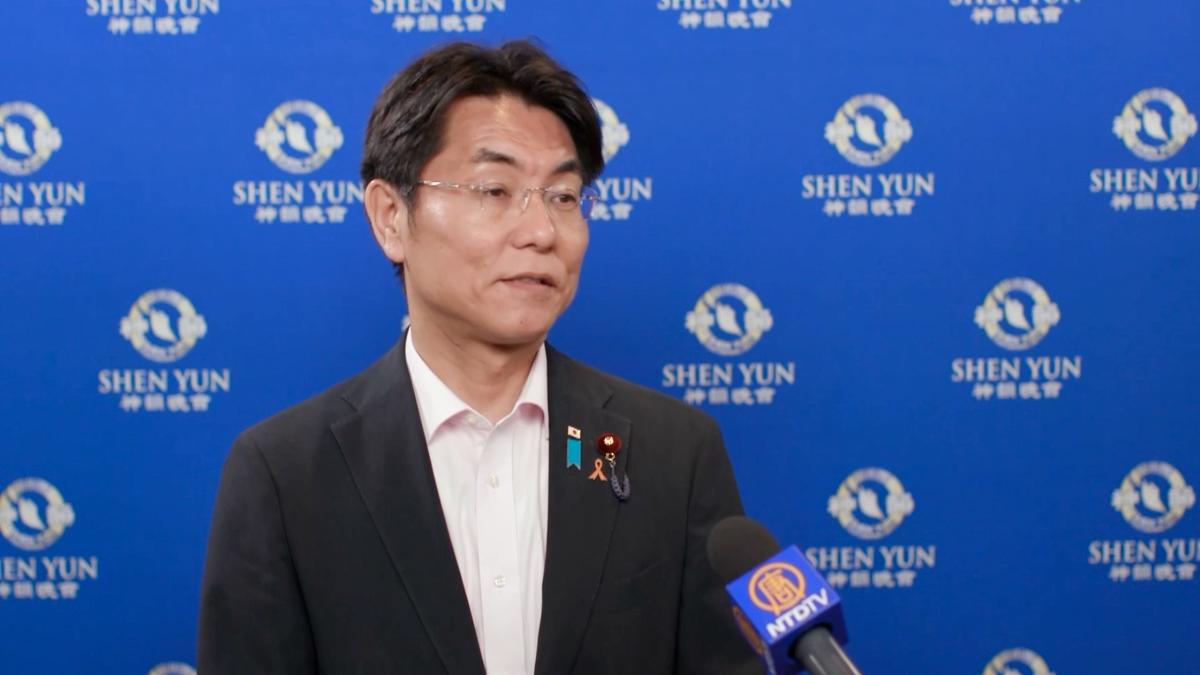
NISHINOMIYA, Japan—“I really wanted to etch the stage and backdrop in my mind and then depict them through painting,” ink painter Takeda Seiko said after watching Shen Yun Performing Arts at the Nishinomiya Hyogo Prefectural Arts and Culture Center on the afternoon of April 30.
“The changes in the clouds alone were particularly vivid. For example, the transition from clear skies and white clouds to the ambiance of looming rain was remarkably natural—layered as if it were an ink painting. So impressive!”
Ms. Takeda, a prominent member of the Kyoto Ink Painting Association, is an active painter in Kyoto’s art scene, primarily working in ink painting. Her representative work received the House of Representatives Award at the Kyoto Ink Painting Exhibition.
Ms. Takeda, who is also well-versed in Chinese ink painting, remarked that what captivated her was not only the dance on stage, but also the continuous artistic inspiration she felt while observing the stage design.
“What captivated me was not solely the dance on stage, but also the continuous inspiration I drew in my mind to depict the diverse backdrop scenes,” she said. “I noticed that the stage backdrop sometimes changed along with the dance, and the two resonated with each other, which was truly amazing.”
Ms. Takeda noted that the landscapes depicted in the backdrop evoked for her the aesthetic world of ink painting.
“The mountains presented have distinct angular forms, characteristic of Chinese ink painting, whereas Japanese landscape paintings tend to exhibit softer, smoother lines and rarely feature such sharp shapes,” Ms. Takeda said. “I observed the images while completely absorbed in the entire performance.”
She also praised the expressive power of the dancers, emphasizing that meaning and emotion could be clearly conveyed without words.
“Even in the absence of language, through the physical movements of the dancers, the audience can ‘understand’ and ‘feel’ the conveyed messages and emotions,” she said. “The dancers’ skills are incredible. Moreover, their control of expression and content is excellent, making the overall presentation truly spectacular.”
She also expressed her appreciation for the storytelling through dance, noting the strong harmony between music and movement.
“I truly enjoyed the stories and short dance dramas presented through dance,” Ms. Takeda said. “Through dance, the audience can understand the emotions and interactions between the characters. The synergy between the music and dance is remarkable, harmonious, and natural.”
“It only has two strings, yet it demonstrates an extremely high level of artistry, which is truly admirable,” she said. “Especially the timbre—it is impeccably beautiful.”
Having spent part of her childhood in China, particularly during her primary school years, Takeda said the performance brought back vivid memories.
“The entire performance brought me a delightful sense of nostalgia,” Ms. Takeda said. “It felt like a brief return to my time in China. While watching, I felt deeply connected and emotional, and it even gave me a sensation of becoming young again.”