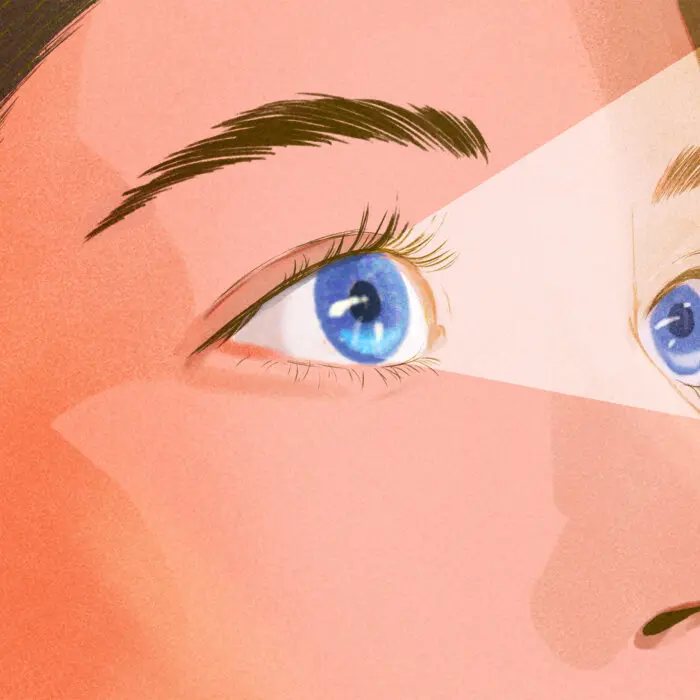
Glen Jeffery has studied the human eye for decades. He has published in top-tier medical journals, advised governments, and trained a generation of vision scientists. Jeffery practices what he preaches—he even commutes to work by bike because of what sunlight does for his retinas.
Jeffery, a neuroscience professor at University College London, has discovered that brief, daily exposure to daylight—as little as 30 minutes—is one of the most powerful habits for long-term eye health, at any age.
“Without doubt, the best kind of light for your vision is daylight,” he said.
The Light We’re Missing
Most of us are starved of one critical component of natural light: infrared wavelengths.
Two factors are driving this deficit: We spend far less time outdoors, and most indoor lights are light-emitting diode (LED) bulbs designed for energy efficiency, not eye health. They emit visible light but strip out infrared almost entirely.
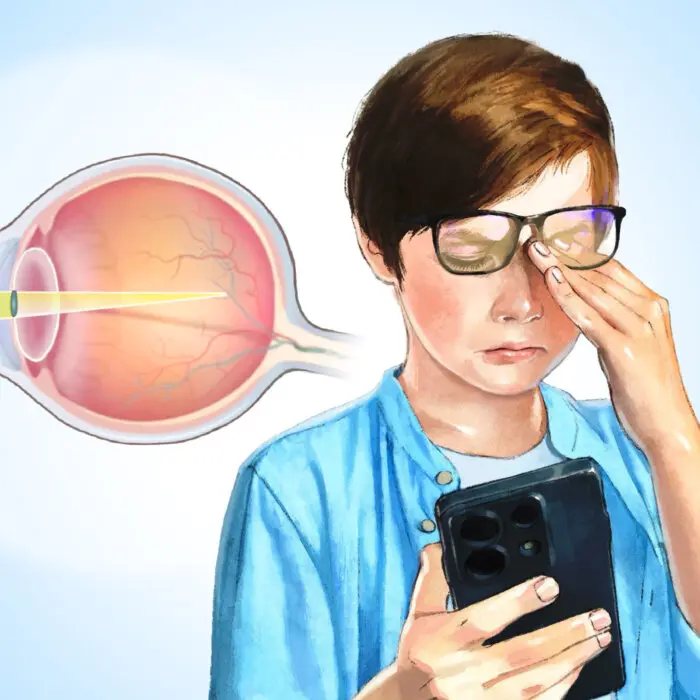

Infrared light does something no other wavelength does as effectively: It penetrates the skin and boosts mitochondrial function, which in turn increases energy—adenosine triphosphate production (ATP). In the eye, ATP helps regulate eye pressure, maintain lenses, and protect against retinal cell damage. The downstream effect is meaningful protection against glaucoma, cataracts, and macular degeneration.
The retina contains exceptionally densely packed mitochondria and a high metabolic rate, which makes it particularly prone to decline with age. Infrared wavelengths can help recharge it.
“I can make it sound really impressive and high tech, but it’s not,” Jeffery said.
Jeffery’s studies on the superiority of incandescent lighting over LED light are a nod to the original light source: the sun. Incandescent light has the same wavelengths as sunlight, but sunlight has greater intensity and balance, even on cloudy days, making it more powerful even when it seems to be barely there.
Why Children Are the Most Urgent Case
The journey to better sight with sunlight begins in childhood with the prevention of myopia, or nearsightedness.
The mechanism appears to involve dopamine: Bright light triggers the release of dopamine from retinal cells, which is believed to stop the eyeball from growing too long, he said.
One caution—don’t rely on infrared light devices to fulfill your goal of more light. Most of what he’s reviewed is far too powerful. Energy levels vary widely across products, so exposure time matters—but there is little regulation, Jeffrey said. Manufacturers chase what sells—stronger, brighter, more intense—even if the research hasn’t caught up.
Bottom Line: Don’t Fear Sunlight
The practical implications are more manageable than they might seem.
Outdoors, you don’t need direct sun exposure. You should still protect your eyes from ultraviolet light by wearing sunglasses or a hat, or by sitting in the shade, Mutti said.
Jeffery’s current recommendation is at least 30 minutes of outdoor time daily, though that guidance could evolve as research accelerates, he said.
If you’re inside, Jeffery recommends adding a single incandescent or halogen bulb—both of which include infrared wavelengths—in an area of the home where you spend time in the morning. Morning light exposure is best, he said, whether outdoors or with artificial lights, because your mitochondria are more sensitive right after waking.
Jeffery is hoping to change conventional thinking—and laws that limit incandescent lights—by sharing his research on human health with policymakers and leaders in the architecture industry.
“I’m not saying that it’s all got to do with light, but I think we should start paying attention to light.”