High-quality, sound sleep improves work efficiency and mood and beautifies skin. However, modern-day people live under a lot of pressure and often encounter problems such as insomnia, light sleep with frequent dreams, and waking up easily. Dr. Wu Hung-Chien, director of Taiwan Yisheng Traditional Chinese Medicine Clinic, introduced his unique “Qiankun Line” sleep aid technique to help improve sleep quality.
Sleep Supplements and Their Side Effects
Many people turn to sleeping pills or supplements when they experience insomnia, but before doing so, perhaps you should understand how they work and what side effects they might bring.- Antihistamines: Often used to treat colds and allergies, antihistamines have a sedative effect and can temporarily help you fall asleep. However, the sedative effect sometimes extends to the daytime, making people feel drowsy, which may affect energy and work quality during the day.
- Melatonin: This is a hormone produced by the brain’s pineal gland. The secretion of melatonin in the body usually increases at night, encouraging people to go to sleep. Taking melatonin may cause side effects such as headache, dizziness, stomach upset, and daytime sleepiness.
- Muscle relaxants: For people who cannot sleep because of muscle tension, muscle relaxants can help. But they can cause muscle weakness as a side effect, so you risk accidentally falling if you visit the toilet at night.
Psychological Stress: The Primary Cause of Insomnia
Dr. Wu was interviewed by the Epoch Times’ “Healthy Cultivation” program and said that clinically, insomnia symptoms in most patients are caused by psychological and mental stress. In particular, during the past three years of the pandemic, many people suffered from COVID-19-induced insomnia.Traditional Chinese medicine (TCM) posits that emotions are closely related to physical health. Joy, anger, worry, overanalyzing, sadness, and fear all uniquely influence different organs.
Dr. Wu said acupuncture and Chinese medicine conditioning have positively affected insomnia patients. TCM holds that the human body has a meridian system, or an energy channel, responsible for transporting qi and blood to the whole body. These essential substances constitute the body and maintain all its physiological activities. Some points on the meridians with special functions are called acupoints. Stimulating acupoints through acupuncture and massage can treat diseases of the corresponding viscera.
3 Quick Ways to Help You Fall Sleep
Dr. Wu shared three sleep aid methods to help you fall asleep quickly:1. ‘Qiankun Line’ Sleep Aid Method
Dr. Wu published an academic paper stating that the clinical use of the “Qiankun line” to treat insomnia brought remarkable results.
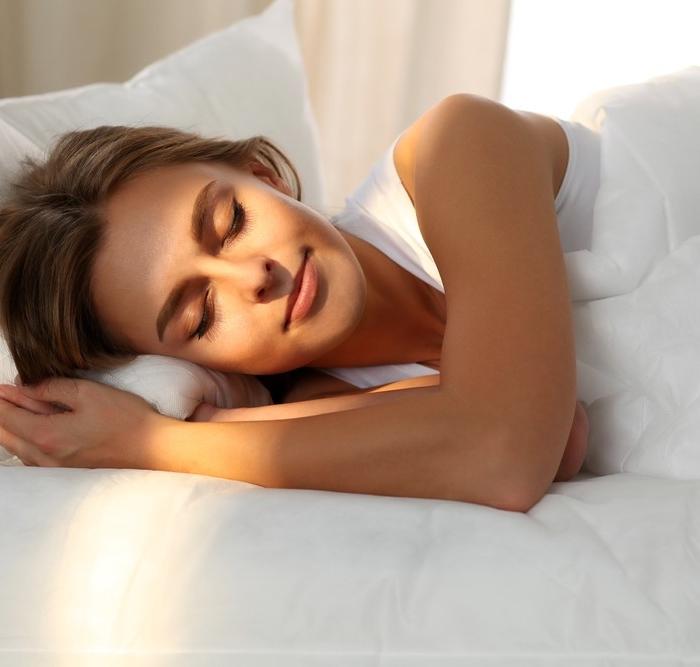
The Qiankin line refers to the horizontal line extending from the back of the earlobe to the start of the hair. There are five acupoints along it: Yifeng, Anmian 1, Yiming, Anmian 2, and Fengchi. The vagus nerve also runs along this line.

2. Yintang Acupoint and Deep Breathing
The Yintang acupoint between the eyebrows is also an excellent point to aid in sleeping. After applying mint to the Yintang, close your eyes and slowly take a deep breath.- It can stop you from overthinking and brooding.
- It prompts the brain to secrete calming substances.
- As there are many sympathetic and parasympathetic nerves inside the internal organs, when the organs expand during deep breathing, all those nerves are activated. When the sympathetic and parasympathetic nerves strike a balance, it primes a person for sleep.

3. Tea as a Sleep Aid
Dr. Wu also provided a tea recipe that serves as a sleep aid. He suggested people suffering from insomnia drink it before dinner to be effective at bedtime.Best Time to Sleep
Although some people must stay up late for work, going to bed early and getting up early is a good way to keep your body strong and work more efficiently. Dr. Wu said it takes a week or even a month to make up for staying up late for one night, and it is tough for people with long-term insomnia to recover fully. So always do your best not to stay up late.Dr. Wu said that TCM emphasizes the need to take “midnight and noon naps.” Midnight is considered to be from 11:00 p.m. to 1:00 a.m., and noon is considered to be from 11:00 a.m. to 1:00 p.m. Sleeping during these periods is most conducive to repairing the body.
TCM posits that there are 12 meridians in the human body, respectively connected to 12 viscera, and the 24 hours in a day is divided into 12 periods (each equivalent to two hours on the clock). The qi and blood on the corresponding meridians will be particularly affluent at different times. And the corresponding viscera(s) to that meridian are also more active.
The ancient Chinese medicine literature “The Yellow Emperor’s Inner Classic” says that “when a person lies down (sleeps), the blood returns to the liver.” Therefore, when a person sleeps and lies down, the blood is stored in the liver, and the autonomic nervous and endocrine systems controlled by the liver will stabilize.
The gallbladder meridian is “on duty” from 11:00 p.m. to 1:00 a.m., and the liver meridian is on duty between 1:00 a.m. to 3:00 a.m. Entering a soundly deep sleep during this period helps the liver and gallbladder detoxify, metabolize, and repair the body.
From the perspective of Western medicine, 10:00 p.m. and 11:00 p.m. are when the two major hormones, growth hormone and melatonin, repair the body and are secreted in large quantities. Therefore, sleeping at this time has the best effect on body repair and makes one less vulnerable to insomnia.
From 11:00 a.m. to 1:00 p.m. is the time when the heart meridian is most active. Resting at this time is good for the heart to supply blood to the body, which helps the body cope with environmental changes and repair its cells.