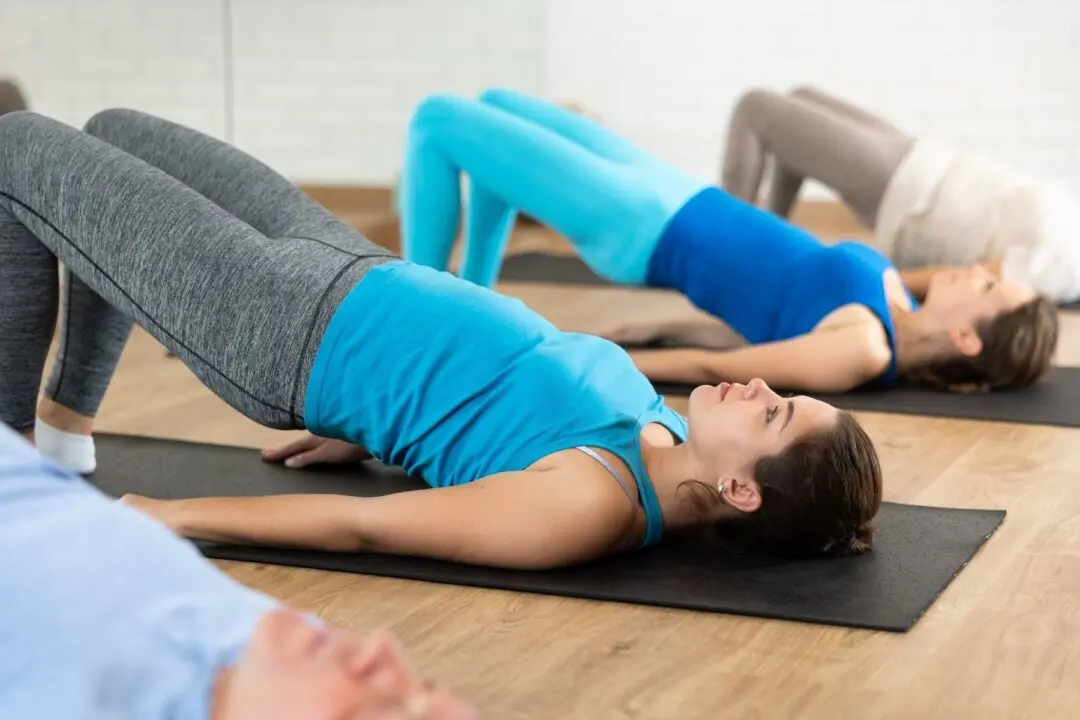
Many common upper-body issues—including neck and shoulder soreness, hunched back, forward head posture, and rounded shoulders, as well as buffalo and dowager’s humps—are strongly linked to poor scapular (shoulder blade) mobility.
The Unique ‘Floating’ Scapula: How It Affects Your Body
Most bones in the human body are connected through joints. The scapulae, however, are unique in that they are highly mobile yet “floating” bones. Located on the back of the rib cage, they connect to the skeletal framework only at its outer edges through the clavicle. Because of their unique position, the scapula’s stability and smooth movement depend largely on the surrounding muscles.When the surrounding muscles become inactive or are used improperly over time, stiffness, tightness, and poor blood circulation can develop, leading to various aches and pains. Prolonged sitting, poor posture, and extended use of computers, phones, and tablets can pull the scapulae forward, cause the neck to protrude, and gradually move out of their natural alignment.
Once the scapulae lose their balanced position, it immediately affects the head and neck to which they are connected. Reduced circulation can contribute to symptoms such as dizziness, cold hands and feet, or a tendency toward a “cold” constitution.
Moreover, chronic tension in the upper body can disrupt autonomic nervous system balance, keeping the body in a heightened state of stress and suppressing parasympathetic activity, which, in turn, may interfere with healthy digestive function.
5 Quick Tests to Check Your Scapular Mobility
If you’d like to assess whether your scapular mobility is functioning properly, try the following five simple self-check movements:1. Shoulder Shrug and Release
Perform a shrug by lifting your shoulders upward, then relaxing them back down, to engage the levator scapulae. If you feel stiffness, catching, or discomfort during the motion, it may indicate limited scapular mobility.2. Shoulder Flexion
With both arms straight, raise them forward and overhead. Observe whether your arms can naturally come close to your ears. During this movement, the scapulae assist with upward rotation and external rotation. If your arms cannot reach your ears, it suggests restricted scapular mobility.3. Shoulder Abduction
With both arms straight, lift them out to the sides and upward. You should be able to raise them to at least 120 degrees. If you cannot reach this angle, it may indicate insufficient upward rotation or restricted movement of the scapula.4. Shoulder Extension
With both arms straight, lift them backward and upward. Ideally, you should achieve at least 45 degrees of extension. If you are unable to do so, this may signal limited scapular mobility.5. Shoulder Rotation
Place both hands behind your back—one reaching down from above and the other reaching up from below—and try to clasp your hands together. If your fingers cannot touch, it may indicate restricted scapular movement.Improving Scapular Mobility
Enhancing scapular mobility can be approached in two main steps: “repair” and “activate.” The first step focuses on stretching and relaxing tight or sore muscles to improve circulation and range of motion. The second step involves strength training to activate the muscles surrounding the scapula, building stability and control.Repair
1. Shoulder Press Stretch (Upper Body Release)
Step 1: Begin in a kneeling position, with your knees directly under your hips and your spine naturally extended without collapsing your lower back.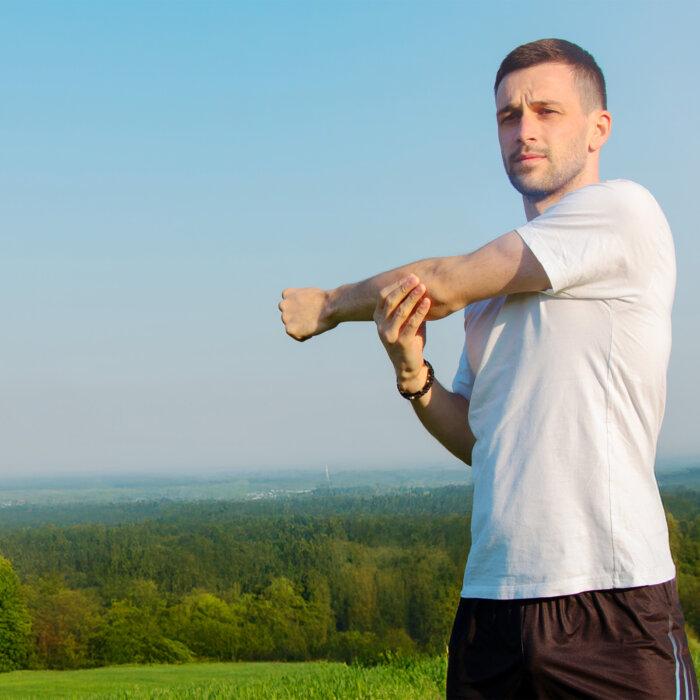
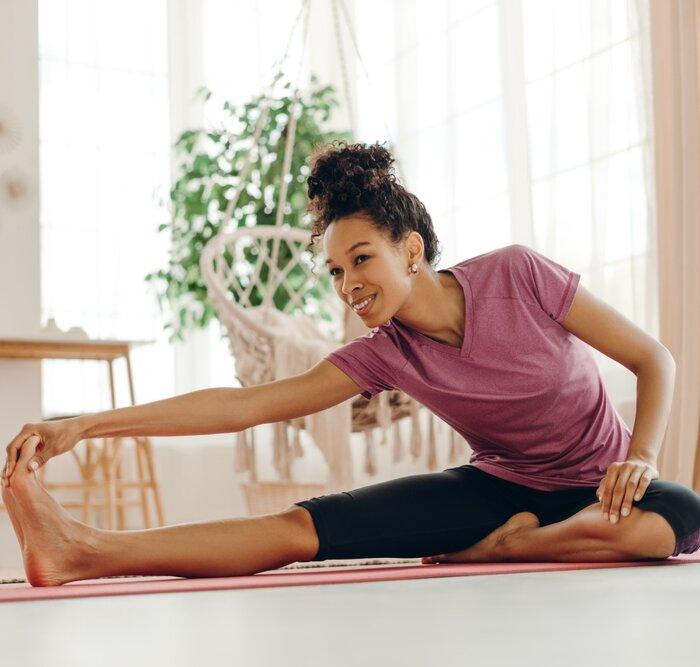
You should feel a stretch along the backs of your arms and your upper chest.
2. Forward and Backward Clap
Step 1: Reach both arms forward, clap in front of your body, then behind your body.3. Up-and-Down Arm Swings
Step 1: Raise both arms straight in front of your body at chest level.4. Shoulder Shrug and Release
Lift both shoulders as high as possible toward your ears, hold for at least 20 seconds, then forcefully lower them.Activate
1. Prone Y-W-I-T Scapular Activation Series
Lie face down and perform the arm positions in the sequence Y, W, I, and T. Keep your fingers slightly bent and thumbs pointing upward to help maintain proper shoulder alignment throughout the movements.2. Superman Hold
Lie face down with your arms in a “W” shape at your sides. Inhale, then simultaneously lift both your arms and legs, holding them stable without moving.3. Superman Forward and Back Extension
From the Superman position, lift your arms and legs, then extend your arms forward and return them to the “W” position at your sides. Repeat this movement.4. Internal and External Rotation
Stand or sit with your back against a wall. Raise your upper arms to a 90-degree angle with your body and keep them still. Move your forearms up and down simultaneously.By first “repairing” to improve mobility and then “activating” to strengthen muscles and control, the scapulae can return to their proper position and function. Once the scapulae regain flexibility and stability, upper-body posture naturally improves, gradually alleviating issues such as neck and shoulder soreness, rounded shoulders, and hunchback posture.