The word “collagen” comes from the Greek word for glue, and for good reason—it’s the main protein holding our bodies together. It’s especially critical for cartilage, the tissue that cushions our joints.
Why Collagen Matters for Joint Health
Collagen is the most abundant protein in the human body. It forms a large part of tendons and ligaments, but unlike muscle or bone, it breaks down faster as we age. In fact, collagen loss starts as early as our 20s and 30s, and by the time we reach 80, up to 75 percent of the body’s collagen may be gone. Collagen loss can increase our susceptibility to injury and joint problems.That’s where supplementation comes in.
“Collagen has shown potential as a supplement for managing osteoarthritis,” Dr. Deepak Ravindran, a pain medicine specialist, told The Epoch Times. Collagen supplements stimulate the body to produce more of its own collagen, which strengthens cartilage and lowers inflammation, he said.
“While some may dismiss collagen as hype, the research is gradually catching up, and it suggests measurable benefits,” Jodi Duval, a naturopathic physician and owner of Revital Health, who has seen collagen help patients with injury recovery, postnatal repair, and osteoarthritis, told The Epoch Times.
Type and Absorption
Not all collagens are the same. The type of collagen you choose—and how your body absorbs it—makes a big difference for joint health.In simpler terms, hydrolyzed collagen provides building blocks for new cartilage, while native collagen helps calm the immune system to prevent further damage.
There are also different types of collagen based on where it is found in the body.
Type 1 is found in skin, tendons, and bones, where it provides structure and strength. Type 2 is concentrated in cartilage and is critical for keeping joints resilient and flexible. Type 3 collagen is found in soft tissues, often working alongside Type 1 collagen.
“Type 1 and 3 are better suited for skin and bones; Type 2 for cartilage,” Duval said.
When assessing collagen products, Duval generally recommended focusing on hydrolyzed collagen peptides with proven absorption, ideally specifying Type 2 if the goal is joint health.
Absorption can be further boosted by pairing collagen with other supportive compounds. Ingredients such as vitamin C, hyaluronic acid, or glucosamine have been shown to enhance both the absorption and efficacy of collagen.
Duval also highlighted the importance of source transparency, noting that grass-fed bovine, wild-caught marine, or eggshell membrane collagen often provides higher quality than generic blends.
How Much Collagen Do You Need?
The next question is whether you’re actually getting enough to make a difference.“For someone wanting to boost collagen, a mix of both diet and supplements is ideal,” Duval said.
On the dietary side, she pointed to slow-cooked broths, bone marrow, collagen-rich cuts of meat such as oxtail or beef cheeks, as well as chicken skin and fish skin. These foods naturally provide a spectrum of collagen types and gelatin, a protein derived from collagen.
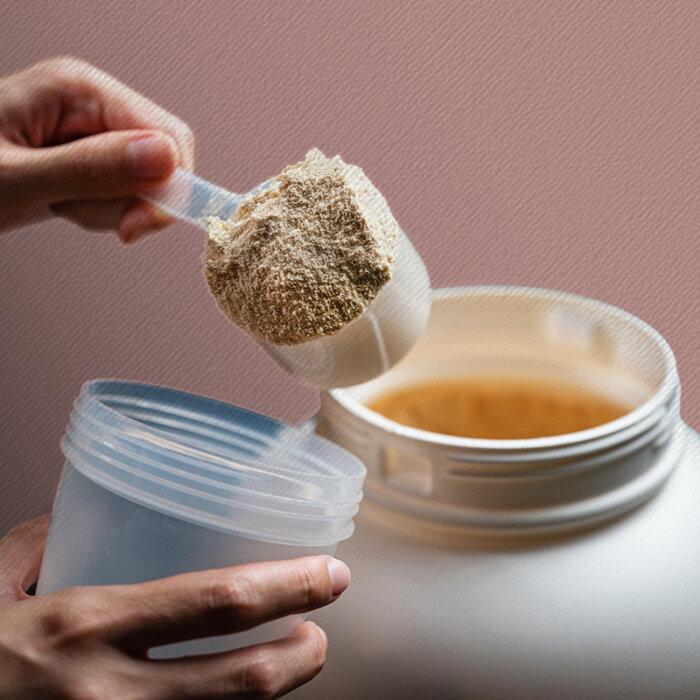
Supplements can help fill the gap. Based on both research and her clinical experience, Duval generally recommends 10 to 15 grams per day, often split into smaller doses, specifically for joint pain and osteoarthritis. Clinical studies suggest that 10 to 20 grams daily, taken consistently over six to nine months, can improve daily function and ease symptoms in mild to moderate osteoarthritis. In severe cases, it’s less likely to reverse damage but may still provide some symptom relief. Side effects are rare, but some people may experience slight digestive discomfort or an allergic reaction if collagen is derived from fish, eggs, or other allergens.
More isn’t necessarily better. “Consistency matters more than mega-dosing,” Duval said.
Timing may also play a role. Taking collagen peptides 30 to 60 minutes before exercise or rehabilitation therapy could enhance local collagen production, due to the boost in blood flow during activity, Duval said.
Collagen Recipe for Joint Health
To bring all of this together in a practical way, Duval shared one of her favorite winter dishes.Collagen-Rich Beef Shin and Tendon Stew (Pressure Cooker Version)
This stew combines collagen-dense cuts, such as beef shin (osso buco), marrow bones, tendons, and skin-on pieces. Slow pressure cooking tenderizes the cuts and breaks down gelatin and Types 2 and 3 collagen, while releasing amino acids such as glycine and proline, which support joint health. It also includes vegetables and herbs rich in vitamin C, zinc, magnesium, and silicon, which act as cofactors to support collagen production.- 2 pounds beef shin (with bone)
- 1/2 pound beef tendon (optional but ideal)
- 2 marrow bones or knuckle bones (grass-fed)
- 1 onion, chopped
- 2 carrots, chopped
- 2 celery stalks, chopped
- 3 cloves garlic, crushed
- 1 tablespoon fresh ginger (optional anti-inflammatory)
- 1 tablespoon tomato paste (lycopene and vitamin C)
- 1 tablespoon apple cider vinegar (helps extract minerals)
- 1 teaspoon turmeric
- 1 teaspoon smoked paprika
- 1 bay leaf
- Salt and black pepper to taste
- 2 to 3 cups filtered water or homemade broth
- Optional: 2 teaspoons collagen peptide powder for an extra boost
Method
- Sear meat and bones using the sauté function with a splash of olive oil or ghee until browned.
- Add garlic, onion, ginger, turmeric, and tomato paste and cook until fragrant.
- Add carrots, celery, vinegar, and enough water or broth to cover the meat.
- Seal the lid and cook on high pressure for 45 to 60 minutes (use 60 minutes for very gelatinous cuts such as tendon).
- Let the pressure release naturally for 10 to 15 minutes.
- Open, stir, adjust seasoning, and remove bones (marrow can be eaten or stirred in).
- For an extra-rich texture, cool overnight to allow the gelatin to set. Reheat as needed.
- Serve hot, topped with fresh parsley or lemon zest for a vitamin C boost.
For zinc and copper, garnish with pumpkin seeds or serve the stew with a side of oysters. For an extra boost of vitamin C, pair it with fermented cabbage or a squeeze of lemon.