Have you ever had trouble falling asleep or staying asleep through the night? If you’ve experienced tossing and turning in bed for hours or waking in the middle of the night and struggling to fall back asleep, you might be dealing with autonomic dysfunction. In this article, Dr. Wu Guobin, the Taiwan Xinyitang Heart Clinic superintendent, shares some tips on how to self-assess and regulate your autonomic nervous system.
A female patient in her 40s with autonomic dysfunction visited Wu for a consultation. The patient had been suffering from insomnia for over 20 years and struggled to fall asleep until 3 or 4 in the morning, even with the help of two sleeping pills, sedatives, and painkillers. She also experienced restlessness, anxiety, persistent ringing in her left ear, and stiffness and soreness in her shoulders.
Wu employed acupuncture therapy, targeting the Fengchi, Anmian, and Wangu acupuncture points located under the skull and the Huatuojiaji acupoints on both sides of the spine. After just one treatment, the patient experienced noticeable relief in the tension of her neck and shoulder muscles and could sleep soundly throughout the night. The persistent ringing in her left ear also showed improvement. With continuous treatment, her overall health condition gradually improved.
Self-Assessment Checklist for the Autonomic Nervous System
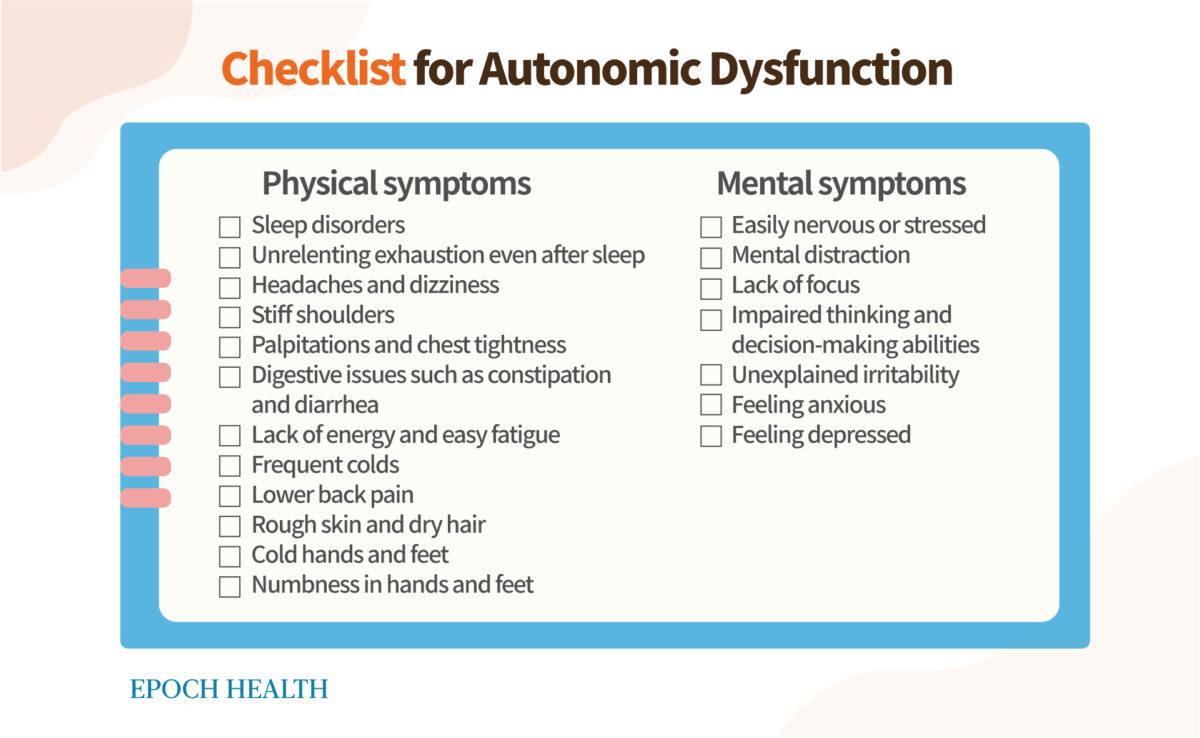
How can we tell if our autonomic nervous system is functioning normally? Wu provided the following checklist. If you experience five or more symptoms, it may indicate an imbalance in your autonomic nervous system.Physical Symptoms
- Sleep disorders
- Unrelenting exhaustion, even after sleep
- Headaches and dizziness
- Stiff shoulders
- Palpitations and chest tightness
- Digestive issues such as constipation and diarrhea
- Lack of energy and easy fatigue
- Frequent colds
- Lower back pain
- Rough skin and dry hair
- Cold hands and feet
- Numbness in hands and feet
Mental Symptoms
- Easily nervous or stressed
- Mental distraction
- Lack of focus
- Impaired thinking and decision-making abilities
- Unexplained irritability
- Anxiety
- Depression
How to Address Autonomic Dysfunction at Home
According to Wu, insomnia and shoulder stiffness are typical symptoms of autonomic dysfunction. People with this condition often exhibit perfectionist tendencies, impatience, negative emotions, and high work pressure, which lead to increased psychological burden and tension in the body.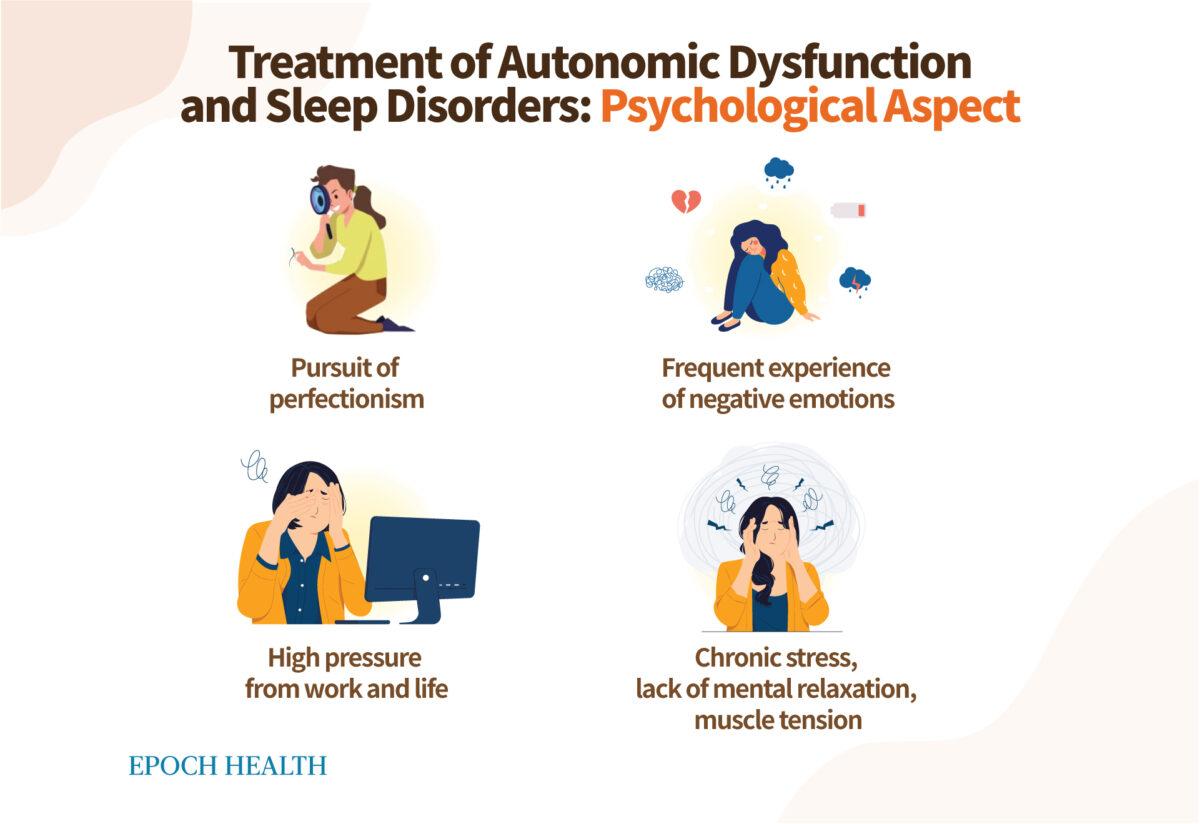
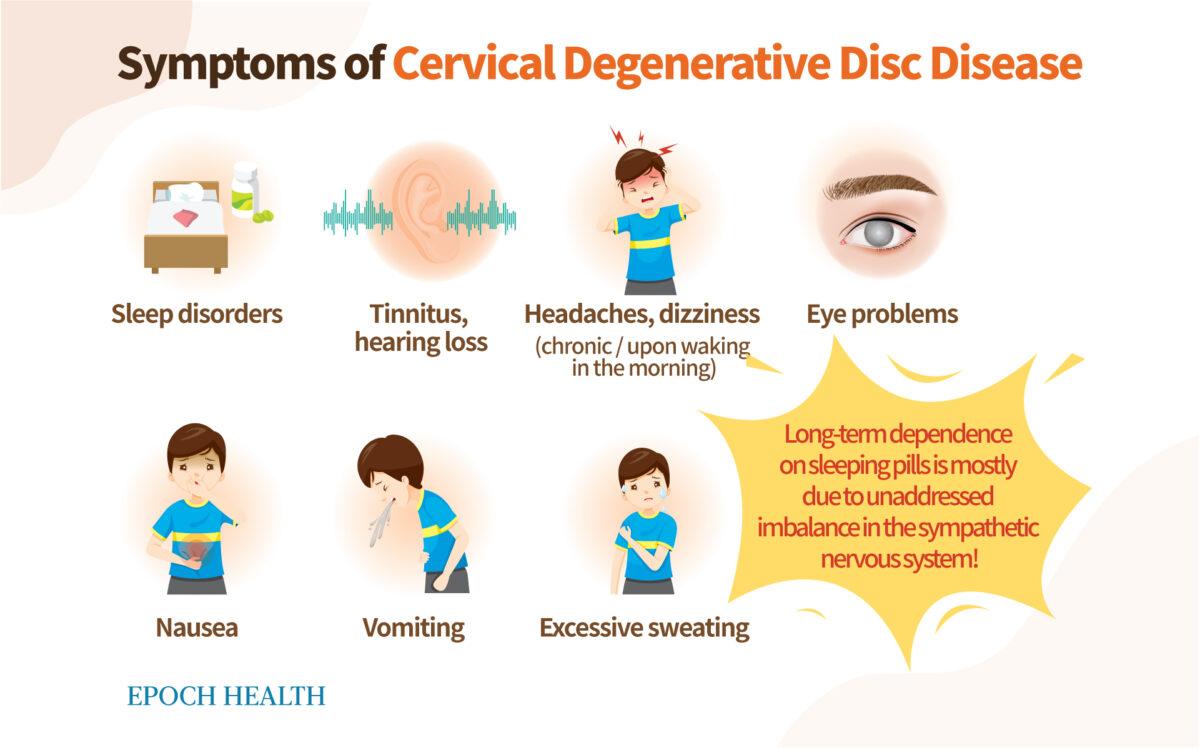
Wu also mentioned that addressing shoulder muscle stiffness should be given priority when dealing with sleep problems. This is because degenerative changes, slippage, or narrowing of the cervical spine that supports the head can stimulate the sympathetic nervous system, leading to poorer sleep quality and other symptoms such as tinnitus and hearing impairment, headaches, and dizziness. In some cases, it may even cause eye problems such as glaucoma, eye pain, flashing lights, protrusion, and temporary blurred vision or vision loss. Other complications like nausea, vomiting, chest tightness, and palpitations may also occur.
Treating Autonomic Dysfunction With 7 TCM Herbal Formulas
- Modified Free and Easy Wanderer Powder: This can help improve emotional anxiety. For individuals with chronic inflammation, moutan bark and gardenia fruit can be added to enhance the heat-clearing effect.
- Wen Dan Tang: This can promote restful sleep for individuals who experience restlessness at night or exhibit mental symptoms such as palpitations and fear.
- Gui Pi Tang: This is specifically used to treat deficiency of both the heart and spleen and is particularly effective in addressing issues such as palpitations, chest tightness, insomnia, and forgetfulness.
- Tian Wang Bu Xin Dan: This is specifically used to address heart palpitations and short sleep duration.
- Chai Hu Jia Long Gu Mu Li Tang: This formula has a calming effect and can aid in promoting restful sleep.
- Gan Mai Da Zao Tang: This is effective in addressing emotional instability and frequent yawning.
- Huang Lian E Jiao Tang: This is suitable for individuals experiencing agitation and insomnia.
In another case, Wu treated a male patient with depression. He prescribed Modified Free and Easy Wanderer Powder, Yue Ju Wan, and the qi-tonifying herbs ginseng, Mai Men Dong, and Wu Wei Zi. The patient reported that the medication effectively relieved his depression, and he wanted to engage in recreational activities. To this, Wu stated that getting out of the house can help treat depression, and staying at home all the time can actually lead to illness.
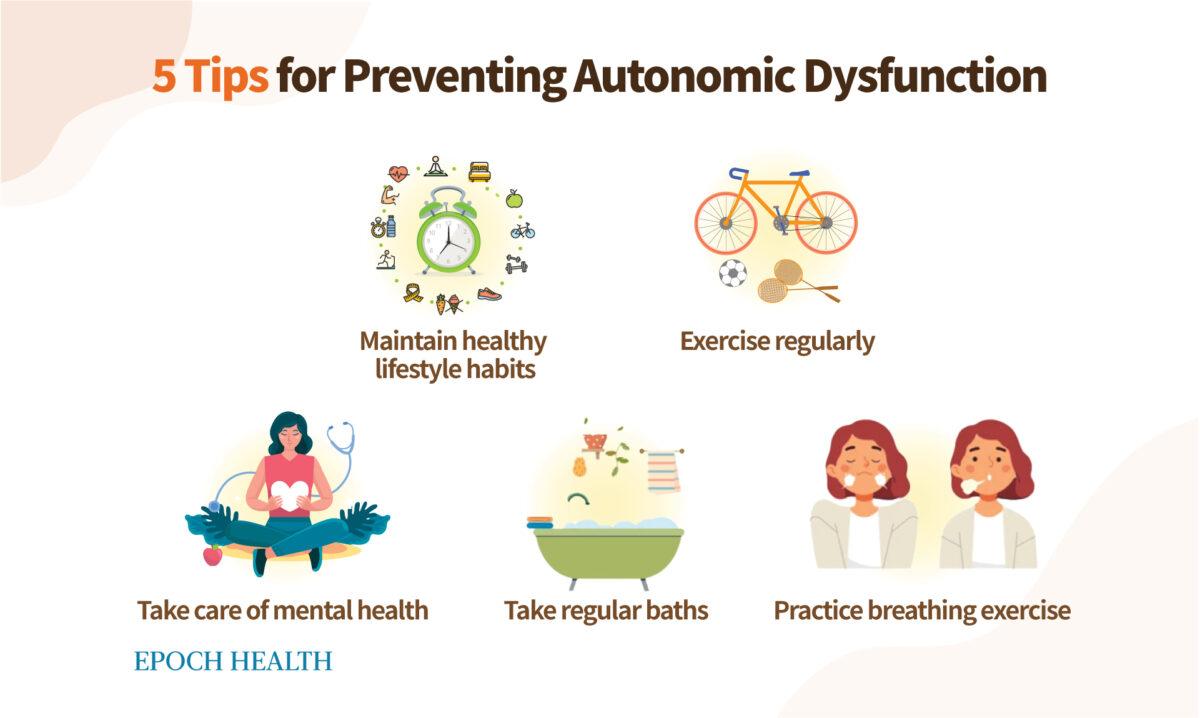
- Get up early and go to bed early: It may be difficult for insomniacs to go to bed early, but they can start by getting up early. By having more time to be active during the day, they will naturally feel tired earlier.
- Eat breakfast: This is a practical way to regulate the autonomic nervous system.
- Get sun exposure: Spending 30 minutes outdoors sunbathing every day is beneficial. Even on rainy days, spending 30 minutes outdoors can still be helpful.
- Eat dinner at least three hours before bedtime: Eating too close to bedtime can disrupt the regulation of the autonomic nervous system.
- Exercise: Engage in some gentle exercises such as taking a walk, stretching, or going for a relaxing jog.
- Smiling: Smiling can enhance the body’s ability to handle stress. Even a slight smile during challenging times can help build resilience.
- Singing: Singing for 10 minutes daily or listening to music can help regulate mood. Wu treated a 48-year-old stroke patient who often felt depressed and had difficulty speaking. Wu instructed him to sing at least five songs every day, warning him that he should not come for treatment if he failed to do so. The patient went home and started singing with his wife every day. After a while, he reported feeling more relaxed and noticed an improvement in his language ability, all thanks to his new singing habit.
- Take a hot bath: Soaking in water at 102 to 104 F (39 to 40 C) for 15 minutes daily can help promote better sleep. However, ensure that the water temperature does not exceed 107.6 F (42 C), as temperatures above this can stimulate the sympathetic nervous system and negatively affect sleep.
- Practice breathing exercises: Taking deep breaths in a 1:2 ratio (inhaling for four seconds, exhaling for eight seconds) through the nose can help alleviate feelings of tension.
- Do squats: Squats can help improve the body’s metabolic circulation. When we have trouble sleeping or feel anxious, our muscles can tense, and our blood vessels may constrict, leading to poor microcirculation. Performing squats can quickly regulate the circulation and metabolism of the lower body.
- Perform a one-minute stretching exercise: Cross your arms and stretch upward, imagining your body is a stick. Exhale and rotate your body to the left for four seconds, then inhale and return to the center. Repeat the movement on the right side. This exercise can help promote the smooth flow of the gallbladder meridian along the sides of the body. In TCM, it is believed that the energy of the internal organs circulates throughout the body via meridians. Therefore, clearing the gallbladder meridian can promote the health of the liver and gallbladder and regulate our emotions.
Some herbs mentioned in this article may be unfamiliar, but they are generally available in health food and Asian grocery stores. It is important to note that treatment methods may vary depending on the individual. Please consult with a TCM health care professional for a specific treatment plan.