High-Risk Habits for Presbyopia From a TCM Perspective
More than 1,300 years ago, the Tang dynasty physician Sun Simiao documented everyday habits that could harm eye health in his work “Essential Prescriptions Worth a Thousand in Gold for Emergencies” (“Beiji Qianjin Yaofang”), some of which still hold true in modern everyday life.Prolonged and Excessive Use of the Eyes
Sun identified “prolonged writing and meticulous craftsmanship” as high-risk behaviors that can accelerate the development of presbyopia. In practical terms, these behaviors refer to occupations or activities that require sustained near vision and fine visual focus, which can easily lead to eye overuse.From a traditional Chinese medicine (TCM) perspective, eye overuse is explained by the principle that “prolonged visual strain depletes the blood.” In essence, continuous and intensive use of the eyes gradually depletes the nourishing substances that support eye function, impairing the body’s ability to repair and restore the eyes.
Eye Usage in Inadequate Lighting
Classical descriptions, such as “reading fine text at night” or “reading by moonlight,” closely mirror modern practices, such as using a smartphone in bed with the lights off. Forcing the eyes to function in poor lighting conditions accelerates the depletion of qi (vital energy) and blood, which nourish the eyes.From a conventional medical perspective, darkness causes excessive pupil dilation and sustained tension in the eye muscles, thereby increasing the risk of fatigue, dryness, and difficulty focusing.
Chronic Mental or Emotional Stress
In addition to visual habits, mental and emotional well-being also play an important role in eye health. In TCM, prolonged emotional distress—such as persistent low mood or frequent crying—is believed to have a detrimental effect on eye health.Excessive Recreational or Entertainment Activities
Unhealthy lifestyle habits can also harm eye health. Sun specifically cautioned against excessive indulgence in recreational activities—such as gambling or board games—that people in the past engaged in and interfered with adequate rest.In modern times, this is comparable to staying up late to binge-watch television series or to play video games throughout the night.
Unhealthy Dietary Habits
Sun also emphasized the influence of diet on visual health, particularly excessive alcohol consumption and the frequent intake of spicy or highly stimulating foods. In modern lifestyles, this can extend to habitual drinking of iced beverages and fried foods.Excessive Sexual Activity
Another behavior considered harmful to eye health is excessive or unrestrained sexual activity. From a TCM perspective, this is believed to directly deplete the body’s fundamental energy reserves, known as kidney essence.TCM holds that the kidney “opens into the eyes,” meaning kidney energy nourishes and sustains visual function. When kidney essence is strong, the eyes maintain flexibility and focusing ability. When it is depleted, vision weakens—particularly the ability to adjust focus.
From this perspective, presbyopia is understood as a sign of declining kidney essence, reflecting reduced visual adaptability rather than an isolated eye problem.
Underlying Mechanisms of Eye Disorders
In TCM, eye disorders are primarily associated with two functional systems: the liver and the kidneys, which regulate circulation, nourishment, and long-term vitality.The liver governs the flow of qi and blood and is closely connected to vision, while the kidneys store the body’s core restorative energy and support visual stability with aging.
Eye problems are commonly associated with three patterns:

Natural Ways to Support Healthy Eye Aging
Healthy management of sleep, stress, and diet helps maintain good eyesight as we age.1. Maintain a Regular Sleep Schedule
TCM holds that the period between 11 p.m. and 1 a.m. is a critical time for liver repair and regeneration. Going to bed before 11 p.m. is therefore considered beneficial for liver health.2. Manage Emotional Stress
Practicing slow, deep, and rhythmic diaphragmatic breathing can help relax both the mind and body, allowing the nervous system to shift from a state of tension to one of relaxation. This, in turn, helps restore the smooth circulation of qi and blood, supporting their upward flow to the eyes.3. Incorporate Foods That Nourish the Liver and Kidneys
In TCM, black-colored foods are commonly associated with nourishing the kidneys and replenishing the body’s deeper restorative energy. Green vegetables, meanwhile, are believed to support liver function and, in turn, help nourish the eyes.Black-colored foods are often rich in anthocyanins, compounds known for their antioxidant properties.
Other kidney-nourishing foods, such as Chinese yams and black fungus, are believed to support fluid balance in the body, thereby reducing dryness and fatigue while maintaining adequate moisture in the eyes.
4. Cervical Spine and Eye Care Exercises
To improve blood circulation to the eyes, internal nourishment of the liver and kidneys should be complemented by cervical spine and eye care exercises.Clinical experience suggests that many cases of visual decline and eye fatigue are not solely the result of age-related changes in the eyes themselves, but are often closely associated with impaired cervical circulation and insufficient blood supply to the eyes.
However, the causal relationship between cervical spine conditions and eye disorders warrants further investigation and confirmation.
In particular, the first three exercises—longitudinal traction, horizontal traction, and back-of-the-head massage—primarily target the first and second cervical vertebrae. These regions are closely associated with the blood supply to the eyes. When circulation in this area is restricted, the effectiveness of other eye exercises may be limited.
Long-term, consistent practice is essential for eye care.
In one observational case, two 75-year-old women with marked presbyopia performed the eye exercises two to three times daily, for approximately 10 minutes per session, without additional interventions. After three months of consistent practice, both reported improvements in vision.
5. Warm Compresses and Blinking
To enhance blood circulation around the eyes, gently warming the eyes with the palms of the hands can be effective. This technique is part of the previously mentioned 20-Minute Eye Care Routine, and it can also be practiced on its own.Commercial eye-warming devices may produce varying results depending on the individual. If the eyes feel dry or uncomfortable after heat application, it may indicate that the device is not suitable, as the eyes generally do not tolerate excessive heat well. Using the palms for warm compresses remains the simplest, gentlest, and most reliable approach.
Blinking is another natural way to promote circulation around the eyes and regulate tear production.
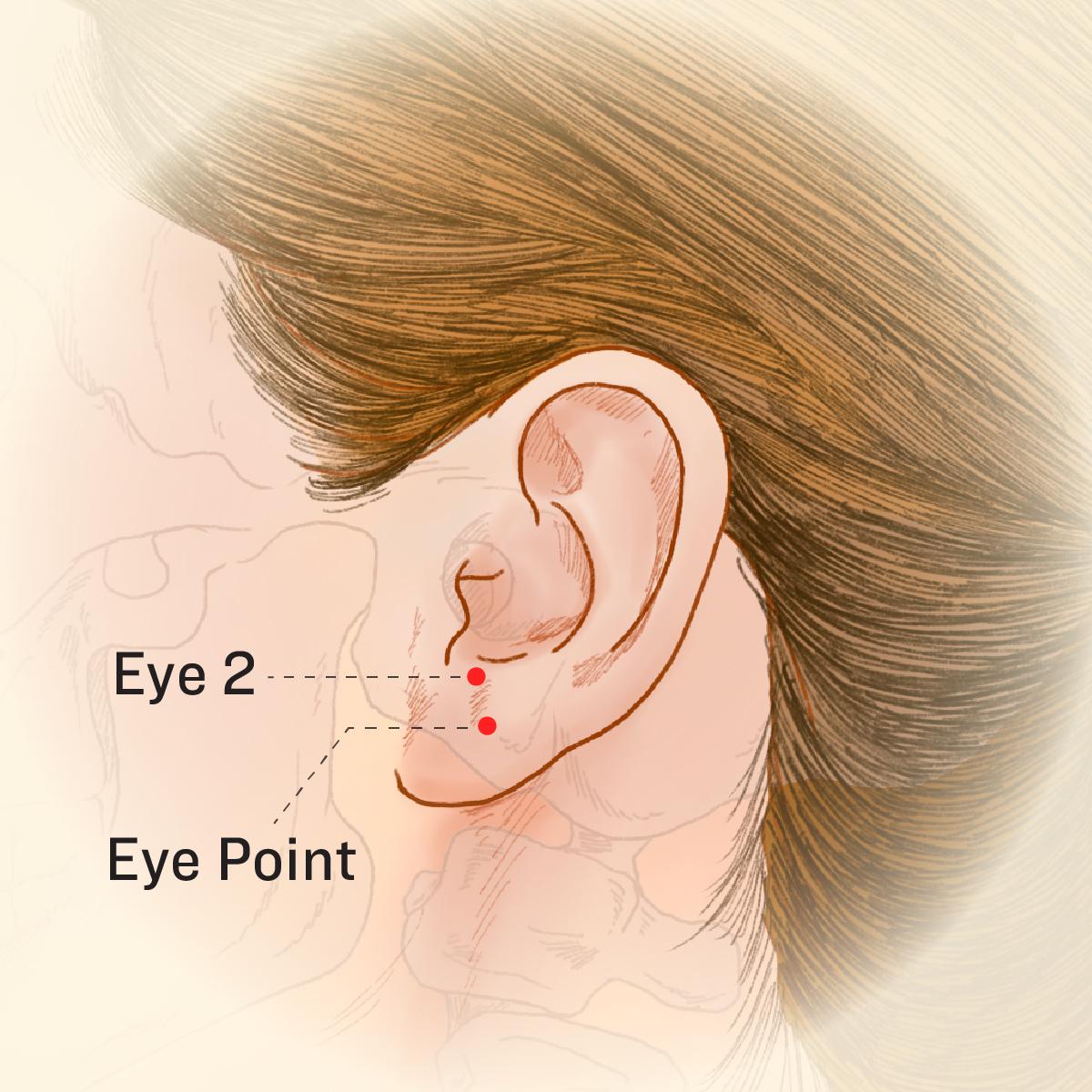
6. Ear Acupoints for Eye Health
Massaging specific ear acupoints can help regulate blood supply to the eyes and support visual function. In auricular therapy, certain reflex points on the ear are commonly associated with eye function. These include:- Eye 2: Located in the depression near the outer edge of the concha cavity
- Eye Point: Located near the center of the earlobe, close to the typical site of ear piercing
7. Gabor Patch Training
Presbyopia is not solely the result of age-related changes in the eyes—it is also related to the brain’s ability to process visual information.Gabor patches are specialized visual patterns derived from the research of Nobel Prize-winning physicist Dennis Gabor. They are widely used in vision science for both studying visual processing and in visual training programs.
Under professional guidance, Gabor patch training is typically recommended for 10 to 20 minutes per session, three to four times per week, as a supportive eye-care practice.
Such training requires long-term consistency and is not intended to produce rapid visual recovery. It should be viewed as a complementary approach rather than a replacement for corrective lenses or standard ophthalmologic care.
Presbyopia may be common, but it need not be passively accepted as an inevitable decline. By adjusting daily habits, restoring balance to sleep and stress, nourishing the body, and practicing consistent eye and cervical care, we can support healthier visual aging and preserve clarity for years to come.