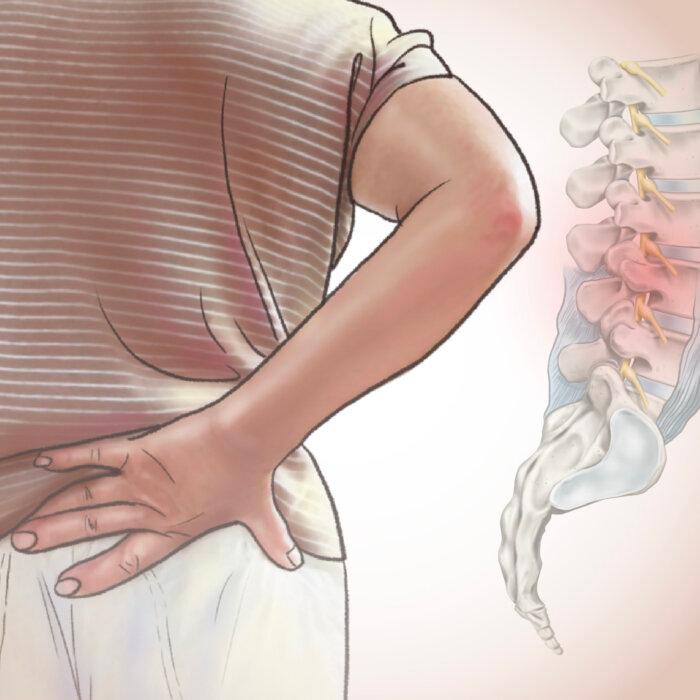
An older woman underwent surgery for a herniated lumbar disc, yet recovery brought little relief. Although she could manage a few steps, persistent pain and weakness remained, stripping her of independence. Everyday movements—such as standing up after using the toilet—required support from others. Her condition is widely known as failed back surgery syndrome.
A full-body structural evaluation revealed the underlying issue: Although her lower back hurt the most, the root cause was an old, untreated foot injury from years earlier that had left her body misaligned. Despite the imbalance, she continued to work, care for her family, do laundry, and carry her grandchildren, resulting in mounting physical strain.
After the foot misalignment was addressed, improvement came much faster than expected. The very next morning, she sent a message to the doctor: “I was able to sit up in bed by myself and go to the bathroom without waking my husband. After using the toilet, I could stand up from the seat on my own. When my husband woke up and nervously asked me where I had gone, I burst into tears of joy at that moment.”
This case comes from Dr. Huang Hsien-ming, founder and director of Zhenhuan Traditional Chinese Medicine Clinic in Taiwan. Holding dual licenses in Western medicine and traditional Chinese medicine (TCM), he specializes in orthopedic injury treatment and focuses on restoring the body’s structural balance to its optimal state. His clinical experience suggests that the location of pain is not always the location of injury. Many chronic pains that resist treatment do not actually originate where they are felt.
Your Feet May Be Affecting Your Lower Back
Do you have low back pain? Try this quick self-check to see if your feet may be involved:- Stand with both feet together and parallel.
- Test the left foot first. Keep your left heel planted on the ground and rotate your toes outward to about 60 degrees.
- As you turn the foot outward, notice whether your lower back feels looser when arching backward or bending forward. If the pain does not disappear completely but improves by 30 percent or more, the left foot may be contributing to your low back pain.
- If there is no noticeable change, repeat the test with the right foot.
Knee Flex-Extend Exercise
If either foot appears connected to lower back relief, try this knee flex-extend exercise to release tension in the feet and legs: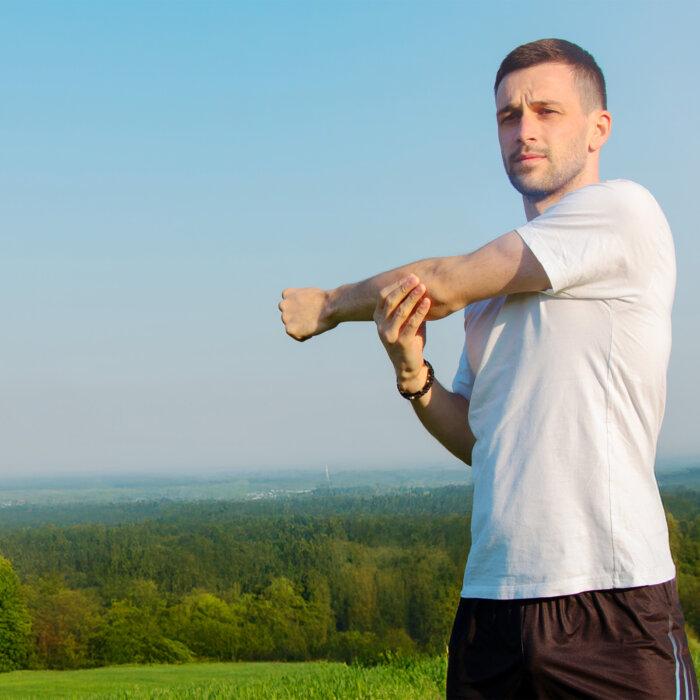
Beginners can perform 30 repetitions. Once you are familiar with the movement, 10 to 15 repetitions are sufficient. This exercise helps release tension in the leg sinew channels and can improve low back pain.
How Knee Pain and Low Back Pain Are Connected
Many people with chronic low back pain also develop knee osteoarthritis, and research confirms a strong two-way relationship: Each condition can worsen the other through factors such as misalignment and movement dysfunction in the spine, pelvis, or lower limbs.Huang has observed in clinical practice that mismatched rotational torques—twisting forces from the ankle and lower leg combined with those from the hip and thigh—create uneven stress on the knee, accelerating wear and tear. For this reason, treatment often begins by addressing the ankle and hip rather than focusing solely on the knee itself. This integrated approach may yield better outcomes than treating the knee alone.
The True Sources of Shoulder and Neck Pain
Shoulder and neck stiffness or aching are common complaints. As with knee and low back pain, the root cause of shoulder and neck discomfort is often not limited to the shoulder or neck. It can stem from three main factors: tension in the arm sinew channels affecting the shoulders and head, old injuries in the lower limbs that influence the cervical spine, and fascial tension from the internal organs that pulls on the shoulder and neck.Arm-Opening Exercise
This movement mobilizes the upper body and engages the upper back and arms.It is recommended to perform at least 10 repetitions per session. With regular practice, this exercise can noticeably relax the shoulders and neck while reducing stiffness caused by poor posture.
Press an Acupoint to Enhance Relief
In TCM, shoulder and neck soreness or stiffness is often caused by the invasion of three pathogenic factors: wind, cold, and dampness. Prolonged exposure to wind or cold, combined with a damp environment or poor fluid metabolism, can lead to dampness accumulation that triggers discomfort. These factors can invade the body more easily when circulation is sluggish—especially with prolonged sitting, poor posture, or lack of movement—allowing wind, cold, and damp to settle in the shoulder and neck region.People who spend long hours in air-conditioned environments often experience stiff shoulders and necks, sometimes accompanied by headaches. In addition to the arm-opening exercise, acupressure may provide faster relief.
The short narrow marsh acupoint (chi ze, LU5) is located on the elbow crease, on the side of the arm closest to the thumb. To stimulate it, gently press the point with a finger from the opposite hand while lightly moving the shoulders and neck. This helps promote the flow of qi (energy) and blood.
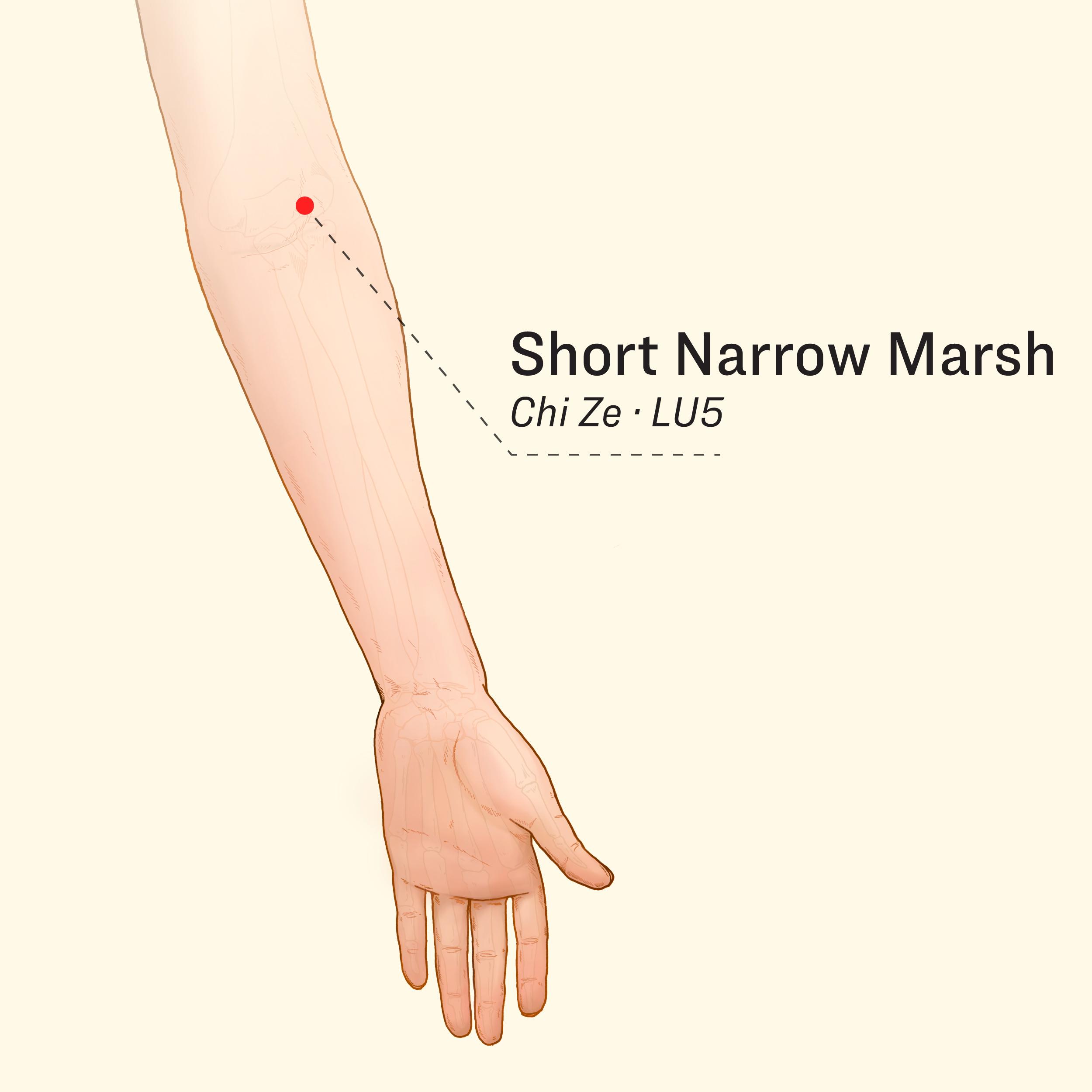
Pressing this acupoint also activates the shoulder and upper back muscles, improving circulation and increasing blood flow to the head, which can naturally relieve headaches. This technique is especially effective for headaches caused by stiff posture or insufficient blood supply.
Chronic pain is not always caused by the area where it is felt. As this case illustrates, hidden imbalances—such as old foot injuries or tension along the body’s connective pathways—can place long-term stress on the spine, knees, and shoulders. By viewing the body as an integrated system and using targeted tests, exercises, and acupoint stimulation, it is often possible to identify the true source of pain and restore balance. Sometimes, real relief begins not where the pain appears, but where the problem first started.