Key Takeaways
- The adrenals and thyroid gland are connected, but research indicates they don’t necessarily have a direct causal relationship where the function of one impacts the other.
- It may be more accurate to say that the adrenals and thyroid are both significantly impacted by chronic stress, which affects the release of adrenal and thyroid hormones.
- When we’re thinking about adrenal and thyroid health specifically, stress management is key. This may involve taking extra care with your gut health, making sure to get enough calories and nutrients every day, and managing external stressors like work, finances, and even unresolved emotional trauma.
The Adrenal-Thyroid Connection
The adrenal glands and thyroid gland are definitely connected—to a point. They’re both glands that produce hormones and are part of the endocrine system. They also share a connection to the hypothalamus and pituitary gland, parts of the brain that release their own hormones, corticotropin-releasing hormone (CRH) and adrenocorticotropic hormone (ACTH). These hormones signal the adrenals to release cortisol (the stress hormone) and the thyroid to release thyroid hormone. We call these hormone chain reactions the hypothalamus-pituitary-adrenal (HPA) axis and the hypothalamus-pituitary-thyroid (HPT) axis.While the adrenals don’t have a direct influence on the thyroid or vice versa, what the research suggests is that a dysfunctional HPA axis (where the adrenals overproduce or underproduce cortisol) may result in a suppressed HPT axis, eventually leading to systemically low levels of cortisol and thyroid hormones [1].
Chronic Stress, HPA Axis Dysfunction, and the Thyroid
We’ve discussed in other articles that “adrenal fatigue” or adrenal dysfunction isn’t a recognized medical diagnosis at this time, although the symptoms are very real.

Usually what people mean when they say they have adrenal fatigue is that they’ve internalized chronic stress that is causing physical symptoms, whether that stress stems from gut health imbalances, autoimmune disease, prolonged emotional distress, self-imposed or outside pressure to perform at work or school, or a number of other factors.
Chronic stress can easily cause a number of problems in the body, including hormonal imbalances—such as a lack or excess of thyroid and adrenal hormones.
A 2021 literature review found that an imbalance of the HPA axis from chronic stress may affect all hormonal systems, including the HPT axis. The review stated that continuous activation of the HPA axis can result in decreased thyroid-stimulating hormone (TSH) production and impaired conversion of T4 to T3, possibly due to increased levels of glucocorticoids (cortisol) [1].
So instead of saying that we need to focus on adrenal health to support the thyroid, what we really need is to reduce our chronic stress load, which significantly affects the actions of both the adrenals and the thyroid gland.

How Cortisol Affects Adrenals and Thyroid Health
Cortisol is the “stress hormone,” released by the adrenal glands in high amounts when there’s a dangerous situation at hand. If that danger is a predator, for example, cortisol helps us either fight or run away.But cortisol is not only released when we’re dealing with a dangerous situation; we have some level of cortisol in our bodies at all times throughout the day. It should be at its highest levels in the morning when we wake up, and at its lowest levels at night while we’re sleeping.
- Immune system suppression (this is why doctors prescribe corticosteroids, essentially synthetic cortisol, for many types of autoimmune diseases).
- Maintenance of blood pressure.
- Increasing blood glucose to give us energy.
- Increasing fat breakdown and fat storage.
- Bone and muscle breakdown.
- Fatigue.
- Depression.
- Pain.
- Memory impairments.
- Electrolyte imbalances.
- Orthostatic hypotension (dizziness when going from seated to standing).
- Impaired pupillary light reflex.
- Inflammation.
- Fatigue.
- Weight loss.
- Low blood pressure.
- Dark spots on the skin (known as hyperpigmentation).
- High blood potassium levels and low sodium.
- The underlying root cause of the imbalance.
- Whether cortisol is high or low.
On the reverse side, an observational study examined the effects of Cushing syndrome (an adrenal condition that causes high cortisol output) on thyroid function. Of the study participants, the results showed that half of Cushing patients had low thyroid hormone that normalized six to 12 months after treatment [7].
These findings indicate that chronically elevated levels of cortisol seen in Cushing syndrome inhibit thyroid function.
However, high cortisol levels don’t always mean low thyroid hormone levels and vice versa. A 2021 observational study looked for correlations between cortisol and thyroid hormone levels. A total of 152 adults who were either healthy or had a diagnosis of subclinical hypothyroidism had their TSH and cortisol levels measured, and the results showed there was a positive correlation between cortisol and TSH levels—meaning elevated cortisol levels were correlated with elevated TSH levels [8].
Managing Cortisol for Adrenals and Thyroid Function
Improving adrenal and thyroid health isn’t necessarily about therapies that target those glands directly. Let’s take a look at some of the other factors that influence cortisol levels, adrenals, and thyroid health.The Gut Health Piece
Gut health is an often-overlooked underlying cause of thyroid dysfunction and high or low cortisol. For example, a pathogen that’s taken up residence in the gut is a significant stressor to the body, and that stressor can easily cause spikes in cortisol levels. Not digesting food and absorbing nutrients well through an impaired gut lining is another stressor that may contribute to increased cortisol levels.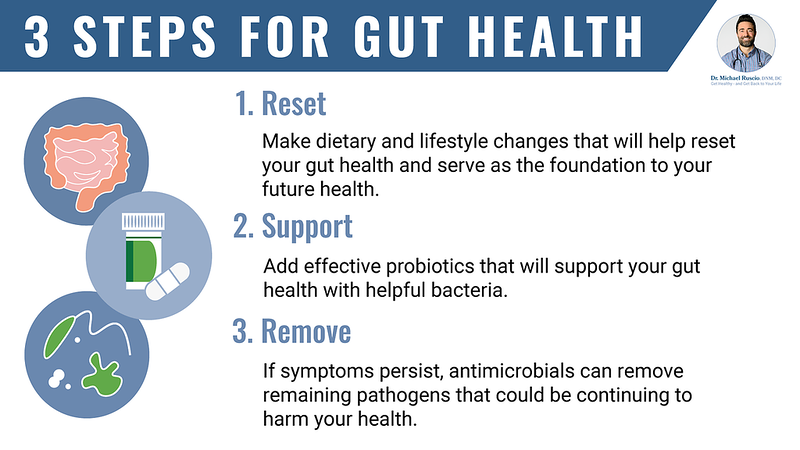
At first glance, her initial symptoms say “thyroid problems.” However, upon further investigation, we found that it was actually gut imbalances and a lack of nutrients from her diet that were the main drivers of her symptoms.
The Nutrition Piece (Are You Eating Enough Food?)
Another factor that may place a burden on the HPA axis includes consuming too few calories.One random controlled trial (RCT) found that caloric restriction significantly increased cortisol levels in women [10], therefore suggesting adequate caloric intake may be helpful for people with thyroid symptoms (as was the case with Beth).
When you’re under-eating, this typically means you aren’t getting enough of your essential nutrients either, like electrolytes and vitamins. Adding in additional electrolytes along with increasing her carb intake represented a significant improvement in symptoms for Beth.
The Chronic Stress Piece
When discussing cortisol, adrenals, and thyroid health, we have to bring up chronic stress. Some chronic stress is internal, like your gut health, as we just addressed.- Working every day in a job you hate.
- Difficult interpersonal relationships.
- Being financially and emotionally responsible for children, aging parents, and/or other family and friends.
- Carrying unresolved trauma that becomes internalized in the body (the issues in the tissues).
- Choosing to view the world as a dangerous and hateful place that’s only getting worse.
There’s no getting around it: Chronic stress must be improved to see improvements in physical symptoms. Again, sometimes this means getting more nutrients that help you handle stress better. But sometimes, it means adjusting your perspective on your job or putting boundaries in place with people who bring you down mentally and emotionally.

Adrenal-Supporting Herbs for Thyroid Health
For additional adrenal support, adaptogenic herbs may assist with both adrenal function and thyroid health, either directly or indirectly, by improving the stress response.Only the adaptogenic herb ashwagandha has clinical trials demonstrating its benefits for thyroid health. Ashwagandha was shown to improve TSH and thyroid hormone levels in patients with subclinical hypothyroidism in one RCT [11].
However, other herbs appear to improve stress, which may be helpful for thyroid function in an indirect way.
A supplement containing eleuthero root extract was shown to improve burnout symptoms [12].
Rhodiola has been shown to improve stress symptoms, fatigue, and exhaustion in one study [13]. Another study found that Rhodiola improved stress symptoms, disability, functional impairment, and overall well-being [14]. Additionally, a literature review found that Rhodiola may reduce stress hormones and prevent chronic stress [15].
Curb Chronic Stress for Better Adrenals and Thyroid Health
When looking at adrenal and thyroid issues, blood tests such as thyroid levels only show a small percentage of the full picture. It’s equally, if not more important, to look at what’s causing chronic, systemic stress in your life and address those root causes. When you make those changes, that’s when you begin to see sustainable healing.◇ References
- Anifantaki F, Pervanidou P, Lambrinoudaki I, Panoulis K, Vlahos N, Eleftheriades M. Maternal prenatal stress, thyroid function and neurodevelopment of the offspring: A mini review of the literature. Front Neurosci. 2021 Sep 8;15:692446. DOI: 10.3389/fnins.2021.692446. PMID: 34566560. PMCID: PMC8455916.
- Yaribeygi H, Panahi Y, Sahraei H, Johnston TP, Sahebkar A. The impact of stress on body function: A review. EXCLI J. 2017 Jul 21;16:1057–72. DOI: 10.17179/excli2017-480. PMID: 28900385. PMCID: PMC5579396.
- Hannibal KE, Bishop MD. Chronic stress, cortisol dysfunction, and pain: a psychoneuroendocrine rationale for stress management in pain rehabilitation. Phys Ther. 2014 Dec;94(12):1816–25. DOI: 10.2522/ptj.20130597. PMID: 25035267. PMCID: PMC4263906.
- Thau L, Gandhi J, Sharma S. Physiology, Cortisol. In: StatPearls. Treasure Island (FL): StatPearls Publishing; 2022. PMID: 30855827.
- Samuels MH. Effects of variations in physiological cortisol levels on thyrotropin secretion in subjects with adrenal insufficiency: a clinical research center study. J Clin Endocrinol Metab. 2000 Apr;85(4):1388–93. DOI: 10.1210/jcem.85.4.6540. PMID: 10770171.
- Munir S, Quintanilla Rodriguez BS, Waseem M. Addison Disease. In: StatPearls. Treasure Island (FL): StatPearls Publishing; 2022. PMID: 28723023.
- Shekhar S, McGlotten R, Auh S, Rother KI, Nieman LK. The Hypothalamic-Pituitary-Thyroid Axis in Cushing Syndrome Before and After Curative Surgery. J Clin Endocrinol Metab. 2021 Mar 8;106(3):e1316–31. DOI: 10.1210/clinem/dgaa858. PMID: 33236107. PMCID: PMC7947758.
- Heidari Z, Hajbagheri A. Assessment of serum cortisol and thyrotropin correlation in euthyroid and subclinical hypothyroid subjects. Expert Rev Endocrinol Metab. 2021 Sep;16(5):263–9. DOI: 10.1080/17446651.2021.1968829. PMID: 34402695.
- Talebi S, Karimifar M, Heidari Z, Mohammadi H, Askari G. The effects of synbiotic supplementation on thyroid function and inflammation in hypothyroid patients: A randomized, double‑blind, placebo‑controlled trial. Complement Ther Med. 2020 Jan;48:102234. DOI: 10.1016/j.ctim.2019.102234. PMID: 31987229.
- Tomiyama AJ, Mann T, Vinas D, Hunger JM, Dejager J, Taylor SE. Low calorie dieting increases cortisol. Psychosom Med. 2010 May;72(4):357–64. DOI: 10.1097/PSY.0b013e3181d9523c. PMID: 20368473. PMCID: PMC2895000.
- Sharma AK, Basu I, Singh S. Efficacy and Safety of Ashwagandha Root Extract in Subclinical Hypothyroid Patients: A Double-Blind, Randomized Placebo-Controlled Trial. J Altern Complement Med. 2018 Mar;24(3):243–8. DOI: 10.1089/acm.2017.0183. PMID: 28829155.
- Jacquet A, Grolleau A, Jove J, Lassalle R, Moore N. Burnout: evaluation of the efficacy and tolerability of TARGET 1® for professional fatigue syndrome (burnout). J Int Med Res. 2015 Feb;43(1):54–66. DOI: 10.1177/0300060514558324. PMID: 25537278.
- Ross SM. Burnout: A Multicenter Exploratory Clinical Trial With a Proprietary Extract of Rhodiola rosea in Patients With Burnout Syndrome. Holist Nurs Pract. 2018;32(6):336–9. DOI: 10.1097/HNP.0000000000000299. PMID: 30320658.
- Edwards D, Heufelder A, Zimmermann A. Therapeutic effects and safety of