Key Takeaways:
- The vagus nerve is the longest nerve in the body and connects nearly every organ system to the brain stem and cortex.
- Vagus nerve dysfunction can lead to a number of mental and physical health problems, like lightheadedness, anxiety, digestive distress, and sleep issues.
- Healthy lifestyle choices like gentle exercise, meditation, and a nutrient-dense diet act as non-invasive forms of vagus nerve reset.
- Other holistic interventions include multiple types of massage, breathwork, and laughter.
- Heart rate variability (HRV) is the best way to indirectly measure vagal activity, also called vagal tone.
- Electrical vagus nerve stimulation (VNS) is the conventional approach to vagus nerve stimulation but is only FDA-approved for a small number of conditions, is invasive, and has a higher potential for side effects.
Boosting low vagal tone can also help a number of medical conditions such as epilepsy, high blood pressure, Parkinson’s disease, rheumatoid arthritis, atherosclerosis, inflammatory bowel disease, diabetes, and cardiovascular disease, and prevent early mortality [1].
There are several low-cost, low-barrier-to-entry treatments for a vagus nerve reset that are safe and effective for many conditions that are tied to vagus nerve dysfunction. Lifestyle interventions like gentle exercise, a nutrient-dense diet, and a meditation practice can go a long way in helping reset the vagus nerve.
Since electrical vagus nerve stimulation isn’t realistic for most people, due to its limited use and higher potential for side effects, the natural, safe, and research-backed treatments I discuss here are probably a better place to start when healing your nervous system. They also take a more holistic approach as they can help heal many other body systems, not just the vagus nerve.

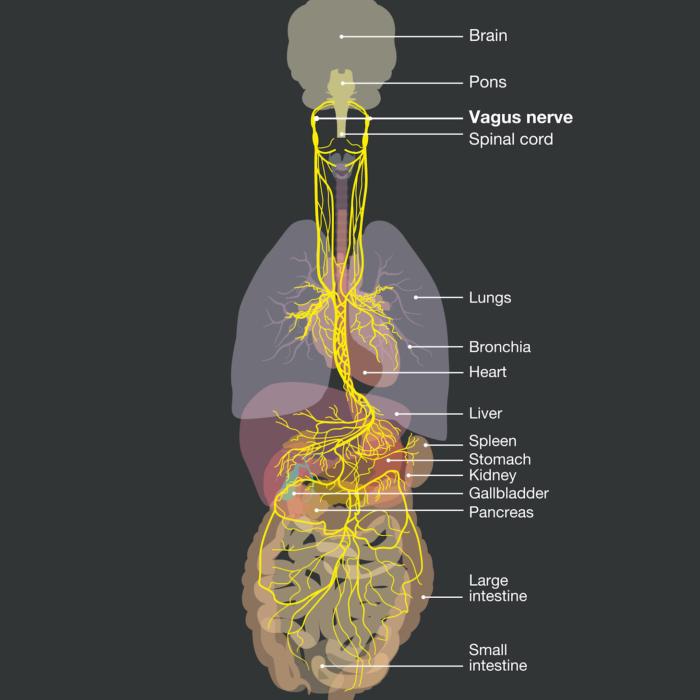
The Nuts and Bolts: What Is the Vagus Nerve?
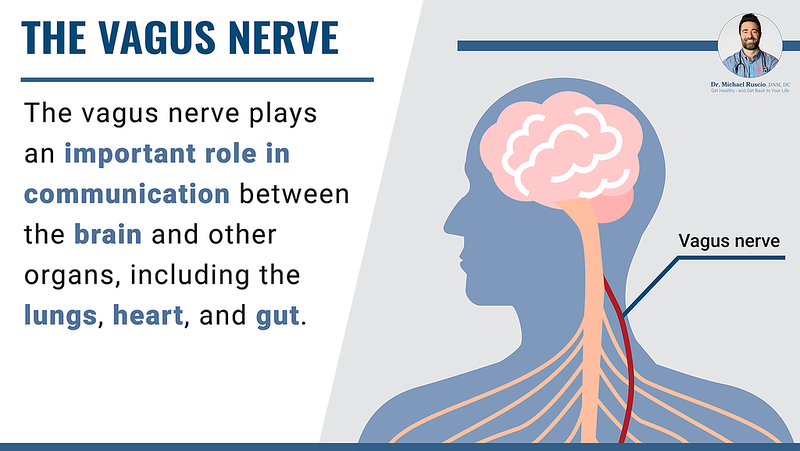
If you’ve ever fainted or gotten woozy at the sight of blood, an intense injury or sudden pain, or other stressful stimuli, it was likely a vasovagal malfunction called vasovagal syncope. This is the most well-known type of vagal disturbance where blood pressure drops, temporarily reducing blood flow to the brain and resulting in a brief loss of consciousness (usually a minute or less) [4].
Vagus Nerve and The Parasympathetic Nervous System
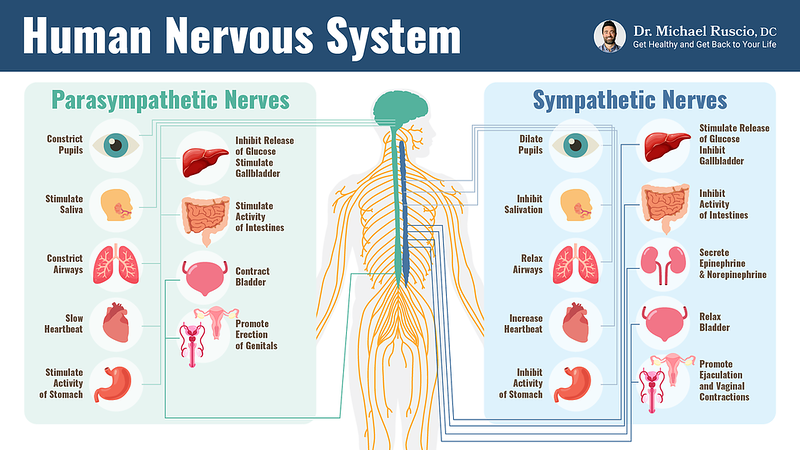
The vagus nerve carries 75 percent of all parasympathetic nerve fibers in the body, making it the primary component of the parasympathetic nervous system (PNS), which is part of the autonomic nervous system (ANS). The other part of the ANS is the sympathetic nervous system (SNS), which governs fight or flight, as well as most voluntary actions.
- Organ systems: cardiovascular, respiratory, gastrointestinal, immune, and endocrine (hormone)
- Heart rate
- Respiratory rate
- Dilation/constriction of vessels
- Digestion
- Urination
- Involuntary muscle movements
- Reflex actions such as coughing, sneezing, swallowing, and vomiting
- Insomnia
- Migraines
- Anxiety
- Chronic pain
- Gas and bloating
- Gastroparesis
- Constipation
- High or low blood pressure
- Elevated and/or fluctuating heart rate
What Is a Vagus Nerve Reset?

Many studies have linked various gastrointestinal, neurologic, and cardiovascular/metabolic diseases to reduced vagal tone, and this has led to exploration into how stimulation of the vagus nerve can improve health. Vagus nerve stimulation is also referred to as vagus nerve therapy or, more loosely, a vagus nerve reset.*
The goal of a vagus nerve reset is to get the two parts of the autonomic nervous system (parasympathetic and sympathetic) back into balance, thereby helping to heal symptoms of nervous system dysfunction.
Any technique that stimulates the vagus nerve, including manual or electrical stimulation, constitutes a form of vagus nerve stimulation (VNS). However, there are other ways to reset the nerve that doesn’t involve direct stimulation and are likely a much more effective place to start.
Holistic Forms of Vagus Nerve Stimulation
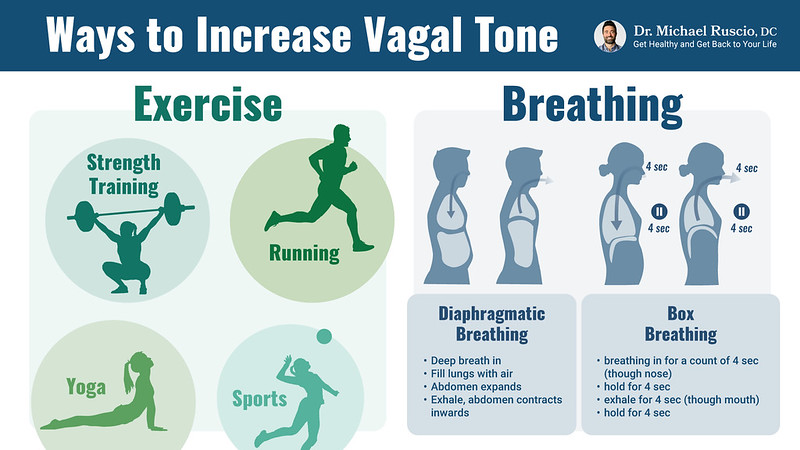
This is the list of interventions that include healthy lifestyle habits that we know are good for your overall health generally. However, there are also additional interventions in this category that are geared specifically toward improving vagal tone.
- Slow breathing exercises
- Chanting
- Music therapy (singing, listening, learning, and performing music)
- Practicing loving-kindness meditation
- Mindfulness meditation
- Practicing forgiveness
- Laughter
- Aerobic exercise
- Stretching
- Resistance training
- Yoga
- Increased consumption of omega-3 fatty acids
- Fasting
- Massage
- Cold water facial immersion
- Sleeping on the right side
Improve Vagal Tone and Whole-Body Health
The known healthy behaviors that have been shown to improve vagal tone include:- Physical activity/exercise like walking, yoga, and stretching. [9, 10]
- Good nutrition and supplementation with choline, omega-3 fatty acids, B12, and probiotics. [9]
- Stress management and meditation. [10]
Oddly enough, this seems to include simulated (fake or forced) laughter. A very small 2012 study looked at the effects of laughter on HRV and mood in patients awaiting an organ transplant (high stress!). It compared the effects of simulated laughter, stretching exercises, clapping, and meditation for 20 minutes to a control group that only had discussions about their health [13].
The results showed that the laughter group had immediate improvement in mood and HRV—the best measure for vagal tone, which I discuss below. Both groups had improved long-term anxiety [13].
Nutrition
As discussed above, proper nutrition is vital for healing the vagus nerve. Reducing your consumption of inflammatory foods like sugar, trans fats, processed foods, and alcohol can go a long way in reducing inflammation and nervous system hyperreactivity.A Mediterranean diet is pretty non-restrictive, and research shows that it is linked to better vagal tone [9]. It emphasizes the consumption of fatty fish, moderate amounts of polyphenol-rich red wine (no spirits or beer), yogurt, and nuts like pistachio, which are all shown to be good for improving heart rate variability (a measure of vagus nerve health).
Exercise
An effective vagus verve reset is likely going to include some sort of physical activity, as research consistently shows that this is one of the best ways to normalize heart rate variability and boost vagal tone [15]. While this might look different for everyone, the key here is just to get moving.Massage
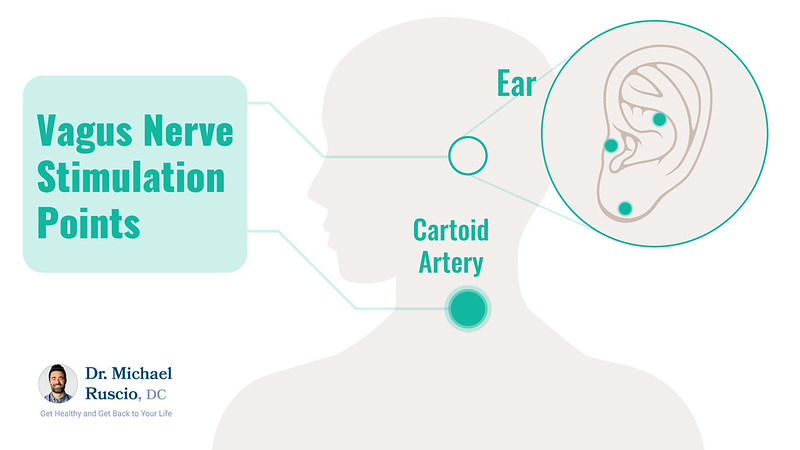
Vagus nerve massages work by applying pressure with stroking and twisting motions to the area between the trapezius and sternocleidomastoid muscles in the neck/shoulder area and to muscles below the base of the skull. Massaging of these areas is thought to stimulate the vagus nerve (due to its close proximity), and to increase parasympathetic activity and vagal tone [16].Another type of massage, known as a carotid sinus massage, involves exerting light pressure with the fingers on one side of the neck where the pulse from the carotid artery can be felt the strongest. However, carotid sinus massages are typically used in emergency medicine situations to slow rapid heart rate and improve abnormal heart rhythms. It can cause adverse effects, especially in people with underlying heart conditions and carotid artery disease [17].
For this reason, I don’t recommend starting here, especially without a health care provider to guide you on using the proper technique.
Ice massage applied to the head and spine may also improve HRV when compared to tap water massage or massage using no water or ice. A study done on 30 healthy male subjects had the participants lie face down while receiving an ice massage over their heads and spine. Compared to the no-treatment and water massage control groups, those who received ice massage had significantly reduced heart rates and improved HRV [18].
Slow Breathing Exercises
Deep breathing activates the PNS and tells your body that it can calm down and relax. In contrast, in fight or flight response (when the sympathetic nervous system is active), short, shallow breaths are more common. By taking deep breaths, you can tell your brain to calm down and slow down the stress response in the body.- Breathe in through your nose for 4 seconds.
- Hold at the top of your inhale for 4 seconds.
- Exhale through your mouth for 4 seconds.
- Hold the bottom of the exhale for 4 seconds.
- Repeat as many times as desired or until you feel relaxed.
Using Heart Rate Variability to Measure the Vagus Nerve Activity
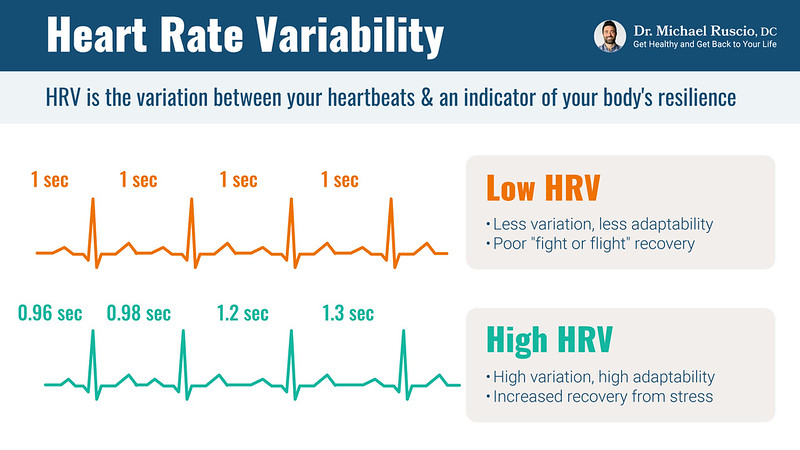
So how do you know if you need to work on your vagal tone anyway?
Activity of the vagus nerve, also referred to as vagal tone, is measured indirectly through heart rate variability (HRV), which is the fluctuation in time intervals between heartbeats. High HRV is associated with higher vagal tone and better health and represents the ability of the nervous system to be adaptable and resilient during stressful situations and to return to baseline afterward [20].
Even though higher/optimal levels of HRV appear to be associated with health and lower HRV is associated with lower vagal tone and worse health, there are no definitive reference ranges constituting normal or healthy HRV [21, 22].
Electrical Vagus Nerve Stimulation
Electrical VNS is a more invasive method where a small implanted device is surgically placed just under the surface of the skin (usually on the left side of the chest) to stimulate the vagus nerve. It’s FDA-approved in the treatment of epilepsy and treatment-resistant depression and is also being explored for the treatment of obesity, stroke rehabilitation, male infertility, autism spectrum disorders, migraines, tinnitus, autoimmunity, and inflammatory disorders [2, 3].This treatment is reserved for the above conditions, and its invasive nature and high cost make it a less preferred method for vagus stimulation in the general population (best stick to cold water and targeted breathing techniques).
- Voice alteration
- Hoarseness
- Cough
- Tingling
- Difficulty breathing
- Vocal cord paralysis
- Implant site infection
- Left facial nerve paralysis
- Horner syndrome: Nervous dysfunction of the face that leads to a smaller pupil, drooping eyelid, and little or no sweating on the affected side [23].
There is no standardized protocol or set of parameters that are proven to yield the greatest therapeutic benefit for specific conditions in these treatments. While these may have a more predominant place in improving vagal tone in the future, trying low-cost, at-home methods that benefit your overall health is probably where your resources will be best spent.
Reset Your Vagus Nerve With Self-Care First
Knowing that your vagus nerve is connected to so many systems of the body should help you understand how a disruption there could affect your sense of well-being.Let it be a comfort that so many established self-care and healthy lifestyle habits like exercise, mindfulness, and nutrition already have a positive impact on vagal tone and heart rate variability. There are also a number of other holistic, complementary interventions like music therapy and targeted breathwork that can improve vagal tone.
◇ References:
- Yuen AWC, Sander JW. Can natural ways to stimulate the vagus nerve improve seizure control? Epilepsy Behav. 2017 Feb;67:105–10. DOI: 10.1016/j.yebeh.2016.10.039. PMID: 28152451.
- Kenny BJ, Bordoni B. Neuroanatomy, cranial nerve 10 (vagus nerve). In: StatPearls. Treasure Island (FL): StatPearls Publishing; 2018. PMID: 30725856.
- Mandalaneni K, Rayi A. Vagus Nerve Stimulator. In: StatPearls. Treasure Island (FL): StatPearls Publishing; 2021. PMID: 32965846.
- Vasovagal syncope–Symptoms and causes–Mayo Clinic [Internet]. [cited 2023 May 29]. Available from: https://www.mayoclinic.org/diseases-conditions/vasovagal-syncope/symptoms-causes/syc-20350527
- Yuan H, Silberstein SD. Vagus nerve and vagus nerve stimulation, a comprehensive review: part I. Headache. 2016 Jan;56(1):71–8. DOI: 10.1111/head.12647. PMID: 26364692.
- Breit S, Kupferberg A, Rogler G, Hasler G. Vagus Nerve as Modulator of the Brain-Gut Axis in Psychiatric and Inflammatory Disorders. Front Psychiatry. 2018 Mar 13;9:44. DOI: 10.3389/fpsyt.2018.00044. PMID: 29593576. PMCID: PMC5859128.
- Tindle J, Tadi P. Neuroanatomy, parasympathetic nervous system. In: StatPearls. Treasure Island (FL): StatPearls Publishing; 2023. PMID: 31985934.
- Gibb AJ. Choline and acetylcholine: what a difference an acetate makes! J Physiol (Lond). 2017 Feb 15;595(4):1021–2. DOI: 10.1113/JP273666. PMID: 28028814. PMCID: PMC5309389.
- Young HA, Benton D. Heart-rate variability: a biomarker to study the influence of nutrition on physiological and psychological health? Behav Pharmacol. 2018 Apr;29(2 and 3-Spec Issue):140–51. DOI: 10.1097/FBP.0000000000000383. PMID: 29543648. PMCID: PMC5882295.
- Bonaz B, Sinniger V, Pellissier S. Therapeutic potential of vagus nerve stimulation for inflammatory bowel diseases. Front Neurosci. 2021 Mar 22;15:650971. DOI: 10.3389/fnins.2021.650971. PMID: 33828455. PMCID: PMC8019822.
- Azam MA, Katz J, Fashler SR, Changoor T, Azargive S, Ritvo P. Heart rate variability is enhanced in controls but not maladaptive perfectionists during brief mindfulness meditation following stress-induction: A stratified-randomized trial. Int J Psychophysiol. 2015 Oct;98(1):27–34. DOI: 10.1016/j.ijpsycho.2015.06.005. PMID: 26116778.
- Brenner IKM, Brown CA, Hains SJM, Tranmer J, Zelt DT, Brown PM. Low-Intensity Exercise Training Increases Heart Rate Variability in Patients With Peripheral Artery Disease. Biol Res Nurs. 2020 Jan;22(1):24–33. DOI: 10.1177/1099800419884642. PMID: 31684758.
- Dolgoff-Kaspar R, Baldwin A, Johnson S, Edling N, Sethi GK. Effect of laughter on mood and heart rate variability in patients awaiting organ transplantation: a pilot study. Altern Ther Health Med. 2012 Aug;18(4):53–8. PMID: 22891377.
- Hayashi K, Kawachi I, Ohira T, Kondo K, Shirai K, Kondo N. Laughter is the Best Medicine? A Cross-Sectional Study of Cardiovascular Disease Among Older Japanese Adults. J Epidemiol. 2016 Oct 5;26(10):546–52. DOI: 10.2188/jea.JE20150196. PMID: 26972732. PMCID: PMC5037252.
- Grässler B, Thielmann B, Böckelmann I, Hökelmann A. Effects of Different Training Interventions on Heart Rate Variability and Cardiovascular Health and Risk Factors in Young and Middle-Aged Adults: A Systematic Review. Front Physiol. 2021 Apr 23;12:657274. DOI: 10.3389/fphys.2021.657274. PMID: 33981251. PMCID: PMC8107721.
- Meier M, Unternaehrer E, Dimitroff SJ, Benz ABE, Bentele UU, Schorpp SM, et al. Standardized massage interventions as protocols for the induction of psychophysiological relaxation in the laboratory: a block randomized, controlled trial. Sci Rep. 2020 Sep 8;10(1):14774. DOI: 10.1038/s41598-020-71173-w. PMID: 32901072. PMCID: PMC7479151.
- Niehues LJ, Klovenski V. Vagal Maneuver. In: StatPearls. Treasure Island (FL): StatPearls Publishing; 2021. PMID: 31855402.
- Mooventhan A, Nivethitha L. Effects of ice massage of the head and spine on heart rate variability in healthy volunteers. J Integr Med. 2016 Jul;14(4):306–10. DOI: 10.1016/S2095-4964(16)60266-2. PMID: 27417177.
- Lin IM, Tai LY, Fan SY. Breathing at a rate of 5.5 breaths per minute with equal inhalation-to-exhalation ratio increases heart rate variability. Int J Psychophysiol. 2014 Mar;91(3):206–11. DOI: 10.1016/j.ijpsycho.2013.12.006. PMID: 24380741.
- Shaffer F, Ginsberg JP. An overview of heart rate variability metrics and norms. Front Public Health. 2017 Sep 28;5:258. DOI: 10.3389/fpubh.2017.00258. PMID: 29034226. PMCID: PMC5624990.
- Sadowski A, Dunlap C, Lacombe A, Hanes D. Alterations in Heart Rate Variability Associated With Irritable Bowel Syndrome or Inflammatory Bowel Disease: A Systematic Review and Meta-Analysis. Clin Transl Gastroenterol. 2020 Dec 18;12(1):e00275. DOI: 10.14309/ctg.0000000000000275. PMID: 33346998. PMCID: PMC7752679.
- Bonaz B, Sinniger V, Pellissier S. Vagal tone: effects on sensitivity, motility, and inflammation. Neurogastroenterol Motil. 2016 Apr;28(4):455–62. DOI: 10.1111/nmo.12817. PMID: 27010234.
- Khan Z, Bollu PC. Horner Syndrome. In: StatPearls. Treasure Island (FL): StatPearls Publishing; 2023. PMID: 29763176.
- Yap JYY, Keatch C, Lambert E, Woods W, Stoddart PR, Kameneva T. Critical review of transcutaneous vagus nerve stimulation: challenges for translation to clinical practice. Front Neurosci. 2020 Apr 28;14:284. DOI: 10.3389/fnins.2020.00284. PMID: 32410932. PMCID: PMC7199464.