Things to Gather for Campfire Cooking
For the Fire:
- Dry firewood, fire starters, matches or a long lighter
- Small kindling that you can buy from your hardware store or log dealer, or you can chop to size yourself
- Good fireproof gloves
- A shovel or stick for moving the firewood and charcoal around the campfire
- A bucket of water to put out the fire and for handwashing
Equipment:
- A pot or pan with a lid, a skillet, a grate and/or camp grill (many campsites already have grates that you can use)
- Long metal tongs for turning meat or vegetables on the fire
- A cutting board and a knife
- A pot and a ladle if you are making soup or a stew
- A sharp kitchen knife for slicing bread
- Cups, plates, forks, and knives (and/or spoons if you’re making soup or stew)
- Napkins or kitchen towel
What To Bring:
- Cooler with icepacks for storing all perishables such as milk products, meat, fish, or shellfish
- Thermos with coffee or tea
- Beer or wine
- Water for drinking while you cook
Cleanliness/Hygiene:
- Soap or other hand cleaner
- Kitchen towel
- Dishwashing liquid and a sponge
- Tea towels
- Dish cloths
- Garbage bags
Safety:
- Water for extinguishing the fire
- Band-Aids for if you happen to cut yourself
- Remember to check yourself as well as your friends and family for ticks after you’ve been outside in nature!
How To Start a Campfire and Keep it Burning
- Make sure your firewood is dry before you start a fire. Damp firewood produces a lot of smoke.
- Make sure that you have plenty of small kindling to start the fire. You can buy kindling and fire starters in hardware stores or at some gas stations.
Instructions for Safe Log Splitting:
Safety note: If you’re not comfortable splitting logs, you can buy logs that are already prepared for use on a campfire. Place your log straight up toward the back of a sturdy chopping block. If you miss the log, you will cut into the chopping block and avoid injury to your legs. Make sure you spread your legs and that you raise the axe above your head before you chop. If the log can’t stand on its own, DO NOT hold it with your hands or ask someone else to hold it for you as this could lead to serious injury. You can safely use an additional block of wood to support the log to make it stand up.
Campfire Site
If there’s not a ready-made campfire site or fire pit available, you can build your own campfire. Place a circle of stones around the area where you want to build a fire and use a shovel to remove any flammable material such as grass, turf, or leaves.
Pagoda Fire
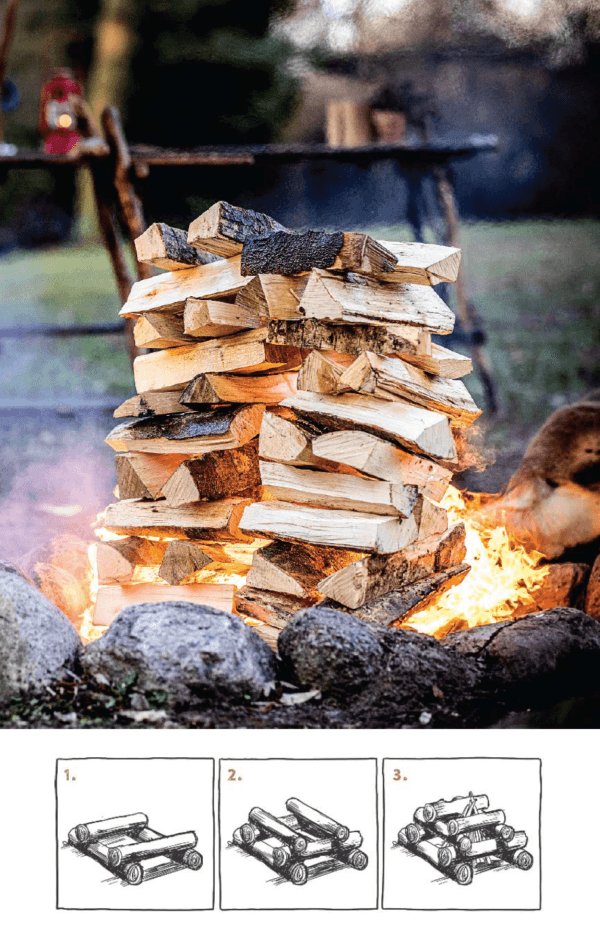
There are many ways and techniques to build a fire. The most important thing is that you can get it started. I usually start with a “pagoda” style fire, which produces great embers for cooking campfire food.
The way to build a pagoda fire is simply to place pieces of firewood in pairs in a square. The first four pieces are placed on the ground, and then you stack firewood on top until you have a square tower of firewood. Place the fire starters at the bottom, and if it’s windy, you can place a larger piece of firewood on the top to give some cover from the wind. Place some slightly thicker pieces of firewood in the top part of the pagoda fire.
Keeping the Fire Burning
Keep in mind that you need to keep the fire burning by adding more firewood as you go. It’s no fun having to restart your fire when your stomach is rumbling.
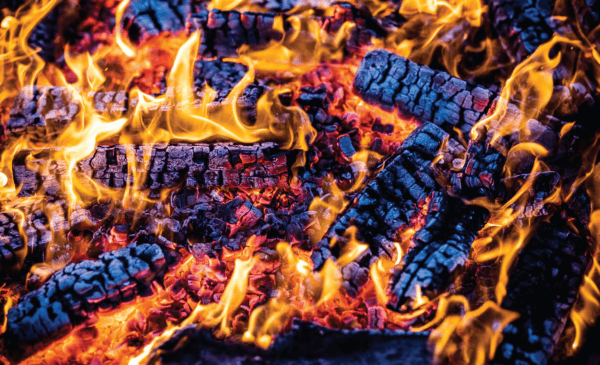
Embers are needed for grilling meat, vegetables, fish, bread on a stick, and marshmallows. Bear in mind that it takes about 2 hours to produce good embers on an open fire.
Fire is needed for cooking stews and soups. If you cook with fire, you need to make sure that you keep feeding your fire with small firewood under a pot or casserole. It’s easier to control a fire with small pieces of firewood, which catch fire more quickly than larger pieces.
It’s very helpful if you can adjust your cooking pot either up or down depending on the heat of your campfire, or if the pot can be moved to stand on a grate if the fire is too strong.
If you’re making bread on a stick and need embers and are grilling meat or vegetables on a grate and need to keep a fire going at the same time, then you can divide the campfire into two parts with embers on one side and a fire on the other side. Use a shovel or a stick to move the logs or embers around.
Remember To Extinguish the Fire When You’re Done
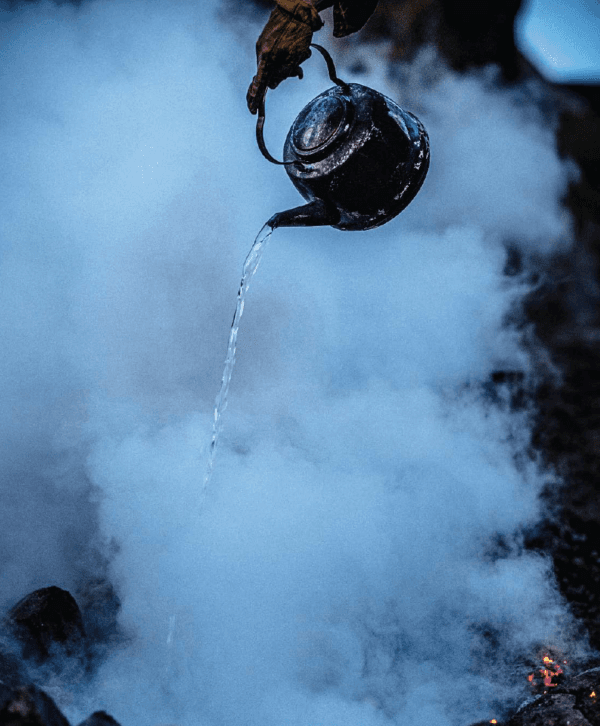
It’s very important to think about safety by the campfire. A campfire can burn for many hours unless it’s extinguished properly, and if the wind suddenly picks up, the embers can light up and you can have a disaster on your hands. Please always remember to have water on hand for extinguishing the campfire when you’re finished making your meal. Be careful when you pour water over the fire because hot steam can rise from the embers.
And don’t forget to clean up after yourself. Take your garbage home to allow the next user to have a nice experience by the fire. I usually tell my kids that when you leave a campfire, there should be no signs left to show that you’ve been there.

Tips and Tricks for Getting Started
- The easiest thing to cook over a campfire is a stew or a soup. You just need a pot and a skillet and a few ingredients. Bingo! And to make it even simpler, you can prep all the ingredients ahead of time at home.
- If you plan to grill something over the fire, you need to make sure the embers are hot and glowing, and keep in mind that it takes a couple of hours to produce perfect embers for cooking. If you plan to make a soup or a stew, you can make a small fire and start cooking right away. Make sure that the food is not overheated. You can very easily increase the heat from a fire but it’s much harder to turn the down the heat. Should your pot become overheated, you can simply hoist it higher up away from the fire. You can also place the pot on a grate away from the fire. Another way to reduce the heat is to use a stick to move the logs away from your cooking pot.
- Make cooking your dinner quality time by inviting your family or friends out into nature to make the meal together. It doesn’t have to be a huge project. In the summertime, I take a camp grill to the beach. The kids are playing on the beach while I start the fire and make something simple for dinner. Then we eat together and end our dinner with a swim. It’s a great way to spend a few hours with family and friends. If you can find a campfire site with a grate, tables, and benches, then it’s even easier to get started.
- It’s OK to “cheat” by preparing things at home. It’s perfectly fine to chop and slice the vegetables at home or prepare the meat so that all you have left to do is to combine all the ingredients in a warm pot over the fire. You can also prepare dressings or sides at home.
- Making a stew at home and heating it over the campfire works well if you would like to make things easy. You’ll still have great fun and smoke in your eyes, which is not possible at the dinner table at home.
- If you’re a beginner, then find an easy recipe and make it as simple as possible to avoid bringing too many things with you out into nature. Later, when you’re more established as an outdoor cook, you can be more ambitious with your cooking.
2 Easy Campfire Recipes
1.) Potatoes in Salt Dough Served with Herb Crème Fraîche
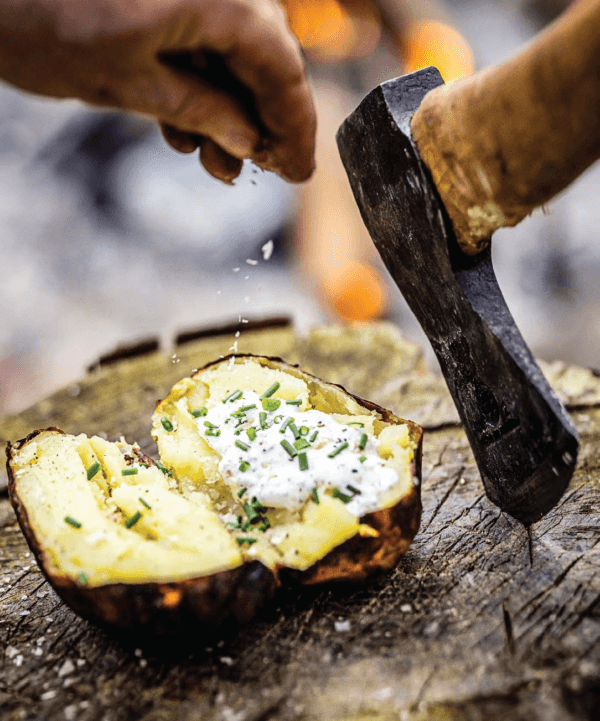
Salt dough is fantastic to use when cooking meat, fish, or vegetables. It functions as a tailor-made frying pan that keeps in the juices and the flavors of what you’re cooking. You don’t eat the salt dough, as it becomes very hard and crusty after cooking. In this recipe, I’m using the salt dough as a vessel for making baked potatoes, which I’ll serve with crème fraîche, herbs, and salt.
Ingredients:- 6 washed potatoes
- Flaky sea salt
Salt dough
- 4 ½ cups (600 g) flour
- 2 1⁄8 cups (600 g) salt
- Water
Herb crème fraîche
- ¾ cup crème fraîche
- ½ finely sliced red onion
- 2 tablespoons finely chopped leek
- 1 radish, finely chopped
- ½ teaspoon lemon juice
- ½ teaspoon salt
Instructions:
- Build your fire and wait until you have good embers before you cook the potatoes. This will take about 2 hours.
- Mix all the ingredients for the herb crème fraîche and let it cool in the fridge for 30 minutes.
- Combine the flour and salt for the salt dough. Add the water a little at a time and knead. The dough should be firm and smooth and have the same consistency as playdough. Not too wet, not too dry. Add some flour if it’s too wet, or a little water if it’s too hard. Roll out the salt dough on parchment paper. The dough should be a little less than ¼-inch (1⁄2 cm) thick. Then pack the potatoes one at a time in a rectangle of salt dough making sure that the potatoes are completely enclosed. The salt from the dough will penetrate the potatoes.
- Place salt dough packets directly on top of the embers. Turn the dough packets regularly and bake for approximately 40 to 45 minutes. To check for readiness, feel free to take out one potato, crack open the dough, and taste the potato.
- Crack open the slightly cooled dough packets and serve the potatoes with the herb crème fraîche and a little flaky salt.
Tip: You can make the herb crème fraîche and the salt dough at home and pack the potatoes in the dough ahead of time.
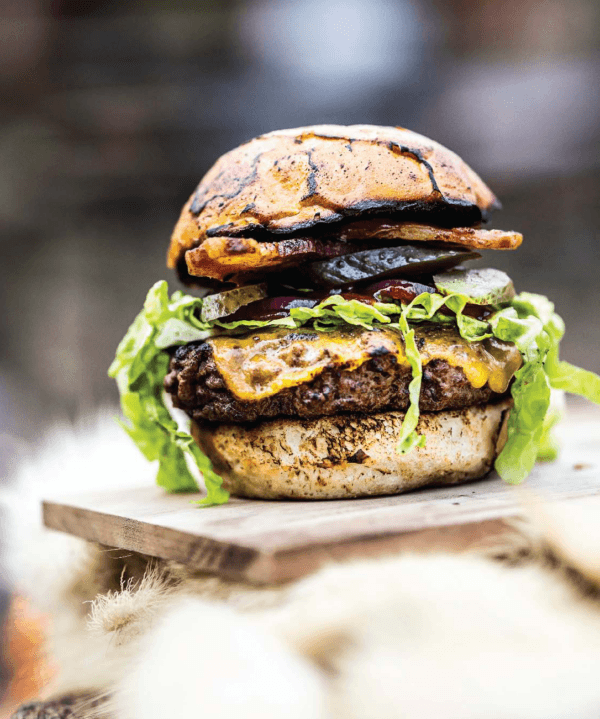
2.) Campfire Burger with Bacon, Cheddar, Blue Cheese and BBQ Sauce
A greasy burger is always a winner, but you can’t beat a burger that’s been cooked over a campfire with smoky grilled bacon and melted cheese on a toasted brioche bun. This burger is so good that it’ll make you cry ... or maybe that’s the smoke in your eyes.
Ingredients:- 1 pound (approximately 500 g) ground beef
- 4 slices cheddar cheese
- 4 slices blue cheese
- 4 slices grilled bacon
- 5 brioche buns
- Ketchup
- 5 leaves romaine lettuce
- 4 tomato slices
- Pickles
- Pickled red onion or sliced red onion
- 4 tablespoons prepared BBQ sauce
- Salt and pepper
- Make four round beef patties and sprinkle them with salt and pepper. Grill them approximately 3 to 4 minutes on each side so that they are slightly crispy on the outside but preferably a little pink inside. When you turn the patties, place one slice of cheddar cheese and 1 slice of blue cheese on top (make sure everyone likes blue cheese) followed by a slice of bacon.
- Cut the brioche buns in half and toast them over the fire.
- Add the ketchup on the bottom part of the bun and place the meat patty with the cheese and bacon on top. Follow up with the lettuce, tomato, pickles, pickled red onion, and finally a little barbeque sauce.
Tip: You can serve the burgers inside paper coffee filters to avoid any spillage.