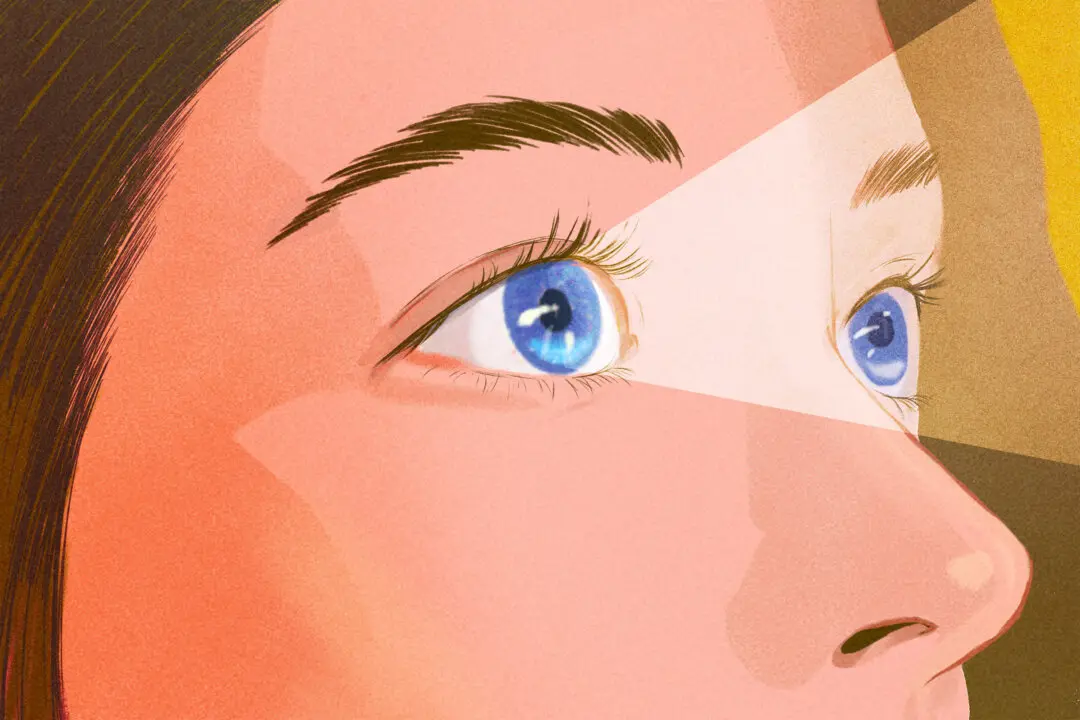
Four words can end a shame spiral: “It’s not your fault.”
In the case of people with attention deficit hyperactivity disorder (ADHD), who just want to function optimally and have a better sense of self, it can come as a relief to know that they aren’t to blame for the traits that make it hard for them to operate like the rest of the world.
The causes of ADHD may not be well understood, but there are many studies connecting the neurological condition and other factors, such as biome depletion, environmental stimulus, injury, and genetics. Knowing what’s at the root of ADHD makes treatment more personalized and effective, and, when going a pharmaceutical-free route, can be invaluable information.
“I find that people are getting less and less inclined to look at medication,” said Dominick Hussey, functional medicine practitioner and osteopath at Complete Wellbeing Centre in Ottawa, Canada.
“They’ve already been searching. They’ve already been through the different options orthodox medicine has looked at and had trouble with medications or [had] unpleasant outcomes.”
The fact that ADHD is married to a myriad of comorbid conditions treated with a patchwork of prescriptions, including some to remedy the side effects of others, has made plenty of people determined to investigate the root cause of this increasingly common disorder.
Comorbid conditions include anxiety, depression, personality disorders, oppositional defiant disorder, eating disorders, gut disorders, and others.
The adult population with ADHD is expected to surpass the number of children with ADHD. And the numbers appear to be rapidly growing. The rate was 5 percent in 2013 and more than 10 percent by 2018, according to the organization Children and Adults with Attention-Deficit/Hyperactivity Disorder.
“As a society, it’s better to be understanding of the reason people have these issues,” Hussey said. “There’s a lot of research out there looking at the reasons, but doctors aren’t really looking at it yet. It normally takes about 20 years for these to surface.”
Those with ADHD may have trouble paying attention or controlling behaviors (acting impulsively), or they may be overly active. For many children, this is normal behavior in some settings. But those with severe symptoms that are ongoing and interfere with their ability to learn, complete basic tasks, work a job, and get along with others are likely to end up with an ADHD diagnosis.
Neurotransmitters, chemicals responsible for carrying messages within the brain, operate differently in children with ADHD, but the reason still isn’t understood.
- Low birth weight
- Premature delivery
- Prenatal maternal smoking and drug abuse
- Prenatal and early childhood toxic exposures (e.g., lead)
- Brain trauma
Hussey and other functional medicine experts disagree about diet and consider ADHD more of a brain-gut disorder.
- An unbalanced microbiome
- Excess antibiotic use
- Toxin and heavy metal exposure
- Acetaminophen exposure
- Trauma
Jillian’s Story
Tylenol use is where Jillian Burne’s story begins.“My mother was definitely an avid Tylenol user. That definitely resonates that there could be some insults during pregnancy,” she said.
Early in elementary school, Burne was diagnosed with ADHD, entered a pilot program at Ohio State University, was put on Ritalin (a popular stimulant drug approved for hyperactivity in the 1970s), and received ongoing cognitive behavioral therapy. She was taught that, just as a diabetic patient needs daily insulin, she would need daily stimulant medication.
And yet, Burne still struggled. College, her first two jobs, and marriage were difficult. Along came her children, and she slowly started thinking about the kind of childhood she wanted them to have. She appreciated her mom’s tenacity to advocate for her, but she believed that modern medicine only made her problems worse.
“Being on Ritalin created a lot more issues for me than it solved,” Burne said.
In the lines at a juice bar in New York City, she heard interesting conversations about environmental toxins and the dangers of drinking city tap water, and she noticed after drinking the juice that it made her feel, think, and behave better.
Rethinking Food
Food is a relatively easy place to start because it can cause rapid transformation. Changing a person’s diet (without doing testing) is all that some need to do to improve their symptoms—even if government health authorities don’t acknowledge this treatment modality.Testimonies abound on the power of nutrition to heal this disorder, and studies also corroborate that diet plays a role.
Most Americans skimp in the grocery store and pay for it later. Price and convenience trump nutrition. Purchasing decisions are heavily influenced by what’s on sale rather than what’s nutrient-dense and free of additives and hyper-processed ingredients.
Healthier foods come from healthier plants, animals, and mushrooms, rather than those sprayed with toxic chemicals or kept in crowded barns, devoid of sunlight and open air.
“It’s not something everyone buys into. They think supplements are a scam, and food should be as cheap as possible,” Burne said. “Animal proteins and fats are really important to build your hormones and neurotransmitters.”
She uses a food diary app and blood sugar data with her clients. She’s a fan of a high-protein, high-fat approach with lots of vegetables because it stabilizes moods and improves energy and focus.
“That had the biggest impact on my symptoms,” Burne said. “Before I changed my diet, I was like a radio station not quite tuned into the right frequency. Now, I’m fully tuned in.”
Hussey, the functional medicine practitioner in Ottawa, said that food sensitivities, sometimes unknown, can cause inflammation that aggravates ADHD symptoms. Simply taking wheat/gluten and dairy out of a diet can often change behavior and mood within a week.
Where medicine looks to find ways to stop undesired symptoms, changing diet removes the trigger for various symptoms. Some of the digestion issues suffered by ADHD patients stem from digestion issues in infancy, including diarrhea, colic, and early allergies.
“Suppressing symptoms, especially with medicine, is only going to cause more symptoms on top of things. You may end up developing comorbid conditions,” Hussey said.
Correcting Microbiome Imbalance
The body depends on a host of beneficial microbes, called the microbiome, that live largely in the gut.Hussey does a timeline with clients that goes all the way back to birth, piecing together their delivery, whether they were breastfed or formula fed, and if they had digestive issues as an infant. He’s also on the hunt for early childhood trauma and a family history of trauma. All of these can provide vital clues to a person’s current health status.
These are all factors in ADHD and autism spectrum disorders.
“At this stage, it is not so far-fetched to say that Western society has altered human microbial populations, which in turn may be altering human behavior and culture,” Dr. Derrick MacFabe writes in a 2013 article in Global Advances in Health and Medicine.
Do Vaccines Play a Role?
Mainstream medical websites are adamant that vaccines and ADHD are unrelated. But while a direct relationship may be less apparent (and with scant research to suggest it), there’s significant research connecting the effectiveness of vaccines with the gut microbiome.Both Hussey and Burne consider vaccines alongside toxic exposures, such as to ingredients in processed foods, lead, mercury, and harmful chemicals, to all play a role. The exact role these play in the human body is an area of concern for many functional medicine practitioners.
When he does a client’s history, Hussey always asks about vaccine schedules and how they may have intersected with other events.
“You can’t really do much about it because it’s already happened. It’s definitely something I ask about,” he said. “There are things in vaccines that can trigger your genes.”
Genetic Debate
It’s largely accepted that ADHD has a genetic component, as there are patterns in families, but the exact mechanism isn’t known. It’s more likely that epigenetics is the factor that holds the most promise for treatment, and it’s often the heart of root-cause exploration.“Genetic problems don’t explode on the scene like this,” he writes. “The rise has just been too fast and too specific.”
Epigenetics, on the other hand, explains how the environmental influences of modern life can impact gene expression. Under the microscope of consideration, Melillo argues, should be nutrition, screen usage, parental interaction/absent parenting, obesity, stress (mother and child), birth, sleep, and past injuries and illnesses.
“Disconnected Children,” published in 2009, takes issue with the fact that in the previous 30 years the obesity rate doubled in children between the ages of 2 and 5, and tripled in children between the ages of 6 and 11.
“Not coincidentally, we have also seen the sharpest increase in the percentage of children with severe behavioral problems, poor socialization skills, learning disabilities, attention problems, and children on Ritalin and other powerful psychiatric drugs,” Melillo writes.
Outside influences, Hussey said, also include the lack of time spent outdoors, and the impact of stress—and lack of stress management—on mitochondrial dysfunction.
“I always cringe when I hear the old rhetoric that it’s ‘probably genetic,’” Burne said.
She once took a mother of one of her son’s classmates aside to suggest that her child’s extreme hyperactivity might be linked to diet. Burne had watched the boy going to the bus stop with Pop-Tarts every morning. Once the family worked to clean up the boy’s diet, he was like a completely different kid.
Epigenetics can explain why some people react to influences while others in the same set of circumstances don’t. Factoring in lifestyle will often help those suffering from unwanted effects of ADHD and other neurological disorders to free themselves from the burden of unwanted behavior. It’s a highly individualized journey of healing that can take time.
An ADHD Checklist
This checklist comes from Epidemic Answers, a nonprofit organization focused on reversing the childhood epidemics of autism, ADHD, asthma, allergies, and more.- Ensure that your child is getting adequate sleep, movement, and hydration.
- Eliminate processed foods and consider eliminating added sugar, gluten, and dairy.
- Include plenty of good fats.
- Remove vegetable oils.
- Include high-quality protein at every meal.
- Consider digestive aids.
- Clean up toxins in your home.
- Consider lab workups.
- Add fermented food and probiotics daily.
- Use herbs, essential oils, and supplements under practitioner guidance.
- Detoxify.
- Use a myofunctional dentist or orthodontist.
- Consider using a network of specialists. See website for list.
- Use sensory therapies and tools.
https://www.ncbi.nlm.nih.gov/pmc/articles/PMC4831151/