

There are times when your brain suddenly doesn’t feel like your own. Your thoughts are slower, your memory is unreliable, and only the mental clutter seems to stick. An occasional bad day is normal, but if it keeps happening, it could be a sign of brain fog.
What Are the Common Signs of Brain Fog?
Brain fog is not a medical diagnosis. It is an umbrella term for a range of symptoms. Common signs include:
Difficulty focusing or thinking clearly
Memory lapses
Mental exhaustion and fatigue
Trouble learning or processing new information
Problems finding the right words during conversations
Difficulty planning, organizing, multitasking, or solving problems
Confusion
Brain fog symptoms often come and go, but they can disrupt daily life, including work, school performance, and relationships.
What Causes Brain Fog?
Brain fog can stem from everyday habits or underlying medical conditions. Common causes include:


1. Lifestyle and Environmental Factors
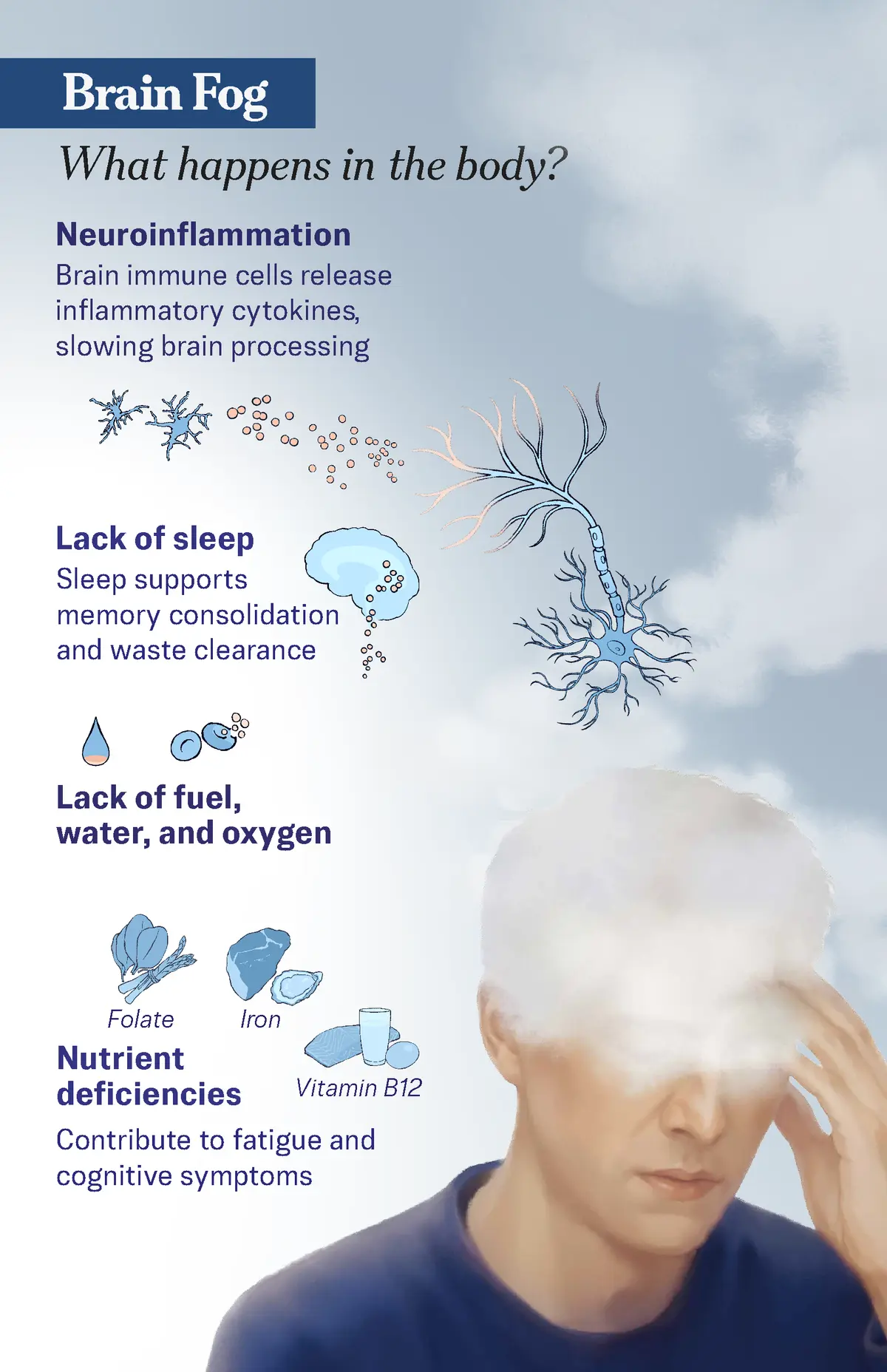
Your brain thrives on energy, water, and oxygen. It doesn’t function well when it’s starved, sleep-deprived, or exposed to extreme temperatures. Toxic chemicals can also make it malfunction.
The following go against your brain’s thriving environment:
Poor Sleep: Insufficient or poor-quality sleep is a major contributor to brain fog. The brain needs sleep to rest, repair itself, and process information.
Dehydration: As people age, the body becomes less efficient at retaining water, and even mild dehydration can impair cognitive function because the brain depends on adequate water to maintain normal blood flow, electrolyte balance, and communication between nerve cells. Losing 1 percent to 2 percent of body water can affect how efficiently the brain works.
Alcohol: Even moderate drinking can blunt mental clarity, and chronic use has been linked to brain shrinkage.
Excess Screen Time: Excessive screen time, particularly before bedtime, can disrupt sleep. Poor sleep, in turn, reduces the brain’s ability to restore cognitive function, leading to symptoms such as fatigue, poor concentration, and brain fog. Too much screen time may also contribute to impaired brain development.
Extreme Heat: Extreme heat can cause brain fog by increasing thermal stress, diverting blood flow to help cool the body, and contributing to dehydration.
Air Pollution: Air pollution can contribute to brain fog by triggering inflammation and oxidative stress that impair cognitive function.
Exposure to Cold: Cold weather causes blood vessels to narrow (vasoconstriction), reducing blood flow to the brain.
Mold: Mold inhalation and long-term exposure have been linked to brain fog in some people, although the mechanism isn’t fully understood and reactions vary widely.
Heavy Metal Exposure: Metals like mercury and lead may disrupt brain function, increasing inflammation and impairing mitochondria, or the energy-producing structures inside brain cells. This can leave less energy for cells to function efficiently.
2. Certain Medications and Treatments
Certain prescription and over-the-counter medications may contribute to cognitive impairment, with older adults being particularly susceptible. Aging can weaken the blood-brain barrier and may allow more medications to enter the brain, where they are metabolized more slowly, making patients more vulnerable to medication-related symptoms such as brain fog. Taking multiple drugs at once (polypharmacy) raises the risk of interactions.
Common medications that may cause brain fog include:
Sleep Aids: Over-the-counter antihistamine sleep aids, such as diphenhydramine, and prescription drugs such as zolpidem can disrupt the brain activity involved in memory formation.
Pain Medications: Opioids, tricyclic antidepressants, and gabapentin can cause cognitive side effects.
Anticholinergic Medications: These medications can cause brain fog by blocking acetylcholine, a brain chemical essential for memory and clear thinking.
Medication-related brain fog often improves once the dose, timing, or drug itself is adjusted.
Certain cancer treatments may also lead to brain fog, including:
Chemotherapy: “Chemo brain” refers to the cognitive difficulties experienced during or after chemotherapy. Some chemotherapy agents can cause central nervous system toxicity and may harm healthy brain cells.
Radiotherapy: High-dose ionizing radiation can damage healthy brain tissue and blood vessels and trigger inflammation.
3. Certain Diseases
Although the term “brain fog” has been around for decades, COVID-19 brought it into the mainstream. The following conditions have brain fog as a common symptom:
COVID-19 Infection: Brain fog is one of the most common symptoms of long COVID. One theory suggests that persistent SARS-CoV-2 viral reservoirs, particularly in the gut, may drive chronic immune activation by disrupting the gut microbiome and the gut-brain axis, thereby contributing to cognitive symptoms.
Another leading hypothesis is that prolonged inflammation and immune dysregulation following infection result in elevated inflammatory cytokines, activation of brain immune cells (microglia), and neuroinflammation, which may impair neuronal function. A 2024 study also linked long COVID-related brain fog to blood-brain barrier disruption. Other research has found changes in brain oxygenation, brain-wave patterns, and activity in regions involved in memory and cognition. Different COVID-19 vaccines have also been associated with long COVID-like symptoms, including brain fog.Fibromyalgia: This chronic pain condition can cause cognitive difficulties, which is often referred to as “fibro fog.” Around 15 percent to 40 percent of people with chronic pain as their primary condition experience brain fog. Brain fog in fibromyalgia likely results from a combination of central sensitization, altered neurotransmitter signaling, chronic pain-related cognitive overload, disrupted sleep, and fatigue.
Depression and Anxiety: Both can disrupt sleep or, in the case of depression, cause oversleeping, which in turn worsens cognitive symptoms.
Multiple Sclerosis: The immune system mistakenly attacks the central nervous system, disrupting normal brain function.
Hypothyroidism: Low levels of thyroid hormone can cause brain fog by slowing brain metabolism, disrupting neurotransmitter function, and impairing attention and memory.
4. Other Triggers and Risk Factors
Many of the following factors are also fairly common:
Nutritional Deficiencies: Low levels of vitamin B12, vitamin D, omega-3 fats, and iron can contribute to brain fog. Additionally, minerals are essential for mitochondrial energy production because they enable the enzymes that generate adenosine triphosphate, or ATP (the body’s main energy molecule). When mineral levels are low, reduced mitochondrial efficiency can contribute to widespread symptoms such as poor concentration.
Chronic Stress: Chronic stress raises cortisol levels and promotes brain inflammation.
Hormonal Changes: In pregnancy, changes in several hormone levels, such as higher estrogen, progesterone, and cortisol, can have multiple effects and lead to temporary difficulties with memory and focus. Women in perimenopause often experience brain fog due to hormonal changes that can affect sleep and brain function, even without significant hot flashes.
Fatigue: Overextending energy reserves can trigger brain fog.
Pain: Unmanaged pain consumes cognitive resources that would otherwise go toward focus and memory.
Orthostatic Intolerance: Orthostatic intolerance is the body’s inability to properly regulate blood flow and blood pressure when standing up. As a result, the brain may receive less blood flow or oxygen than it needs.
Aging: Age-related changes in the brain, including reduced blood flow, changes in brain structure, and increased inflammation, can affect memory and mental clarity. Declining hormone levels, such as reduced testosterone in men and changes in estrogen and progesterone in women, can also contribute to brain fog.
Food Allergies and Sensitivities: Aspartame, monosodium glutamate (MSG), dairy products, and peanuts are commonly reported triggers.
How Is Brain Fog Diagnosed?
Because brain fog is a symptom, not a disease, there is no single test to diagnose it. Instead, clinicians identify it by ruling out or identifying underlying causes.
Evaluation of brain fog typically begins with a detailed medical history and physical examination. Your doctor may ask about sleep, stress, diet, medications, and mental health, then order targeted blood tests to check for issues such as thyroid problems, nutrient deficiencies, blood sugar issues, organ dysfunction, infection, or inflammation.
If those tests don’t reveal a clear cause, further specialist assessment may include neurological or cognitive testing, brain imaging, sleep studies, or additional investigations, such as cerebrospinal fluid analysis, to check for hormonal, infectious, or inflammatory conditions.
SPECT imaging is an emerging diagnostic tool that may help detect localized brain inflammation and allow clinicians to track changes and treatment progress over time.
What Are the Natural and Lifestyle Approaches to Brain Fog?
Lifestyle changes are typically the first-line approach for brain fog.
1. Diet
A well-balanced diet that provides adequate essential nutrients is key. Three eating patterns stand out in research: Mediterranean Diet, Dietary Approaches to Stop Hypertension (DASH) Diet, and a combination of both—Mediterranean-DASH Intervention for Neurodegenerative Delay (MIND) Diet. Studies find these diets reduce neuroinflammation and slow cognitive decline.
Prebiotic, fiber-rich foods, such as sweet potatoes, bananas, and whole grains
Fish, which provides omega-3 fatty acids
Nuts, which have antioxidant properties
Berries, which provide vitamin C and antioxidants
Highly processed foods, which may contribute to inflammation and poor metabolic health
Foods high in added sugars, which can affect blood sugar balance and mental clarity
Foods high in saturated fats, which may affect brain and metabolic health
Alcohol, which can impair memory formation, disrupt restorative sleep, and contribute to dehydration
2. Supplements
Some supplements may support mental clarity by addressing inflammation, oxidative stress, or nutrient gaps. Consult a healthcare provider before taking them, especially if you use medications.
L-theanine: This naturally occurring amino acid, found primarily in green and black tea, helps improve overall mental alertness and focus. In a 2025 meta-analysis of five studies involving 148 healthy adults, L-theanine demonstrated dose-dependent improvements in cognitive function, particularly in rapid visual information processing and visual recognition reaction time.
Pycnogenol (French Maritime Pine Bark Extract): This antioxidant supplement is rich in polyphenols and has anti-inflammatory properties. A 2025 meta-analysis of 19 studies involving almost 5,000 participants that compared 18 botanical products found that Pycnogenol had the most promising cognitive benefits in people with mild cognitive impairment.
Curcumin: A 2025 meta-analysis of nine studies involving more than 500 participants found that compared with placebo, curcumin supplementation was associated with improved overall cognitive function. The effects were more noticeable in adults aged 60 and older and in studies conducted in Asian populations, while results were less consistent in younger or Western groups.
Luteolin: Luteolin is a flavonoid found in peppers, carrots, broccoli, and other produce, with antioxidant and anti-inflammatory properties. Early research suggests that it may reduce brain fog in people with mast cell disorders (mastocytosis), and pairing it with palmitoylethanolamide, a naturally occurring fatty acid that helps regulate inflammation, has shown some benefit.
Glutathione: Glutathione is an antioxidant the body produces naturally. It may support mental clarity by reducing oxidative stress, aiding detoxification, and helping maintain a healthy brain environment.
3. Mental Exercises
Mental exercises work best when they engage as many regions of the brain as possible. Common types include memory exercises, such as learning a new song or taking mental notes of several objects when entering a room; comprehension exercises, such as learning a new language or reading a book or article on an unfamiliar topic; and focus exercises, such as paying attention to the task at hand.
4. Physical Exercise
Physical exercise triggers the release of neurotrophic factors, proteins that support brain cell growth and survival, which help protect memory and cognitive function.
5. Music Therapy
6. Meditation and Mindfulness
7. Social Activities
8. Everyday Tips
Everyday coping strategies may also help manage symptoms:
Take short, regular breaks throughout the day.
Pace activities to stay within your energy limits.
Break complex tasks into smaller, more manageable steps.
Reduce environmental stimuli, such as background noise, when possible.
Schedule the most demanding tasks for when your energy is highest, because brain fog may fluctuate throughout the day and with different tasks. Use the Pomodoro time-management method, which alternates short periods of focused work (usually 25 minutes) with regular breaks (typically five minutes) to improve concentration.
Use sensory toys, such as stress balls and fidget tools, when tired, stressed, or losing concentration.
Try square breathing to de-stress. Inhale through your nose for four seconds, hold for four seconds, exhale for four seconds, and hold for a final four seconds. Repeat until breathing slows.
Keep a regular sleep-wake schedule, create a comfortable sleep environment that is dark and at a suitable temperature, and avoid screens before bedtime.
What Are the Treatments for Brain Fog?
Treatment of brain fog targets the underlying cause.
1. Medicinal Herbs
More research is needed to confirm the effectiveness of the following herbs for brain fog:
Ashwagandha: Traditionally used in Ayurvedic medicine to enhance memory and improve cognition, ashwagandha has immune-regulating, anti-inflammatory, stress-adapting (adaptogenic), and antioxidant properties. A 2024 study involving more than 120 healthy adults found that compared with a placebo, an ashwagandha root extract led to greater improvements in episodic memory, working memory, attention accuracy, and executive function. A 2017 pilot study found that this herb may improve memory in people with mild cognitive impairment, as well as enhance executive function, attention, and processing speed. It can also reduce anxiety and stress while improving sleep quality.
Bacopa Monnieri: Also rooted in Ayurvedic medicine, Bacopa monnieri supports memory, learning, and overall cognitive health. In a 2024 study involving 62 people with mild cognitive impairment, Bacopa monnieri extract improved overall cognitive performance, particularly attention and verbal fluency.
Ginseng: A 2024 meta-analysis of 15 studies involving nearly 700 participants, who were either healthy or with cognitive impairment, schizophrenia, and Alzheimer’s disease, found that ginseng modestly improved memory, particularly at higher doses. In a 2024 study involving 80 adults with subjective memory impairment, daily supplementation with sprout ginseng extract improved memory, overall cognitive function, and sleep quality.
2. Cognitive Behavioral Therapy (CBT)
3. Constraint-Induced Cognitive Therapy (CICT)
4. Emerging and Experimental Treatments
Whole-Body Cryotherapy: Cold water immersion and cryotherapy may help reduce neuroinflammation, improve autonomic function, and alleviate fatigue, which could contribute to better mental clarity.
Stem Cell Treatment: Stem cell-based approaches, particularly therapies involving mesenchymal stem cells (MSCs), have been proposed as a way to address the persistent immune dysregulation that may contribute to brain fog rather than the symptoms themselves.
Transcranial Direct Current Stimulation (tDCS): This noninvasive brain stimulation technique delivers a very weak electrical current through electrodes placed on the scalp. It works by gently adjusting activity in specific brain regions, making neurons slightly more or less likely to fire. It is generally safe and painless, and it has been studied for its potential to improve cognitive function.
Hyperbaric Oxygen Therapy (HBOT): Breathing pure oxygen in a pressurized chamber at 1.5 to 3 times normal atmospheric pressure increases blood oxygen levels. Already approved for conditions such as carbon monoxide poisoning and nonhealing diabetic wounds, hyperbaric oxygen therapy has shown early results in people with brain fog, including improved oxygen uptake and reduced symptoms.
Methylphenidate and Amantadine: The American Academy of Physical Medicine and Rehabilitation collaborative compendium includes methylphenidate and amantadine as commonly used medications for long COVID brain fog.
How Does Mindset Affect Brain Fog?
Research suggests that mindset can influence how brain fog is experienced and managed. For example, a positive outlook and healthier relationship with stress may reduce symptom severity, improve attention, and enhance treatment outcomes, while chronic stress and negative expectations can worsen cognitive performance.
In short, a healthy mindset may help improve daily functioning by reducing stress, supporting resilience, and encouraging healthy behaviors.
How Can I Prevent Brain Fog?
Brain fog isn’t always preventable, but these habits may lower your risk:
Get seven to eight hours of quality sleep.
Eat a nutritious, anti-inflammatory diet.
Exercise regularly.
Manage stress through meditation or yoga.
Stay well hydrated.
Limit or avoid alcohol.
Treat underlying medical conditions promptly.
A few extra precautions may also help:
What Are the Possible Complications of Brain Fog?
Although brain fog is not a disease, persistent symptoms can potentially lead to the following complications:
Reduced school or work performance due to difficulty concentrating, memory issues, and impaired cognitive function.
Emotional distress, such as anxiety and depression.
Safety concerns due to impaired decision-making and slower reaction time.
Worsening cognitive difficulties, especially if the underlying cause is not addressed.