Prolonged sitting can be harmful to health, affecting posture and potentially causing discomfort and pain. To reduce these risks, it is essential to take regular breaks from sitting and incorporate light exercises.
The harm prolonged sitting inflicts on the body may be greater than we realize. A 2020 systematic review published in the International Journal of Behavioral Nutrition and Physical Activity revealed a significant non-linear dose-response relationship between sedentary time and health risks, including mortality from all causes, cardiovascular disease, and cancer. Simply put, the longer one sits, the higher the risk of death—especially for people with lower levels of physical activity. This study underscores the importance of reducing sitting time and increasing physical activity to mitigate the risks.
Major Health Risks of Prolonged Sitting
Do you often find yourself sitting for long periods? In today’s world, whether working in an office or relaxing at home, long periods of sitting have become the norm. Yet many people are unaware that this sedentary lifestyle can harm muscles and bones and even slow down metabolism. Some of the major health risks associated with prolonged sitting include:- Anterior Pelvic Tilt: Prolonged sitting can tighten the thigh and hip flexor muscles while weakening the abdominal and gluteal muscles, increasing the risk of developing an anterior pelvic tilt.
- Knee Pain: Sitting for extended periods can weaken the thigh muscles, while an anterior pelvic tilt may contribute to knock-knee posture. These factors can reduce knee stability and support, leading to knee pain.
- Reduced Mobility: Weak thigh and gluteal muscles make it challenging to climb stairs or walk comfortably.
- Lower Back Pain: Prolonged sitting weakens the upper abdominal muscles, reducing spinal support and potentially leading to lower back pain or even a hunchback posture.
- Incontinence: For those with urinary incontinence, prolonged sitting further weakens the abdominal and pelvic floor muscles, making it harder to control leakage.
- Neck Strain: Long periods of sitting often lead to an unconscious forward extension of the neck, placing strain on the cervical spine.
- Migraines: Added strain on the neck causes inflammation and restricts circulation to the head, which can trigger migraines. In traditional Chinese medicine (TCM), many migraines are believed to be caused by poor circulation of qi (energy) and blood in this area.
- Shoulder and Neck Pain: Forward head posture increases pressure on the upper back, often resulting in shoulder and neck pain.
- Impaired Metabolism: Prolonged sitting restricts blood circulation, which can slow down the body’s metabolic rate.
- Eye Issues: Prolonged sitting often involves screen time, which exposes the eyes to blue light for extended periods, increasing the risk of eye issues such as myopia (nearsightedness) and glaucoma.
6 Exercises to Break Up Long Periods of Sitting
Various exercises can help mitigate the harmful effects of prolonged sitting. The exercises highlighted here focus on relieving shoulder and neck tension and promoting blood circulation in the lower body.
Seated W-Stretch. The Epoch Times
Exercise 1: Seated W-Stretch
Steps:- Sit on a chair with your torso angled forward at about 45 degrees. Keep your back straight and avoid slouching. Position your arms at your sides in a “W” shape.
- Squeeze your shoulder blades together as you gently push your arms back. Then, slowly extend your arms forward and up over your head. Hold for three seconds, then gradually return to the starting position.

Shoulder Rolls. The Epoch Times
Exercise 2: Shoulder Rolls
Steps:- Sit upright with your back straight and avoid slouching. Place your hands on your shoulders.
- Move your elbows in a circular motion, rolling your shoulders forward for eight circles.
- Reverse the direction, rolling your shoulders backward for another eight circles.

Seated Chest Opener. The Epoch Times
Exercise 3: Seated Chest Opener
Steps:- Sit upright with your back straight and avoid slouching. Extend both arms straight forward, reaching as far as possible, and round your back to stretch the muscles in your upper back.
- Open your arms out to the sides, then pull them back while lifting your chest and raising your head.

Seated Spinal Twist. The Epoch Times
Exercise 4: Seated Spinal Twist
Steps:- Sit with your legs extended straight in front of you.
- Bend your left knee and cross your left leg over your right, placing your left foot flat on the floor. Twist your torso to the left until you feel a stretch along the right side of your waist.
- Repeat on the other side.


Squat to Calf Raise. The Epoch Times
Exercise 5: Squat to Calf Raise
Steps:- Stand with your feet shoulder-width apart and toes pointing forward. Keep your chest lifted, engage your core, and lean slightly forward. Place your arms in front of your chest.
- Inhale as you slowly push your hips back and down until your thighs are parallel to the floor. Hold for three to five seconds. Exhale as you slowly return to the starting position, keeping your head and neck aligned.
- Raise your heels to lift onto your toes, holding for three to five seconds, then slowly lower back down to the starting position.
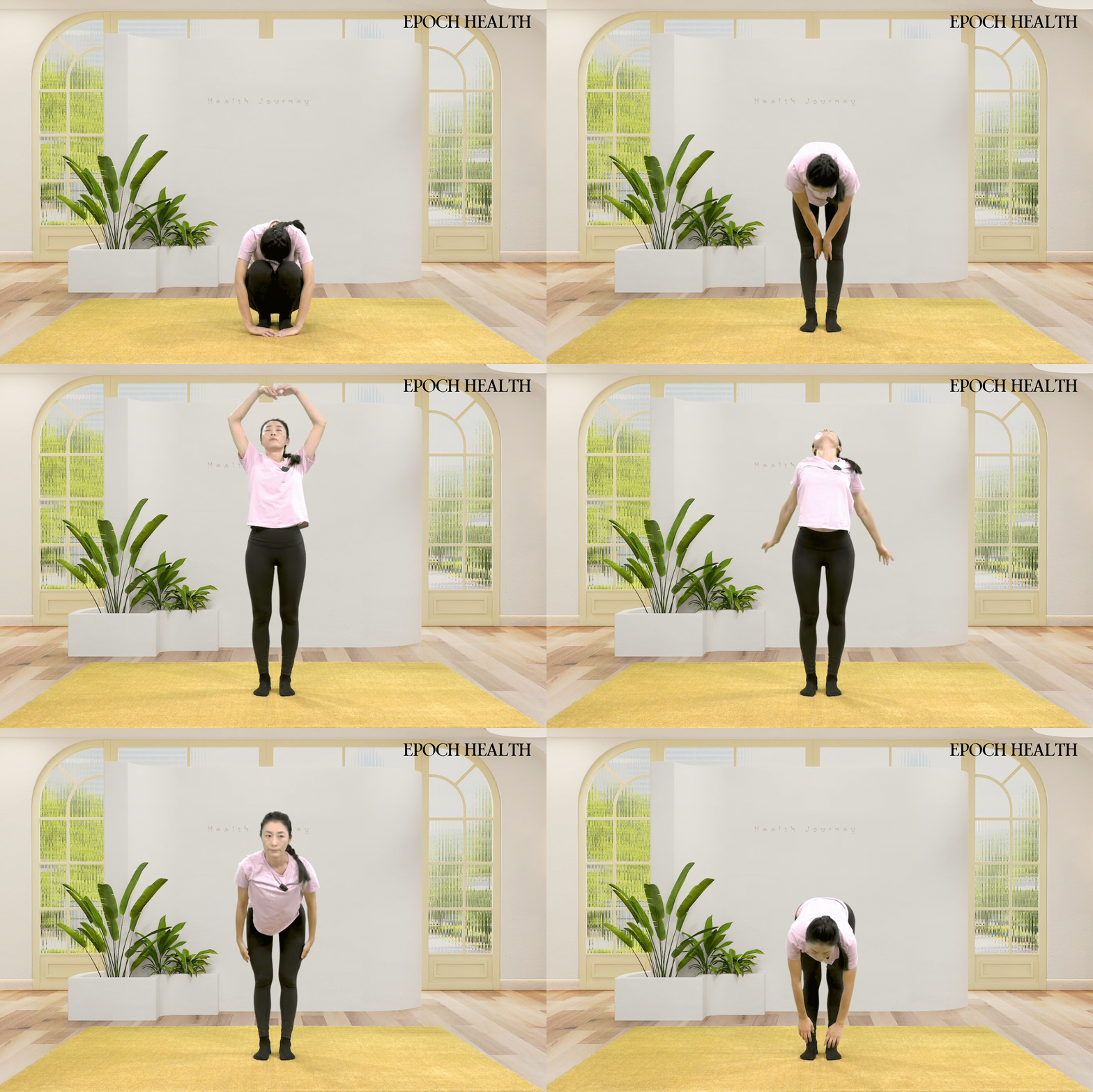
Full-Body Curl and Stretch. The Epoch Times
Exercise 6: Full-Body Curl and Stretch
Steps:- Stand upright and slowly lower yourself into a squat, bringing your torso close to your thighs and curling into a ball. You should feel a gentle stretch along your back.
- Lower your head, place your hands on the ground, and gradually lift your hips.
- Slide your hands up along your shins, thighs, waist, and chest until your arms are fully extended above your head. Stretch upward and hold for three to five seconds.
Views expressed in this article are the opinions of the author and do not necessarily reflect the views of The Epoch Times. Epoch Health welcomes professional discussion and friendly debate. To submit an opinion piece, please follow these guidelines and submit through our form here.