Read the previous article, “Guarding Against Osteoporosis: Unveiling Risk Factors and Time-Honored Prevention Methods,” here.
With a growing older population and extended lifespans, there is an increasing trend in osteoporosis and associated fractures. To prevent osteoporosis, middle-aged and older individuals should focus on exercise and nutrition. In this article, we will introduce several exercises that can be performed at home, along with three bone-healthy recipes.Principles and Methods for Bone Health
Maintain a Healthy Lifestyle
The following are ways to maintain a healthy lifestyle to delay or prevent the onset of osteoporosis.1. Increase Calcium Intake
The metabolism of bones requires dietary supplementation. A balanced diet can provide the necessary nutrients for bone metabolism, thus delaying osteoporosis. Foods such as milk, legumes, lean meats, dried small fish, dried shrimp, black sesame sauce, walnut kernels, eggs, seaweed, kelp, and shiitake mushrooms all contain a significant amount of calcium and can be consumed regularly. At the same time, be mindful not to consume excessively salty foods.2. Minimize Calcium Loss
Smoking and alcohol consumption can both affect the metabolism of calcium and vitamin D, impacting bone cell metabolism and the formation of peak bone mass. Excessive caffeine (from tea and coffee) can increase urinary calcium excretion, affecting the body’s calcium absorption. Carbonated drinks can also inhibit calcium absorption. Additionally, excessive salt and protein intake can lead to calcium loss. Therefore, it is advisable to avoid smoking, limit alcohol consumption, and reduce the intake of coffee, strong tea, and carbonated beverages.3. Exercise Regularly
The mechanical stimulation of muscles and the influence of gravity during exercise contribute to increasing bone density, ensuring normal bone growth and development, and maintaining bone strength. Exercise aids in building peak bone mass, reducing bone loss in postmenopausal women, enhancing balance and confidence in older individuals, and preventing falls and fractures.Toe and Heel Raises
- Toe raises: Hold onto the back of a chair with both hands. Raise your toes, maintaining the position for 10 to 15 seconds or until you feel a slight soreness in the calf muscles. Repeat this exercise 20 to 30 times each session, with the goal of reaching 100 repetitions per day.
- Heel raises: Hold onto the back of a chair with both hands, keeping your heels on the ground. Lift your toes and the front part of your foot upward, maintaining this position for 10 to 15 seconds or until you feel a slight soreness in the muscles at the front of your lower leg. Repeat this exercise 20 to 30 times each session, with the goal of reaching 100 repetitions per day.
Alternate between the toe and heel raises exercises. Complete this sequence of movements 10 times, take a short rest, and then continue with the next set. Aim to perform 10 sets each day.
Note: When pushing your heels down, you may feel a sensation of vibration in your body. It is best to channel this vibration upward along your legs and spine, reaching the top of your head. Performing this exercise 100 times daily can be an effective way to help prevent osteoporosis.

Lower Back Strengthening Exercises
- Supine glute bridge: Lift your lower back and hips using support from your head, both elbows, and both heels, forming an arch with your lower back and hips.
- Superman exercise: Lie on your stomach, then lift your head and upper body off the floor. Then, use your abdomen as support and extend both legs straight, raising them off the floor without bending your knees, until your upper body and legs are lifted simultaneously.
Tips: Maintain a full range of motion, holding the position for at least one or two seconds during each repetition. Progress gradually, as consistency is key.
Follow a Balanced Diet
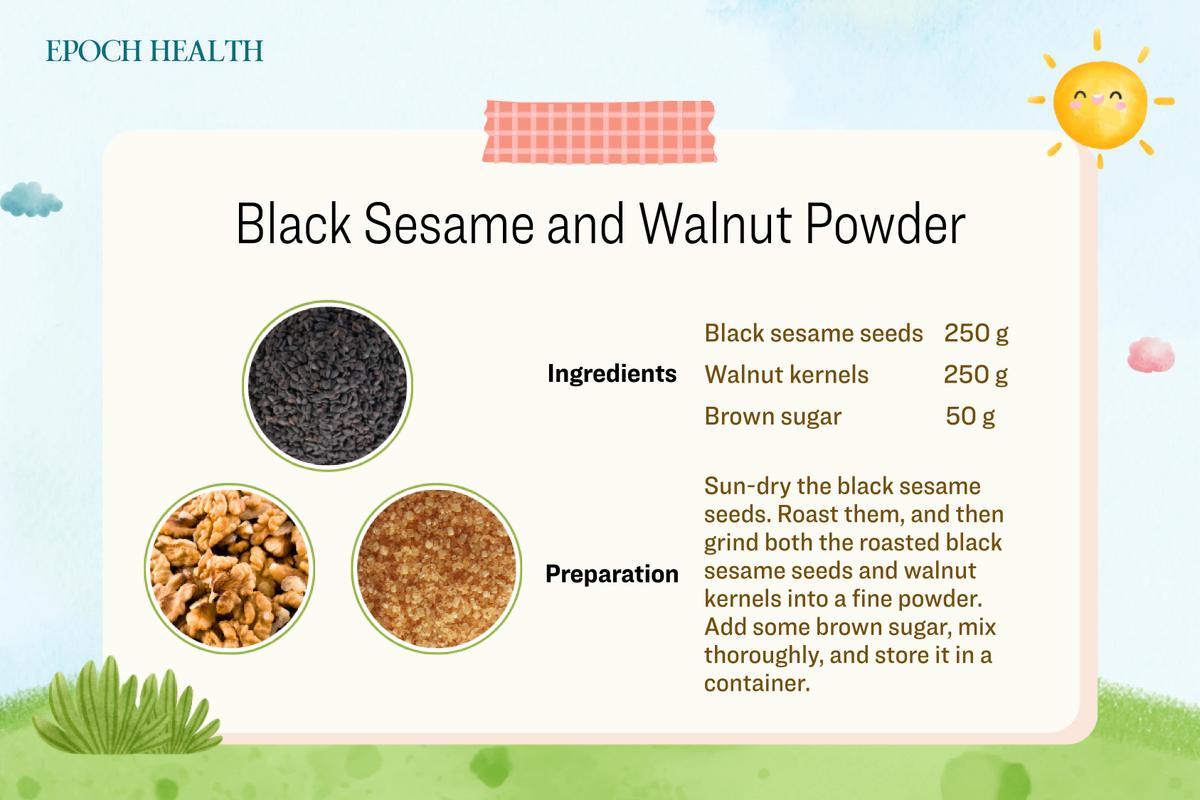
1. Black Sesame and Walnut Powder
Ingredients: 250 grams black sesame seeds, 250 grams walnut kernels, and 50 grams brown sugar.According to traditional Chinese medicine (TCM) theory, the kidneys are associated with the storage of kidney essence. A deficiency in kidney essence is linked to accelerated aging and can contribute to conditions such as osteoporosis. The essence is further classified into kidney yang and kidney yin, and insufficient kidney essence is often referred to as “Kidney Yin Deficiency.” Symptoms of this deficiency include lower back pain, weakness in the lower limbs, night sweats, and hot flashes.
2. Seaweed and Pork Backbone Soup
Ingredients: 1,000 grams pork backbone, 150 grams seaweed, and ginger, scallions, ground black pepper, monosodium glutamate (MSG), and salt to taste.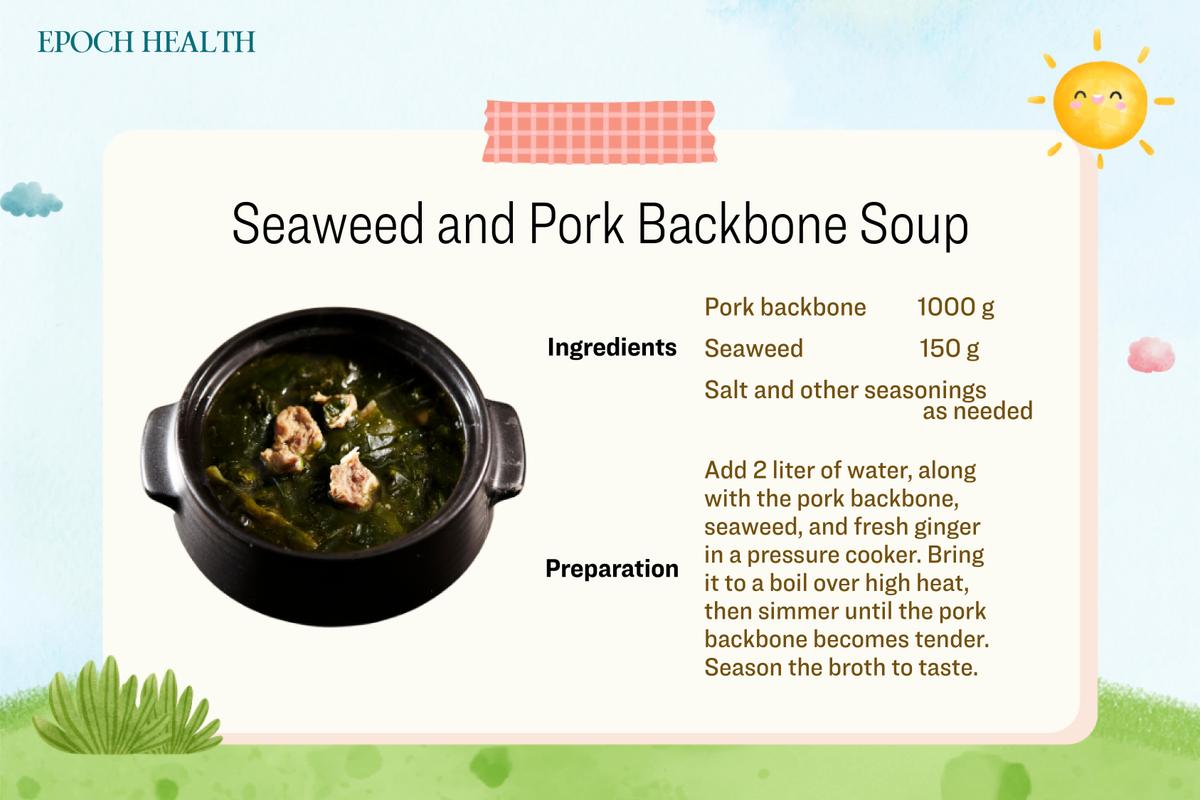
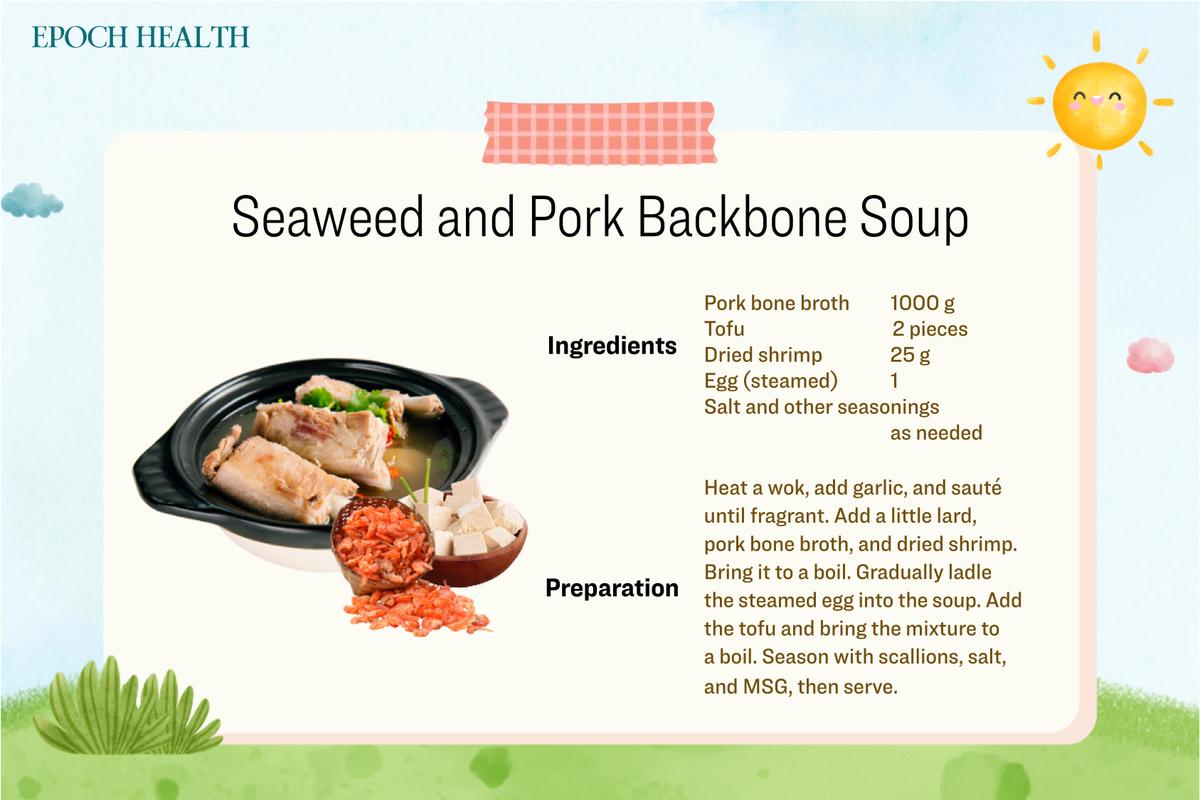
3. Pork Backbone Soup With Tofu, Dried Shrimp, and Egg
Ingredients: 1,000 grams pork bone broth, 2 pieces tofu, 25 grams dried shrimp, 1 egg, and ginger, scallions, garlic, monosodium glutamate (MSG), salt, and lard to taste.