Last week in “Tune in Today,” we explored the remarkable revival of Johann Sebastian Bach’s music and the first prelude of his “Six Suites.” The “Six Suites for Solo Cello,” consisting of six baroque suites of six movements each, are considered one of Bach’s greatest musical achievements. For a cellist today, they are a pillar of the repertoire—a staple that encompasses the human condition.
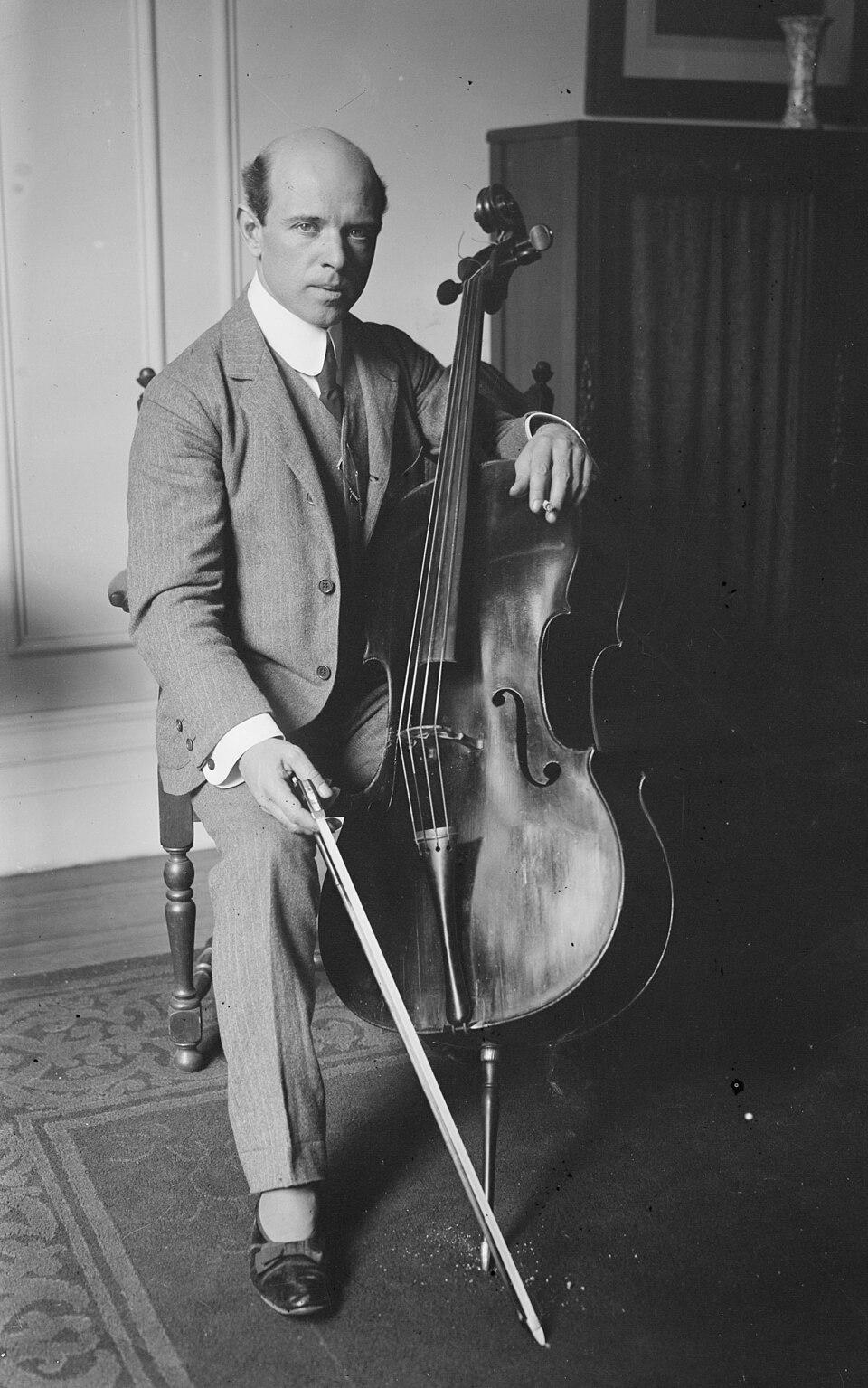
Pablo Casals
Pablo Casals (1876–1973) was perhaps the greatest cellist in history. In addition to being a brilliant conductor and composer, Casals was a passionate advocate for human rights and freedom. His humanitarian efforts led to his exile from Spain in 1939 after the defeat of Republican Spain to the Nationalists. After refusing to perform in Soviet Russia, Nazi Germany, and even the Allied countries (for their tolerance of Francoist Spain), he formed a fruitful relationship with the United Nations in his efforts to pursue world peace. He was awarded the U.S. Presidential Medal of Freedom by John F. Kennedy in 1963.Casals was an artist. Violinist Fritz Kreisler once described him as “the greatest man who ever drew a bow.” He innovated cello technique, developing bowing and fingering advancements that made him arguably the first “modern virtuoso” of the instrument. His greatest contribution to the cello, however, dates back to his youth and his role in the rediscovery of J. S. Bach’s “Six Suites.”
In the book “Joys and Sorrows,” Casals describes the chance encounter that changed his life. On a quest for new scores, he stumbled upon an old music shop near a harbor in Barcelona. He “came upon a sheaf of pages, crumpled and discolored with age,” the sheet music to Johann Sebastian Bach’s “Six Suites for Violoncello Solo.” The moment was magical. Inexplicably drawn to the unassuming pages, Casals was thunderstruck. He wrote:
“Even today, when I look at the cover of that music, I am back again in the old musty shop with its faint smell of the sea. I hurried home, clutching the suites as if they were crown jewels. ... Those suites opened up a whole new world. I began playing them with indescribable excitement. They became my most cherished music.”
Suite No. 5 in C minor, “IV. Sarabande”
This week’s recording of J. S. Bach’s Suite No. 5 in C minor, “IV. Sarabande” is by Pablo Casals. (Listen)
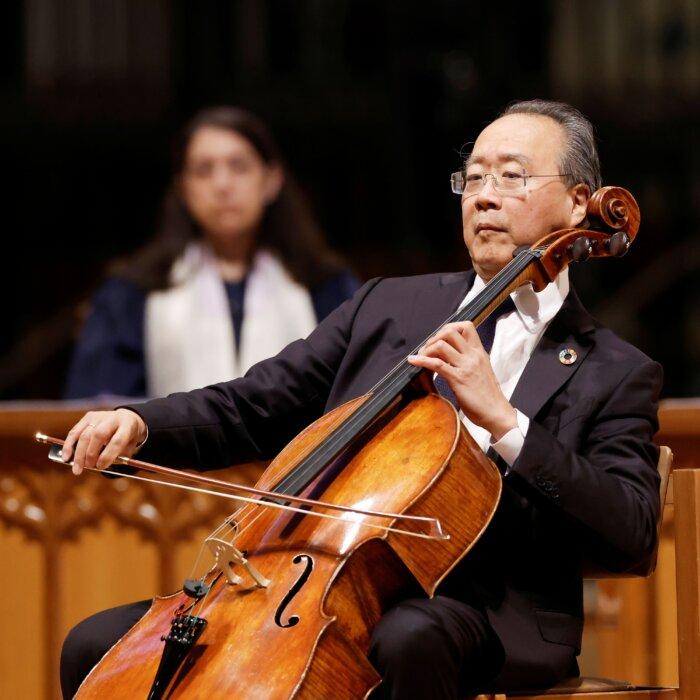
Suite No. 5 in C minor is somber and austere. Unlike any of the other suites, the fifth employs the technique of “scordatura,” or tuning a string to non-standard pitch. In this case, the top A string is tuned down a whole tone to a G. This gives the instrument a darker, more veiled tone, altering its natural resonance in ways that color the entire suite.
The “Sarabande” of the “Fifth Suite” is one of the most striking movements in the entire cycle. While most of the other movements involve the double-stopping of strings and richly voiced chords, the “Sarabande” is stripped bare, unfolding as a single melodic line. Sparse and unadorned, the movement has become associated with meditation and grief.
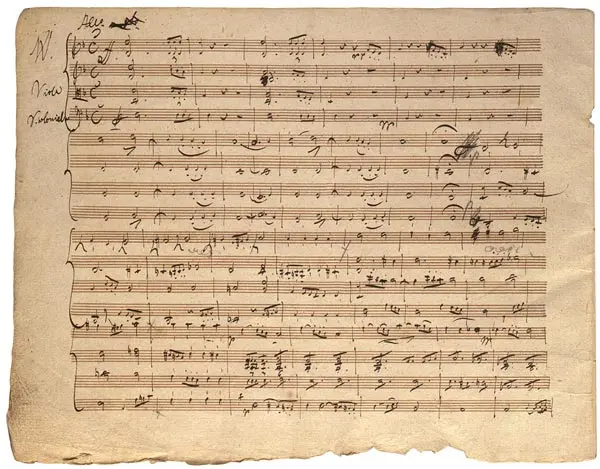
The story of the “Six Suites” doesn’t end here. To this day, no autograph manuscript of the work has been found, and discrepancies between the various copies that exist have sparked a debate that remains unresolved.
Next week, in the final part of the trilogy, we will explore the controversy surrounding the surviving sources of Bach’s “Six Suites.”