In the year 1840, Robert Schumann wrote 168 songs, more than half his lifetime’s output.
Until then, he wrote almost exclusively for solo piano, and the astonishing surge in creativity surprised even Schumann himself. He marveled at how easily the songs came to him. Unlike instrumental music which had to be “carried through the fingers,” he often conjured up his songs standing or away from the piano. This period of unprecedented productivity came to be known as Schumann’s “Liederjahr,” or “year of song.”
In the same year, Schumann married Clara Wieck, the daughter of piano teacher Friedrich Wieck. Friedrich opposed the match. Schumann, a former student of Friedrich’s, fought bitterly with her father for years before a court ruling allowed the couple to marry.
Historian George Hall, in his entry in the Oxford Companion to Music, wrote that the marriage provided “the emotional and domestic stability” in which Schumann’s “subsequent achievements were founded.”
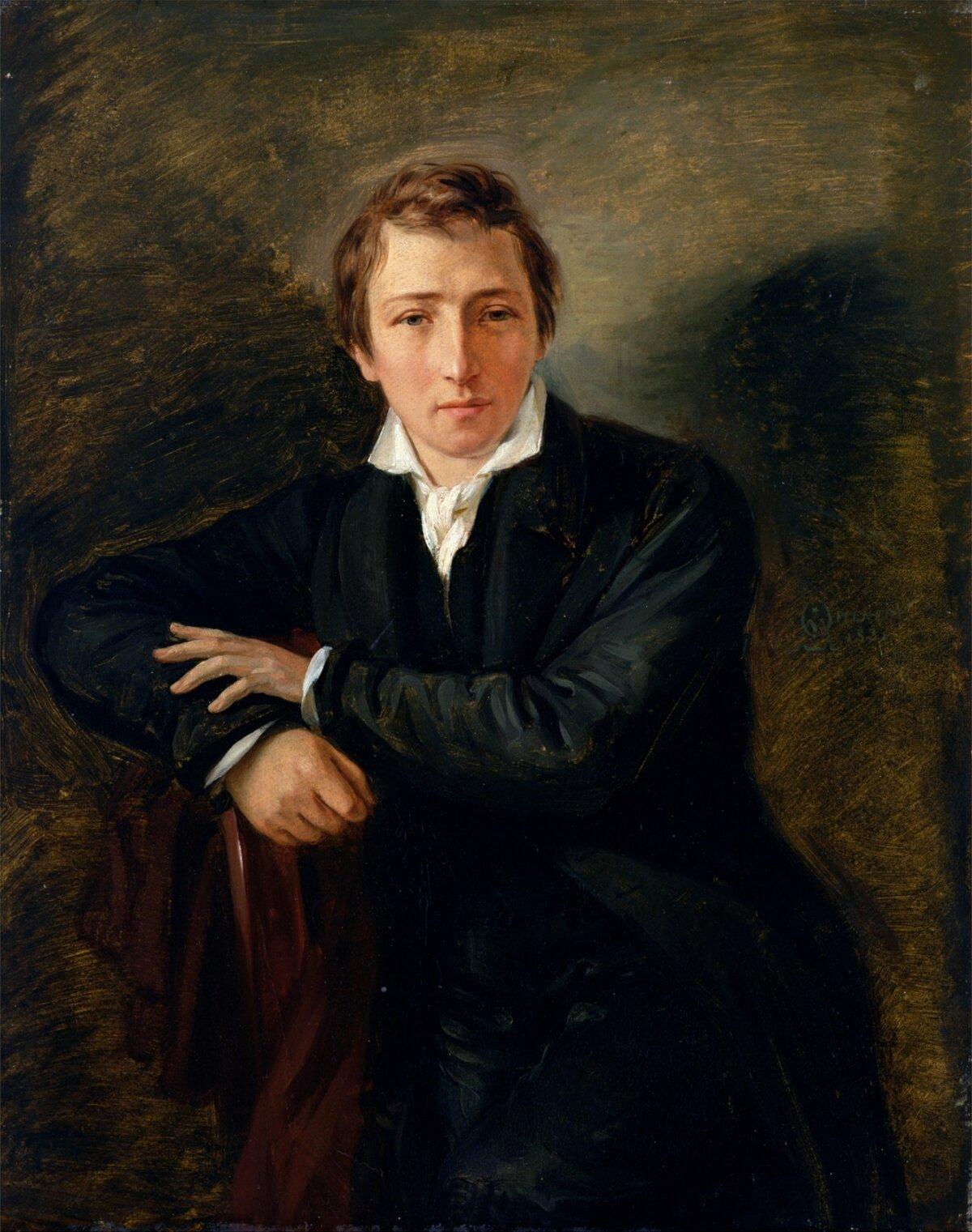
The happy union likely prompted the composer’s sudden outpouring, which redefined his legacy as a composer. Yet one of his greatest works from this period, a song cycle based on the writings of poet Heinrich Heine, emerged as a tragic counterpoint to the events of Schumann’s own life. The work is none other than “Dichterliebe” Op. 48, or “A Poet’s Love,” one of the cornerstones of the song cycle genre. It’s riveting exploration of unfulfilled love in which “Dichterliebe” brings painful emotions to life by wedding poetry and music.
‘Dichterliebe’ Op. 48
Today’s recording of “Dichterliebe,” “A Poet’s Love,” is by tenor Francisco Araiza and pianist Jean Lemaire. (Listen)

“Dichterliebe,” while lacking an explicit narrative, is led by an atypical narrator: the piano. While the soloist, the “poet” of the cycle, takes center stage with the melody and lyrics, the characteristic figures and harmonies of the accompaniment paint the emotional backdrop of this tragic play. In certain moments, the piano even drives the story, taking over the lead role.
In the first song, “Im wunderschönen Monat Mai,” the opening notes are haunting. A hint of F-sharp minor, lingering before a dip into A major, acts as the prelude to the upcoming tragedy. This famous beginning is actually a quotation from the second movement of Clara Wieck’s Piano Concerto, a hidden reference to Schumann’s wife. The tenor follows with the words of Heine: “In beautiful May, when the buds sprang, love sprang up in my heart.”
The next few songs feature declarations of love by the poet. In the second song, “Aus meinen Tränen spriessen” at 2:07, the phrase sighs and pauses on choice words. As “flowers spring up from my tears,” the imagery of flowers and “nightingale choirs” evokes the favored symbolism of the Romantic era.
By the sixth song, “Im Rhein, im heiligen Strome” at 7:10, the music begins to take a darker turn. The lyrics compare the poet’s love to the beauty of the Madonna at the cathedral of Cologne, with the march-like figure in the piano mimicking the tolling of church bells. By 9:03, the poet has disappeared. The narrator takes over, with heavy, chromatic motions in the chords signaling a twist in the story. In some interpretations, this is the moment where reality asserts itself; the earlier songs were happy memories of a distant past. The piano’s postlude yanks the audience into the present, and to the most famous song of the cycle.
At 9:57, the seventh song, “Ich grolle nicht,” begins. The words, repeated over and over by the singer, translate to “I bear no grudge.” Tragedy strikes, as the poet’s love does not love him back. The heroic-sounding accompaniment in the piano underlines the contradiction between the verse and music. While the words insist that all is well, a strange sense of discontent permeates the atmosphere,
The lovesick poet is distraught. The next few songs grow increasingly morbid. At the 10th song at 15:00, “Hör' ich das Liedchen klingen,” the ringing of the church bells from the sixth song is transformed, a single line remaining from the earlier chords. The tenor sings of his “wild affliction” when he hears “that song which my love once sang.” What once suggested church bells and sacred love now resembles funeral bells.
The music grows more and more fantastical and detached, culminating in the 15th song, “Aus alten Märchen winkt es,” a wish for a fairytale utopia. By the final song at 31:40, “Die alten, bösen Lieder,” the cycle is reaching its finale. “The old bad songs, and the angry, bitter dreams, let us now bury them, bring a large coffin,” says the poet, calling upon 12 mighty giants to carry it as they must “throw it in the sea.” The tenor sings his final words at 34:30, and the poet is no more.
The protagonist is dead, but the story isn’t over. The narrator recalls the melancholic memories of the past, concluding the song cycle with a soliloquy. “Dichterliebe” is a work that combines the beauty of prose with the elegance of music. Schumann, a writer himself, believed in the unified aesthetic of art.