Legacy
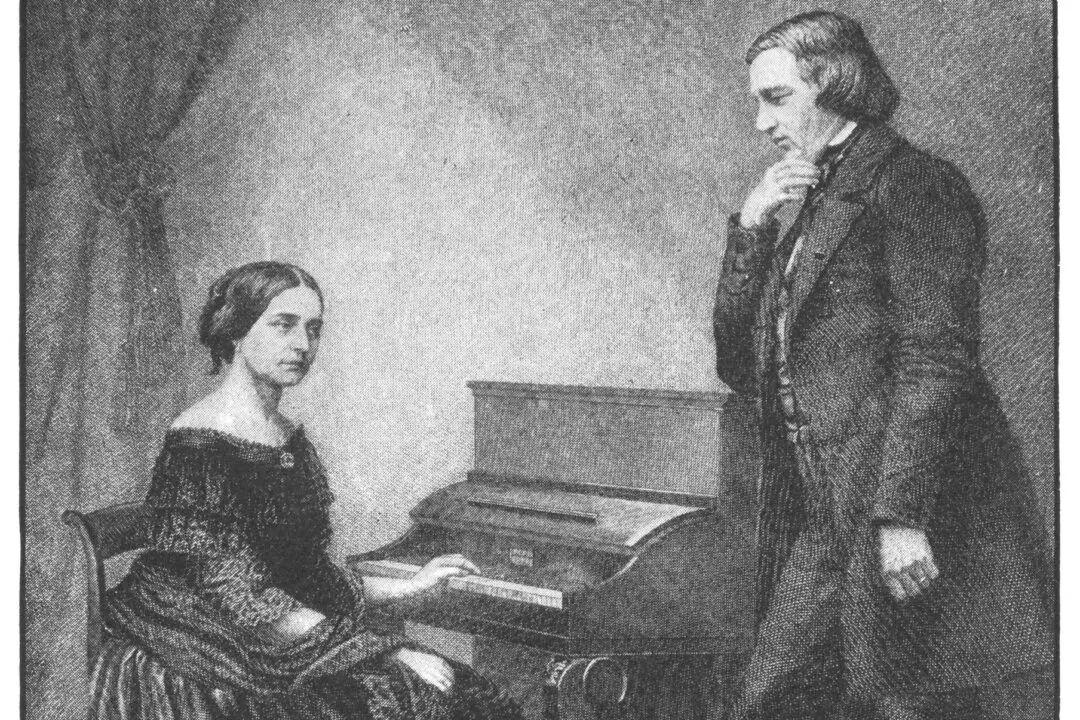
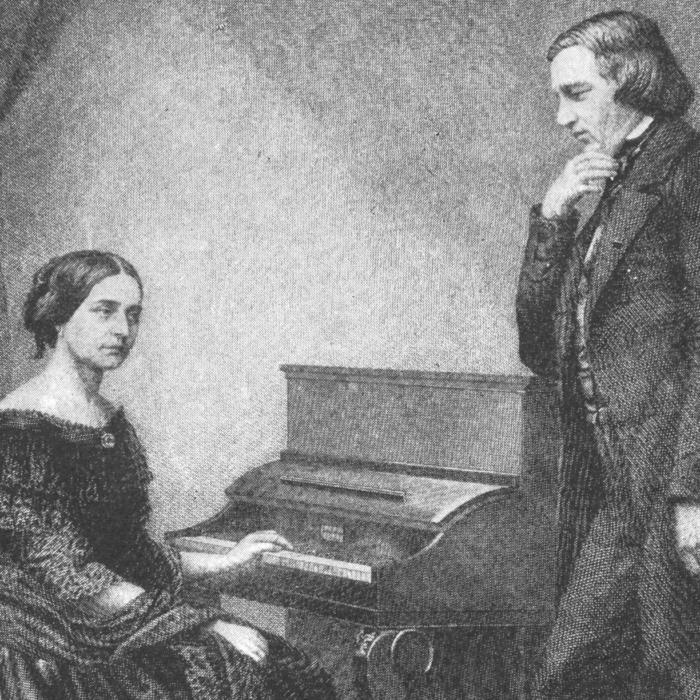
The expectations for Brahms were enormous. Crowned as the musical torchbearer of the future by Robert Schumann, the self-exacting composer was often self-deprecating. A relentless perfectionist, Brahms famously claimed to have destroyed as many as 20 string quartets compositions. His standards for symphonic writing were similarly strict.For his first symphony, the process was trying. Brahms wrote to friends about the length of the work, how it sounded “difficult” and “not exactly charming.” The concept came about as early as 1855, two years after the time of his fateful meeting with Schumann. The founder of the “Neue Zeitschrift fur Musik,” or the “New Music Journal,” Schumann was extremely impressed with the young Brahms. Schumann named him as the musician destined to lead German music into a new era. He even wrote to mutual friend Joseph Joachim a year later asking about a potential symphony: “But where is Johannes? Is he not yet ready to let drums and trumpets sound?”
Schumann passed away just a few years after propelling Brahms’s name into the spotlight. Yet the next two decades saw slow work on the C minor, with another potential candidate scrapped. He dissected and recycled a D minor symphony, begun in 1854, into a piano concerto. It faced hostile reviews after its premiere. This D minor work came about after Brahms had heard a performance of Beethoven’s monumental Symphony No. 9 in D minor earlier that year. The C minor sketches, which eventually became the First Symphony, similarly drew inspiration from Beethoven’s Fifth Symphony, also in C minor.
How strong was Beethoven’s influence on Brahms? In his home, a marble bust of Beethoven stared down on Brahms as he composed. Beyond his esteem for his German predecessor, Brahms carried the music banner of Beethoven’s non-programmatic music.
Brahms was a composer of the Viennese Classical tradition, a proponent of absolute music. Absolute music refers to the conservative structures of Classical forms, eschewing developments of the “New German School” led by Liszt and Wagner.
Unlike other programmatic works of the time, which distanced themselves from Classicism with freedom of form and vibrant textures, the music of Brahms faced inevitable comparison with the music of the past. For a composer following in the footsteps of one of the masters of the symphonic form, Brahms found it daunting to be the “inheritor” of Beethoven. “You have no idea how the likes of us feel when we hear the tramp of a giant like him behind us,” he allegedly once said.
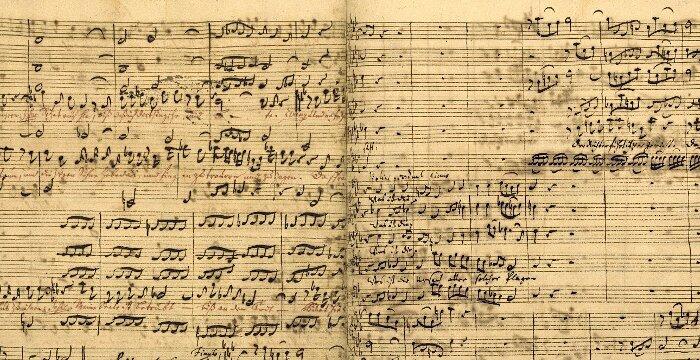
Now, the Symphony No. 1 stands as a masterpiece of the Romantic era. Drawing material and ideas from the spirit of Beethoven, the music nonetheless takes an audience on a journey in a uniquely Brahmsian fashion.

‘Un poco sustenuto—Allegro’
Today’s recording of the first movement of Brahms’s Symphony No. 1 in C Minor, “Un poco sustenuto—Allegro,” is by the Berlin Philharmonic and Claudio Abbado. (Listen)The stormy section of the music begins at 6:25. A staccato canon, in which different voices imitate each other, unfolds between the strings and winds, until the main theme appears in an altered form in the low strings and bassoons. The altered main theme heralds a stormy section of strife before a gradual buildup at 8:05. The music seems to sigh with each motif by the strings, the three-note motif from the beginning descending lower and lower. As defeat seems inevitable, a strident attempt is made to return to the home key of C minor. As the energy builds, we reach the climax as tension is released in a flurry of notes as the return home finally arrives at 9:35.
The coda begins at 12:22, a noble declaration which transforms into a graceful melodic figure. The conclusion of the movement features a beautiful venture into C major.