The year was 1900, and Sergei Rachmaninoff was unable to write.
His promising career had stalled out. Audiences had loved his Prelude in C-sharp minor, his breakout work. But disaster followed. His Symphony No. 1 in D minor crashed. A young love affair went sideways, and Rachmaninoff broke down, devastated. Now, he was unable to compose. He didn’t composed anything for three years. His abilities as a pianist remained, but the wellspring of creativity had dried up.
Although his confidence was shaken, hope was not all lost. Rachmaninoff was taken to meet an amateur musician by the name of Nikolai Dahl, who was not only a musician, but also a neurologist. He recommended a special treatment method: hypnosis.
The composer visited Dahl daily. Each day, Rachmaninoff lounged in an armchair and dreamt, listening to the same recitations. He heard: “You will begin to write your concerto. You will work with great facility. ... The concerto will be of an excellent quality.”
The treatment worked. Rachmaninoff’s confidence was restored and his depression lifted. In gratitude, he dedicated his next work to the doctor. The inscription on the score of the newly published Piano Concerto No. 2 in C minor reads, “A Monsieur N. Dahl.” The work premiered on Nov. 9, 1901.
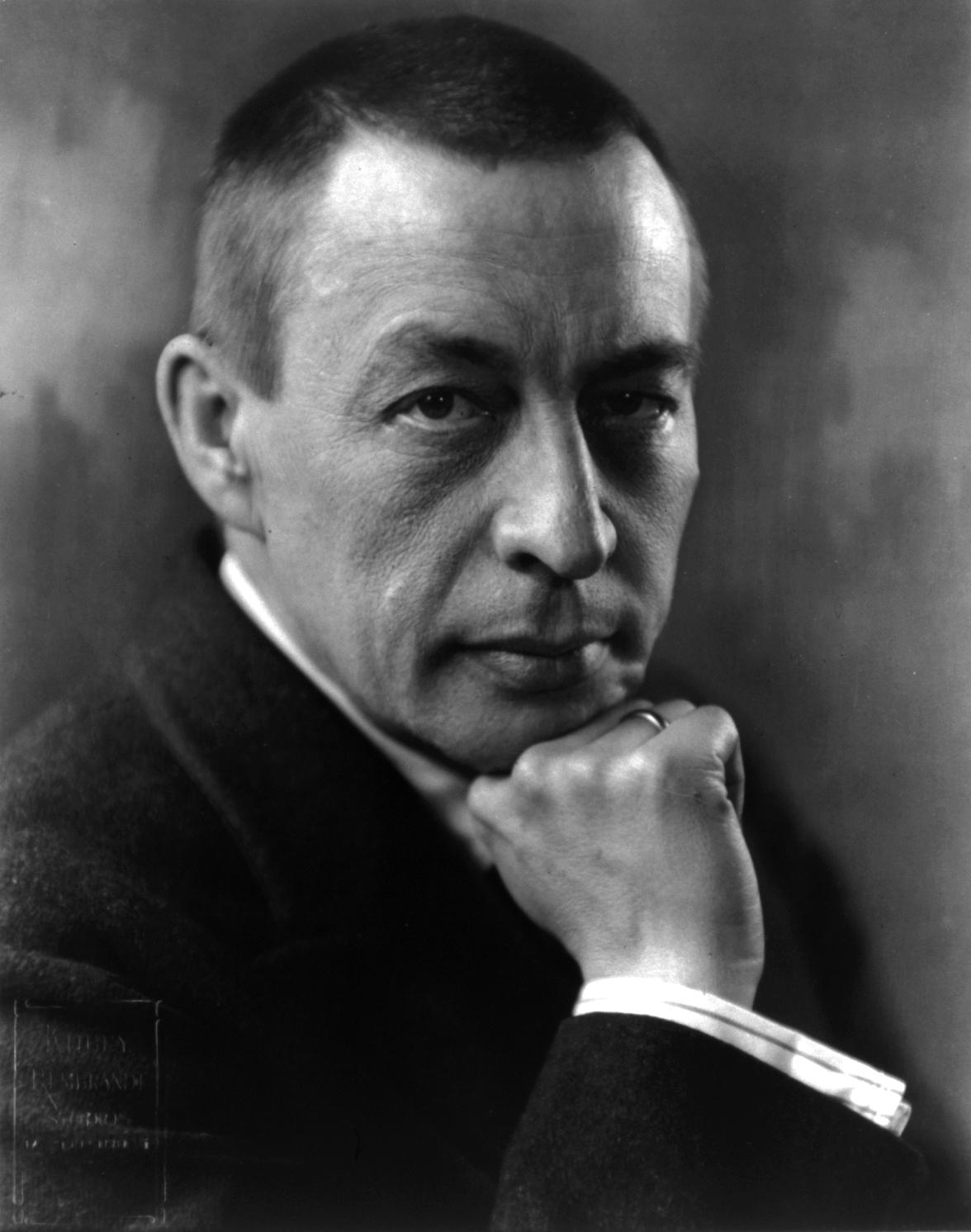
Sergei Rachmaninoff (1873–1943) in 1921. Public Domain
Sergei Rachmaninoff (1873–1943) went on to produce a total of four piano concertos, a trio of symphonies, and 24 preludes. As communism began to loom over Russia, he emigrated to the United States in 1918. He criticized Stalin, resulting in a ban on his works in Soviet Russia.

Ultimately, he became one of the last of a great tradition—a proponent of 19th-century Romanticism struggling against the radical music of the 20th century.
A Glorious Comeback
The famous opening of this concerto is performed by Grigory Sokolov and the Finnish Radio Symphony Orchestra. (Listen)The opening chords swing back and forth, like the pendulum of a hypnotist’s watch. They culminate in a flurry of sixteenth notes, each beat punctuated by the rising and falling fifth. Atop this mesmerizing display, the strings enter with a luscious melody, the score marked “con passione.” The steady feeling of the beat comes from the time signature of the piece, the cut time (2/2) resulting in half as many beats per measure as the more frequently seen common time (4/4).
The second movement, Adagio sostenuto (11:45), opens with string chords that brighten onto the scene. The piano comes in with an arpeggiated-bass figure, lilting in the hypnotic signature fashion of the concerto. The piano line wanders, sounding like it could be the melody. Then the flute enters with the true main theme of the movement, passing the tune throughout the woodwinds over the marvelous texture of the piano.
The highlight of the third movement comes in the finale (33:18), a thunderous climax to cap off a landmark work. While the piano dances with difficult passage-work, fragments of the theme are recited by the celli. After the pianist catapults off a tightrope mini-cadenza, the entire orchestra erupts with a glorious reinstatement of the second theme of the movement over the massive chords of the pianist.
What arts and culture topics would you like us to cover? Please email ideas or feedback to [email protected]