“Music, wondrous and alone, held sovereign sway in the blackness of night,” recounted composer Vincent d’Indy on Dec. 16, 1886. He was in attendance for what he described as a “miracle that will never be forgotten.”
A few hours prior, an audience had gathered in the gallery of the Museum of Modern Painting in Brussels. In the cold depths of the Belgian winter, they came for music. More specifically, they came to hear the great Belgian violinist Eugène Ysaÿe, who was to give the first public performance of César Franck’s Violin Sonata in A major. It had been written for Ysaÿe as a wedding gift.
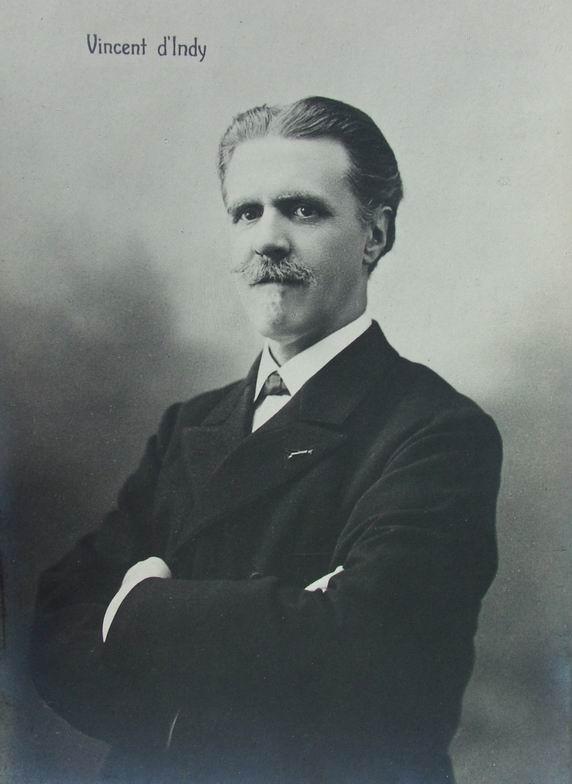
Vincent d'Indy, (1851–1931), Franck’s student and fellow composer, who witnessed the legendary dark performance in Brussels and recorded it for history. Public Domain
Together with pianist Marie-Léontine Bordes-Pène, the violinist embarked on a typical concert program. Yet as the hours passed, the afternoon stretched into dusk. By the beginning of the performance, the room was cast into darkness. By the end of the first movement, the music was barely decipherable. What’s more, there was to be no light; in the presence of so many paintings, not even a single match was to be struck.
Despite the circumstances, the audience was unwilling to leave. They wanted to hear the rest. Just when it seemed the concert was finished, Ysaÿe “struck his music stand with his bow, demanding, ‘Let’s go on!’” What followed was a magical moment. D'Indy describes his awe as “amid darkness that rendered them virtually invisible, the two artists played the last three movements from memory with a fire and passion” that astonished the listeners.
Special moments like these play into the mythology of music. For Ysaÿe, the sonata became a personal favorite. Performing the work countless times around the world, he championed Franck’s music until the end of his career. The Franck sonata in A major now stands as one of the finest of the violin repertoire.
Franck’s Violin Sonata, IV: ‘Allegretto poco mosso’
Today’s recording of the fourth movement, “Allegretto poco mosso,” of Franck’s Violin Sonata in A major is by David Oistrakh and Sviatoslav Richter. (Listen)=

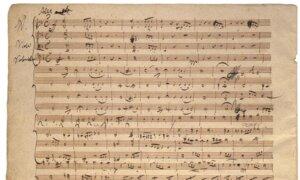
The wonderful tune of the fourth movement emerges like a ray of light. Played by the piano, the violin follows in canonic imitation, or in other words, a constant step behind. Historian James Harding describes it as “simple, majestic and irresistible in its ample, beautifully wrought proportions.” The two voices weave together in harmony before the two instruments repeat at 1:27. This time, the violin takes the lead, before a third iteration leads into new territory at 2:54.
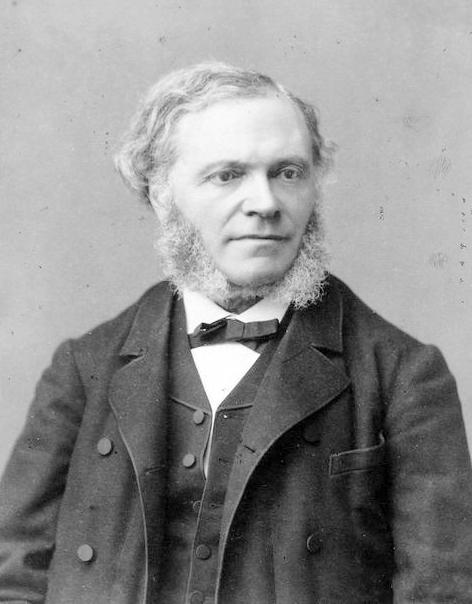
César Franck (1822–1890), the composer who wrote his famous Violin Sonata in A Major as a wedding gift for violinist Eugène Ysaÿe. Public Domain
Franck had a unique gift for graceful modulations of musical keys. Listen to how, through the change in key, the reappearance of the melody is now melancholic in contrast to the optimism of before. The piano thunders at 3:19, recalling thematic material from earlier movements of the piece, imitating the dramatic turbulence of the second movement.
The violin enters at the height of the climax, piercing above the consecutive notes in the piano. As the phrase repeats and the violin enters once more, we finally resolve, at 4:20, into a glorious outpouring from the piano in major, the hope of the beginning returns in the form of the opening melody. Starting from a wistful mood, the voices build much like the beginning until they finally unite. The joy of the music only grows until a soaring trill in the violin leads to the finale of the piece.
Ysaÿe would often tell his listeners that he played the piece “con amore,” or “with love.” The music has been transcribed for a variety of instruments, from flute to cello, double bass, oboe, clarinet, organ with choir, and even orchestra.
What arts and culture topics would you like us to cover? Please email ideas or feedback to [email protected]