In 1955, an unknown, young Canadian pianist arrived at a recording studio on 30th Street, Manhattan. He had just signed a contract with Columbia Records. He planned to play a lesser-known work by Bach, a lengthy, esoteric 38-minute (as he played it) variation. Company executives were skeptical, but they gave the green light.
Glenn Gould became a household name, synonymous with genius, savant, and, above all else, Bach.
In April of 1981, almost three decades after his blockbuster record, Gould returned to Columbia Records. He had decided to rerecord the “Goldberg Variations,” this time in stereo sound. The product would be his final musical testament.
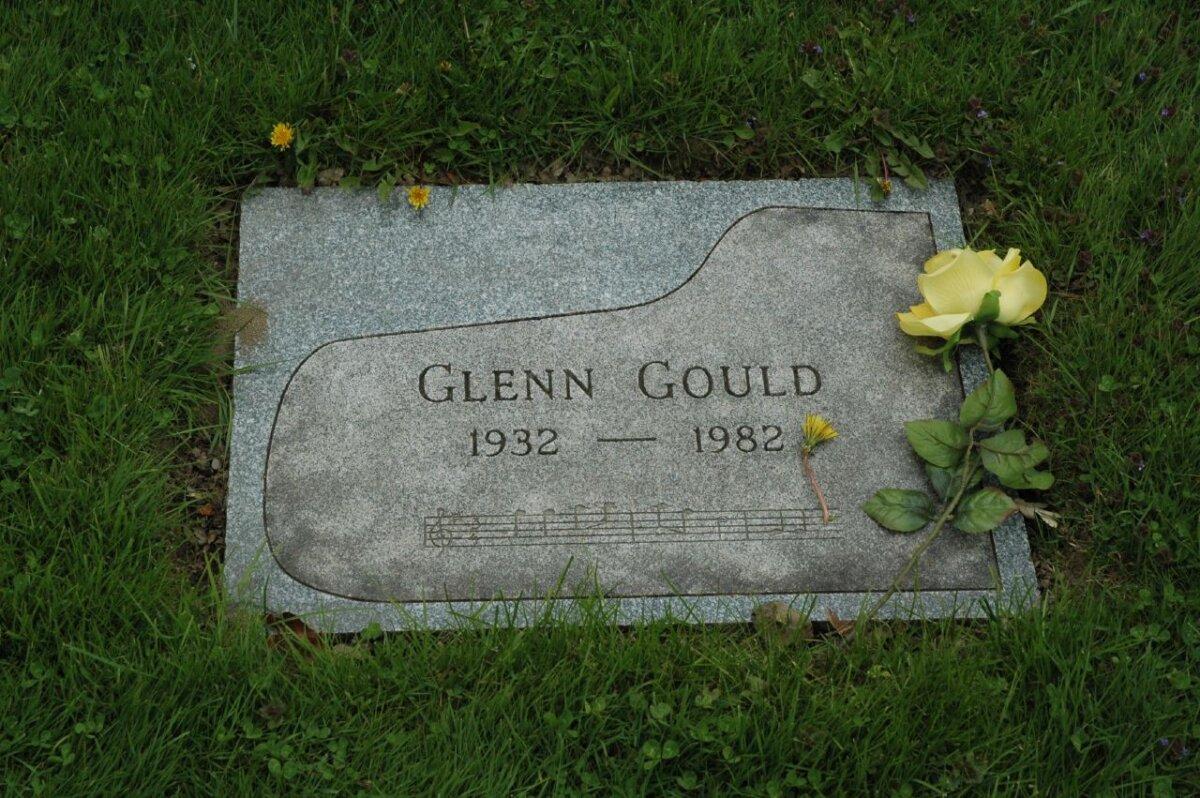
By the time the new album was released a few months later, Glenn Gould had passed away, just the week before. His career had been dynamic; his eccentric behavior, combined with musical genius, left an indelible mark on history. His legend only grew after his passing, inextricably tied to the “Goldberg Variations.”
The ‘Goldberg Variations’
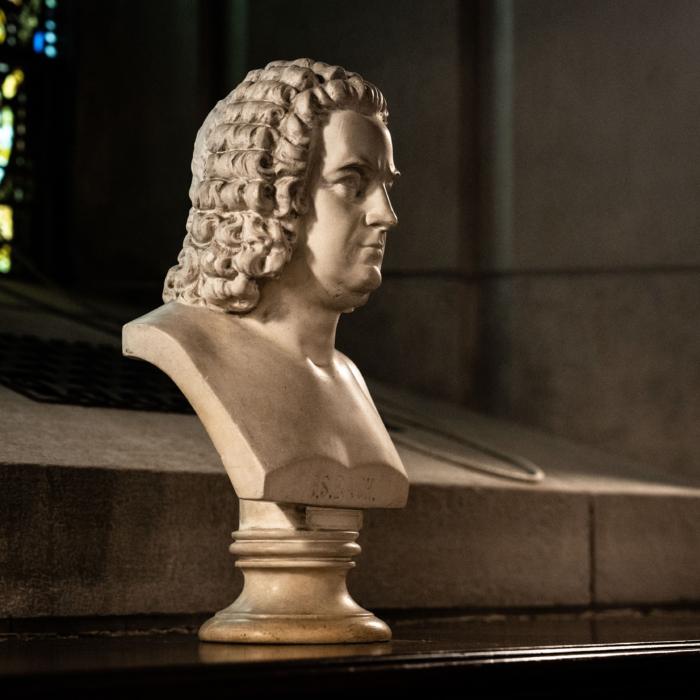
Johann Sebastian Bach (1685–1750) was possibly the greatest composer in all of Western music. He was defined by his faith in God, composing over 200 sacred cantatas, multiple oratorios, and his masterwork the Mass in B minor. Music historian Albert Schweitzer dubbed him “the Fifth Evangelist” for his contributions to the Lutheran church.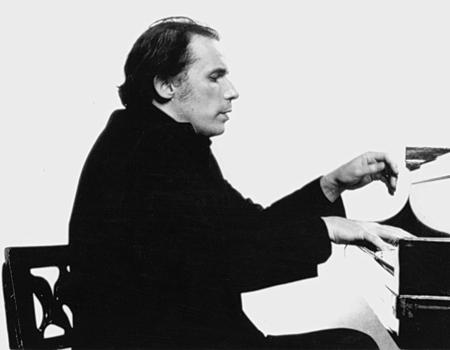
In 1741, he wrote the “Goldberg Variations” (BWV 988). It’s a titanic work that spans anywhere between 40 and 80 minutes in length depending on the number of repeats taken. Flanked by an angelic “aria” and “aria da capo” are 30 complex variations, in which Bach’s compositional mastery is on display.
The 30 variations are separated into triplets, with each third variations a canon. A canon is a technique whereby a melody is stated and then layered on top of itself. Think of Pachelbel’s Canon in D, a piece popular at weddings, where the famous melody plays again and again, each time in a more complex pattern. Bach takes this a step further in the “Goldberg Variations,” where out of nine canons in 27 variations, each canon is then raised a step above the previous one, all while fugal voices intersect in a dazzling display of color.
During a quiet moment at home, or while on a long work commute, take this opportunity to experience one of the most magical recordings of all of keyboard music. Gould’s 1981 recording with Sony Classical was filmed by director Bruno Monsaingeon.