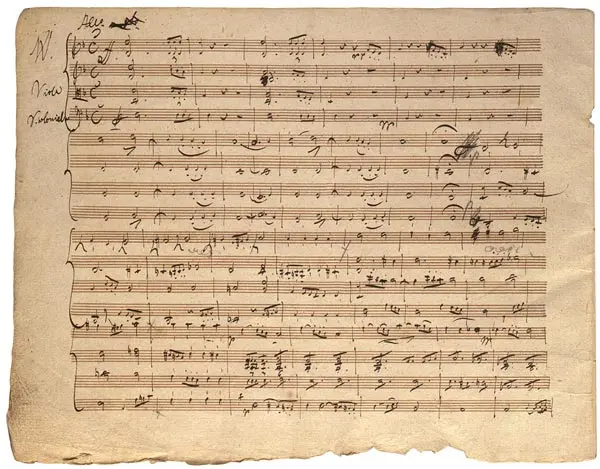
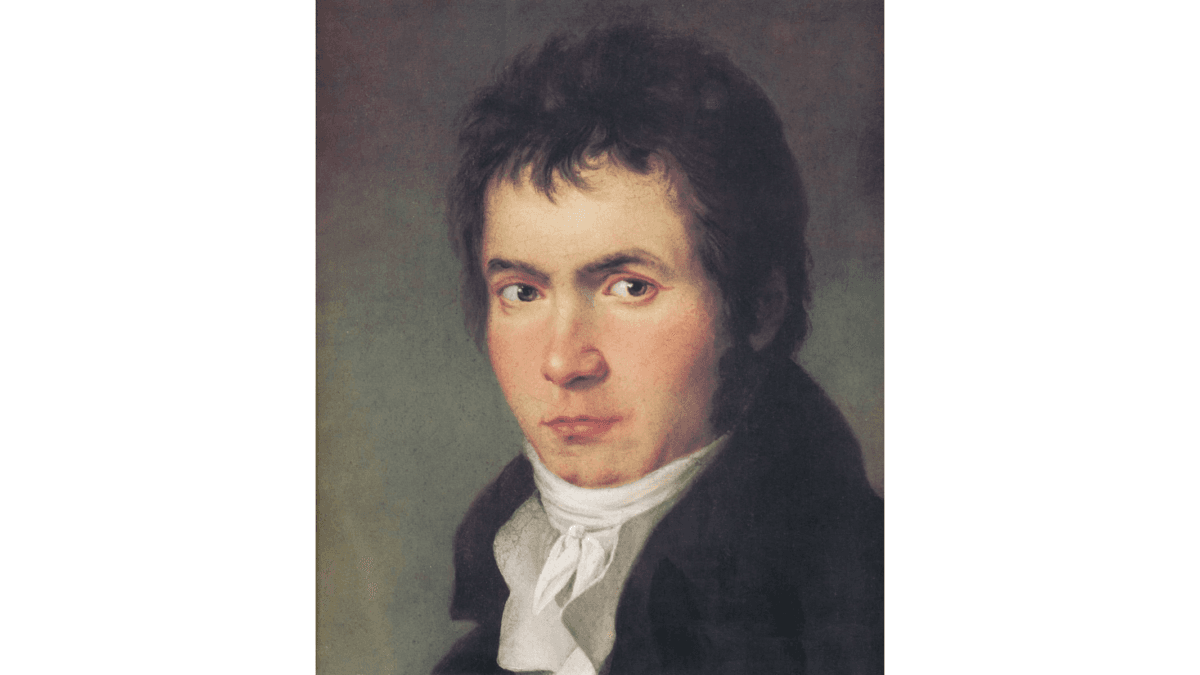
Composed in 1808 and dedicated to Prince Joseph Franz von Lobkowitz and Count Andrey Razumovsky, Beethoven’s Sixth Symphony was his vivid work in F major, “Pastoral.”
The work is open and expansive, with unraveling, unfolding motifs that hearken to the murmurs of nature. In contrast to his Symphony No. 5 in C minor—a journey from darkness to light, punctuated by Anton Schindler’s description of “fate knocking on the door”—the Sixth was a work of openness. (It is interesting that, from Beethoven’s sketchbooks, we find that both were completed almost simultaneously).
Nature in Symphony
The titles of the movements are nonstandard; beyond a tempo marking, they carry descriptions such as “Awakening of cheerful feelings on arrival in the countryside” and “Scene by the Brook.” This is a perfect example of programmatic music, in which a musical work is equipped with extra-musical subjects and concepts. While the goal of most symphonies at the time was to evoke emotions through the inherent properties of the music, Beethoven sought to evoke the very feeling of nature through his Sixth.Past programmatic works such as Vivaldi’s “The Four Seasons” utilized direct imitations of sounds such as birdcalls—which Beethoven does. However, Beethoven’s achievement is not in his mimicry of nature but in his ability to capture the emotions associated with nature and rural life using purely musical devices.
Movement and Motifs
In today’s recording we will hear the third movement, “III. Lustiges Zusammensein der Landleute: Allegro,” by Karl Bohm and the Vienna Philharmonic. Listen to the energy and festivity behind the aptly named “Merry Gathering of Country Folk.” (Listen)The structure of the work is tight, a catchy dance bobbing in and out of this scherzo and trio. The strings creep in with an offbeat bounce, then the woodwinds take over. Listen to the quality of the French horns at 0:50, with strings scampering upwards in flurries of sixteenths. Afterwards, the squirrely oboe pops in with a funky, lopsided phrase. Bassoons support with a descending motif, while the strings march with repeated staccato notes.
This movement is a great example of Beethoven’s categorization of the piece as “more an expression of feeling than painting.” As opposed to the end of the second movement, which directly references birdcalls, the third movement is less literal. The focus of the movement is on the development of motifs and structures, with each musical section clearly defined and connected to the others. Devices such as five-bar phrases and repeated staccato figures aren’t direct imitations of sounds from reality, yet Beethoven uses them in ways that evoke the subject matter of a rural dance. The work is designed so that even without knowledge of the extra meanings, the idea of the work is clear through the construction of themes.