‘The Odyssey’: Tales of Brave Ulysses—Stark and Majestic

The eye-opening concept from Nolan’s ‘The Odyssey’ is the idea that Odysseus was responsible for Greek civilization’s downfall. That’s a new angle.
‘The Odyssey’: Tales of Brave Ulysses—Stark and Majestic
Odysseus (Matt Damon, C) and his warriors storm a beach, in "The Odyssey." Universal Pictures
Mark Jackson
Mark Jackson
Film Critic
|Updated:
0:00

R | 2 hr 52 min | Drama, History, Epic | 2026

Most people know the story of the Trojan Horse. Director Christopher Nolan, in his new magnum opus “The Odyssey,” depicts it as an ancient Greek version of a modern military, tier-one special operations mission.
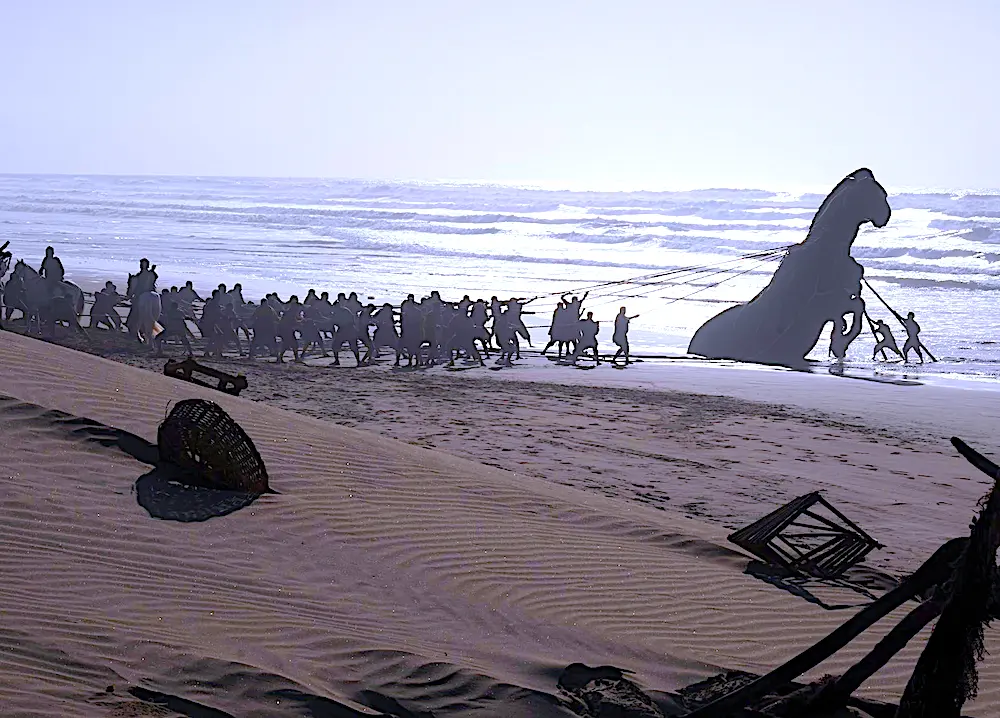
Trojan troops haul the Trojan Horse back to the city of Troy, in "The Odyssey." (Universal Pictures)
Trojan troops haul the Trojan Horse back to the city of Troy, in "The Odyssey." Universal Pictures

I was immediately reminded of the four Army Delta Force operators who set up the bombing run that killed Abu Musab al-Zarqawi (the Jordanian monster responsible for the first public beheading of an American in the Iraq War).

The reconnaissance-conducting Delta teammates dug a shallow pit in the desert, covered it with camouflage, and crawled in. It soon filled with brackish water up to their necks. They all came down with dysentery, diarrhea, vomiting, and fevers.

They sat in a virulent soup of their own bodily wastes, shivering with fever, for 4 days and nights, and then painted the building al-Zarqawi was hiding in with an infrared laser. And a pair of F-16 fighter jets dropped two 500-pound laser-guided bombs and sent Mr. Al-Zarqawi straight to Hades.
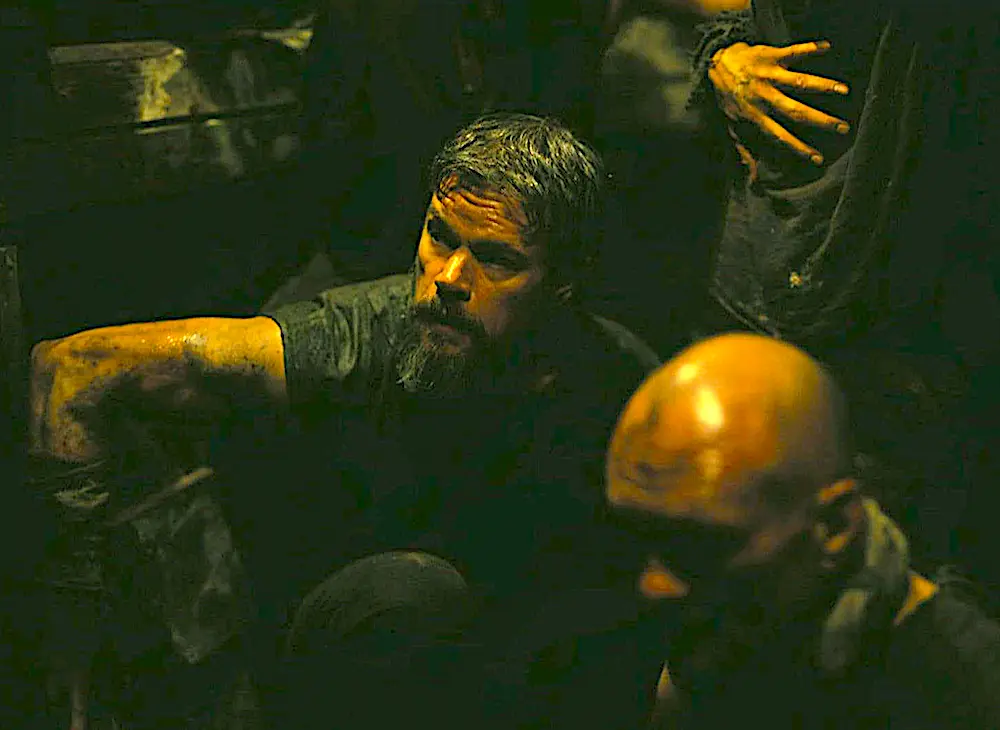
Odysseus (Matt Damon, center) in the belly of the beast, in "The Odyssey." (Universal Pictures)
Odysseus (Matt Damon, center) in the belly of the beast, in "The Odyssey." Universal Pictures

Similarly, in the belly of the Trojan horse, built by the Greeks as a fake peace-offering, were packed like sardines, Greek tier-one teammates, including Odysseus. (It was his idea.) They were claustrophobic and starving. And when the tide rolled in, the guys at the bottom of the pile drowned. And no bathroom breaks.
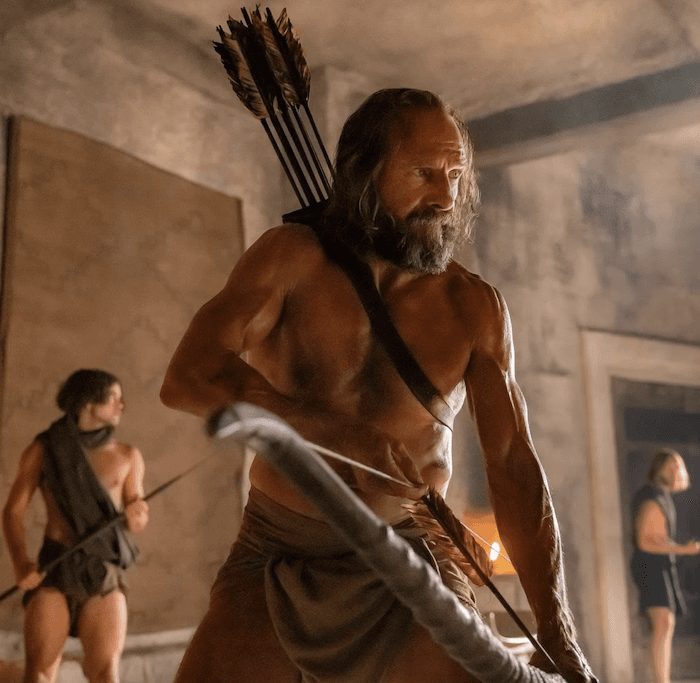

That’s how you cinematize “The Odyssey” and bring the gritty reality home, to Homer.

The Helen and Achilles Casting Controversies

The buzz regarding the movie spewed controversy like a fire hose: All the depictions heretofore of Helen of Troy, the world’s supposedly most beautiful woman, whose kidnapping from Greece started the war—have been as blondes.

Nolan cast Lupita Nyong’o, who’s so black all the funny African jokes apply (Africans think they’re funny too): “She’s so black that when she goes out in the sun, the sun gets a tan.”
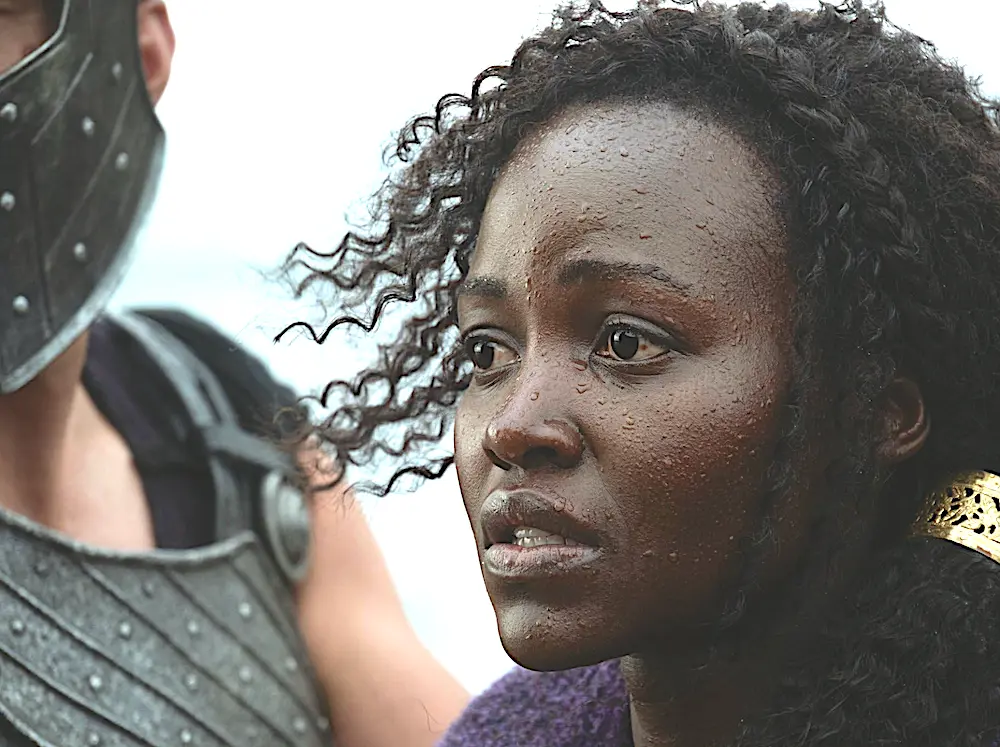
Suspicious that this might be a woke rewriting of history to appease Hollywood DEI casting requirements, I did some research and found out that in the Greece of Homer’s “Iliad” and “Odyssey,” the core populations were Mediterranean, but black Africans were indeed present in the broader Aegean world.
The ancient Greeks—who interacted with diverse peoples through trade and war—referred to them as “Aethiopians,“ which means ”burnt face,” and considered them close to the gods. So Helen of Troy could conceivably have been black, considering blonde people were similarly rare in the ancient Mediterranean.
However, the concept that really makes the whole thing make sense is the description by Helen’s husband, Menelaus (Jon Bernthal), of the reason his brother, King Agamemnon’s (Benny Safdie), is going to war with Troy. He used the hostage-taking of Helen as an excuse to break Troy’s control of the trading routes. Now that sounds like a bona fide, Straits of Hormuz-type political reason for starting a war—not this sappy, romantic business of “The face that launched a thousand ships.” Blonde or black.
Helen of Troy (Lupita Nyong’o), in "The Odyssey." (Universal Pictures)
Helen of Troy (Lupita Nyong’o), in "The Odyssey." Universal Pictures

And to be fair (and realistically), Nyong’o is a fashion-model-level, polished-ebony specimen of shocking symmetry. I was prepared to be outraged at the DEI of it all, but soon acknowledged, “Okay, that actually works.” It’s really a non-issue. And I’ll take a melanistic Helen over melanistic hobbits any day.

What I seriously foresaw as a problem, though, was the buzz about petite, fragile trans-man Elliot Page playing Greek war-legend and demi-God Achilles. He was definitively portrayed by a freakish, muscularly-jacked Brad Pitt in 2004’s “Troy.” She doesn’t. She plays Sinon, Odysseus’s cousin, who sells the idea to the Trojans to haul the giant wooden horse full of warriors into their city. Also not particularly a problem.

Nolan’s New Masterpiece

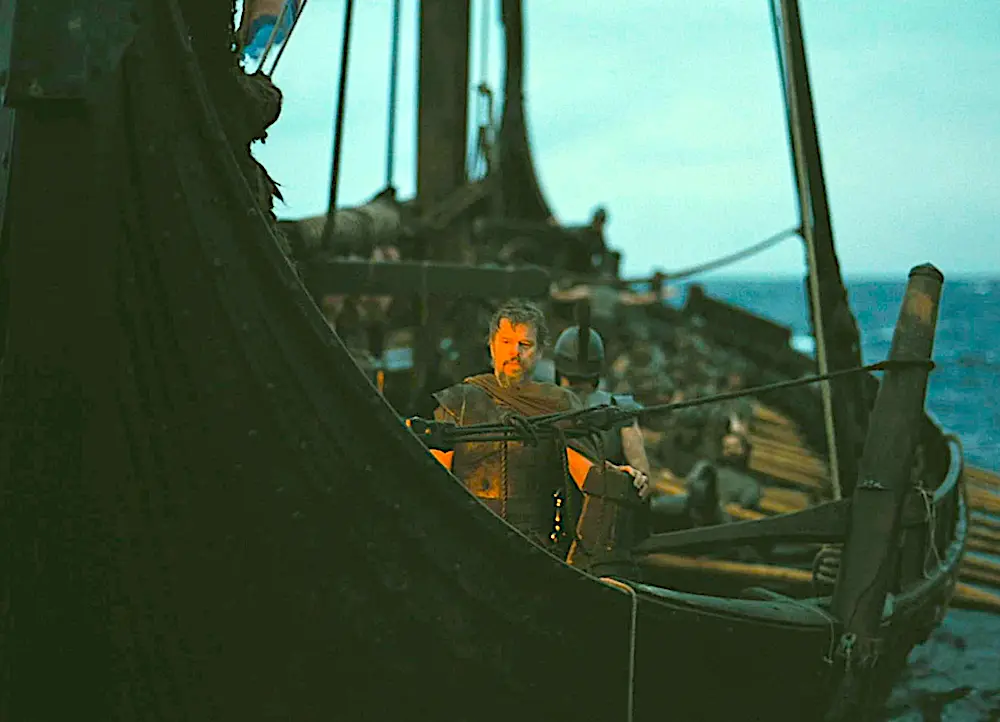
Odysseus (Matt Damon, center) and his men rowing and sailing back to the Isle of Ithaca, in "The Odyssey." (Universal Pictures)
Odysseus (Matt Damon, center) and his men rowing and sailing back to the Isle of Ithaca, in "The Odyssey." Universal Pictures

I was looking forward to this one. I played Odysseus in the sixth-grade class play—I feel a kinship. I know things. Nolan does not disappoint. This is a stark, deeply Greek, ancient-feeling telling, with powerful, horse-hair-helmeted warriors often silhouetted against dark skies. It rings true, even when it mildly employs horror techniques to capture some of the numerous monsters and witches that inhabit the tale.

Odysseus—also known by the Roman version of his name, Ulysses—is on his arduous, 10-year oceanic trek from Troy to Ithaca, where he encounters a series of legendary, mythical obstacles. Of the 12 or so ordeals described by Homer, Nolan chooses a few, starting with the story of Polyphemus the Cyclops.
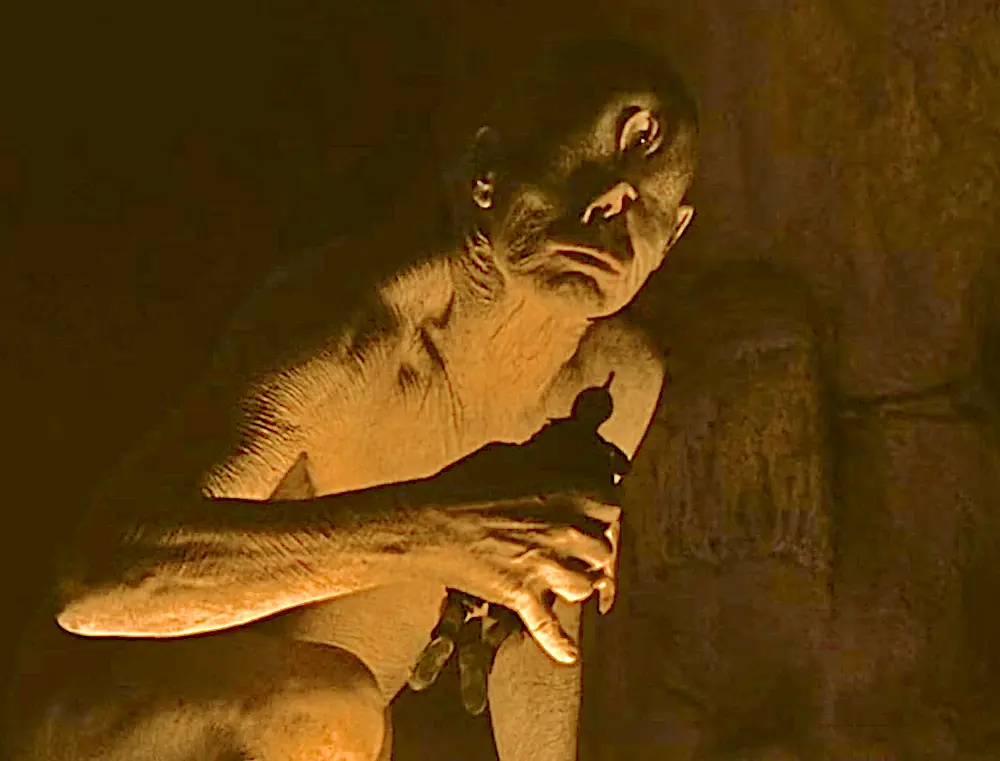
Polyphemus the cyclops (motion-capture-acted by Bill Irwin<span style="color: #333333;">),</span> in "The Odyssey." (Universal Pictures)
Polyphemus the cyclops (motion-capture-acted by Bill Irwin), in "The Odyssey." Universal Pictures

Trapped in the one-eyed giant’s cave, Odysseus tricks and blinds the monster to escape. Unfortunately, Polyphemus is sea-god Poseidon’s son. This will not bode well.

They next encounter the Laestrygonians: a race of armor-wearing, cannibalistic giants who destroy nearly all of Odysseus’s fleet by hurling massive boulders.
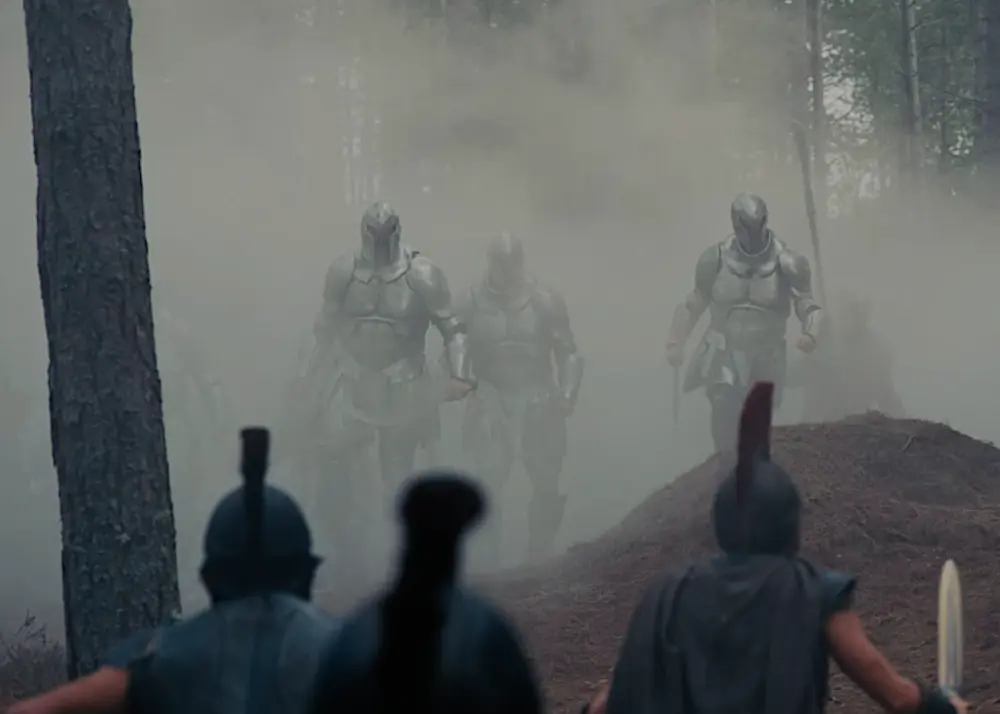
The giant Laestrygonians kill most of Odysseus's men, in "The Odyssey." (Universal Pictures)
The giant Laestrygonians kill most of Odysseus's men, in "The Odyssey." Universal Pictures

Then comes Circe (Samantha Morton). She’s a powerful sorceress who temporarily turns Odysseus’s men into oinking pigs.
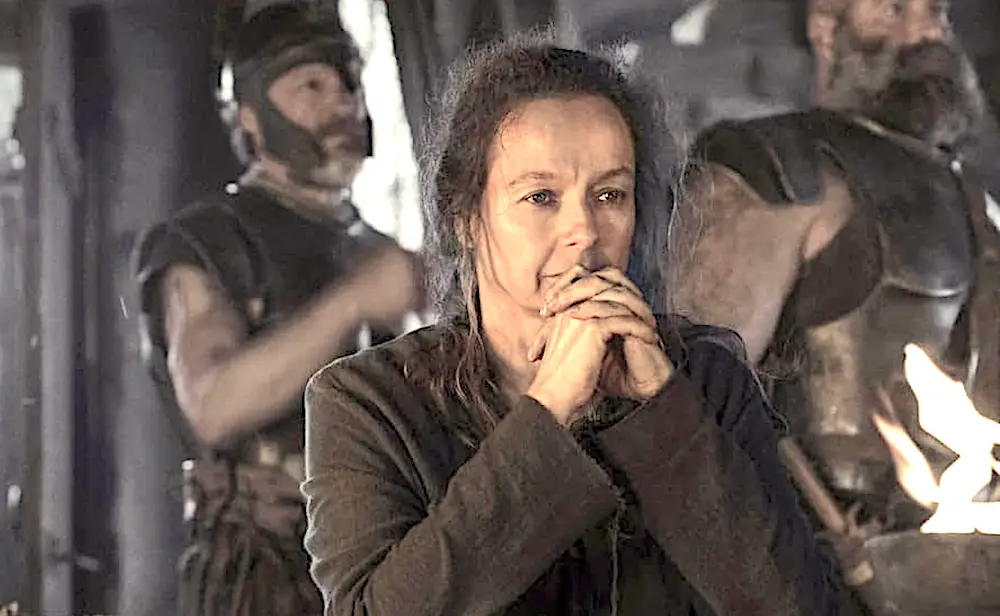
The easily-offended witch Circe (Samantha Morton) turns Odysseus's men into pigs, in "The Odyssey." (Universal Pictures)
The easily-offended witch Circe (Samantha Morton) turns Odysseus's men into pigs, in "The Odyssey." Universal Pictures

Then, Odysseus travels to The Underworld (Hades), the land of the dead, to speak with the blind prophet Tiresias (James Remar) and his now-dead cousin Sinon, who reveal to him how to get home.

After this comes the well-known story of the Sirens, where Odysseus has himself tied to the ship’s mast, while his crew plugs their ears with wax, to resist the Sirens’ deadly, enchanting songs.

Next up are Scylla and Charybdis—Odysseus has to navigate between a massive, ship-swallowing ocean whirlpool (Charybdis) and a deadly, six-headed, cliff-dwelling monster (Scylla).
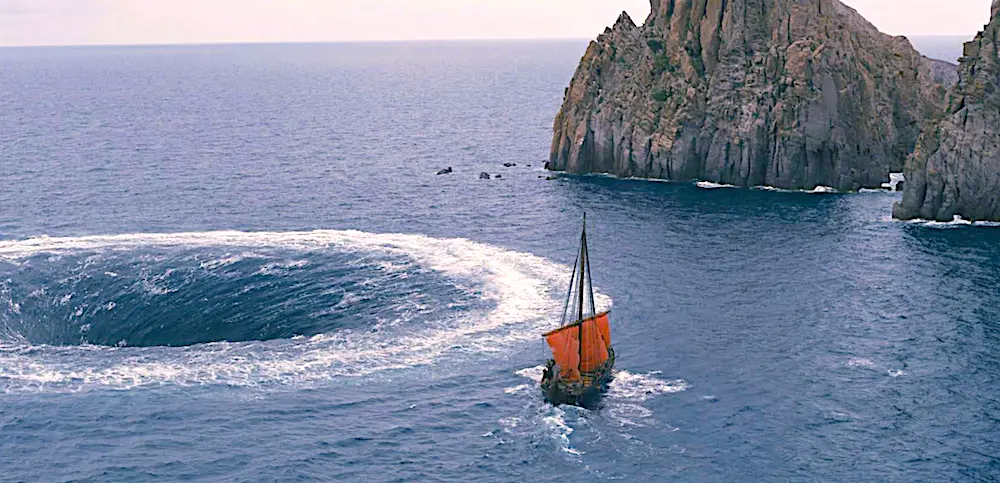
Odysseus steers his ship precariously close to Charybdis, the ship-swallowing vortex-monster, in "The Odyssey." (Universal Pictures)
Odysseus steers his ship precariously close to Charybdis, the ship-swallowing vortex-monster, in "The Odyssey." Universal Pictures

In Thrinacia (Helios’s Cattle), Odysseus’s starving crew slaughter and eat the sacred cattle of the sun god Helios, which dooms them all to a fatal storm.

Finally, in a mash-up of the Lotus-Eaters and Ogygia (Calypso, played by Charlize Theron), Calypso feeds Odysseus intoxicating lotus flowers, which causes him to lose all desire to return home for seven years.
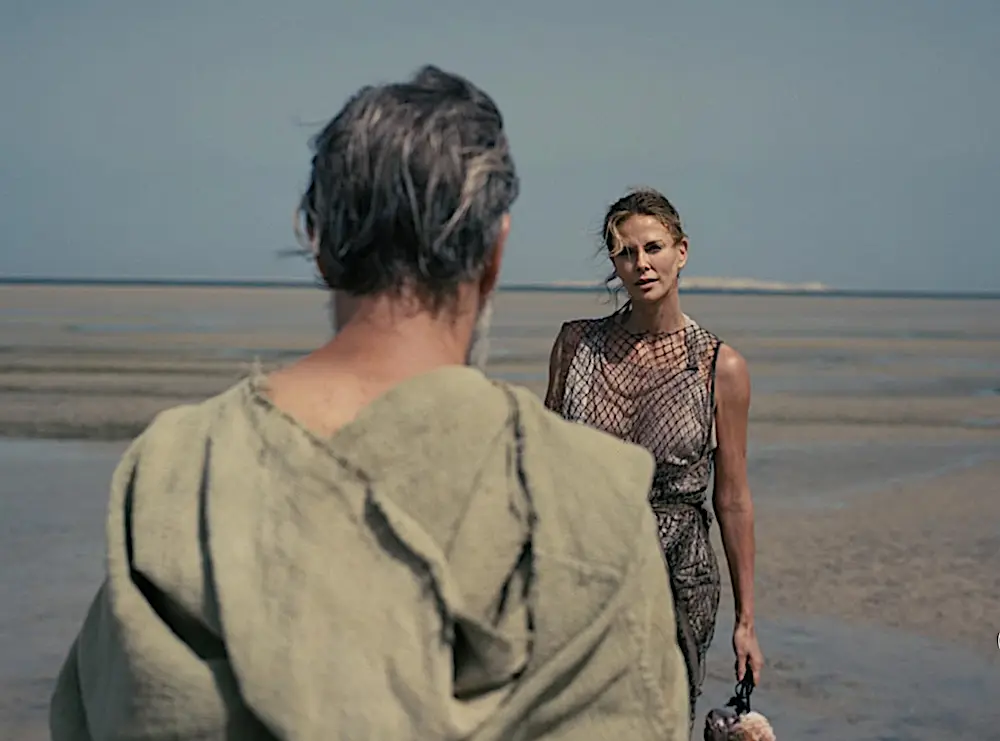
Odysseus (Matt Damon) has woken up from the spell of Calypso (Charlize Theron) and wants to go home, in "The Odyssey." (Universal Pictures)
Odysseus (Matt Damon) has woken up from the spell of Calypso (Charlize Theron) and wants to go home, in "The Odyssey." Universal Pictures

One of the missing episodes that I would have liked to have seen was Aeolus, where the Wind King gifts Odysseus a bag containing all the world’s winds. His curious crew opens the bag, and in so doing, after many years at sea, the fierce winds blow them all the way back to Troy.
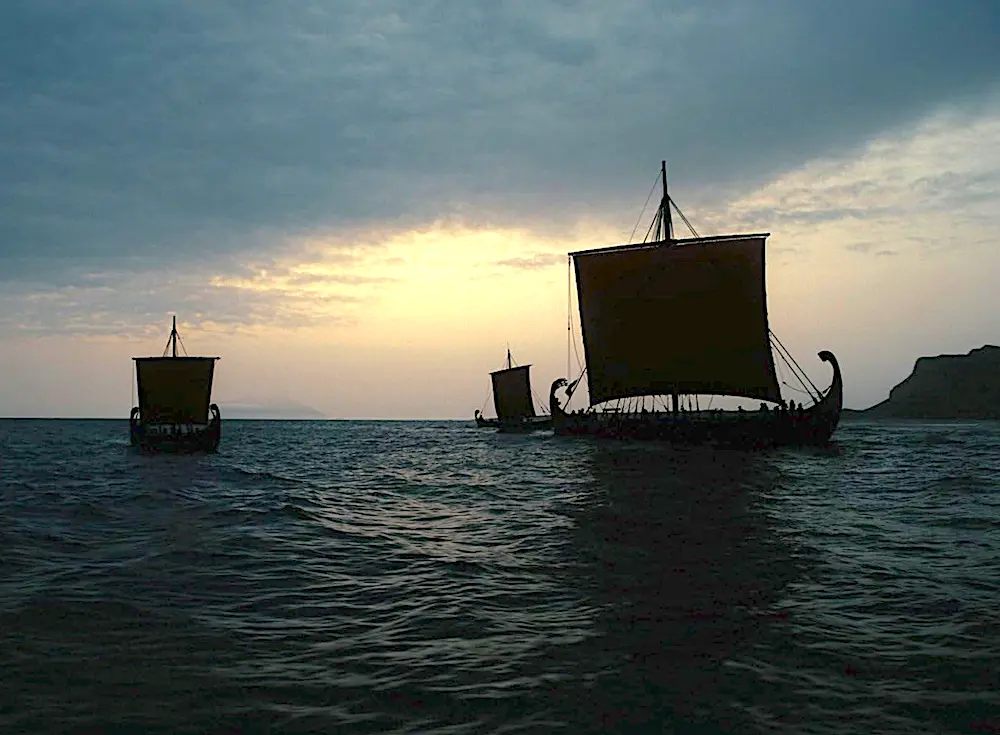
Odysseus's main ship and two smaller ships heading home, in "The Odyssey." (Universal Pictures)
Odysseus's main ship and two smaller ships heading home, in "The Odyssey." Universal Pictures

“The Odyssey” is the number-one Western tale of spiritual enlightenment (followed closely by Tolkien’s “The Lord Of The Rings”), and the return home to Ithaca is a metaphor for returning to one’s heavenly origin.

Traditionally, on the spiritual journey, the path of moral refinement narrows to a razor’s edge. One has to bottle up one’s thoughts. Even a minor mental indulgence of temptation can, like opening up the Wind King’s gift of already-bagged winds, cause one to get violently blown off course. Blown all the way back to the beginning of the spiritual journey, necessitating one to start all over again.

Performances

“The Odyssey” is yet another cinematic masterpiece from acclaimed filmmaker Nolan. It’s sweeping in scale, with his trademark touches of visceral cinematography, a pulsating score, and a well-told and well-enacted story. It’s close to three hours of riveting viewing.
As the battle-weary protagonist fighting the will of treacherous gods in his journey home, Matt Damon gives one of his best-ever performances.
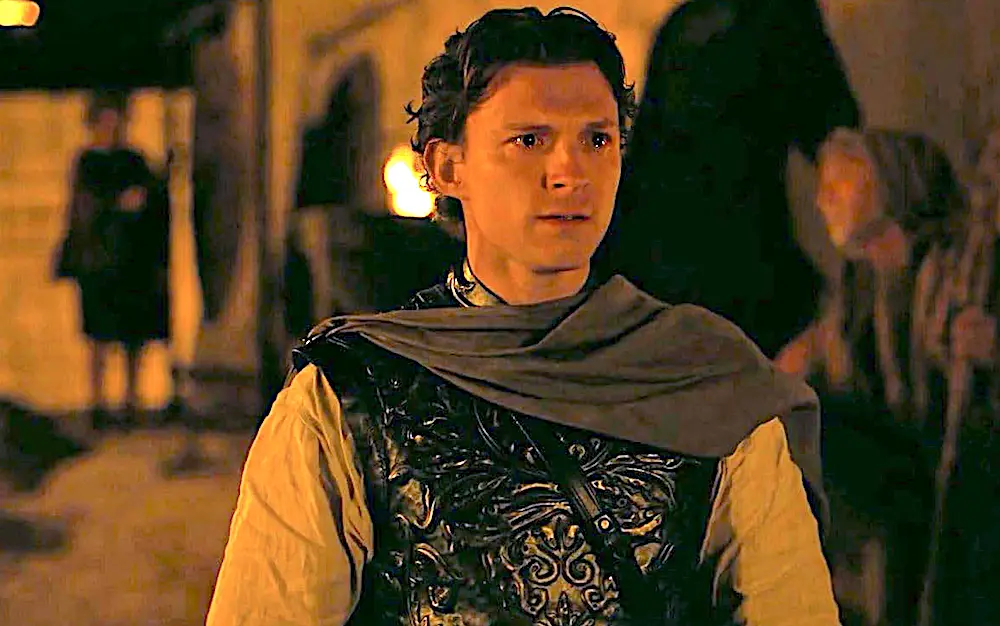
Telemachus (Tom Holland) faces a hall full of his mother's hostile suitors, who are angling for the throne of the long-gone Odysseus, in "The Odyssey." (Universal Pictures)
Telemachus (Tom Holland) faces a hall full of his mother's hostile suitors, who are angling for the throne of the long-gone Odysseus, in "The Odyssey." Universal Pictures

Tom Holland as Odysseus’s son Telemachus is perhaps a bit lightweight; would have liked to see the more smoldering version Timothée Chalamet would have contributed. This is especially so since Chalamet’s “Henry V” scenes with Robert Pattinson as The Dauphin were brilliant, and Pattinson here plays the execrable Antinous, main suitor to Odysseus’s wife Penelope (Anne Hathaway).
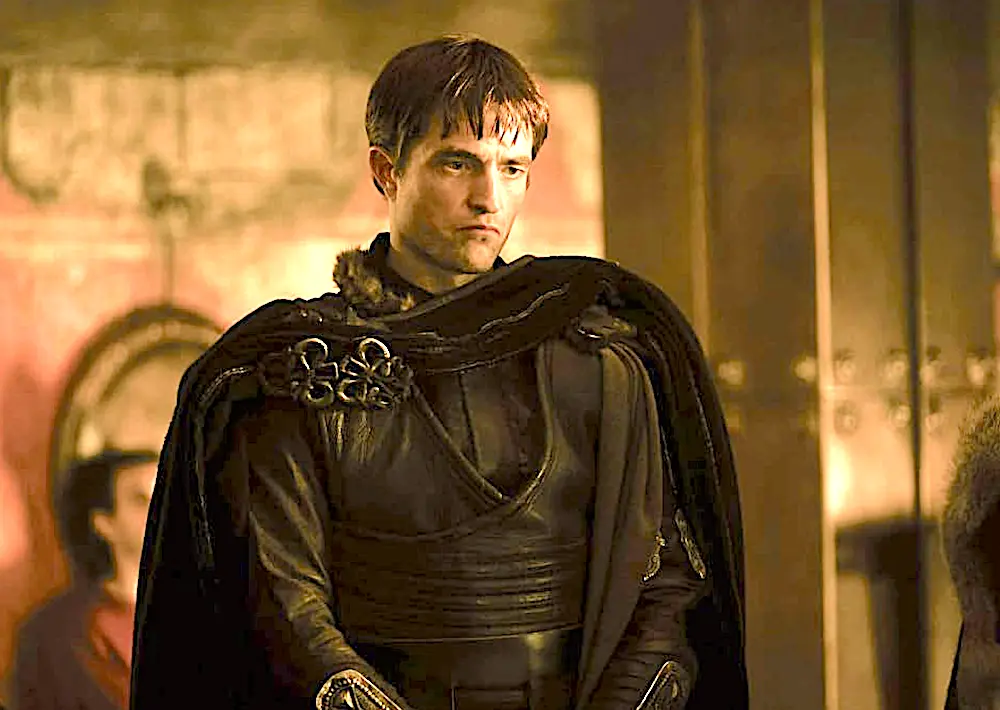
Antinous (Robert Pattinson), the most unctuous, cunning, and persistent of Penelope's suitors, in "The Odyssey." (Universal Pictures)
Antinous (Robert Pattinson), the most unctuous, cunning, and persistent of Penelope's suitors, in "The Odyssey." Universal Pictures

Hathaway herself knocks it out of the park as the wife who weaves Odysseus’s death shroud all day, and unravels it at night, as to avoid having to choose a new husband.
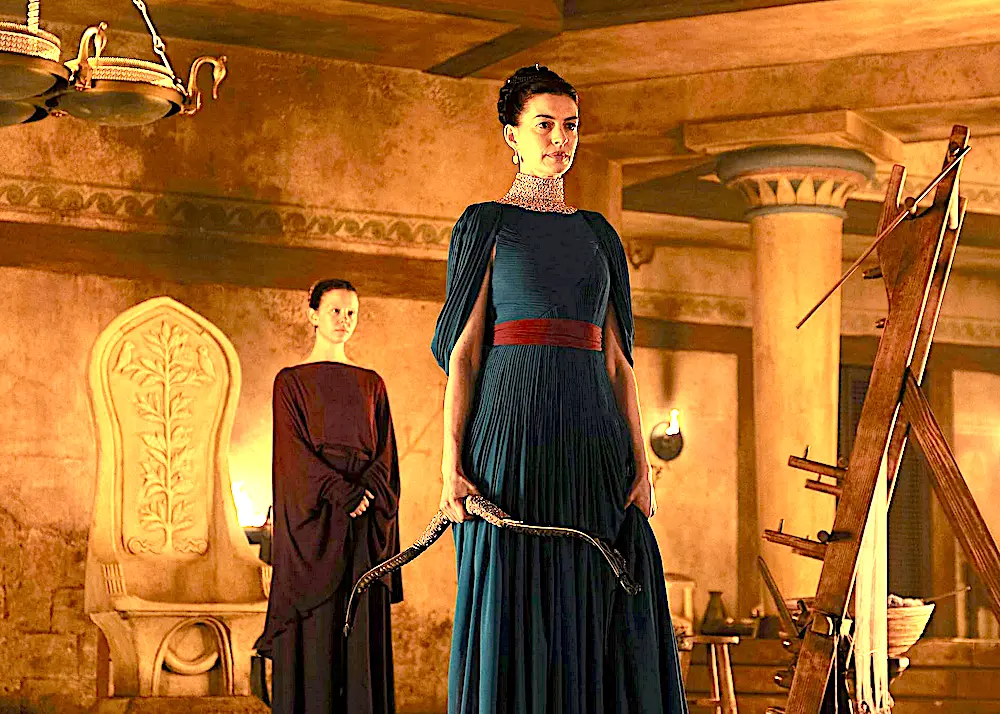
Odysseus’s wife Penelope (Anne Hathaway, center) declares she will marry the suitor who can string the bow of  her husband, in "The Odyssey." (Universal Pictures)
Odysseus’s wife Penelope (Anne Hathaway, center) declares she will marry the suitor who can string the bow of  her husband, in "The Odyssey." Universal Pictures

Conclusion

The return to Ithaca was actually better depicted in Ralph Fiennes’s recent turn as Odysseus in “The Return.” As mentioned, Damon does an outstanding job, but this is more his wheelhouse—he’s got more history playing heroic characters (Jason Bourne). Fiennes plays effete, often evil characters, so to see Fiennes turn his non-athletic body into an impressive ancient spec ops Greek warrior and sell the complicated fight-choreography was to see real dedication and commitment to the craft.
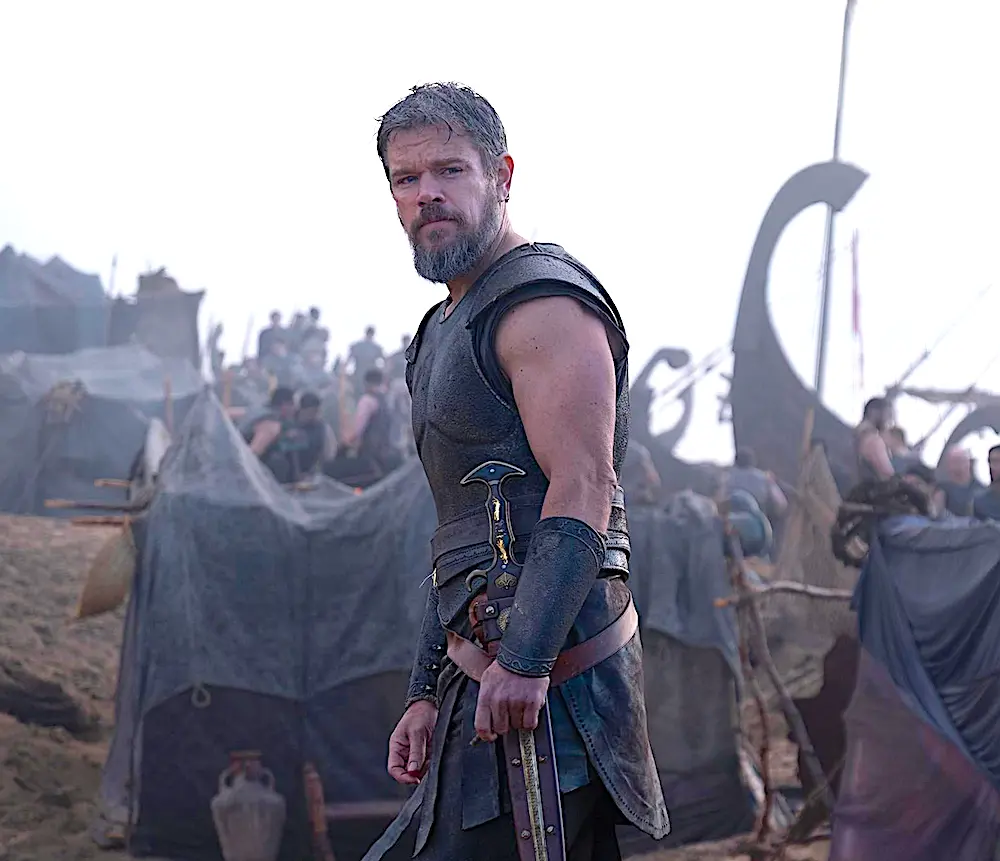
Odysseus (Matt Damon), the smartest of all the heroes, in "The Odyssey." (Universal Pictures)
Odysseus (Matt Damon), the smartest of all the heroes, in "The Odyssey." Universal Pictures

My greatest takeaway from Nolan’s “The Odyssey” was the suggestion that Odysseus was responsible for the downfall of Greek civilization. I’d not heard that angle before. It’s argued thusly: By using the Trojan horse ruse, the Greeks violated father God Zeus’s law—the law of hospitality.
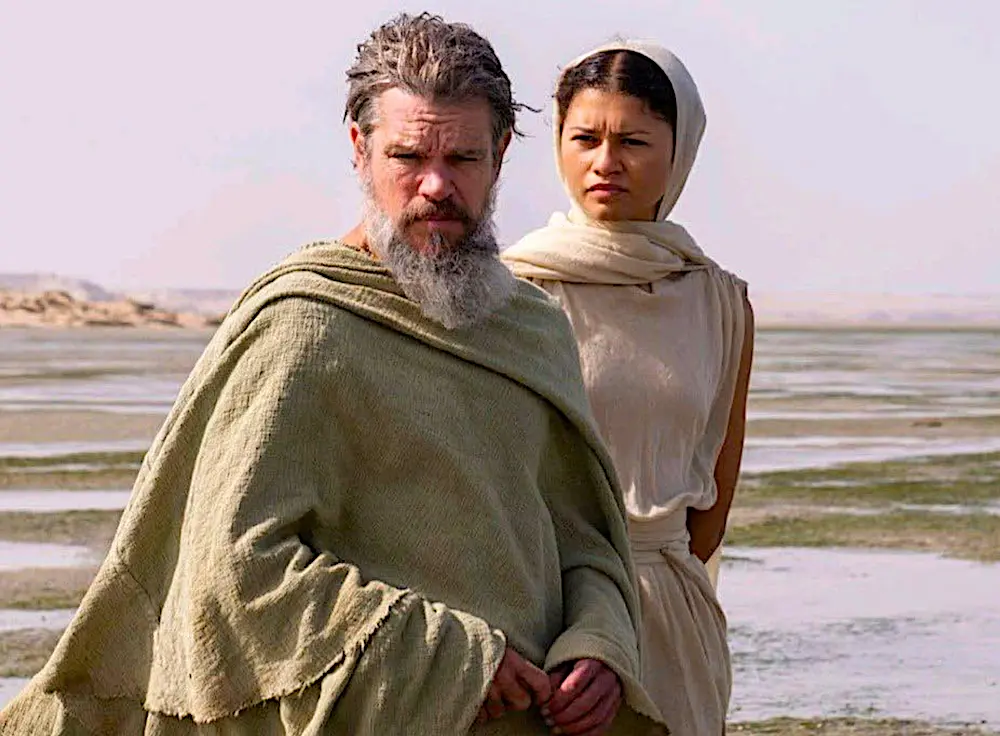
Odysseus (Matt Damon), remembering who he is, with the help of goddess Pallas Athena (Zendaya), in "The Odyssey." (Universal Pictures)
Odysseus (Matt Damon), remembering who he is, with the help of goddess Pallas Athena (Zendaya), in "The Odyssey." Universal Pictures

The Greek army presented it as a gift in surrender and acknowledgment of the prowess of Troy—and lied. And that was a big deal. It tore the fabric of the Greek moral law and heralded the decline of the power of the Greek gods. Like the old-force gods before them, the Titans, the Greeks would go into decline, first morphing into their Roman versions, and then fading completely, to make way for Christianity. “The Odyssey” gets one thinking about such things.
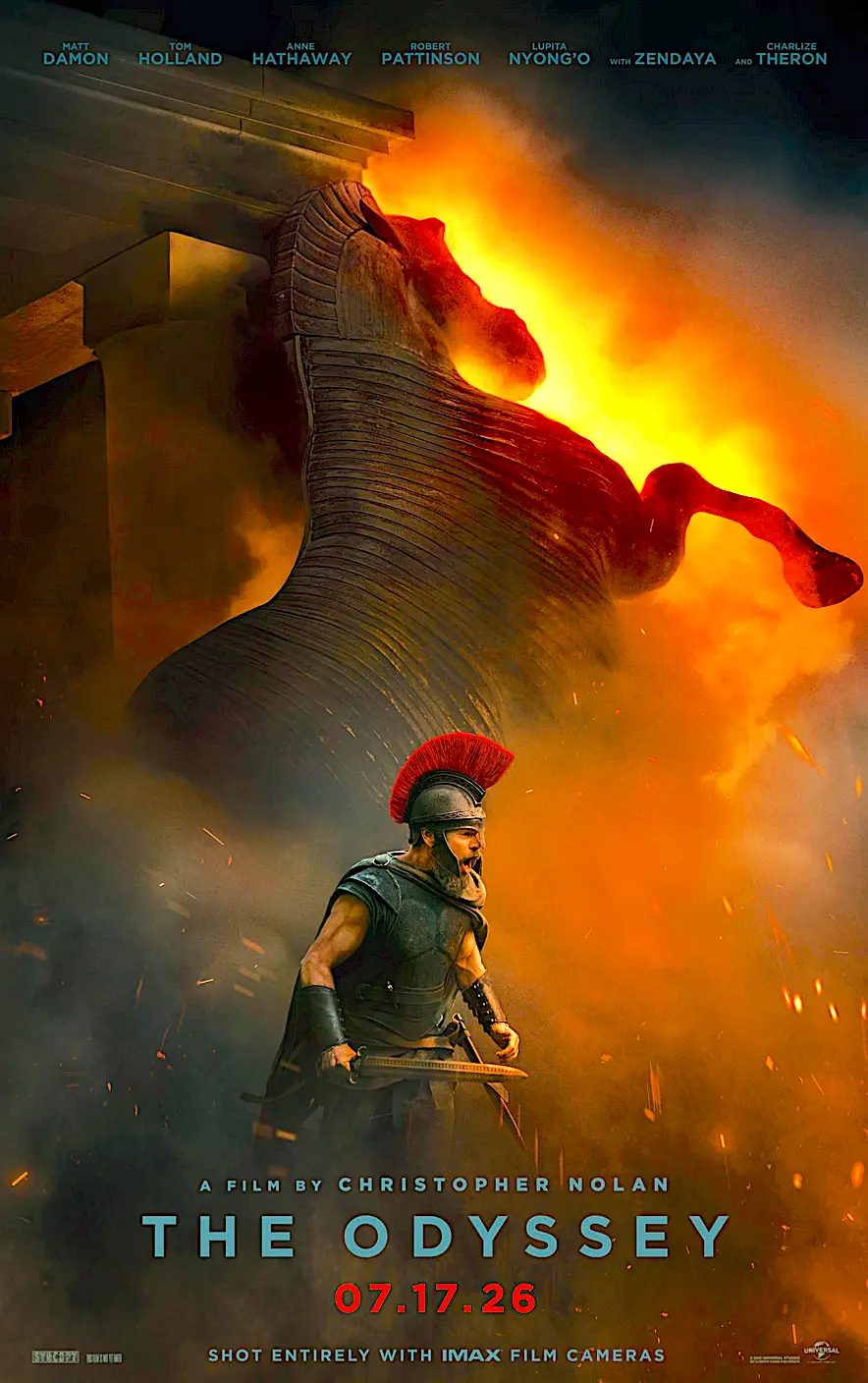
“The Odyssey” is set to release in cinemas on July 17.
Promotional poster for "The Odyssey." (Universal Pictures)
Promotional poster for "The Odyssey." Universal Pictures
‘The Odyssey’ Director: Christopher Nolan Starring: Matt Damon, Anne Hathaway, Tom Holland, Zendaya, Charlize Theron, Lupita Nyong’o, Robert Pattinson Running Time: 2 hours, 52 minutes Release Date: July 17, 2026 Rating: 4 stars out of 5
Would you like to see other kinds of arts and culture articles? Please email us your story ideas or feedback at [email protected].
Google LogoMark Us Preferred on Google
Mark Jackson
Mark Jackson
Film Critic
Mark Jackson is the senior film critic for The Epoch Times and a Rotten Tomatoes-approved critic. Mark earned a bachelor's degree in philosophy from Williams College, followed by classical theater conservatory training, and has 20 years' experience as a New York professional actor. He narrated The Epoch Times audiobook "How the Specter of Communism Is Ruling Our World," available on iTunes, Audible, and YouTube. Mark is featured in the book "How to Be a Film Critic in Five Easy Lessons" by Christopher K. Brooks. In addition to films, he enjoys Harley-Davidsons, rock-climbing, qigong, martial arts, and human rights activism.