‘Flag Day’: How Small-Town America Shows Big Love for This Country

One indie film flies the red, white, and blue in a show of great patriotism.
‘Flag Day’: How Small-Town America Shows Big Love for This Country
Horseback flag-bearers in the Flag Day parade, in "Flag Day." Shea Productions
Mark Jackson
Mark Jackson
Film Critic
|Updated:
0:00

Not Rated | 1h 15m | Documentary | 2026

If you want to show foreigners or extraterrestrials what the United States of America is all about—have them watch “Flag Day.”

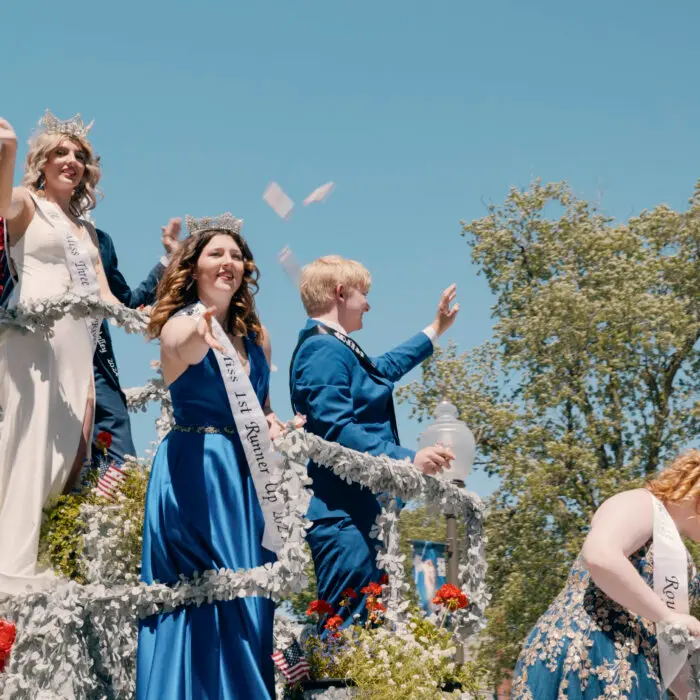
Beauty pageant contestants in the Flag Day parade, in "Flag Day." (Shea Productions)
Beauty pageant contestants in the Flag Day parade, in "Flag Day." Shea Productions

Filmmakers Andrew and Melissa Shea showcase, in cinema vérité style, Three Oaks, Michigan’s 74-year tradition—the town is home to the largest Flag Day parade in the world.

What’s ‘Flag Day’?

Flag Day (June 14) is the date when, in 1777, the Stars and Stripes was adopted by the Second Continental Congress. It’s obviously hugely overshadowed by July Fourth and Juneteenth. It’s still a major affair in Three Oaks, although, as one auto mechanic notes—that used to mean a lot more before Google. Google informs us that there aren’t a lot of Flag Day celebrations in America anymore, which means Three Oaks’s celebration is a big-fish-in-a-small-pond situation.
The documentary follows a few residents, but specific storytelling is not the objective. “Flag Day” is literally and figuratively a flag-waving and heartwarming documentary about quintessential Small Town, USA, and Anytown, Main Street, USA, with an all-Americana soundtrack. Will John Mellencamp’s “Small Town” make an appearance in the lineup? Of course it will.

Attendees

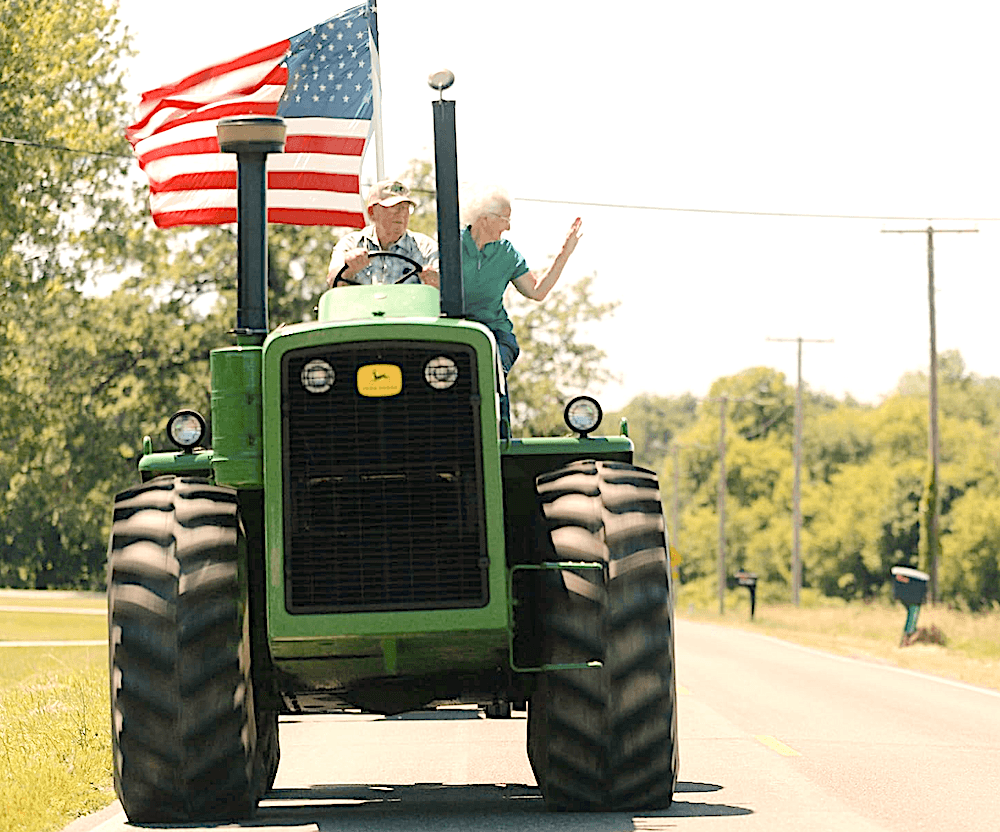
The local tractor club comes rolling in for the Flag Day parade, in "Flag Day." (Shea Productions)
The local tractor club comes rolling in for the Flag Day parade, in "Flag Day." Shea Productions
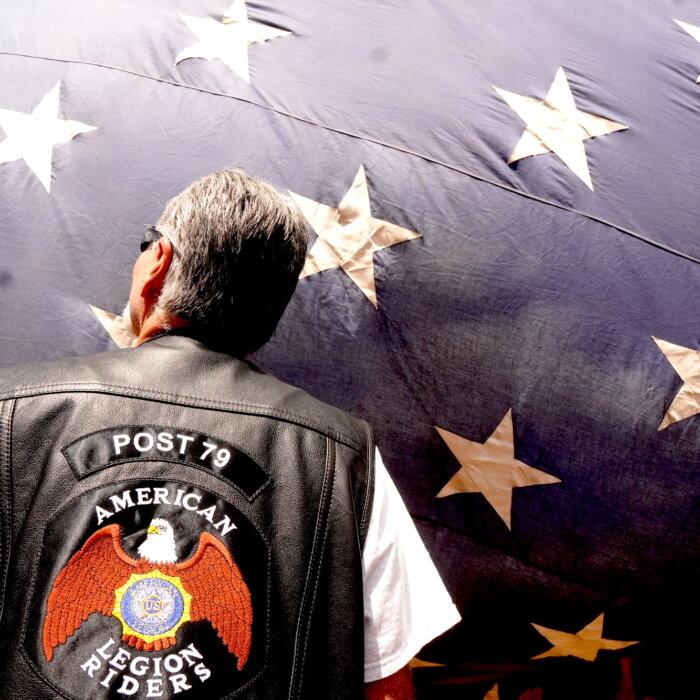
You’ve got your local auto mechanics, farmer-run tractor clubs, a high school drum corps from a nearby town, Three Oakss River Valley high school beauty pageant contestants, and military vet-bikers, who, it must be said, make no secret of the fact that they are going to enjoy ogling those contestants.

Everyone participates variously: joining the tractor line, building floats, working on costumes. One second grader tells her teacher her favorite part is marching down the street and giving out candy to people who don’t have any candy.

Three Oaks residents are interviewed; high schoolers joke about all being possibly related to each other, and the inevitable small-town reality is sliced-and-diced—everyone knows everyone else’s business. Three generations of Three Oaks residents were driven to school by the same bus driver.

The high school beauty queen has a rule about only dating boys outside the township in order to preclude her mom from hearing all her relationship particulars from neighbors. Local farmers are now in their fifth generation, doing the same work their forefathers did, except they now consider it “hobby farming” since it’s not really possible to make a living from it anymore.

Modern Sensibilities

Watching a film like “Flag Day” these days is an unusual occurrence; it overflows with positivity, making one suspicious that the other shoe is about to drop. We’ve been conditioned by all-invasive algorithmic social media to expect divisive, disillusioning, Debbie-Downer info that details the state of our dissolving nation.
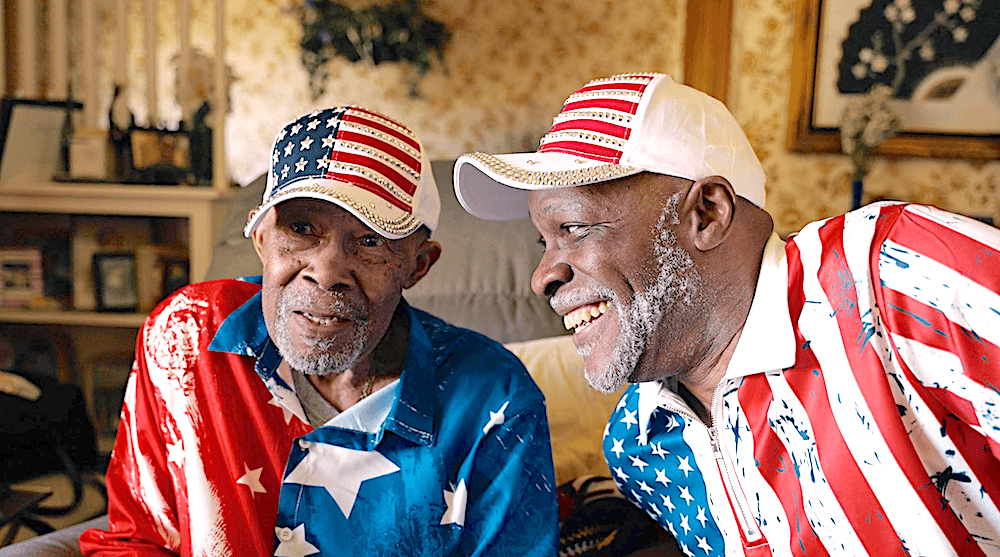
Father and son Albert Brayboy Sr. and Albert Brayboy Jr. being interviewed about what the Flag Day parade means to them, in "Flag Day." (Shea Productions)
Father and son Albert Brayboy Sr. and Albert Brayboy Jr. being interviewed about what the Flag Day parade means to them, in "Flag Day." Shea Productions

Watching the film might feel a bit like the staged and disingenuous displays organized by communist countries for visitors—as if the heartwarming community camaraderie doesn’t occur naturally and on a regular basis.

It’s the news outlets residing on the East and West coasts that are predominantly responsible for promoting and perpetuating the illusion that the entire nation is hand-wringing about gender issues, systemic racism, veganism, and climate change.
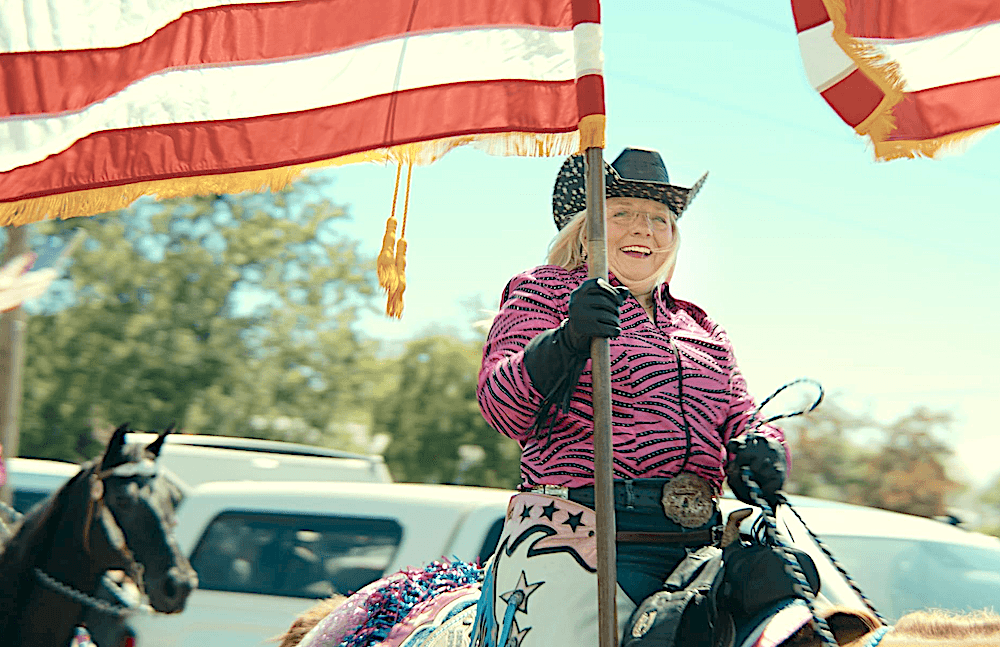
Maddie Borton, a member of the precision equestrian drill team, known as the Drum & Surf Drill Team, in "Flag Day." (Shea Productions)
Maddie Borton, a member of the precision equestrian drill team, known as the Drum & Surf Drill Team, in "Flag Day." Shea Productions
Similarly, the negatives regarding small-town life, as sometimes depicted in movies, are missing—the point where everyone knowing everyone’s business tips over into vicious gossip, and the collective circling of the wagons against particular kinds of people. These are also press-perpetuated views; racism and such issues exist more in New York and Los Angeles now than they do in Small Town, America. The rosy, touching picture painted by “Flag Day” is the real America. The press also likes to sweep under the rug that small-town folks are largely churchgoers and actively cultivate positivity.

Takeaway

“Flag Day” is likely best enjoyed by those who either grew up in small towns or live in big cities and yearn for the sense of community small towns offer. The goal of “Flag Day” is to reminisce about America’s small-town community and patriotism and wonder if it still matters. Clearly, it does.

With the state of the world today, it’s kind of a no-brainer. “Flag Day” is a good way to reflect on the American way—the way the Founding Fathers imagined it—as the United States celebrates its 250th anniversary, this July 4.
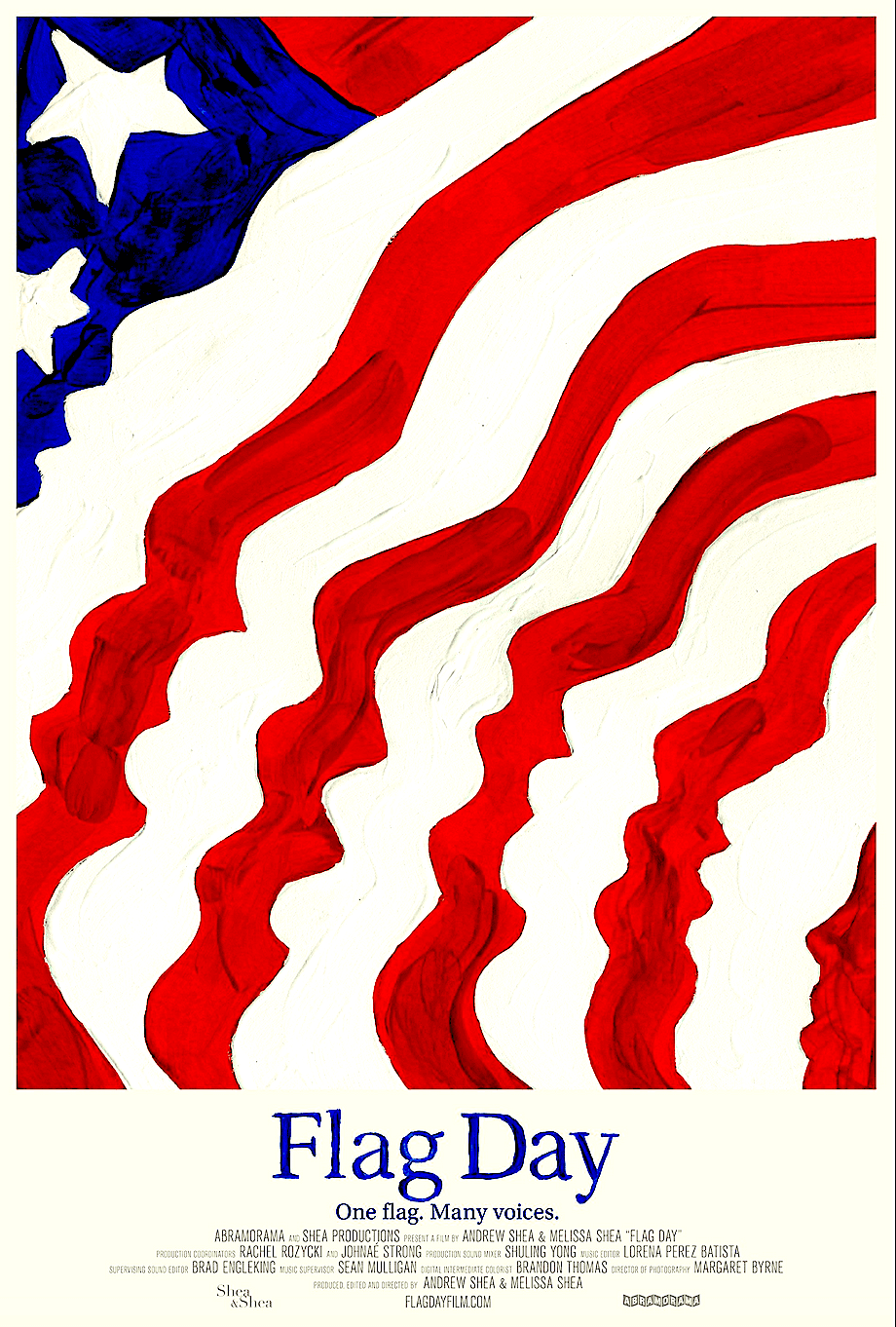
Promotional poster for "Flag Day." (Shea Productions)
Promotional poster for "Flag Day." Shea Productions
‘Flag Day’ Documentary Directors: Andrew Shea and Melissa Shea Running Time: 1 hour, 15 minutes Not Rated Release Date: June 12, 2026 Rating: 3 1/2 stars out of 5
Would you like to see other kinds of arts and culture articles? Please email us your story ideas or feedback at [email protected]
Google LogoMark Us Preferred on Google
Mark Jackson
Mark Jackson
Film Critic
Mark Jackson is the senior film critic for The Epoch Times and a Rotten Tomatoes-approved critic. Mark earned a bachelor's degree in philosophy from Williams College, followed by classical theater conservatory training, and has 20 years' experience as a New York professional actor. He narrated The Epoch Times audiobook "How the Specter of Communism Is Ruling Our World," available on iTunes, Audible, and YouTube. Mark is featured in the book "How to Be a Film Critic in Five Easy Lessons" by Christopher K. Brooks. In addition to films, he enjoys Harley-Davidsons, rock-climbing, qigong, martial arts, and human rights activism.