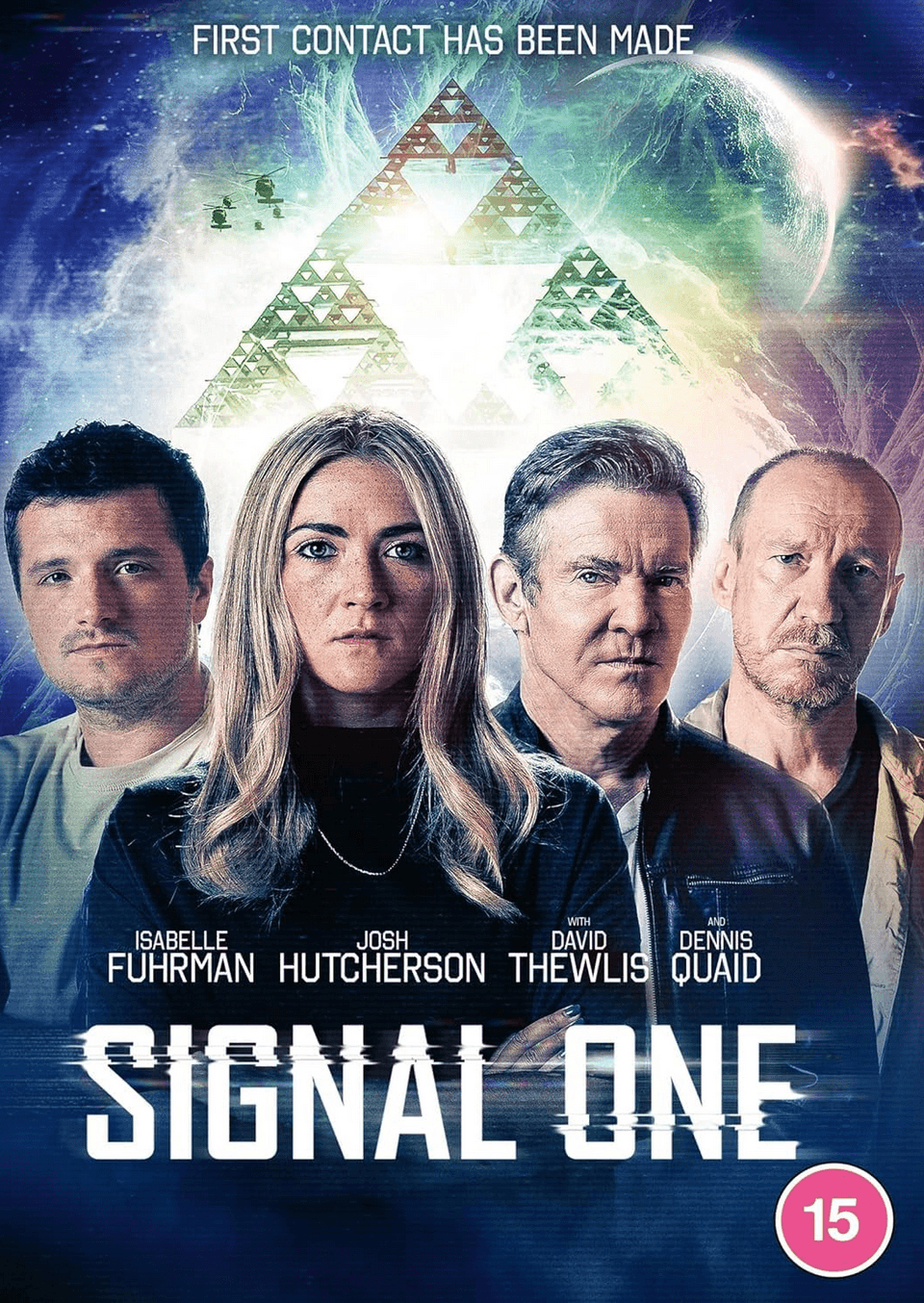
Unrated| 1h 27m | Sci-Fi, Thriller | 2026
Brilliant young computer scientist Dr. Annika Kask (Isabelle Fuhrman)—an astronomy and space exploration buff since childhood—has already made her bones in the science world by becoming the first person to photograph dark matter. (NASA describes dark matter as “the invisible glue that holds the universe together.”)
Tech billionaire Sam Houston (Dennis Quaid) makes Dr. Kask an offer she can’t refuse—she simply must come and work for him on a top-secret project, on his private Caribbean island. His pitch includes the line: “You can forget about your little green men, fishing for radio waves, and hunting for a needle in a haystack—because I’m here to tell you that the whole haystack is made out of needles.”
Nonscientist Sam, like artistic patrons of yore, is investing big bucks to ensure that his legacy includes his name being stamped on (potentially) history-changing scientific projects.
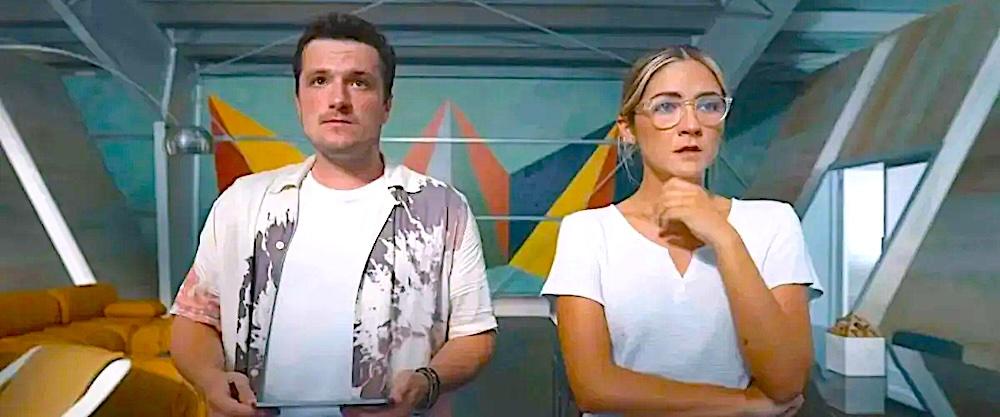
Kask naturally chooses to accept and is well met en route by self-described electronics engineer and fellow wunderkind Charlie Kaminsky (Josh Hutcherson). As Annika points out: “Charlie Kaminsky saying he’s an electronics engineer is like Stephen Hawking saying he teaches math.”

Theories Abound
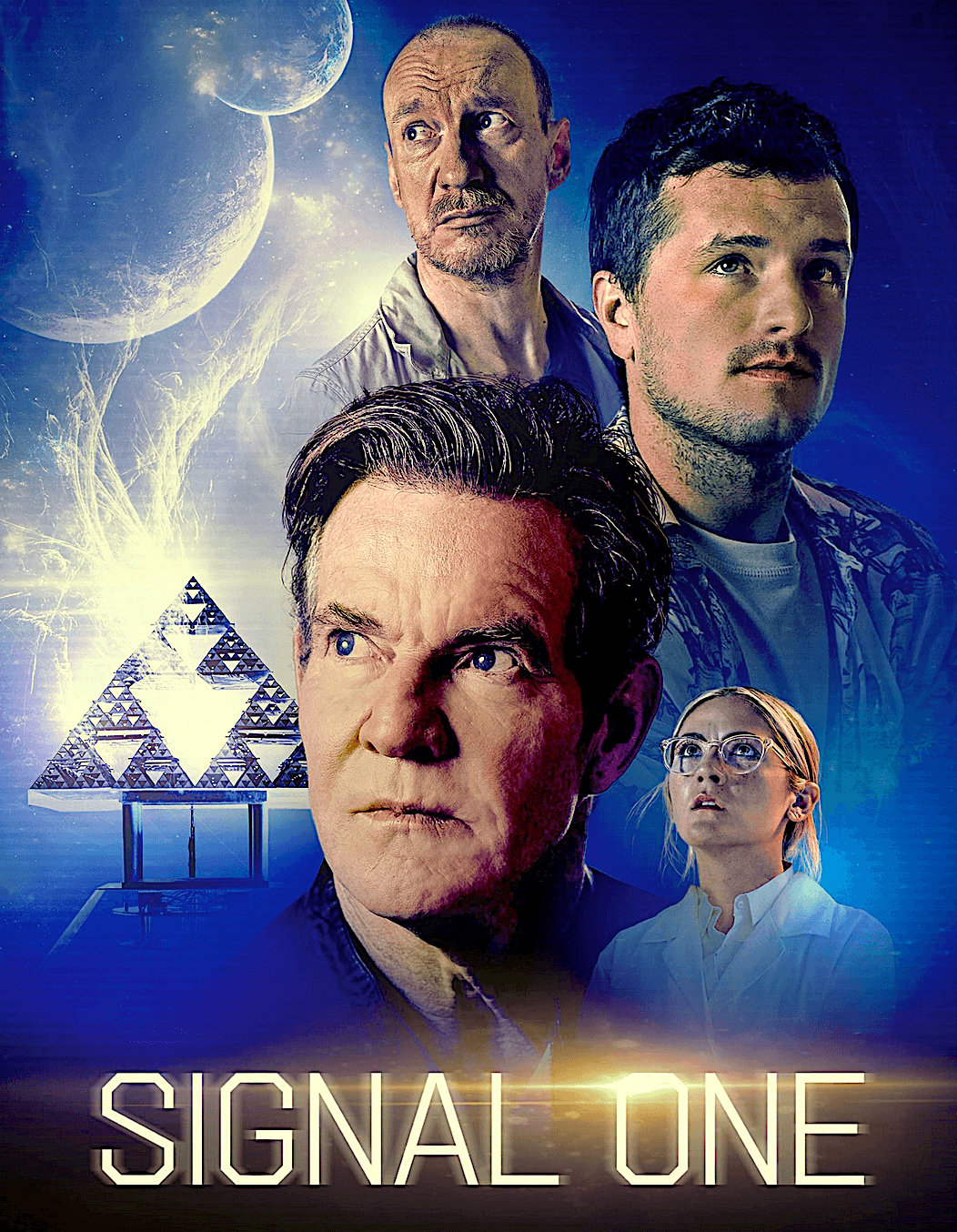
The two whiz kids have actually been brought on board to assist genius-level quantum physicist Perry Glassner (David Thewlis). He invented, in his garage (and “on a lot of amphetamines”), a pyramid-shaped device called “Littlemouth,” which is intended to facilitate quantum communication with non-earthly lifeforms in the cosmos.Glassner’s a stereotypically unbalanced intellectual prodigy; he’s rude, snide, depressed, rage-prone, and nihilistic, but attempting admirably to care for his only daughter. His rant about humanity is that we are, more or less, petty, cruel, prone to self-destruction, and hell-bent on resource-depleting our habitat into extinction.
His response to the naysayers who insist that if intelligent life existed out there in the vast blackness of space, our decades of searching via radio equipment would’ve yielded proof: “It’s like taking a little bowl of water out of the ocean and peering into it and concluding that whales don’t exist.”
Engineer Charlie’s enthusiastic pet theory is that humanity’s future is post-biological. The endgame for homo sapiens is eventually being able to transcend our biology with the means to manufacture superior artificial limbs, eyes, and so on.

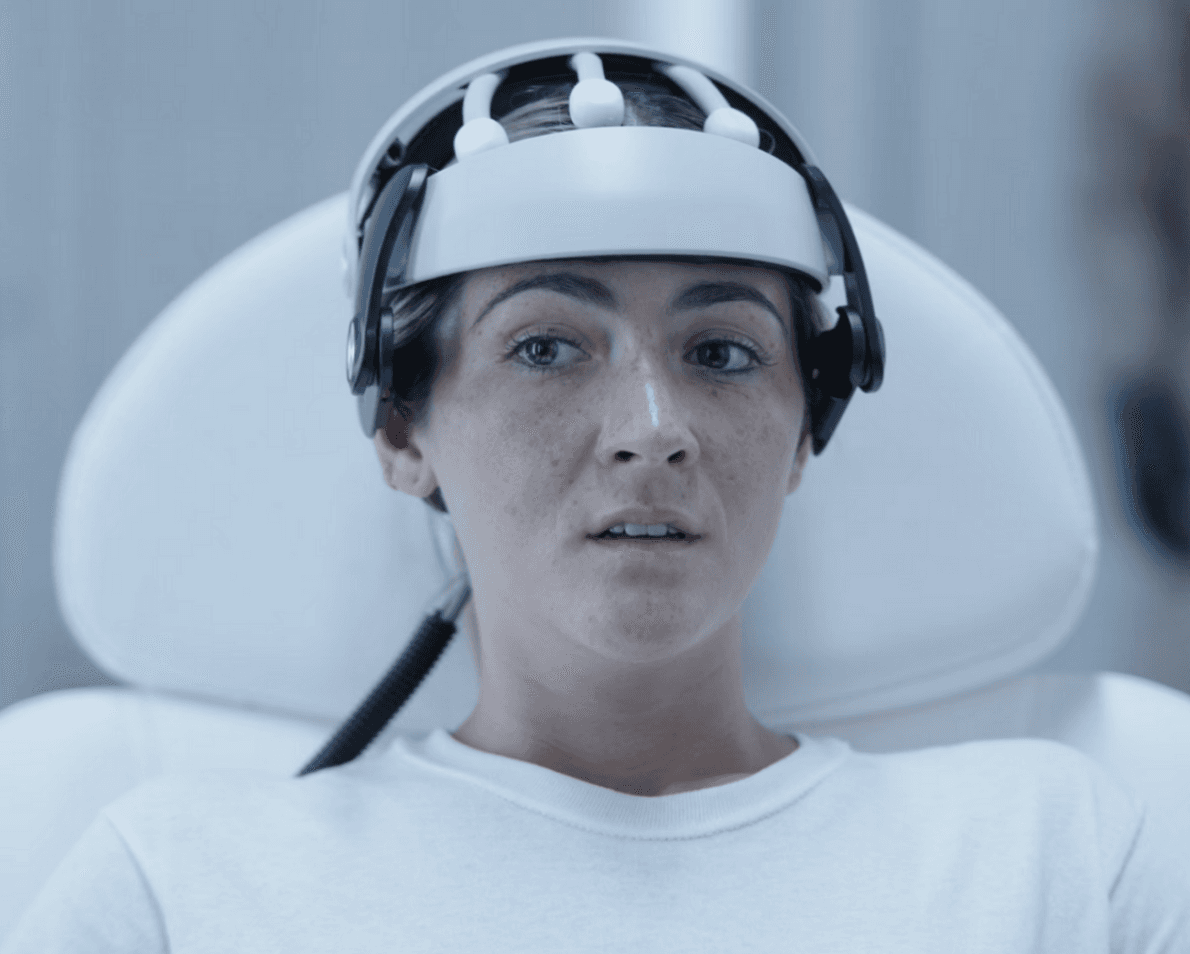
Annika’s theories—and her single-mindedness for her profession—are generated by a tragic backstory involving the childhood death of her little sister. The ordeal left her with an abiding sense of life’s inherent fragility. She rhetorically asks Charlie whether he thinks excellent artificial limbs and the like will be able to completely erase human suffering.
While “Signal One” is mostly conversations between “rocket scientists” about evolution and astrophysics (while monitoring data on screens), and Glassner’s rageful nihilism is the main source of dramatic tension throughout, the questions posed are still far more intriguing than anything on display in “Disclosure Day.” If you like that sort of thing, of course.
To Say Hello or Not to Say Hello: That Is the Question
While the movie’s opening quote by H.G. Wells—“We must remember that the universe is inherently hostile”—turns out to be a common misattribution, it sets up a sense of dread about what the outcome will be once alien life has been successfully contacted.The three men want to pull the trigger. Obviously, Glassner does, since he built the device in the first place with the explicit intention of communicating with these entities, but he’s counting on the aliens ignoring humanity’s efforts to contact them.
Sam’s not considering contact ramifications due to legacy narcissism, and Charlie’s just a happy-go-lucky young scientist seeing an intriguing experiment, dying to give it a whirl, and hoping for the best.
Conclusion
“Signal One” is more thought-provoking than entertaining. It’s a smart film that raises big questions about human nature, the purpose of scientific discovery, and who gets to decide when it’s a good time to cold-call another celestial species. And will the contacted beings turn out more “War of the Worlds” than “E.T.”?“Signal One” eschews easy tropes and is also wise enough not to try to provide concrete answers. It’s more confrontational than escapist; it doesn’t want you to turn your brain off, it wants you to think. It’s a safe bet that the “memorable quotes” section of its Internet Movie Database (IMDb) page will fill up quickly.