NR | 2 h 4 min | Drama | 1943
Since the early 20th century, the world’s vastly improved understanding and use of radiation has transformed several fields, from medical imaging and cancer therapy to atomic energy.
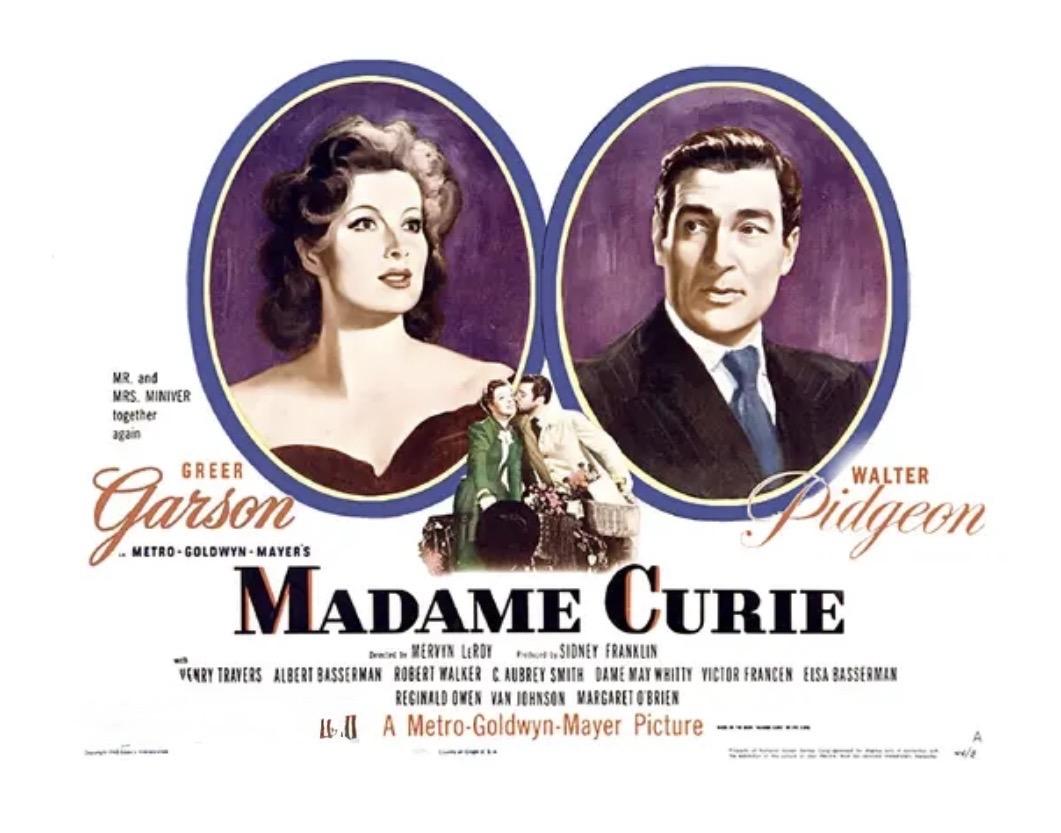
The heavily fictionalized biopic, “Madame Curie,” traces that back to the pioneering 19th-century discovery and study of radium and radioactivity by scientist Marie Curie, and her husband and colleague, Pierre.
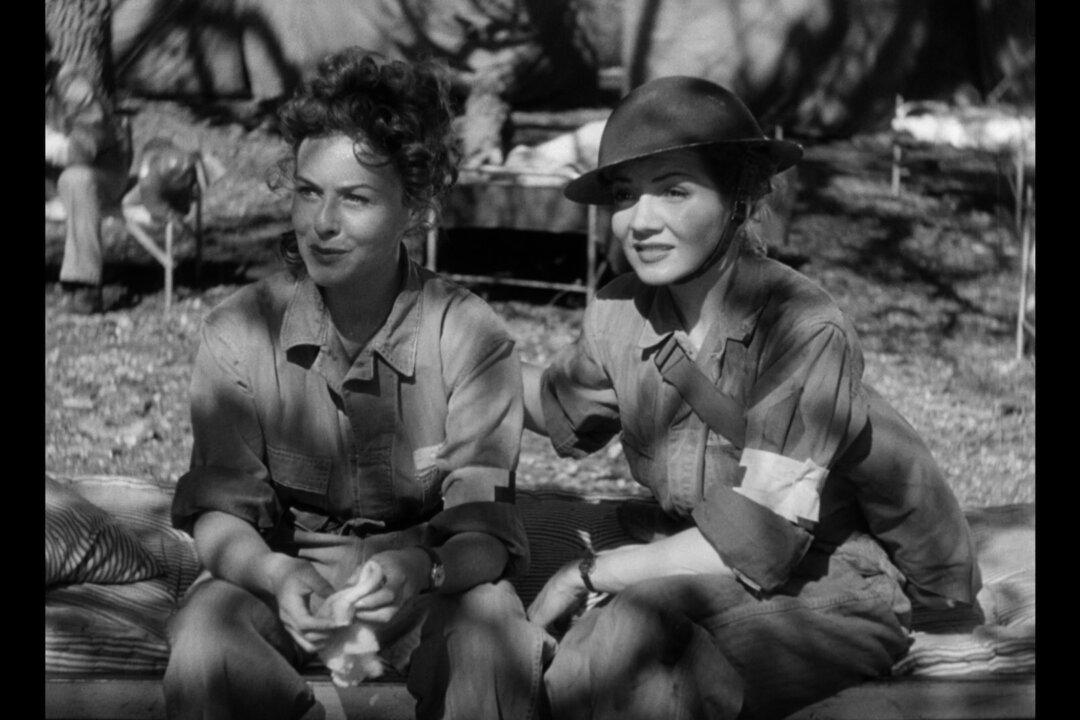
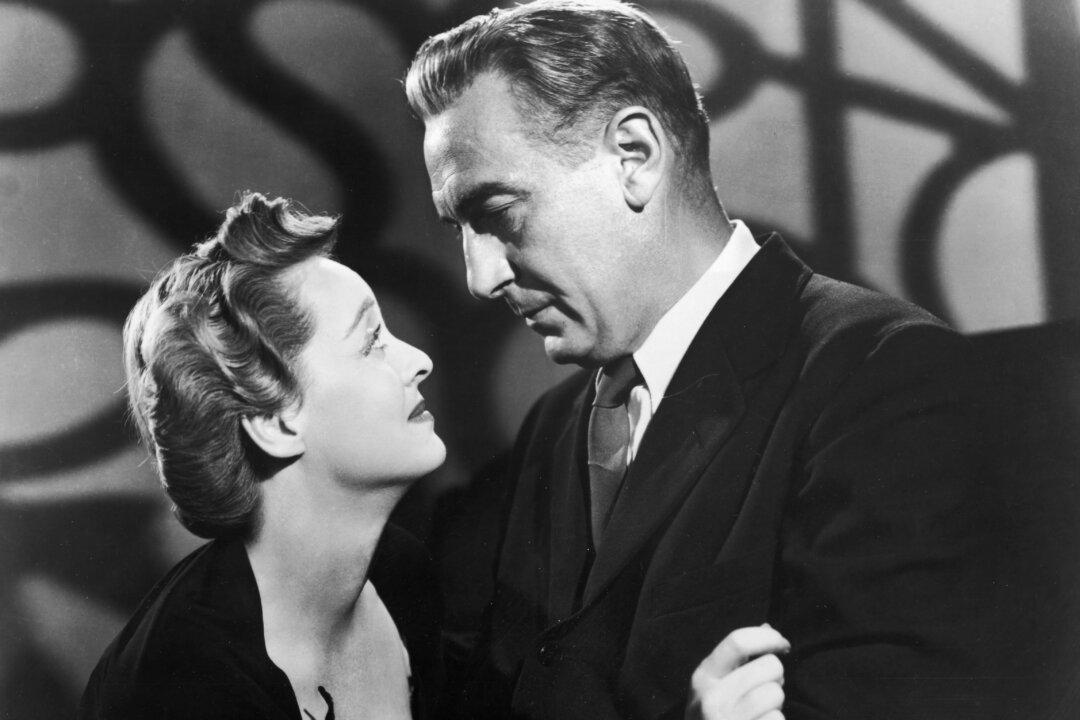
Impoverished Polish student of physics, chemistry, and mathematics, Marie Sklodowska (Greer Garson) excels at Paris’s University of Sorbonne. Finding her too reclusive for her own good, Prof. Jean Perot (Albert Bassermann) introduces her to a similarly shy, scientifically minded Frenchman, Dr. Pierre Curie (Walter Pidgeon). They conduct their respective experiments in Pierre’s lab.
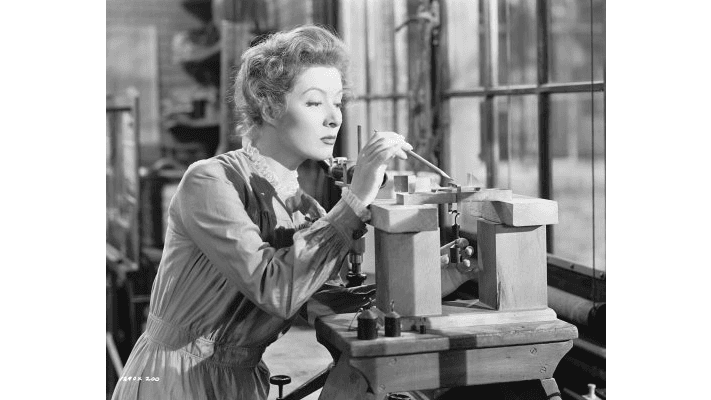
Intrigued by Dr. Henri Becquerel’s (Reginald Owen) discoveries, Marie becomes engrossed in examining how pitchblende gives off rays even independent of the sun. Pierre starts to share her obsession. Lab work blossoms into love, then marriage. Marie gives up her dream of returning to Poland to teach and stays in Paris.
Together, they brave the scientific establishment’s prejudice against women leading scientific discovery. Marie braves potentially cancerous burns from prolonged radiation exposure. Through a back-breaking process of trial and error, she discovers a new element: radium.
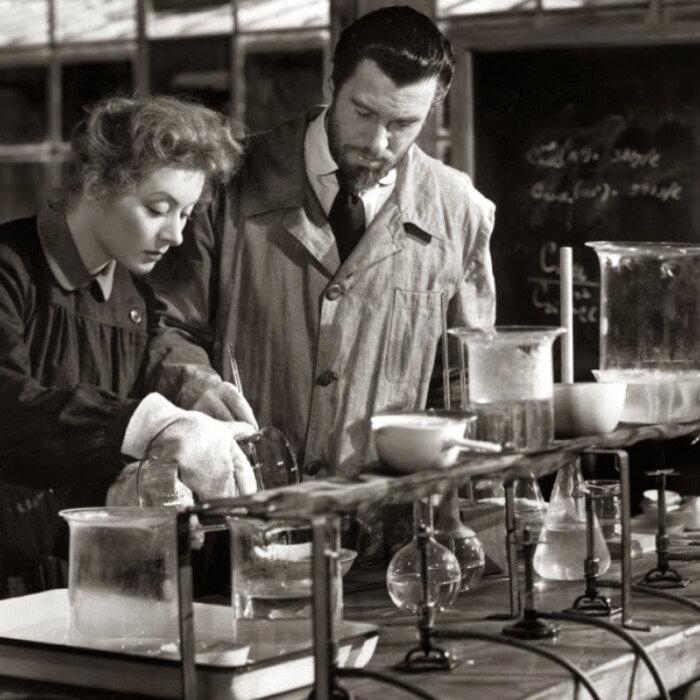
After four years, having started by processing eight tons of pitchblende, the couple runs over 5,000 sequences of crystallization, distilling out element after element, before isolating radium. They then start to unlock the phenomenal power of radiation.
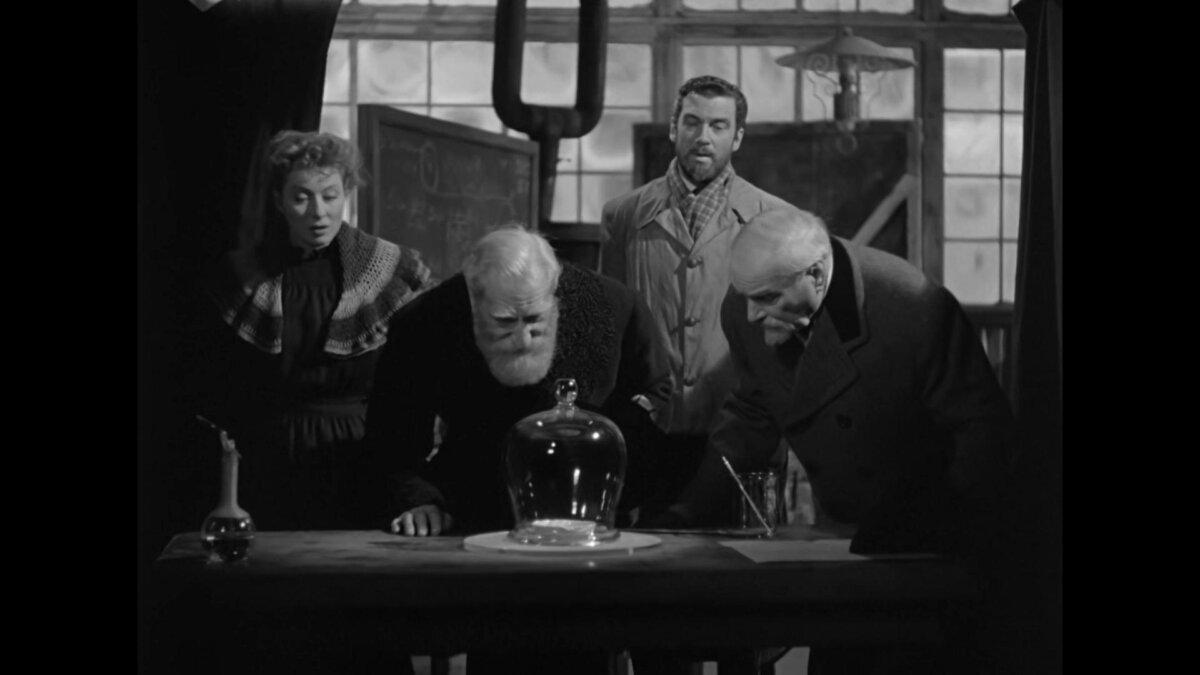
Director Mervyn LeRoy understands the laboratory is a lonely place, prone to silence and seriousness, and wary of impetuousness. Its unglamorous setting, tuned to repeated failure and only rare success, is perfect for the studious, even the socially awkward. Sensitively, he shows how Marie and Pierre, hiding themselves in work, end up finding each other.
Respect and Warmth
Does LeRoy overdo the romance? Perhaps. But he rightly intuits that had there not been a deep bond of respect and warmth between the real-life duo, they couldn’t have collaborated as effectively as they did. He even allows a tinge of humor to lighten the otherwise abidingly grim mood.Once, while toiling away in his dank, drab lab, Pierre presents Marie with one of the first copies of his new book. But with the flourish he lends that gesture, he might as well be brandishing a bouquet.
Not to be outdone, Marie reacts as if admiring a fresh cut of flowers. Slowly, she reads out the book’s title: On Symmetry in Physical Phenomena, Symmetry of an Electric Field and of a Magnetic Field. Pierre’s face glows, as if he’s struck a home run.
Pidgeon brings his usual gravitas to this performance, reflecting Pierre’s admiration for his wife’s critical thinking, resourcefulness, and eagerness to learn from failure.
Garson and her famously upturned eyebrow carry the film by projecting Marie’s spirit of originality alongside her morbid self-doubt and simmering despair.
Nobel Scientist
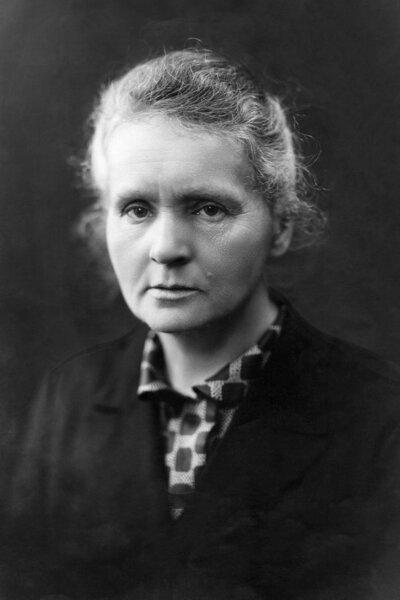
The real-life Marie was the first woman to win a Nobel Prize, the first person to win a Nobel twice, and the only person to win a Nobel in two distinct sciences: physics and chemistry. The Curies were the first duo to win a Nobel as a married couple.Marie refused to patent their discoveries so that the global scientific community could freely build on their research. Today, radioactivity is measured using the “curie” unit, named in their honor.
Why does she feel science possesses great beauty? It allows for seemingly inconsequential individuals to grasp an element of truth that, together with what others uncover, reveals a greater, higher truth.
Where does science’s “spiritual” strength lie? It lies in its power to cleanse the world of evils: ignorance, wars, poverty, disease.
In a plea to her audience of scientists that at once radiates power and humility, Marie urges them to do as she and Pierre had done their whole lives, “Look for the clear light of truth.”