NR | 1 h 54 min | Drama | 1943
“Watch on the Rhine” barely mentions the river Rhine. It doesn’t need to. That riverine reference in the title suffices. The Rhine’s banks straddled the World War II Nazi assault on the world, whether it was Germany’s infamous Remilitarization of the Rhineland that started it, or the Allied Rhineland Offensive that ended it.
But this film raises the bar by being set not in troubled Germany or elsewhere in turbulent Europe, but in tranquil America. It asks not only what Europeans will do about home-grown fascist socialism in Germany, but also what distant Americans will do about it before it mutates on home soil.
An evil in Germany may ask questions of Germans today, but it will ask questions of Americans tomorrow. It’s the world, not just Germany, that must have answers.
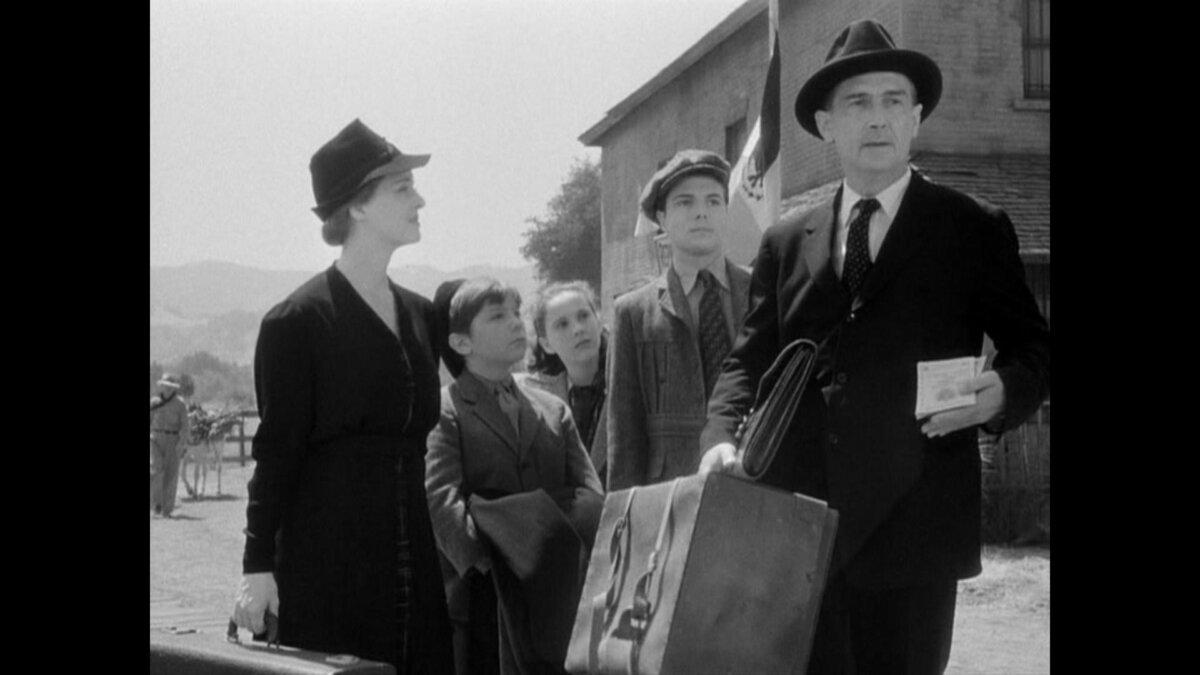
Years before WWII, one-time engineer and German patriot Kurt Muller (Paul Lukas) secretly subverted fascist-socialism across Europe. Now, hounded as Nazism peaks in 1940, he and his American wife, Sara (Bette Davis), head to Washington.
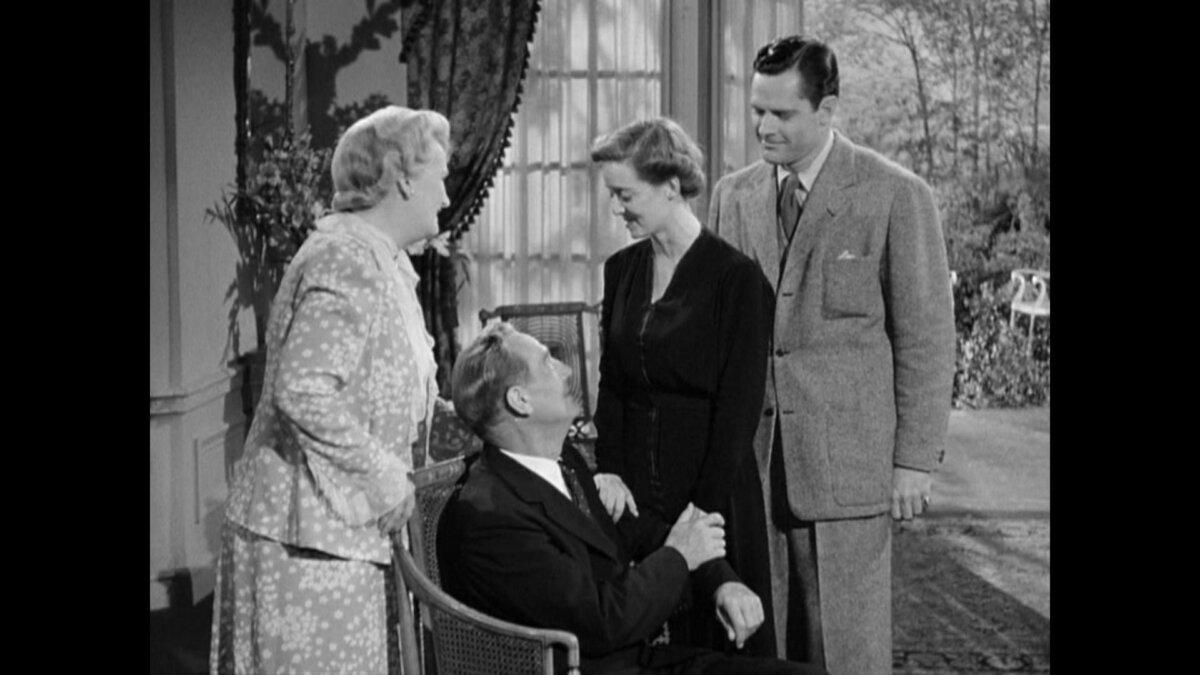
He seeks sanctuary with Sara’s wealthy, widowed mother, Fanny Farrelly (Lucile Watson), and adult brother David (Donald Woods). The Mullers are accompanied by their children, Bodo, Babette, and Joshua. Joshua named after his late grandfather, Joshua Farrelly, a former associate justice of the Supreme Court.

Fanny’s house guest, former Romanian diplomat Count Teck de Brancovis (George Coulouris), conspires with covert Nazi operatives in the German Embassy in Washington to expose Kurt.

Lukas and Davis Excel
Davis excels, even when playing second fiddle, and Coulouris is convincing as the characterless Count, but this is Lukas’s film. Over six feet tall, he brings a quiet, fiery nobility to Kurt’s patriotism.Yes, Kurt loves Germany, but he loves human dignity and decency more. He starts unruffled, reserved, amiable, even indulgent; not a hair is out of place. But as Teck’s wiles unravel, Kurt, animated, takes charge. Unapologetically, he shapes events by the power of his ironclad moral convictions. Unsurprisingly, Lukas won an Oscar for Best Actor for his performance.
Of the characters here, three pairs of men and women frame what’s at stake. Albeit comically, Fanny’s censorious bossiness proxies as a kind of fascism that asks questions of mama’s boy, David. If he can’t stand up to the regimentation of his thoughts, words and actions at home, how will he stand up to it outside?
More seriously, Teck’s mercenary manipulation asks questions of his wife, Marthe. If she can’t stand up to expediency at home, how will she confront it outside? She tries to prick Teck’s conscience, but when he shows no traces of having one, she stands up to his bullying to forge her own path.
In the Home
Tragically, Kurt’s unbending hatred of fascist-socialism asks questions of his long-suffering wife. Having waited nearly 20 years for some respite from a life of self-denial, will Sara weather even more self-denial on Kurt’s account?This film argues it’s not in parliaments or senate houses that the fate of decent human beings will be decided, but in the confines of homes. It’ll be decided by what’s accepted at dining tables, and argued against, or acquiesced to in bedrooms.
Ordinary women and men must decide the kind of children they’ll raise and send into the world. They’ll also determine the kind of guests they’ll invite from the world and host in their homes.
Secretly rifling through Kurt’s briefcase, Teck discovers his treasured $23,000 anti-fascist fund. Sanctimoniously, Fanny asks, wasn’t it careless of Sara and Kurt to carry around such a large sum? No, Sara insists, they’ve long done so. Where could be safer than her own house?
Anguished, Sara holds her mother accountable for hosting Teck, who’s inimical to their way of life, “It was careless of you and David to have a man like that in this house.”
Chastened, contrite, David agrees. At least initially defensive, Fanny pleads ignorance, “But how could we know?” Sara snaps back, “The world has changed, mama. Some of the people in it are dangerous. It’s time you knew that.”
She’s saying the old rules of hospitality no longer apply. Given the stakes for homes (or home countries), ignorance is no excuse.