NR | 1 h 35 min | Western | 1941
Some men had dominated those great plains as riders at stage stations that would soon disappear. Nevertheless, against the odds, they bravely helped lay that first transcontinental telegraph line, which would eventually succeed them. Edward Creighton (Dean Jagger), chief engineer at Western Union’s Omaha maintenance division, leads a project to lay telegraph lines through harsh terrain right up to Salt Lake City. His sister, Sue (Virginia Gilmore), helps as a telegrapher.
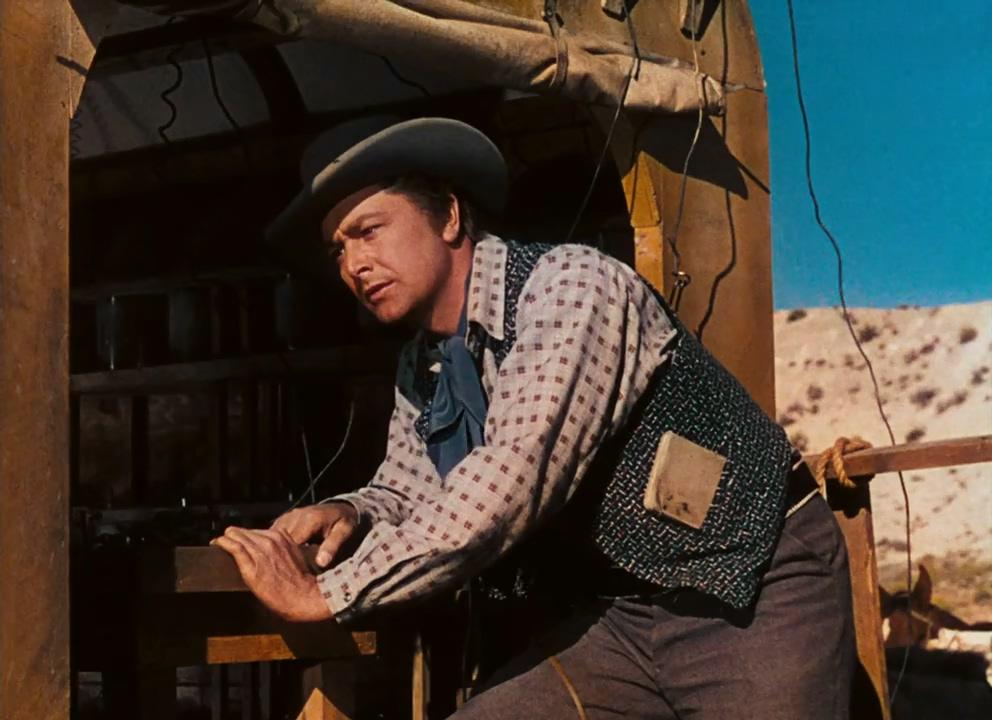
Gunslinger Vance Shaw (Randolph Scott) and Morse code expert Richard Blake (Robert Young) join the project. Both men fancy pretty Sue; their job, though, is limiting project disruption. That comes in two forms.
First, Sioux Indians, fearing the new technology out of ignorance, threaten to disrupt it. Second, mercenaries led by Jack Slade (Barton MacLane), who are Confederate guerillas disguised as Indians, extort Western Union in exchange for freedom from disruption.
Creighton, Shaw, and Blake manage to reassure the Indians that the telegraph isn’t harmful, but Slade and his thugs just won’t back off. Worse, with dwindling teams and supplies, Creighton must oversee laying of underground cables and overland poles. This isn’t just across prairie lands but over hills, too, all before the brutal winter sets in.
Shaw seems to know Slade from way back. As Slade’s disruptions escalate, Creighton and Blake wonder whether that connection is an asset or a liability.
The suave Young is well cast as the voluble, Harvard-educated Blake, who’s ill at ease with guns even if handy with horses. The chiseled Scott is perfect as the taciturn gunslinger. However, it’s MacLane who steals the show as mean-eyed Slade.
Lang’s version of the West, before telegraph poles became a part of its landscape, has a believable, lived-in quality to it, whether he’s showing stagecoaches or saloons.
The laconic man from the West is at one with the telegraph. He says much by saying so little; the telegraph goes further, speaking without speaking, as it were. While he speaks with his holster, hat, and horse, the telegraph speaks through dots and dashes, saying as much through silences as through sounds.
Meanwhile, he’s also at odds with the telegraph; even the quickest man on the draw or on a horse is too slow to transport messages across continental distances instantaneously. Shaw’s and Blake’s ham-handed attempts to woo Sue echo that paradox.
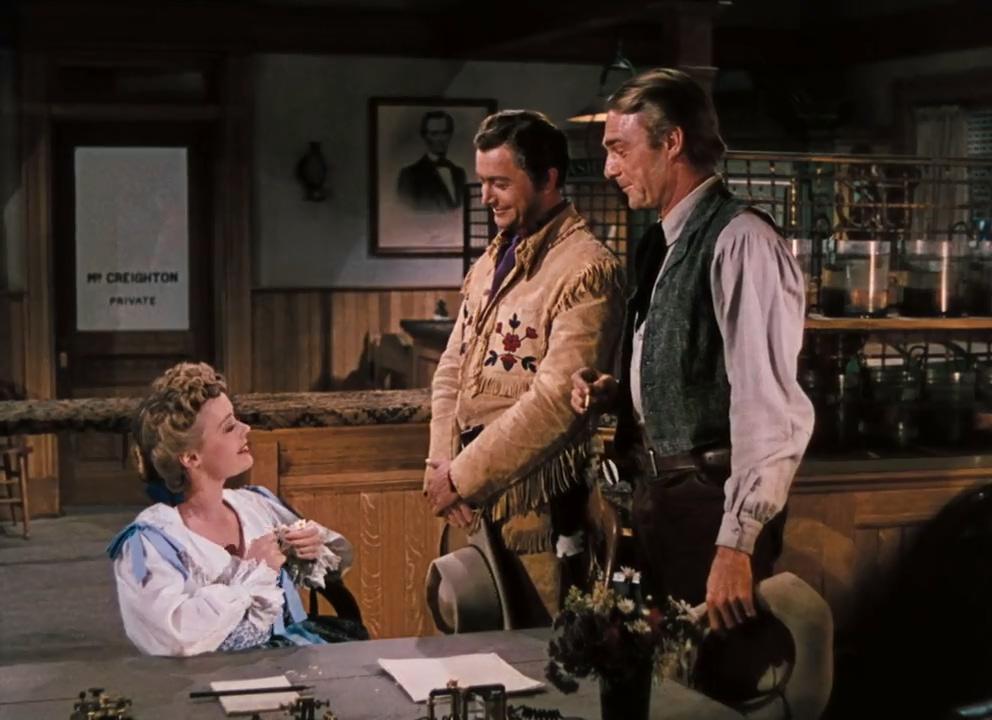
Neither man comes right out and says anything that remotely resembles wooing, yet Sue receives their messages as clearly as if they were typed out telegrams. Without saying even as much, she sends a message of her own back, but only to the one she likes, pressing her prized pendant into his hands.
Both men try to close the emotional distance between themselves and her with the only language they know: riding to her on horseback, reducing miles to minutes. Appearing in person, they score a Pyrrhic victory over a technology that will soon reduce miles to moments.
Lang doesn’t ignore the practical, near-magical difference the telegraph makes in life in the West. Once, Blake reflexively mounts his horse to warn the camp of approaching Indians. A worker suggests it'd be quicker via telegraph. Together, they string up a pole and a serviceable wire so Blake can hammer out a crucially quicker warning.
Shaw confronts Slade about his rustling cattle from the camp. He asks why Slade doesn’t join the Confederacy instead of stealing cattle to blame the Indians and passing that off as soldiering.
Slade taunts, “You come from Missouri, same as me. Are you going against your own people?” Shaw snaps back, “When they turn against their own country, they ain’t my people anymore.”
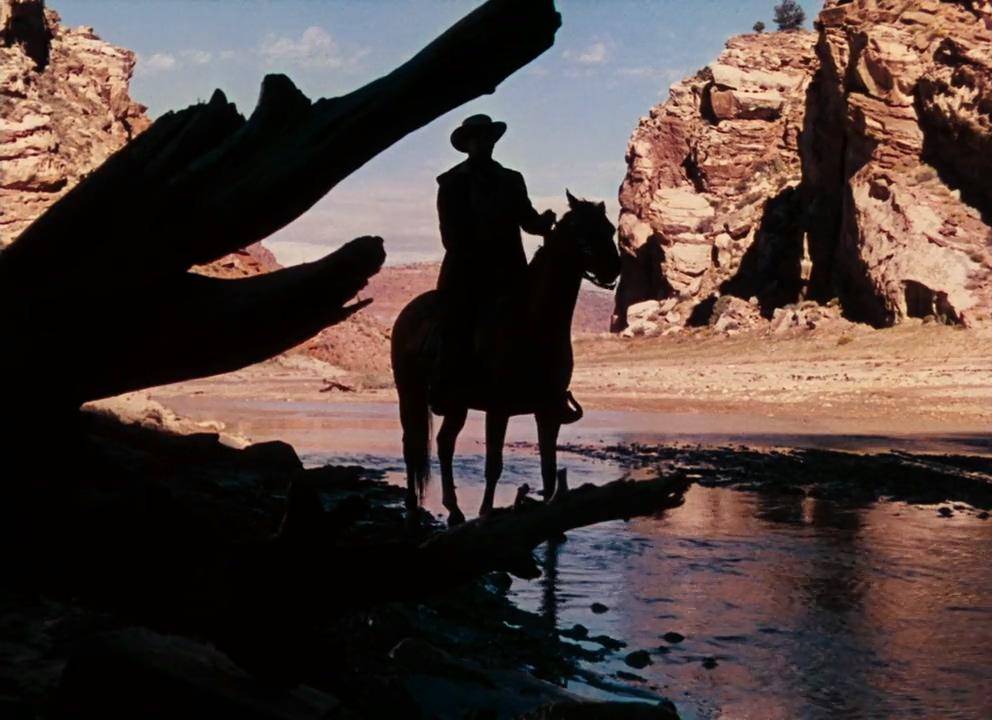
For decades, the cowboy rode his horse to herd cattle, protect property, transport goods, and even ferry messages. Meditatively, Lang uses light and shadow to hint at a slow, melancholic passing of that age. In one wondrous scene, his long shot captures Shaw riding, a mighty canyon in the background and a stream in the foreground.
At first, the man and horse seem tiny and inconsequential, crossing the stream from beneath the scorching sun into the cooler shade. For seconds, they’re still, silhouetted, then as they slowly approach the camera, they look larger, dwarfing everything else (canyon, stream, and sky) before disappearing from the screen.
That’s Lang’s reminder of just how large man and beast loomed in the West before they faded from sight in the shadow of advancing technology.